
Reviewed · SCHINDLER'S FACTORY TOURS
Schindler’s Factory Museum
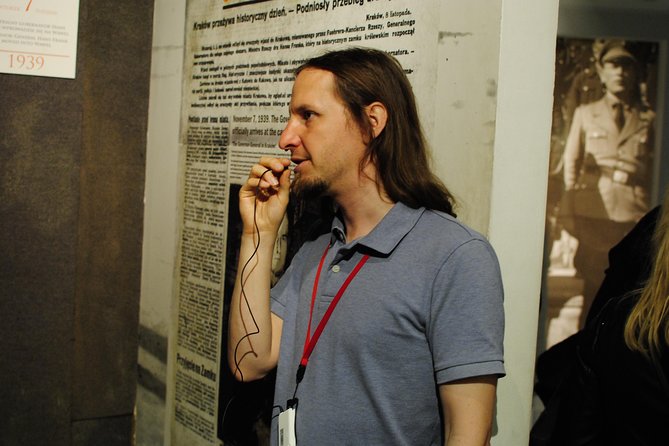
Schindler’s Factory Museum is one of those rare tours where history feels personal, because you walk through a real WWII workplace and see how occupation changed everyday life in Krakow. You also get the powerful context behind the famous Schindler’s List connection, without needing to already know every detail. This is an emotional walk, guided by a local voice, not just a self-guided slideshow.
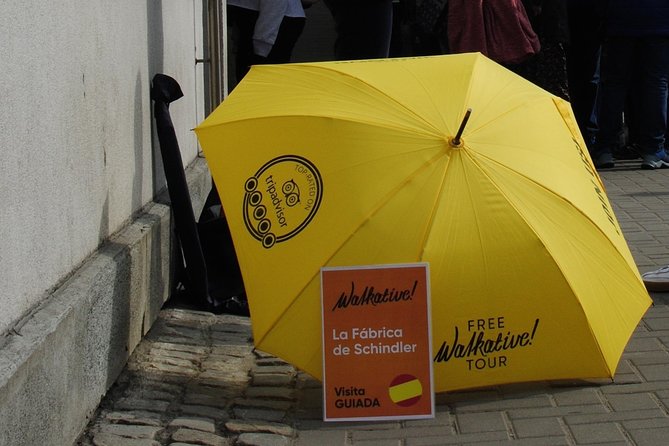
What I like most is how the visit uses a timeline style route, so you can follow the logic of what changed, and when. I also appreciate the practical set-up: a professional guide helps you avoid the queue (look for the yellow umbrella), and the group is capped at 15, so you actually hear the story instead of just standing in it. Guides like Damian and Lucy have been highlighted for bringing the city’s layers to life beyond the Schindler headline.
One thing to consider: the museum can feel crowded, and it includes a lot to read, so if you hate information-heavy exhibits, you may feel rushed even if you want to slow down. Also, the name Schindler is in the title, but the story sometimes spends more time on Krakow under occupation than on Oskar Schindler himself.
Key highlights you should know before you go
- A walk through the occupation timeline that helps you understand how life tightened step by step
- Skip-the-queue entry by meeting your guide with the yellow umbrella
- Small groups (max 15) that keep the experience from turning into a shuffle
- More than Schindler: the guide perspective covers Krakow’s story across the war years and after
- An exhibit route built for staying focused with lots of objects, photos, and personal artifacts
- Plan for time inside since many people end up staying around the 2-hour mark (depending on pace)
Krakow’s Factory Museum: why this experience hits hard
This museum is interesting because it connects a famous film story to the lived reality of an occupied Polish city. You are not just reading about the Holocaust in the abstract. You are walking through the physical setting where the Nazi system operated and where survival and rescue stories intersected.
I also like that the tour framing gives you two tracks at once. You get the occupation story, and you get Krakow’s human scale. The guide approach helps you see what it meant for Jewish and non-Jewish residents to navigate fear, restrictions, and uncertainty.
There is a caution to keep in mind. This is not an easy, light museum. It deals with suffering directly, using displays that can include disturbing imagery and personal items, so bring your emotional stamina.
More Schindler's Factory tours to compare:
- Krakow: Oskar Schindler’s Factory Entry Ticket & Guided Tour
★ 4.2 · 3,793 reviews - Krakow: Schindler’s Factory Tour with Entrance Ticket
★ 4.5 · 3,182 reviews - Krakow: Schindler’s Factory Skip-the-Line Ticket
★ 4.4 · 3,105 reviews
Start at Lipowa 4F, then get in with the yellow umbrella
Your tour begins at Lipowa 4F (Lipowa 4F, 30-702 Kraków). The experience ends back at the meeting point, so you are not stuck figuring out how to get yourself home after you finish.
Logistically, this is a smart way to do the museum. The ticket includes entrance, and the tour is designed to help you avoid the queue. When you arrive, you are meant to spot your guide by the yellow umbrella and join the group for timed entry.
One more practical point: the museum is near public transportation, which matters because the old town is not right next door for everyone. If you are staying in the historic center, you might prefer tram access over walking, though some people do walk and estimate about half an hour.
The main stop inside the factory: how the guided route works
The tour is essentially one long guided visit through Schindler’s Factory Museum, with the story unfolding as you move through rooms and corridors. Expect an interpretive path rather than a quick gallery circuit. The goal is for you to keep the timeline straight while you absorb what you are seeing.
You can think of it as a chronological “how did life change” route. The museum presentation follows what happened as the occupation tightened, and the guide helps stitch the clues together. That structure is a big reason many people find it more meaningful than reading panels alone.
It also means you should plan for steady attention. One visit can feel like a lot to take in because the exhibits pack in photos, documents, swastikas, and personal belongings of people under Nazi rule. If you are the type who scans and moves on fast, you may not get the full benefit.
What the guided story does well
A key strength is that the guide does not treat the museum as only a Schindler story. The narration often expands to include Krakow before WWII, during the occupation, and after the war. One guide example shared in past groups mentioned how the experience also touches the long stretch of Soviet communism after 1945.
This broader framing helps you understand the setting. WWII in Poland was not a single event. It was a brutal turning point inside a longer, complicated national story.
More museum tours in Krakow:
- Auschwitz-Birkenau Museum and Memorial Guided Tour from Krakow
★ 4.5 · 1,510 reviews - Krakow: Rynek Underground Museum Guided Tour
★ 4.6 · 1,122 reviews - Krakow Schindler’s Factory Museum Guided Tour in English
★ 4.5 · 650 reviews - Krakow: Auschwitz Birkenau Museum Guided Tour with Pickup
★ 3.6 · 544 reviews
A possible drawback inside the route
Because the route is built to be followed, you can end up feeling confined by crowd flow. Some people also report that lighting effects and the pacing of the exhibit route can be irritating, especially if you need visual comfort to read labels.
If you are sensitive to crowds or light, go in with patience, and give yourself permission to take short breaks inside.
What you see in the museum rooms: objects that make the story real
The museum experience is often described as a narrow, guided flow that keeps you moving through an intense atmosphere. Instead of big open halls, the exhibits guide you through corridor-like spaces where the objects are close. That layout can feel claustrophobic, especially when several groups are inside at once.
You can expect a lot of interpretive content. The displays include posters and personal items tied to daily life and persecution, which helps turn the war into something concrete. Even when you know the headline story already, the smaller details can change how you picture what happened.
In a place like this, a guide matters. Reading labels quietly is valid, but the guide can connect the dots quickly. That connection is especially helpful if you are visiting for the first time and want to understand why the factory setting mattered.
The Schindler connection: what to expect, and what might surprise you
Let’s talk about expectations honestly. The museum name points toward Oskar Schindler, and the famous movie reference is part of the draw. But the visit can spend more time on Krakow under Nazi occupation than on Schindler as a person.
In practice, that means you may learn a lot about the Nazi-run system, how the occupied city functioned, and how Krakow residents were affected. You may also find that Schindler’s role gets more emphasis later in the route, rather than being the main theme from start to finish.
That is not a flaw on its own. For me, it actually improves the story. It shifts the focus from one famous name to the bigger reality of how people lived and survived in the middle of the machine.
But if you are hoping for a deep biography of Oskar Schindler in particular, you might want to mentally adjust your goal. Think of this as Krakow under occupation first, Schindler-related context second.
Time, pace, and crowd reality: plan like a pro
Most tours run around 1 hour 30 minutes, but the museum itself can take longer. People have reported spending about 2 hours inside, especially when they slow down to read and absorb the exhibits.
That extra time matters because this museum is information-heavy. The displays are not just scenic, they are dense. If you rush, you will miss connections and you will leave with less of the emotional weight.
Crowding is the other variable. Some visitors describe it as busy, with flow lines and groups entering at the same time. If you dislike crowds, your best strategy is to arrive early when you can, and stay flexible inside.
One more practical tip: check how the ticket experience works regarding exiting and re-entering. Some visitors noted that the ticket does not allow leaving and coming back. So if you plan to snack, use the restroom early, and then settle in.
If you are carrying bags, look for luggage storage on site. One visitor specifically mentioned that there is storage, but also that it was not easy to find beforehand. That means you should plan to deal with bags before you start reading everything.
Price and value in Krakow: is $36 a fair deal?
At $36 for about 1 hour 30 minutes, this is not a bargain attraction, but it is also not overpriced for what you get. Your price includes the entrance ticket, VAT, and a professional local guide in Spanish, plus the big time-saver of avoiding the queue with the yellow umbrella.
Here is how I weigh the value. If you were to buy a ticket and then navigate the story alone, you would save money but lose the guided thread that helps you understand the timeline and the city context. Given the density of the museum, the guide role is often what turns information into understanding.
Also, the group size matters. Max 15 travelers keeps the experience from becoming pure crowd math. You will still be inside a museum with many people, but you are less likely to feel like you are shouting over noise just to ask one question.
If you are visiting on a tight schedule, the guided format is a strong value play. It gives you structure, and it helps you focus on what matters most inside.
Who should book this tour, and who should rethink it
This tour fits best if you want a guided explanation while you walk through an exhibit that is emotionally intense and information-heavy. If you like understanding context, Krakow’s story beyond the Schindler headline can be a big win.
It is also a good fit for people visiting with teens. The recommended admission for youth is from 14 years old, which suggests the content is meant for older teens who can handle serious historical topics.
If you want a light, quick museum with minimal reading, this may frustrate you. The exhibit is built for a slower, more attentive pace. If you also dislike crowded interiors, you will need extra patience, or you might consider timing your visit for quieter hours.
Language is another filter. The tour guide is listed as Spanish. If you are not comfortable with Spanish, you may want to confirm whether your specific departure offers another language option before you commit.
Should you book Schindler’s Factory Museum in Krakow?
Yes, I think you should book it if your goal is to understand WWII occupation in Krakow in a guided, structured way. The combination of skip-the-line entry, a local guide, and a small group makes it a practical way to handle a museum that can otherwise feel overwhelming.
I would not book it blindly if you are expecting a detailed Oskar Schindler biography from start to finish. Set your expectations for Krakow under occupation first. If you want that broader context, you are in the right place.
If you are sensitive to crowds and you hate dense exhibits, choose your timing carefully. But if you can handle a serious, tightly structured visit, this is one of those Krakow experiences that stays with you long after you walk back outside.
FAQ
Where does the tour start?
The tour starts at Lipowa 4F, 30-702 Kraków, Poland.
How long is the Schindler’s Factory Museum tour?
The tour lasts about 1 hour 30 minutes.
What is the price?
The price is $36.
What is included in the tour price?
The entrance to Schindler’s Factory Museum, VAT, and a professional local guide in Spanish are included. You also get help avoiding the queue by meeting the guide with the yellow umbrella.
What is not included?
Hotel pickup and transportation to attractions are not included.
What is the meeting point, and does the tour end there too?
Your meeting point is Lipowa 4F, 30-702 Kraków. The activity ends back at the meeting point.
How big is the group?
This tour/activity has a maximum of 15 travelers.
Is the museum tour near public transportation?
Yes, it is near public transportation.
Is this tour suitable for children or teens?
It is recommended for youth from 14 years.
What is the cancellation policy?
Free cancellation is available. You can cancel up to 24 hours in advance for a full refund. If you cancel less than 24 hours before the start time, there is no refund.
Recently reviewed around Krakow
- Wawel Castle and Cathedral Guided Tour★ 4.6 · 44 reviews
- Walking Tour: Kazimierz, Jewish Quarter – 2-Hours of Magic!★ 4.7 · 35 reviews
- Wawel Castle and Cathedral Guided Tour★ 5.0 · 8 reviews
- Kraków Holocaust Tour★ 4.9 · 5 reviews
- Wadowice and Kalwaria: John Paul II Route★ 4.8 · 5 reviews
- VIP Club Entry and Booth Booking★ 5.0 · 4 reviews
- Walking Tour of Krakow: Old town – 2-Hours of Magic★ 4.7 · 5 reviews
- Krakow: Zakopane, Thermal Baths and Gorce Park Treetop Walk★ 5.0 · 3 reviews