

Reviewed · MUSEUMS
Krakow: Museum of Living Butterflies 2+1
A visit to the Krakow Museum of Living Butterflies is interesting because you get close to living butterflies while learning how they grow and how their wings work. I like two things a lot: the museum’s butterfly collection from around the world and the hands-on explanations of life cycle, anatomy, and coloring. One catch to plan for, though: flash photography is not allowed, so your best photos rely on steady timing and the museum’s lighting.
The experience is also built for small groups, limited to 3 participants. That matters because you can actually take your time reading the exhibits and watching the butterflies without feeling rushed.
Finally, there is quite a bit of walking through exhibition areas. The good news is the museum is wheelchair accessible in most areas, but some sections can be challenging if mobility is limited, so wear comfortable shoes and move at your own pace.
Key highlights
- Living butterflies from around the world you can study in one place
- Life cycle and Lepidoptera lessons that connect butterflies to moths
- Wing details explained including the tiny scales that create pattern and color
- Day and night activity so you see different types of butterflies
- Photo time, no flash to protect the butterflies and still capture color
- Conservation messaging focused on preserving butterfly biodiversity
Stepping Into a Living Butterfly Museum in Krakow

This is not a “look at glass cases and move on” kind of museum. The whole point of the Krakow Museum of Living Butterflies is that you can admire butterflies as living creatures, then connect what you see to how they live. You’ll walk through exhibition areas designed to teach you what butterflies look like up close, why their wings look the way they do, and how their life cycle fits into the bigger ecosystem story.
I also like the tone of this kind of museum. It’s fun, but it still feels like learning. You’re not stuck reading endless text with no payoff. You can glance at the exhibits, then look back at the butterflies and make the connection in real time.
If you’re the type who likes photos, you’ll also like that the experience includes an opportunity to take photographs. Just remember the rule: no flash inside the museum. Flash is banned to protect the butterflies, so plan on using whatever lighting is there and keeping your camera steady.
More museum tours in Krakow:
- Auschwitz-Birkenau Museum and Memorial Guided Tour from Krakow
★ 4.5 · 1,510 reviews - Krakow: Rynek Underground Museum Guided Tour
★ 4.6 · 1,122 reviews - Krakow Schindler’s Factory Museum Guided Tour in English
★ 4.5 · 650 reviews
What You’ll See in the Butterfly Exhibition Areas

Once you’re inside, expect to move through all exhibition areas included with admission. The museum is built around giving you both variety and structure, so you can see different butterflies and still understand what you’re looking at.
Here’s what you can expect to focus on as you go:
- A collection of butterflies from multiple regions, including both local and exotic species
- Information that explains butterfly life cycle steps, plus anatomy and coloring
- The idea that butterflies are part of the Lepidoptera order, which also includes moths
- Examples of butterflies that are active during the day and those that are active at night
That day versus night point is useful. It helps you understand that “butterfly season” is not one simple thing. Even inside the butterfly world, activity patterns vary, and the museum uses that to show you there’s more going on than color and wings.
You’ll also spend time studying the actual insects, not just pictures. When the museum is doing its job, you leave with the sense that butterflies are living, moving animals with real behaviors, not only pretty objects.
Lepidoptera and Wing Scales, Explained in Plain Language
One of the strongest sections of the experience is the educational material about how butterflies work. The museum explains that butterflies belong to the Lepidoptera order, which includes butterflies and moths. That simple connection helps a lot because it gives you a mental category.
Then it gets more specific, in a way that helps you look differently. The museum explains that butterfly wings are covered in tiny scales. Those scales are what create the characteristic appearance and patterns you see on the wings.
This is the kind of detail that changes your viewing. After you learn the “why” behind the patterns, you start noticing how coloring is distributed across wings instead of just thinking, wow, that’s pretty.
If you like natural science topics but don’t want it to feel like a textbook, this museum hits a nice balance. You get enough structure to understand the basics, without the experience turning into a lecture.
Life Cycle, Anatomy, and Coloring: What to Look For
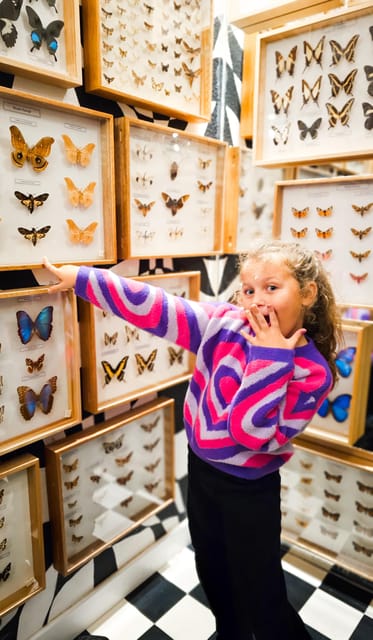
You’ll learn about the butterfly life cycle and about anatomy and coloring. Even without a guided tour, the exhibits are designed to give you clear reference points, so you can connect what you see on the butterflies to the stages described in the museum’s educational content.
When you’re walking through, I recommend using a simple approach:
- Pick one butterfly type at a time and look at how its coloring is distributed
- Then glance at the life cycle explanation and ask what traits make sense for that stage
- Finally, check the anatomy points, especially anything tied to how wings look and function
The coloring section is especially enjoyable because it makes you slow down. Instead of just admiring the “overall” look, you start noticing patterns like bands, spots, and gradients. That’s where the museum’s teaching supports the viewing, not competes with it.
And yes, you’ll probably end up standing in one spot longer than you planned. That’s not a bug. It’s the whole point.
Another way to spend a day around Krakow:
- From Krakow: Auschwitz-Birkenau Guided Tour & Hotel Pickup
★ 4.5 · 33,358 reviews - From Krakow: Auschwitz-Birkenau Guided Tour & Hotel Pickup
★ 4.5 · 29,340 reviews - Krakow: Auschwitz Guided Tour with Optional Hotel Pickup
★ 4.5 · 15,280 reviews - Krakow–Zakopane: Cable Car, Chocholow Baths, Cheese & Vodka
★ 5.0 · 10,720 reviews
Photographing Butterflies Without Flash (and Getting Better Shots)
The photo opportunity is included, which is great, because this is the kind of place where you’ll want a record of the colors. But the museum is also clear that flash photography is not allowed.
So how do you make that work for you?
Here are the photo strategies that match the rules:
- Avoid flash and rely on the available lighting inside
- Keep your camera movements smooth, since you’ll be reacting to living motion
- Take photos in short bursts, then pause to watch again
It also helps to treat photography as a side mission, not the main mission. The butterflies are the reason you’re there, and the best shots usually happen when you’re calm and patient.
If you are the type who gets frustrated in low-light situations, it’s worth adjusting expectations. You can still get good results, but you may need to work with steadier hands and the museum’s lighting instead of blasting flash.
Price and Value: Is $36 Per Group Up to 3 Fair?
The price is $36 per group up to 3 participants. That is not a per-person ticket model, so the value depends on how you’re traveling.
If you’re going as a couple and want a third spot, it can be a decent deal, since the cost is grouped. If you’re going solo, the “per group” pricing can feel more expensive than per-person museum admissions. Still, you are paying for admission to all exhibition areas, plus the included photo opportunity.
Also consider the type of experience. This isn’t a quick stop based on walking past a few displays. You’re moving through multiple educational elements: butterfly life cycle content, Lepidoptera explanations, wing scale information, and day versus night activity context. For many people, that combination of learning plus living animals is what makes it worth it.
Bottom line: if you can share the group price, you’ll likely feel better about the cost. If you’re alone, treat it as a focused activity you choose because you genuinely like butterflies, not because it’s a random “thing to do.”
Small Group Size (Up to 3) and How to Plan Your Timing
The experience is set up as a small group limited to 3 participants. That’s a meaningful detail. Smaller groups usually mean the experience feels less like a production line. You can take a breather when you want one, and you’re not fighting a crowd to read the exhibits.
The duration is listed as valid 1 day, with starting times you can check based on availability. That means you’ll want to pick a time slot that fits your day in Krakow rather than trying to cram it between rushed appointments.
Here’s how I’d plan it:
- Go when you have energy to read, not just to pass through
- Give yourself extra time for the photography, because you’ll want repeat looks at the butterflies
- If you’re pairing this with other Krakow sights, schedule it earlier rather than right before a long evening plan
Because there is a decent amount of walking through exhibition areas, you want to avoid stacking it back-to-back with other activities that demand full attention.
Who This Museum Is Best For, and Who Might Skip It
This is a great fit if you want something hands-on, visual, and educational in a relaxed way. You’ll probably enjoy it if you like:
- Natural science topics like life cycles and insect anatomy
- Seeing butterflies from both local and exotic species in one visit
- Photo opportunities where color is the main reward
- Learning how butterfly diversity matters for ecosystems and conservation
If you’re not into insects at all, this might feel like too much. And if you hate rules, note the no flash photography policy. It’s a hard rule, not a suggestion.
One more practical note: some sections may be challenging for those with mobility impairments. The museum is wheelchair accessible in most areas, but not every section is the same level of easy. If mobility is a concern, plan for slower movement and more pauses.
Conservation and Biodiversity Lessons You’ll Actually Remember
A good museum teaches you something you carry home. In this one, you learn about the importance of preserving the diversity of the butterfly world and about the museum’s educational initiatives. The conservation message is tied to why biodiversity matters, not just to why butterflies are pretty.
If you care about travel with purpose, this is one of those experiences that gives you a tangible take-away. You see living butterflies, learn how they work, and then connect that to the bigger idea of protecting diversity.
It’s not moralizing. It’s more like, here’s what matters, and here’s why.
And if you like science, you’ll appreciate that the content is structured around basic features you can observe, like wing patterns and activity timing.
Practical Tips Before You Go to Sofi sp. z o.o.
This experience is provided by Sofi sp. z o.o. Keep that in mind when you check booking details or reference the activity.
A few practical tips that match what you’ll feel on site:
- Wear comfortable shoes because there is a lot of walking through exhibition areas
- Skip flash, the museum does not allow it
- If you need wheelchair access, know it is available in most areas, but some sections may be harder
- Plan on taking your time, because the museum mixes viewing with education
Also, since guided tours are not included, you’ll be relying on the exhibits themselves. That can be a plus. If you like self-guided learning at your own pace, this format works well. If you need a live guide to explain everything, you may want to pair it with another activity that offers a guide elsewhere in Krakow.
Should You Book the Museum of Living Butterflies in Krakow?
Yes, you should book it if you want a compact day activity that mixes living animals with straightforward learning. The butterfly collection from around the world, the life cycle and Lepidoptera education, and the photo opportunity without flash rules make it feel like more than a casual stop.
I’d think twice if you are going solo and the group-based price feels too steep for you, or if you dislike insects and can’t get past the idea of spending time in a butterfly-focused environment. Also, if mobility is limited, plan extra time for the parts that might be more challenging.
If you’re on the fence, choose it when you know you’ll give it attention. This museum rewards slow looking, not rushing.
FAQ
Is admission to the Butterfly Museum included?
Yes. Your ticket includes admission to the Butterfly Museum and access to all exhibition areas.
Can I take photographs inside the museum?
You can take photographs. Flash photography is not allowed inside the museum.
Are guided tours included?
No. Guided tours are not included.
How long is the visit valid?
The admission is valid for 1 day. Starting times depend on availability.
What is the group size?
This is a small group experience limited to 3 participants.
What is the price?
The price is $36 per group up to 3 participants.
Is the museum wheelchair accessible?
The museum is wheelchair accessible in most areas, but some sections may be challenging for those with mobility impairments. Comfortable shoes are recommended because there is a lot of walking.
Recently reviewed around Krakow
- Walking Tour: Kazimierz, Jewish Quarter – 2-Hours of Magic!★ 4.7 · 35 reviews
- Wawel Castle and Cathedral Guided Tour★ 5.0 · 8 reviews
- Wawel Castle and Cathedral Guided Tour★ 4.6 · 44 reviews
- Kraków Holocaust Tour★ 4.9 · 5 reviews
- Wadowice and Kalwaria: John Paul II Route★ 4.8 · 5 reviews
- VIP Club Entry and Booth Booking★ 5.0 · 4 reviews
- Walking Tour of Krakow: Old town – 2-Hours of Magic★ 4.7 · 5 reviews
- Krakow: Zakopane, Thermal Baths and Gorce Park Treetop Walk★ 5.0 · 3 reviews
Museums, compared.


Chopin Piano Concert at Chopin Gallery with a Glass of Wine
Read our review →
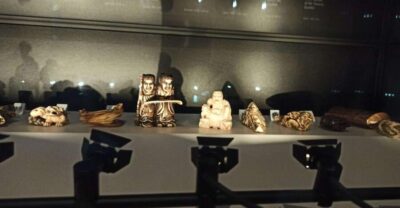

Czartoryski Museum Tour / Entrance with Krakow Card
Read our review →Browse the lists this tour appears in