
Reviewed · JEWISH QUARTER & HERITAGE TOURS
Galicja Jewish Museum
The Galicia Jewish Museum is interesting because it tells a Jewish story tied to southern Poland, and it does it in a way that sticks with you. You will get one of the biggest Jewish history museum experiences in Krakow, built around photos, memory, and how culture was erased during WWII. One practical note: it is photo-heavy, so if you want lots of physical artifacts, you might find some rooms more visual than hands-on.
I especially like how the museum’s permanent exhibition, Traces of Memory, uses images to show what was there, and what was lost. I also like that it is not only about tragedy, it is also about celebrating Jewish culture in Galicia across centuries. The one drawback to consider is time, with the museum asking you to plan around closing, since last entry is 90 minutes before the end.
If you can go early, you’ll likely have a calmer experience, and the exhibits are designed for quiet focus. I found the idea of wandering at your own pace to be a real strength, because the material benefits from stopping and reading. That said, you should check current opening times, since they can change.
Key points to know before you go
- The permanent exhibition is built on the 800-year story of Jewish life in Poland’s former Galicia, shown through more than 140 photographs
- WWII-era moving pictures bring a heavy emotional layer to the exhibits, not just static images
- You can take your time, and the layout works well for slow looking and reflection
- It is a museum experience with extra layers, including a cafe, temporary exhibitions, and cultural events like lectures and workshops
- It is often calm early on, which makes it easier to connect with what you’re reading and seeing
Entering a museum built around memory and Jewish Galicia
The Galicia Jewish Museum is in Lesser Poland, in the Krakow area, and it focuses on a specific regional story. Instead of trying to cover everything in one go, it homes in on Galicia, a place that shaped Jewish life for centuries and later faced systematic destruction.
Walking through, you get a feeling that the museum is trying to do two things at once. First, it honors the victims of the Holocaust. Second, it celebrates Jewish culture of Polish Galicia, including the everyday presence that existed before WWII.
I like that approach because it keeps the experience human. This is not just a history lecture in rooms. It is built like a thoughtful encounter, where photos do the work and you control the pace.
More Jewish quarter and heritage tours to compare:
- Krakow: Schindler’s Factory & Ghetto Guided Tour
★ 4.7 · 1,694 reviews - Krakow: Jewish Quarter and Former Ghetto Tour
★ 4.9 · 1,441 reviews - Krakow: Bike Tour of Old Town, Jewish Quarter and the Ghetto
★ 4.9 · 1,155 reviews
The heart of the visit: Traces of Memory and its photo-led storytelling
Your main reason to come is the permanent exhibition, Traces of Memory. It is the product of twelve years of artistic work, and it is designed as a reminder of an 800-year history of Jewish culture in Poland.
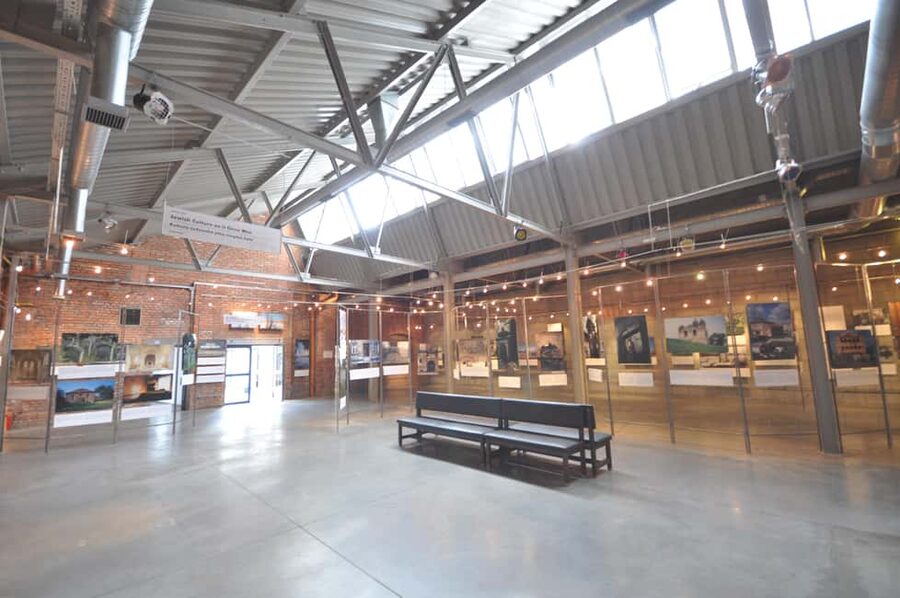
Here is what makes it so effective. You do not just see individual pictures. The museum presents the Jewish presence in southern Poland, the former Galicia, through a large collection of photographs. Over 140 photographs made by the museum’s founder are central to what you’ll see.
One of the most powerful parts is the way the images function like evidence. They show remnants of Jewish life and presence, and they also become a record of how Jewish culture was destroyed by the Nazis during WWII. You can feel the arc moving through the exhibition, even though the museum is not relying on heavy text alone.
The museum’s founder and director is Chris Schwarz, a British photographer. Knowing that the museum was established by Schwarz helps you read the photos with context. It is not just a random collection. It is tied to a person’s long-term relationship with documenting Jewish culture in Poland, and later the museum carried that responsibility forward after he died in 2007.
WWII moving pictures, and why they matter here
In addition to the photo galleries, the museum includes moving pictures showing Jews during WWII. This is one of the highlights because it shifts you out of the still-image mode.
A lot of WWII museums use film, but this one uses it in a very targeted way. It supports the photo story and adds motion and emotion, without turning the whole experience into a nonstop media show. If you tend to absorb better when something changes from image to video, this section can be especially meaningful.
If you prefer to stay in quiet reflection, you can still pace yourself. The moving-picture elements are not presented as the only tool. They are part of a broader structure, which is what keeps the experience from feeling one-note.
Beyond the main exhibition: cafe, temporary shows, lectures, workshops
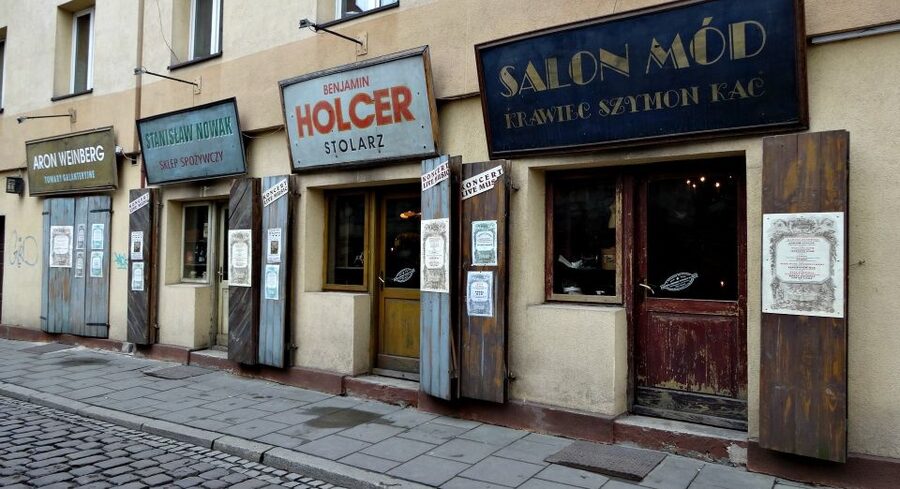
The Galicia Jewish Museum is not only a single gallery. You’ll also find an exhibition space beyond the permanent collection, plus temporary exhibitions that can change what you see on your specific visit.
There is a cafe on site. That sounds small, but it matters. When a museum deals with heavy topics, you want an easy place to reset, sit down, and think without hunting for food somewhere else in the city.
The museum also hosts events, including concerts, meetings with authors, lectures, and workshops. If you happen to visit when something is scheduled, that can turn the visit from a simple walk-through into a fuller cultural evening.
And yes, there’s a bookshop. It carries books in Polish, English, and German about Jewish life and culture, as well as the Holocaust, Jewish thought, identity, and literature. That gives you a practical next step if you want to keep learning after you leave. I like museums that give you a way to continue, not just memories to carry.
More museum tours in Krakow:
- Auschwitz-Birkenau Museum and Memorial Guided Tour from Krakow
★ 4.5 · 1,510 reviews - Krakow: Rynek Underground Museum Guided Tour
★ 4.6 · 1,122 reviews - Krakow Schindler’s Factory Museum Guided Tour in English
★ 4.5 · 650 reviews - Krakow: Auschwitz Birkenau Museum Guided Tour with Pickup
★ 3.6 · 544 reviews
How much time you need, and how to pace it
Most visitors should plan for about 1 to 2 days, depending on starting times available. In real-life terms, I’d treat this as a museum you can do in one longer sitting, or as a calm repeat visit if you want time to reread and re-check rooms.
The best strategy is simple: plan for slower reading than you think you need. The museum’s galleries are built around photography and interpretation, so you’ll likely pause a lot. Even in a short visit, you will want time for the photo sequences and the WWII materials.
Reviews point out that people often spend around two hours reading and looking closely. That makes sense. There is enough content to keep you engaged, but the pace still feels respectful, not rushed.
Also, the museum can be calmer at opening time. One review described arriving at 10am and finding it fairly empty, which made reflection easier. If you can go early, you’ll likely get a smoother experience, with fewer distractions between you and the exhibits.
Price and value: what $4.33 buys you here
The museum price is listed as $4.33 per person. For Krakow, that is a pretty low ticket for what you get.
You’re not paying for a high-tech spectacle. You’re paying for a serious educational experience built around a large photo collection, WWII moving pictures, and a permanent exhibition designed over twelve years. You also get access to other areas like the cafe, temporary exhibitions, and the museum’s public program spaces when available.
If you’re comparing value, this is one of those places where the cost does not match the emotional weight. The subject matter is heavy, but the museum’s structure makes it approachable and readable. That combination, plus the fact you can take your time, is where the value shows.
If you have a Krakow City Pass, you might stretch that ticket further. The Krakow City Pass includes access to 36 Krakow museums and landmarks for 1 to 3 days. If you have the pass, the Galicia Jewish Museum is part of that mix, alongside places like Schindler’s Factory and the Rynek Underground Museum, among other sites. It’s a good way to build a well-rounded Krakow plan without paying for each site separately.
If you hold a Krakow City Card, entrance is free of charge at the museum. That can make the museum a no-brainer stop in your schedule.
Logistics that matter: ticket printing and last entrance timing
You’ll receive a separate ticket via email after booking. Only a printed version is accepted. If you can’t print at home, you can print at Plac Szczepański 8.
Also note the timing rule that affects your day plan: last entrance is 90 minutes before closing. That means you should not drift in at the last minute, even if the museum is still open. If you want to see everything comfortably, arrive with time to get settled.
Opening hours can differ from what you see on the product page due to circumstances, so I recommend checking closer to your visit and not relying on assumptions.
One more small rule: smoking is not allowed in the museum.
Who this museum is best for
This is a strong choice if you:
- Want a focused, regional story about Jewish life in Poland’s former Galicia
- Prefer museum experiences built around photos and interpretation, rather than lots of interactive tech
- Care about understanding WWII not only as events, but as cultural loss
It’s also a good fit for solo travelers and couples who like to move at their own pace. Reviews mention that people enjoy walking around without feeling rushed, and that the exhibits create a good chance to learn more about the history of the Jewish population in Poland.
If you are traveling with kids, it might work best for older teens who can handle serious topics. The museum is about the Holocaust and cultural destruction, so it is not a light stop.
What to watch for if you care about artifacts
One balanced note: the museum is photo-led. A review pointed out that there are more photos than actual artifacts. That can be totally fine, and it can even be the point, because the exhibition is built to show remnants and documentation.
Still, if you strongly prefer rooms with lots of physical objects, you may want to frame your expectations. Think of this as a visual memory archive first, and a tradition of photography and remembrance second.
The upside is that photo-led exhibits often leave more space for your own reading and thinking. If you are the kind of person who stops often to look closely, you’ll probably enjoy this more than you expect.
Should you book the Galicia Jewish Museum?
Yes, if you want a meaningful Krakow museum stop that focuses on Jewish life in Galicia and the way WWII destroyed that culture. The low price makes it easy to add, and the permanent exhibition Traces of Memory is the clear reason to come.
I’d book it when you can arrive near opening time, if you care about a calmer, more reflective visit. Print your ticket in advance so you do not lose time, and plan your visit so you are not fighting the 90-minute last entry rule.
Skip it only if your ideal museum day requires lots of physical artifacts and you dislike photo-heavy exhibits. Otherwise, this is one of the more thoughtful, honest, and quietly powerful experiences you can build into a Krakow itinerary.
FAQ
Where is the Galicja Jewish Museum located?
It is located in Lesser Poland, Poland.
How much does the Galicja Jewish Museum cost?
The price is listed as $4.33 per person.
How long should I plan for my visit?
The experience is valid for 1 to 2 days. Starting times depend on availability, so it helps to check your time window before you book.
What’s included in the ticket?
The ticket includes a separate ticket sent via email.
Do I need to print my ticket?
Yes. Only a printed version of the ticket is accepted. If you cannot print it, you can print at Plac Szczepański 8.
When is the last time I can enter?
Last entrance is 90 minutes before closing.
Is there free entry with a Krakow pass?
If you are a Krakow City Card holder, entrance is free of charge.
Are there any restrictions inside the museum?
Smoking is not allowed.
Recently reviewed around Krakow
- Krakow: City Golf Cart Tour and Schindler’s Factory Museum★ 5.0 · 4 reviews
- Krakow: City Sightseeing Tour by Shared or Private Golf Cart★ 4.4 · 21 reviews
- Krakow beer review with a local guide★ 5.0 · 4 reviews
- Kraków: Romantic Candlelight Chopin Piano Concert★ 4.9 · 8 reviews
- From Krakow: Chocholow Hot Springs Evening or Daytime Ticket★ 4.7 · 72 reviews
- From Krakow: Zakopane, Tatra Mountains & Thermal Baths Tour★ 4.9 · 52 reviews
- Kraków: VIP Candlelight Concert The Music of Fryderyk Chopin★ 4.8 · 8 reviews
- Krakow: Bottomless Brunch with 3-Course Meal and Drinks★ 3.8 · 30 reviews