
Reviewed · AUSCHWITZ-BIRKENAU MEMORIAL VISITS
Auschwitz-Birkenau Museum: Fast-Track Entry Pass
This is one of those tours where the structure matters. A fast-track Auschwitz-Birkenau entry ticket plus a guided walk through both camps helps you move efficiently while keeping the focus on what you’re seeing and why it mattered.
I really like two parts of this setup. First, you start at Auschwitz I, the former main camp and administrative headquarters, which gives you the right context before you go to Birkenau.
I also like that the tour uses headsets with voice support. Standing in busy places and trying to hear an English explanation can be tough, so this makes the experience more workable.
One possible drawback to think about up front is the meeting point timing and instructions, which can feel chaotic if you miss the exact pickup details.
Key things to know before you go
Fast-track entry is included, so you should lose less time at the start.
Auschwitz I first sets context with key locations like the administrative core and the story around Rudolf Hess.
Birkenau shuttle transfer is built into the day so you can move between sites without figuring it out alone.
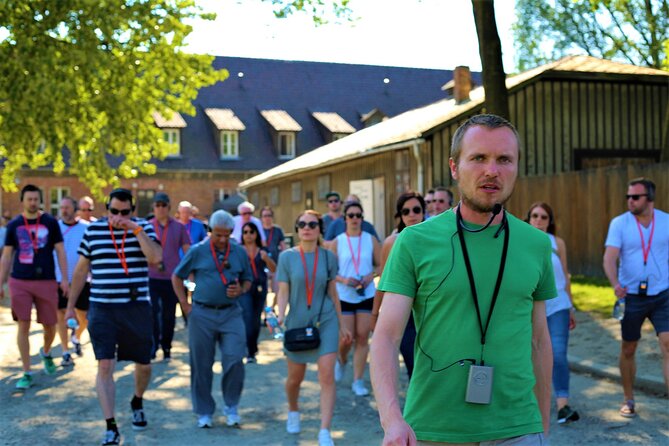
English guide + headsets help you hear explanations clearly as you pass major memorial areas.
- Group size stays capped (up to 30), which usually keeps the pace manageable.
Auschwitz I, where you get the context before the horror
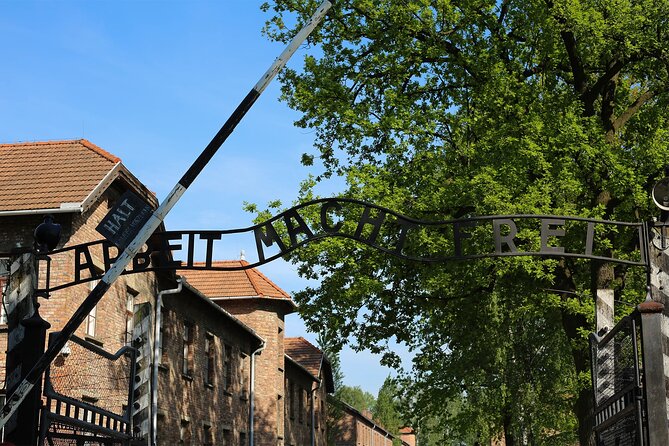
The visit begins at Auschwitz I, the former main camp complex. Starting here is smart. It’s not just a random stop, it’s the administrative and operational heart of the camp system, and it helps you understand how the machinery of persecution worked.
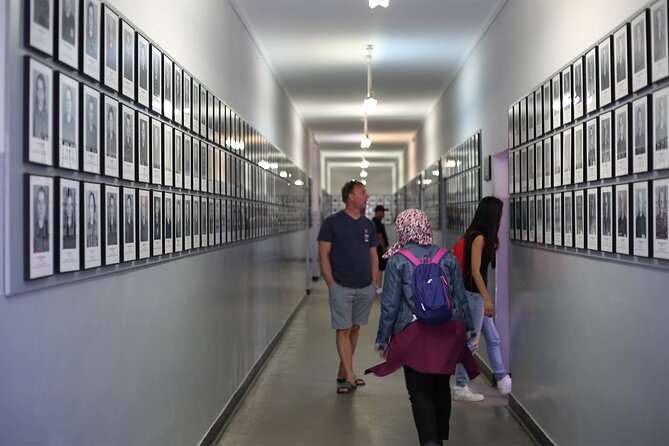
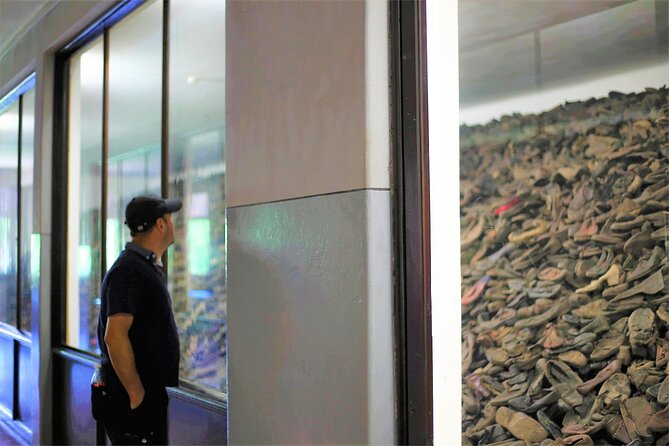
On the ground, you’ll move through areas tied to the prisoner experience and the camp’s functioning. The tour highlights the kinds of photos and personal belongings kept from those imprisoned. Those aren’t just artifacts to look at. They are anchors for what you’re learning: lives reduced to evidence of a systematic crime.
You’ll also hear specific, concrete details. One example that’s called out on this tour is Rudolf Hess. He later became the longest-serving commander of the camp, and he was executed in 1947 as a war criminal. That timeline point matters, because it connects the camp’s history to what happened after the war, not just the events during it.
More Auschwitz-Birkenau memorial visits from Krakow:
- From Krakow: Auschwitz-Birkenau Guided Tour & Hotel Pickup
★ 4.5 · 33,358 reviews - From Krakow: Auschwitz-Birkenau Guided Tour & Hotel Pickup
★ 4.5 · 29,340 reviews - Krakow: Auschwitz Guided Tour with Optional Hotel Pickup
★ 4.5 · 15,280 reviews
Fast-track entry at Auschwitz: useful, but timing is still everything
This tour includes a skip-the-line ticket. That’s the headline benefit, and it can make a real difference when you’re dealing with security screening and tight tour timing.
But here’s the practical reality. Fast-track does not mean you can show up whenever you feel like it. The day is built around a start time (the schedule shows mornings, and the listed window is 9:00 AM to 10:00 AM). If you miss the moment your group is supposed to assemble, you can lose time fast.
Also, keep an eye on how your instructions arrive. There have been cases where start time details were confusing or came late, which led to groups arriving after their planned start and ended up with the wrong setup. Your best move is simple: treat the confirmation message as the truth, and show up early enough to locate the organizer at the exact meeting point.
If you want the day to feel smoother, plan your logistics so you are not running on a tight clock right at arrival.
Auschwitz I highlights you should pay attention to
A good guided visit makes you notice the right things. Here are the Auschwitz I themes this tour is built around, and why they’re worth your attention.
First, the tour focuses on the camp’s role as a system, not just a set of buildings. You’re learning how the camp operated and how that shaped what prisoners endured. When you understand the layout and purpose, your brain stops treating it like a museum display and starts treating it like historical evidence.
Second, you get guided interpretation around preserved material. The mention of prisoner photos and belongings isn’t random. These items are used to explain who was targeted and how dehumanization worked in practice, step by step.
Third, you learn about responsibility and consequences after the war. The Rudolf Hess detail is a good example of how the tour ties camp leadership to the later prosecution and execution. That matters because it answers a question many people feel but do not always ask: what happened afterward.
Transfer to Birkenau: the practical step that prevents chaos
After Auschwitz I, the tour includes a short break and then a move toward Oświęcim and onward to Birkenau. The itinerary includes a transfer by shuttle bus from the museum to Birkenau.
This is one of the most valuable practical pieces of the plan. If you try to do both sites on your own, timing can turn into a headache. With a guided format, you’re less likely to spend your limited time figuring out transport between the two areas.
You also stay with the same structure of the tour. At the second stop, you meet up with your guide and group again and continue your walkthrough at Auschwitz II.
If you are traveling as a pair or small group, this is one of those days where a shared schedule helps. You can focus on what you’re seeing, not on coordinating buses and meeting points while emotionally processing the site.
More museum tours in Krakow:
- Auschwitz-Birkenau Museum and Memorial Guided Tour from Krakow
★ 4.5 · 1,510 reviews - Krakow: Rynek Underground Museum Guided Tour
★ 4.6 · 1,122 reviews - Krakow Schindler’s Factory Museum Guided Tour in English
★ 4.5 · 650 reviews - Krakow: Auschwitz Birkenau Museum Guided Tour with Pickup
★ 3.6 · 544 reviews
Auschwitz II (Birkenau), where the scale hits you
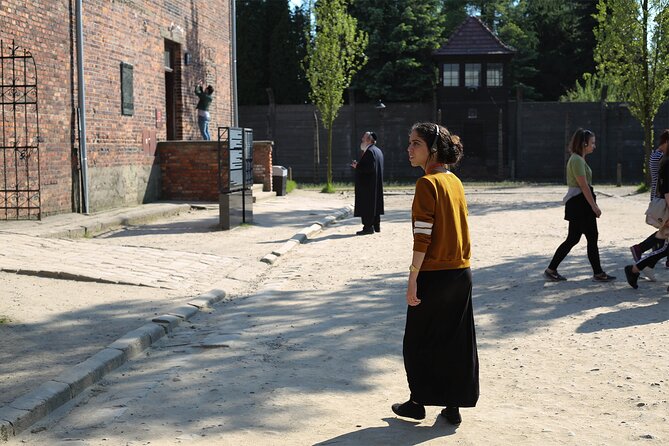
Birkenau is where the tour shifts from administrative context to the physical scale and horror of the camp system.
This stop includes ruins tied to the machinery of mass murder, including crematoria and gas chambers. The tour also covers the railway platform area, where transports arrived. Those locations are central because they show how victim processing was planned, repeated, and engineered.
You’ll also see other major remnants around the camp grounds. The guide is there to connect the World War II context to what the memorial preserves today. In other words, you’re not just looking at ruins. You’re getting a guided explanation of how this site fits into the broader Holocaust story.
Birkenau can feel overwhelming because it is large and exposed in places. A guided route with headsets matters more here than at many other attractions. You’re more likely to stay focused on the explanation instead of getting pulled in ten different directions.
Headsets, microphone clarity, and why the audio setup matters
This tour includes headset and voice reception. That’s a big deal at Auschwitz-Birkenau, where listening can be difficult even for people who try hard. Wind, crowds, and distance can wreck your ability to follow a guide’s English narration.
In a best-case scenario, the headset system makes the experience feel organized and clear. On top of that, the tour is listed with an English-speaking guide, so you’re not stuck trying to translate ideas in your head.
That said, there have also been issues reported with audio clarity and guide delivery, including cases where the microphone sounded poor or the start process was messy. It’s not something you can fully control as a traveler, but it does change how you approach the day. Plan to stay patient if there are short delays. And if you want a smooth listen, position yourself where you can hear the guide’s voice more easily during key moments.
How long is really enough for Auschwitz I and Birkenau?
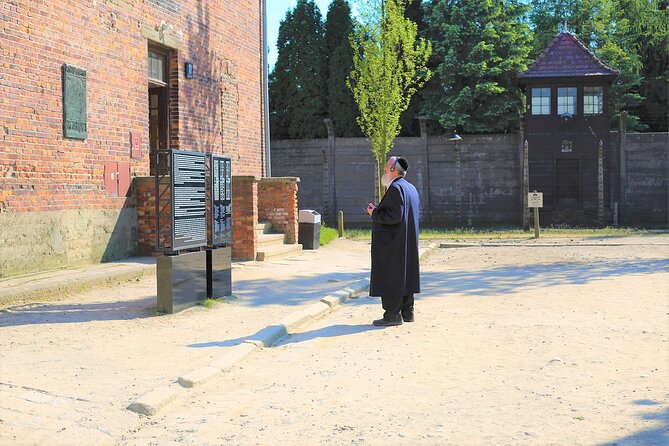
The tour is listed at about 4 hours total. That time includes two main stops, a break, and the transfer between Auschwitz I and Birkenau.
Stop 1 is around 2 hours at Auschwitz I with the guided portion and entrance included. Then you get a short break and the shuttle transfer. The second visit is around 1 hour 30 minutes at Auschwitz II-Birkenau with entrance included, and you continue with the guide from there.
The duration is a reasonable compromise. Auschwitz I needs explanation to be understood. Birkenau needs focus to be processed without rushing. A four-hour structure can work well if you stay mentally present and let the guide keep the pace.
The group size cap (up to 30) also matters. Larger groups tend to stretch the experience and can cause audio and viewing issues. A cap usually keeps the walking and listening manageable.
Price and value: what $32 buys you, and what you still handle yourself
At $32, this is positioned as value because it bundles multiple things together. You get the fast-track ticket, the guided tour, headsets, and entrance fees for the core sites.
However, you should also read the fine print on expectations. Air-conditioned vehicle is not included, and transport is listed as not included. At the same time, the itinerary describes a shuttle bus transfer between the two parts of the memorial. In practice, that usually means you’re not waiting on your own for every leg, but you may still be relying on shuttle operations rather than a private vehicle provided by the tour.
So here’s the honest way to judge the value: you’re paying mainly for guidance and entry efficiency, not for comfort perks like a private car. If you want a no-stress, no-planning day that still feels structured and educational, the price can make sense. If you’re the kind of traveler who likes flexibility and you are confident navigating entry yourself, you might compare options.
Getting the most out of this guided Auschwitz-Birkenau route
You’ll enjoy this tour most if you treat it like a guided lesson, not like a quick sightseeing stop.
Here’s how to do that during the day. Keep an ear open for the guide’s transitions, especially when the focus changes from Auschwitz I context to Birkenau’s physical remnants. Those transitions help your brain connect the dots.
Also, pay attention to the tour’s use of concrete details. The Rudolf Hess mention is an example of the guide anchoring what happened later, not just what prisoners endured. When you hear these specific points, it helps you understand why the museum is arranged the way it is and why certain areas matter to the story.
Finally, plan your patience around the start. The experience is sensitive and tightly scheduled. That means your best strategy is to arrive early enough to find the right people and avoid a last-minute scramble at the meeting point.
Should you book this Auschwitz-Birkenau fast-track tour?
I’d book it if you want a guided visit that covers both Auschwitz I and Auschwitz II-Birkenau with skip-the-line entry and headset support, and you’re okay with the reality that the day can run on strict timing.
I’d think twice if you know you struggle with meeting instructions or you often arrive late to tours. Some past problems reported here are exactly the kind that happen when the meeting point or start time details are missed. If you want a smoother day, confirm your pickup time in advance and build extra buffer into your arrival.
This is not a tour you take to fill a slot. It’s a serious visit, and a guided plan with headsets can make the difference between feeling lost and actually understanding what you’re seeing.
FAQ
What does the fast-track Auschwitz-Birkenau entry include?
It includes a skip-the-line entry ticket and a guided tour. Entrance tickets are included, along with headset and voice reception.
How long is the Auschwitz-Birkenau tour?
The duration is listed as approximately 4 hours.
Where is the meeting point for this tour?
The start meeting point is Miejsce Pamięci i Muzeum Auschwitz I Więźniów Oświęcimia 20, 32-603 Oświęcim, Poland.
Is there transport between Auschwitz I and Auschwitz II-Birkenau?
The tour plan includes a transfer by museum shuttle bus from the first site area to Birkenau.
Is air-conditioned transport included?
No. Air-conditioned vehicle is not included.
Is the tour guided in English?
Yes, the tour is listed with an English-speaking guide.
What should I do if I miss the scheduled start time?
The tour requires you to be at the meeting point at the start time, and the tour can be impacted if you arrive late. To avoid problems, double-check your confirmation message for the exact start details.
What is the cancellation policy?
You can cancel for a full refund up to 24 hours in advance. If you cancel less than 24 hours before the experience starts, the amount paid is not refunded.
Recently reviewed around Krakow
- Wawel Castle and Cathedral Guided Tour★ 4.6 · 44 reviews
- Walking Tour: Kazimierz, Jewish Quarter – 2-Hours of Magic!★ 4.7 · 35 reviews
- Wawel Castle and Cathedral Guided Tour★ 5.0 · 8 reviews
- Kraków Holocaust Tour★ 4.9 · 5 reviews
- Wadowice and Kalwaria: John Paul II Route★ 4.8 · 5 reviews
- VIP Club Entry and Booth Booking★ 5.0 · 4 reviews
- Walking Tour of Krakow: Old town – 2-Hours of Magic★ 4.7 · 5 reviews
- Krakow: Zakopane, Thermal Baths and Gorce Park Treetop Walk★ 5.0 · 3 reviews