
Reviewed · JEWISH QUARTER & HERITAGE TOURS
The Jewish Quarter – Walking Tour
Kazimierz, Krakow’s old Jewish district, makes history feel close, because you walk the same streets where daily life, worship, and tragedy all played out. I love how the tour connects big events to real places, from a 1400s synagogue-era building to the mikveh used for ritual cleansing. You also get to see how Poland once held the world’s Jewish population at a massive scale, then learn what changed later.
Another reason I like this tour is the way Zee guides you from viewpoint to viewpoint with clear storytelling, not vague facts. I also like that you cover Schindler’s List filming locations along the way, so the movie becomes a map you can actually walk. One drawback to plan for: the subject matter turns serious fast, and with a 2-hour walk you will move briskly between stops, so it is not the kind of tour where you hang out for a long time at each site.
Key Points to Know Before You Go
- Licensed guide Zee keeps the story grounded in what you are seeing on the street.
- Kazimierz in context shows how Jews and Christians lived side by side, not in separate timelines.
- Multiple synagogues and ritual sites let you understand Jewish community life beyond names and dates.
- WW2 memory stops include Holocaust remembrance and cemetery context.
- Schindler’s List filming spots help you connect film scenes to real geography.
Why Kazimierz Is More Than a Set of Sights
If you only know Krakow as a pretty old city, this tour challenges that shortcut. I like that it starts with a simple idea: in Krakow, you cannot really separate Jewish and Christian history. Kazimierz is often labeled as a Jewish district today, but the older story is about coexistence, daily contact, and shared urban life.
The guide also gives you scale. In the 16th century, around 75% of the world’s Jewish population lived in Poland. That is not a small detail. It explains why this part of Europe was such a central stage for Jewish life, learning, trade, and community institutions.
Then the tour brings you forward to the shock of the 20th century, where the city’s story changes in a way you cannot un-know. It is educational, but also emotional, because you are walking through memory.
More Jewish quarter and heritage tours to compare:
- Krakow: Schindler’s Factory & Ghetto Guided Tour
★ 4.7 · 1,694 reviews - Krakow: Jewish Quarter and Former Ghetto Tour
★ 4.9 · 1,441 reviews - Krakow: Bike Tour of Old Town, Jewish Quarter and the Ghetto
★ 4.9 · 1,155 reviews
Meeting in the Courtyard, Then Hitting Kazimierz’s Main Square
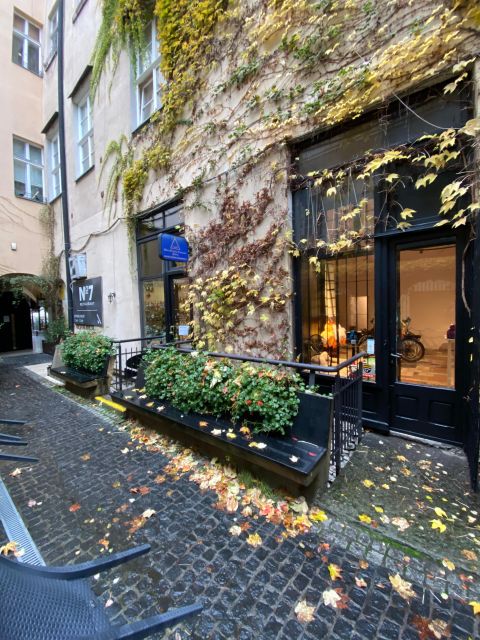
You start at Restaurant No7. Go into the building, then look for ZeeTour’s office in the courtyard, which is the second shop on the left.
Once you are gathered, you head straight into the heart of Kazimierz: Kazimierz’s Main Square. This is a smart opening stop, because squares tell you how a neighborhood functioned. Markets and movement happened here, and when communities grow, you usually see it first in the open public spaces.
From the start, Zee frames the area like a timeline you can walk. You are not just collecting landmarks. You are learning how people organized life around worship, community spaces, and neighboring cultures.
Practical note: this is a walking tour, so wear shoes you trust. Plan on being on your feet through the full 2 hours.
Miodowa Street and the City Walls of Kazimierz
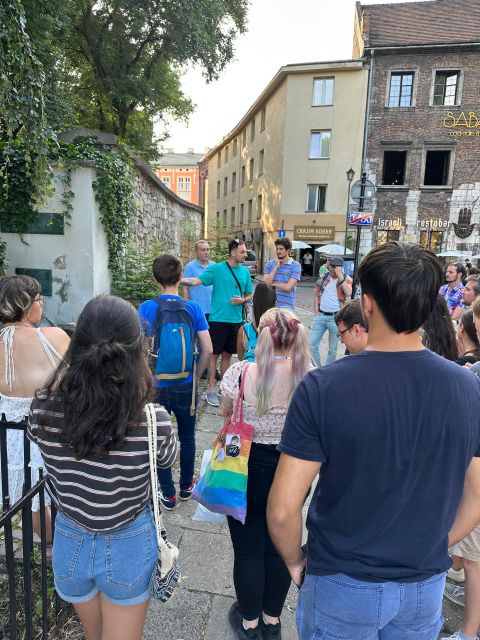
From the square, you move to Miodowa Street, known for the city walls of Kazimierz. Street walls matter more than you might think, because they shape movement, safety, and boundaries.
You can look at the physical line of the wall and understand why a neighborhood developed the way it did. Walls also help you grasp the tension between separation and community. Even when different groups lived near each other, the city still drew lines.
Zee’s explanations make the stone feel like part of the social system, not just old architecture.
Tempel, Kupa, and Izaak’s Synagogues: Places of Worship and Identity
Next comes a run of synagogue stops that really helps you understand what Jewish communal life looked like in Krakow. You will see the Tempel Synagogue, the Kupa Synagogue, and Izaak’s Synagogue.
Here is what I found most useful: the guide treats these buildings as more than religious monuments. You get the sense that they were also community anchors. When an institution can gather people for prayer, learning, and major moments in life, it becomes part of the neighborhood’s identity.
You also stop at the quarter’s oldest building from the 1400s. That stop adds gravity. When you are standing near a structure that long, it stops being abstract. The neighborhood did not just exist in a story. It existed in real time, long before modern borders and modern headlines.
More walking tours in Krakow:
- Old Town Krakow & Wawel Castle Walking Tour
★ 5.0 · 1,508 reviews - Creepy Krakow: 2-Hour City Walking Tour
★ 4.7 · 1,131 reviews - Krakow: The Old Town Walking Tour
★ 4.8 · 794 reviews - Krakow: Kazimierz Jewish Quarter Walking Tour
★ 4.8 · 571 reviews
The Mikveh and Szeroka Street: Ritual Life You Can Actually See
Then you hit the Mikveh, a ritual cleansing and bath house for females from the 16th century. This is one of those stops that changes how you think about history.
A mikveh is not a vague symbol. It is a practical institution tied to purity rituals, daily rhythms, and community rules. Even if you do not know much beforehand, the guide makes the purpose clear enough that you leave understanding the human routine behind the tradition.
After that, you walk through Szeroka Street, a key corridor of Kazimierz life. This stretch matters because it connects the religious side of community life to the street-level reality. People did not live only inside buildings. They lived between them.
Helena Rubinstein, the Nissenbaum Monument, and the Holocaust Remembered
As you continue, the tour balances places of faith with places of memory and individual story.
You will learn about Helena Rubinstein’s birth place, which adds a different kind of context. It reminds you that Jewish communities were not only part of wartime narratives. They also produced artists, entrepreneurs, and people who shaped culture and business.
Then comes the Nissenbaum Family Foundation monument and a statue of a man who tried to stop the Holocaust. These stops carry a strong emotional load, and Zee handles them carefully. What you should take from this section is not only the tragedy, but the idea that individuals mattered, even in systems built to crush people.
If you prefer light sightseeing, this is where the mood changes. If you are ready to learn and reflect, this is also where the tour becomes most meaningful.
Remuh Synagogue, the Jewish Cemetery, and the Weight of Place
No walking tour of this district feels complete without a pause for the Remuh Synagogue and the Jewish Cemetery. Zee uses this area to connect community continuity to what was interrupted.
Cemeteries are hard. They are personal, and they make time feel different. But that is the point. This is not history as trivia. It is history you can stand beside.
You also see more synagogue sites in this phase, including Popper’s Synagogue and the Old Synagogue. With multiple synagogues included, you start to see how varied Jewish religious life was, with different communities and traditions leaving physical traces across the same neighborhood.
Schindler’s List Filming Locations: How Film Scenes Become Real Geography
One of the headline features here is the number of Schindler’s List filming locations you visit. For me, this is one of the smartest ways to make a heavy story more spatial.
When you see movie locations in person, you stop thinking in subtitles and start thinking in streets. The buildings, corners, and sight lines become the explanation. It helps your brain build a map that supports understanding.
Just be ready for a strange mix of feelings. You might find yourself comparing what you remember from the film with what is in front of you today. Zee helps with that mental shift by tying each spot back to what happened there, and why the film team chose these places.
Price and Value for a 2-Hour Licensed Walking Tour
At $33 per person for 2 hours, this tour is priced like a value-focused city walk, not a premium museum day. What makes it feel worthwhile is that you are paying for something specific: licensed guiding services, in-depth context, and a route that strings together Jewish life, WWII history, and film locations into one guided experience.
What is not included matters too. Admission tickets are not included, and public transportation is not included. Since this is a walking tour, you may not need transit for much of it, but if any site on the route requires paid entry, you should be ready to handle that separately.
Also, the tour is English and live, so you can ask questions as you go. For a 2-hour format, that interactive element is where you usually get the most value.
Who This Tour Fits Best
This is a strong match if you want more than a casual walk through old streets. You will like it if you care about how neighborhoods worked, how communities organized themselves, and how wartime events reshaped everyday life.
It is also a good fit if you are a fan of historical film locations and want the real geography behind what you watched. And if you like guided context that ties multiple stops together, Zee’s style supports that.
If you are traveling with someone who only wants upbeat sights, you might need to talk through expectations first. The Holocaust remembrance and cemetery stops mean the emotional tone changes.
Should You Book the Jewish Quarter Walking Tour with ZeeTour?
I think you should book this tour if you want a guided way to understand Kazimierz as both a historical neighborhood and a place of memory. Zee’s approach, paired with the range of stops, makes the walk feel like a coherent story rather than a checklist.
Book it if you want licensed guidance and you care about seeing more than just the famous buildings. The mix of synagogues, the mikveh, Holocaust remembrance points, and Schindler’s List locations gives you a 2-hour overview that is grounded and practical for first-time visitors to Krakow’s Jewish Quarter.
If you are sensitive to heavy topics, go in with awareness. Bring the right mindset, take breaks if you need them, and let the guide set the pace.
FAQ
How long is the Jewish Quarter walking tour?
The tour lasts 2 hours.
How much does the tour cost?
It costs $33 per person.
Is there a live guide, and what language is the tour in?
Yes, it is a live tour with an English-speaking guide, and it includes licensed guides.
Where is the meeting point in Krakow?
Meet at Restaurant No7. Go into the building, and find ZeeTour’s office in the courtyard, in the second shop on the left.
What is included in the price?
The guiding service with licensed guides is included.
Are admission tickets or public transportation included?
No. Admission tickets and public transportation are not included.
Is the tour wheelchair accessible, and is there free cancellation?
Yes, the tour is wheelchair accessible. Free cancellation is available up to 24 hours in advance for a full refund.
Recently reviewed around Krakow
- 1 Hour Traditional Gondola Sightseeing Vistula River Cruise★ 4.5 · 18 reviews
- Krakow: Jewish Quarter Guided Walking Tour★ 4.8 · 119 reviews
- Tour to Wadowice: Hometown of Pope Saint John Paul II★ 4.6 · 12 reviews
- Schindler’s Factory Skip the Line Ticket & Guided Tour★ 4.0 · 5 reviews
- From Kraków; to Białka Thermal Baths private tour★ 5.0 · 5 reviews
- Krakow: Skip-the-Line Wawel Castle & Old Town Guided Tour★ 4.9 · 23 reviews
- Shooting Range Experience!★ 4.8 · 66 reviews
- Krakow: Auschwitz-Birkenau and Wieliczka Salt Mine Day Trip★ 4.7 · 84 reviews