
Reviewed · COMMUNISM & NOWA HUTA TOURS
Nowa Huta Steel Mill Administration Buildings and Shelters with local NGO
Nowa Huta is one of those rare places where the past still has physical walls. This visit to the Nowa Huta Steelworks administration buildings gets you into a complex built in the 1950s, plus underground bomb shelters tied to Cold War fears.
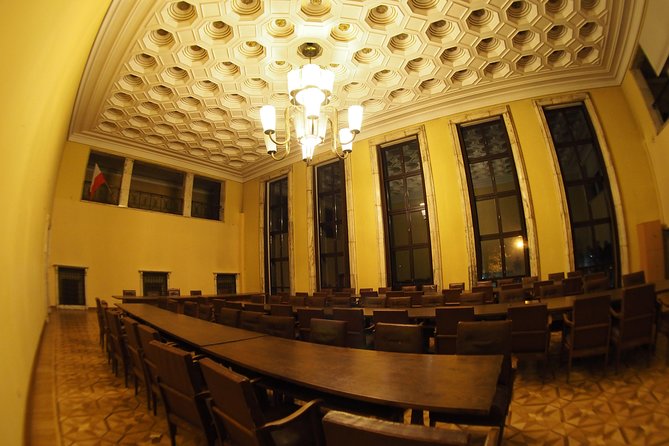
I especially love how the architecture tells a story, because the buildings show what communist planning wanted people to see and feel. I also like that the tour doesn’t stay purely visual, it includes historic steelworks radio tapes and the kind of room-by-room context you usually only get in a proper museum exhibition.
One thing to keep in mind: you are touring an older site that has been reworked for visitors by a local NGO. Some objects are preserved and organized as an exhibition rather than presented as a perfectly frozen snapshot of one exact moment in time, so the vibe is more “found-in-place” than “period-accurate set.”
Key reasons to book this Nowa Huta tour
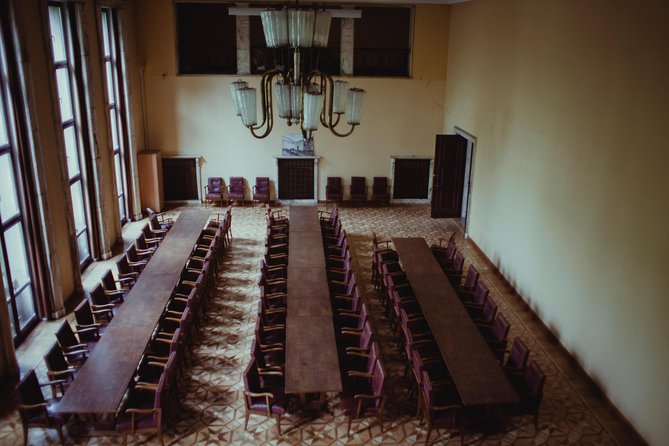
- Socialist Realist architecture you can walk through, not just read about
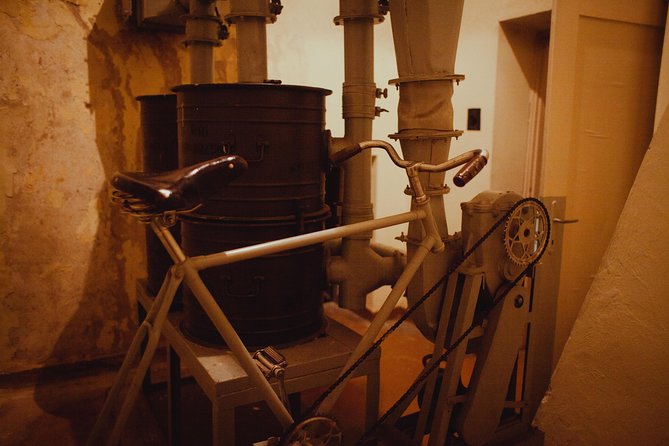
- Underground cold war shelter access, including the tunnels and bunker rooms
- Historic audio tapes from the steelworks radio station
- A small group experience with a maximum of 15 travelers
- A guided visit that mixes offices, artifacts, and workplace-era spaces like a worker’s theater
- Admission at the stop is free, with your ticket covering the guides and experience
Socialist Realist planning, up close at Nowa Huta
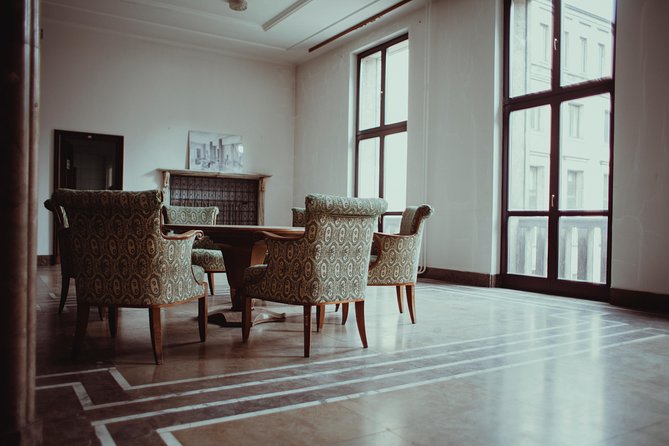
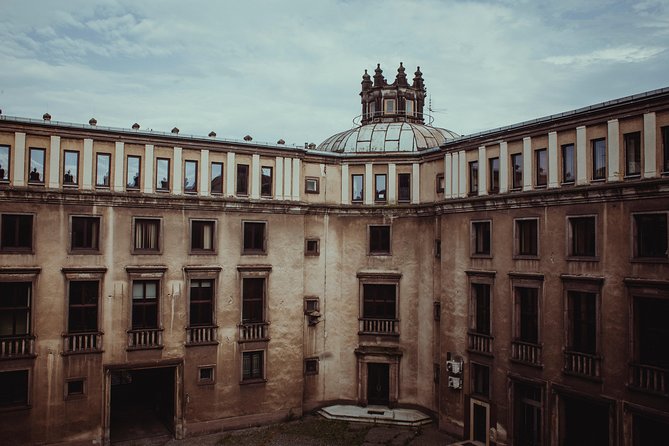
If you want Poland’s communist-era story in a way that you can feel in your body, Nowa Huta is a strong choice. This steelworks complex was designed with big ideas, and the administration buildings reflect that. They are classic Socialist Realist in style, built to communicate authority, permanence, and a sense of ordered life.
What I like for you is that the tour doesn’t treat architecture like decoration. You’ll get explanations for why spaces look the way they do, and how the layout connects to how the system expected workers to move through daily life. That framing matters, because you stop seeing a building as just “old” and start seeing it as purposeful.
The mood can also surprise people. Even if the site is not “museum polished,” it still feels like a working command center from a different era. Expect a sense of scale, with offices and meeting rooms that make you wonder what decisions were made here and what those decisions meant for ordinary people.
More Nowa Huta and communist-era tours to compare:
- Krakow: Nowa Huta Guided Tour in Vintage Car
★ 4.9 · 277 reviews - Legendary Private Nowa Huta Communism Tour with Crazy Guides
★ 5.0 · 262 reviews - Nowa Huta: Steelworks Administration Buildings/Shelters Tour
★ 4.9 · 160 reviews
Inside the Lenin Steelworks administration buildings: offices, artifacts, and why rooms matter
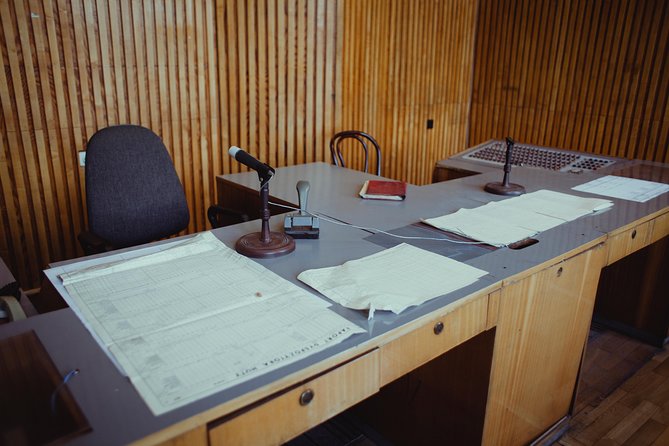
This is not a quick photo stop. You’ll spend time walking through the administrative buildings of the steelworks, including offices and rooms that preserve a strong sense of the site. The best part for me is that the tour guides the way you look at objects, not just where you walk.
You can expect a mix of material on display, including items and details that help you connect the building’s purpose to steelworks life. One detail that comes through clearly is that the collection you see reflects multiple periods. The building served for a long time, into later decades, so the exhibits and artifacts can come from different eras rather than one single year.
That can be a plus. It gives you a broader view of how the place functioned across time. It’s also a fair warning: if you are hunting for one strict time capsule moment, you might find that the NGO’s presentation organizes items thematically rather than showing the building exactly as it was on day one of the 1950s.
Practical tip: wear shoes you trust. You will be moving through interior spaces and also into underground areas later. Comfortable footwear makes the whole experience less stressful and more enjoyable.
The underground cold war shelter: a bunker tour that changes your sense of time
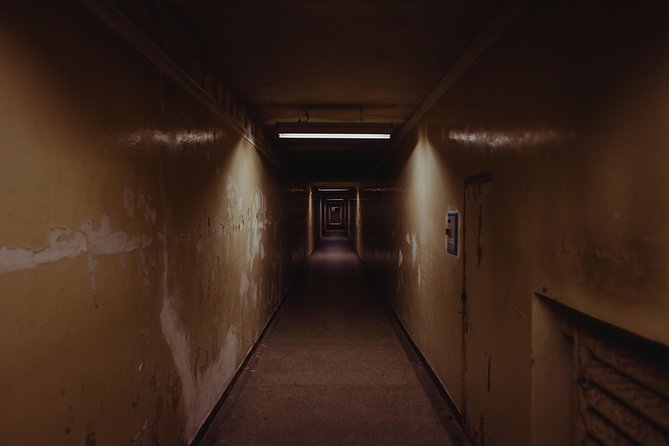
The underground portion is one of the main reasons this tour lands so high with visitors. You’ll get access to underground bomb shelters connected to the Cold War era, including tunnels and bunker rooms that are genuinely memorable.
I like this stop because it reframes the whole steelworks story. Above ground you see planning, buildings, and work. Below ground you see fear and preparation, the idea that power and industry also needed protection. Even without dramatic special effects, the setting does the work. You’re in a physical reminder that threats were taken seriously enough to build for them underground.
There is also a very human scale here. The spaces feel functional, built for survival, not comfort. That makes the experience less like sightseeing and more like understanding how people planned for the worst.
One consideration: the tour lists a moderate physical fitness level, which is usually a sign that you should be ready for stairs, uneven surfaces, and underground walking. If you have mobility issues, it’s worth thinking twice and planning accordingly.
Worker’s theater and workplace institutions: it was not just steel
Steelworks complexes were more than factories. They were mini cities with roles, schedules, and social spaces meant to support day-to-day life. This tour includes the idea of those workplace institutions, including access to a worker’s theater.
This matters because it shows how communist systems tried to shape culture and community. It’s not only about production output, it’s about control of what people did with their time and how they experienced events inside the same industrial ecosystem where they worked.
The theater also adds a different texture to the visit. It breaks up the “administration” feel, so you’re not only staring at offices and paperwork spaces. Instead, you get a sense of life beyond the desk, a reminder that a steelworks town needed entertainment and public gatherings, even during tense times.
Another way to spend a day around Krakow:
- From Krakow: Auschwitz-Birkenau Guided Tour & Hotel Pickup
★ 4.5 · 33,358 reviews - From Krakow: Auschwitz-Birkenau Guided Tour & Hotel Pickup
★ 4.5 · 29,340 reviews - Krakow: Auschwitz Guided Tour with Optional Hotel Pickup
★ 4.5 · 15,280 reviews - Krakow–Zakopane: Cable Car, Chocholow Baths, Cheese & Vodka
★ 5.0 · 10,720 reviews
Historic tapes from the steelworks radio station: hearing the system speak
One of the most striking elements included in this experience is historic tapes from the steelworks radio station. That audio component shifts the tour from what you see to what you hear.
For me, hearing the “voice” of an industrial world makes the story more real. It puts you inside the rhythms of the time, at least as preserved through tapes. It also helps you understand how information traveled through the steelworks and how the institution presented itself to workers.
This is especially valuable on a tour like this, because the buildings are the big star, but the audio gives you context. It’s easier to imagine what daily life sounded like when you have something tangible to listen to, even if it is an archive recording.
Small-group tours work well here. When you can ask questions and get explanations tailored to what you just heard, the audio becomes a learning tool instead of a background extra.
Duration, meeting point, and getting there at Ujastek 1
Plan on about 1 hour 30 minutes to 2 hours. That is long enough to feel like you actually saw a place, but not so long that you lose the thread. The tour’s pacing also helps if you like history with physical context, because you move from above-ground rooms into the underground setting without rushing.
You meet at Ujastek 1, 31-752 Kraków, Poland, and the tour ends at the same place. It’s described as opposite the site of the street, so give yourself a few extra minutes to orient yourself on arrival. Also note that the meeting area is near public transportation, which is great for day-of logistics in Kraków.
The tour uses a mobile ticket, so have your confirmation ready on your phone. You should also know that hotel pickup and drop-off are not included, so plan to get yourself there and back.
Group size is capped at 15 travelers, which is one of the reasons the guides can keep the experience engaging rather than turning it into a lecture line.
What you get for $27.63: value beyond the price tag
At $27.63 per person, this is priced in a way that makes sense for a guided, small-group visit that includes underground access and audio materials. You are not paying for a generic museum ticket. You’re paying for on-the-ground explanation and interpretation inside spaces that are hard to replicate elsewhere.
Your ticket includes:
- a local guide
- a professional guide
And at least at the main stop, the admission ticket is free, meaning the cost is focused on guiding and the experience itself rather than a separate entry fee.
You will also likely see optional photo-related add-ons, since souvenir photo services may be available to purchase. If you care about capturing the underground rooms, it’s worth asking the guide on the spot about what’s possible for photography and what the onsite options are.
If you’re deciding between this and another Kraków history visit, think about the kind of memory you want. This one gives you a place-based story. You’ll remember the feel of the building and the switch to underground rooms, not just facts on paper.
Language, guides, and how to make the most of your questions
The tour is offered in English. That matters because this kind of architecture and Cold War context can get technical fast, and clear explanation helps you connect details to the bigger picture.
Guides can make or break a complex site. In past groups, visitors have highlighted guides such as Mateusz for being enthusiastic and organized in how he presented the story. That kind of match can really help, especially if you are curious but not sure what questions to ask.
My advice: come with one goal. For example, you might want to understand why buildings have that particular style, or you might want help connecting the shelter to the broader steelworks system. When your questions tie to your goal, the answers tend to land better.
Also remember: the narration here focuses heavily on the communist perspective. That can be what you want. If you prefer a more balanced industrial comparison to Western steelworks from the same period, you may need to bring your own curiosity and do a little follow-up reading later.
Who should go, and who might want a different tour
This tour is ideal if you like:
- architecture with a political story tied to real places
- industrial history that includes daily-life institutions, not only factories
- the Cold War theme in a physical setting
It also fits people who want something different from the standard Kraków sightseeing circuit. Nowa Huta can feel like a detour that turns into a highlight, because you’re seeing a side of Poland that feels separate from the historic center.
Who might skip it? If you want an experience that is purely polished like a museum, you might find the site more raw and “organized for visitors” than perfectly preserved. Also, if you dislike underground spaces, the shelter portion is a core element and may not be your thing.
Lastly, keep that moderate physical fitness note in mind. You don’t need to be an athlete, but you should be comfortable with walking and underground conditions.
Should you book the Nowa Huta administration buildings and shelter tour?
Yes, I think you should book it if you want a hands-on lesson in Poland’s communist past that you can see and hear, not just read. The combination of Socialist Realist buildings, underground Cold War shelters, and historic audio gives you a balanced package of visuals plus context.
Book it especially if you value a small group and guides who can explain why rooms look the way they do. At this price, with professional guiding and admission handled at the stop, it’s strong value for a very specific experience you can’t easily recreate on your own.
Skip it if you only want a quick overview, or if you strongly prefer fully restored, museum-like spaces. Also reconsider if underground areas are a dealbreaker.
If your goal is to understand how an industrial political system built its world, this is one of the better ways to do it in Kraków.
FAQ
Where is the tour meeting point?
You meet at Ujastek 1, 31-752 Kraków, Poland. The tour also ends at the same meeting point.
How long does the tour take?
The tour lasts about 1 hour 30 minutes to 2 hours.
What does it cost?
The price is $27.63 per person.
Is the tour offered in English?
Yes, the tour is offered in English.
How many people are in a group?
The experience has a maximum of 15 travelers.
What’s included in the tour?
It includes a local guide and a professional guide.
Is hotel pickup and drop-off included?
No, hotel pickup and drop-off are not included.
Do children need to be accompanied by an adult?
Yes, children must be accompanied by an adult.
Is free cancellation available?
Yes. You can cancel for free up to 24 hours in advance for a full refund. If you cancel less than 24 hours before the start time, the amount paid is not refunded.
Recently reviewed around Krakow
- Wawel Castle and Cathedral Guided Tour★ 4.6 · 44 reviews
- Walking Tour: Kazimierz, Jewish Quarter – 2-Hours of Magic!★ 4.7 · 35 reviews
- Wawel Castle and Cathedral Guided Tour★ 5.0 · 8 reviews
- Kraków Holocaust Tour★ 4.9 · 5 reviews
- Wadowice and Kalwaria: John Paul II Route★ 4.8 · 5 reviews
- VIP Club Entry and Booth Booking★ 5.0 · 4 reviews
- Walking Tour of Krakow: Old town – 2-Hours of Magic★ 4.7 · 5 reviews
- Krakow: Zakopane, Thermal Baths and Gorce Park Treetop Walk★ 5.0 · 3 reviews