
Reviewed · AUSCHWITZ-BIRKENAU MEMORIAL VISITS
Krakow to Auschwitz Birkenau Guided Tour with Ticket and Transfer
This tour is interesting because it tackles one of the hardest parts of visiting Auschwitz-Birkenau from Krakow, the logistics. You get hotel pickup and drop-off plus a professional guide that helps you make sense of two massive sites in one day.
I especially like the setup for hearing and focus, the headset lets you follow the guide without leaning in. And because the group size is capped at 30, the day stays manageable.
One big consideration is that the visit times can shift, and some people report long waiting outside the museum gates when ticket flow does not go the way the tour promises. So you want a calm mindset and weather-ready clothing.
Key things to know before you go
- Hotel pickup in Krakow helps you avoid tiring public transport with a long day ahead
- Auschwitz I in about 2 hours gives you structured context instead of wandering
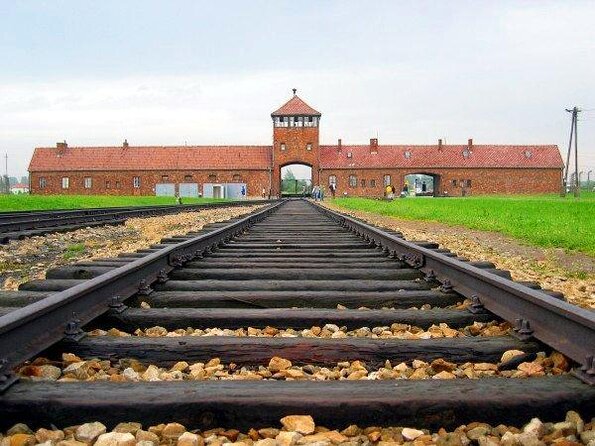
- Birkenau in about 1 hour keeps momentum, but it is mostly outdoors
- Tickets are included on paper, but real-world entry timing can still vary
- Max 30 travelers and headsets improve your ability to actually hear the guide
- Luggage limits are strict (30x20x10 cm), so pack light
From Krakow to Auschwitz: what the day feels like in real time
Krakow to Auschwitz-Birkenau is about 65 km, and you should plan on roughly 1 hour 30 minutes in each direction. That means the day is built around one thing: getting you there early enough to make the most of both sites without turning the visit into a blur.
The tour runs about 8 to 12 hours overall, which is a wide range. The difference usually comes from museum timing, traffic, and how the operator schedules the group so you can reach Auschwitz I, then transfer to Birkenau II.
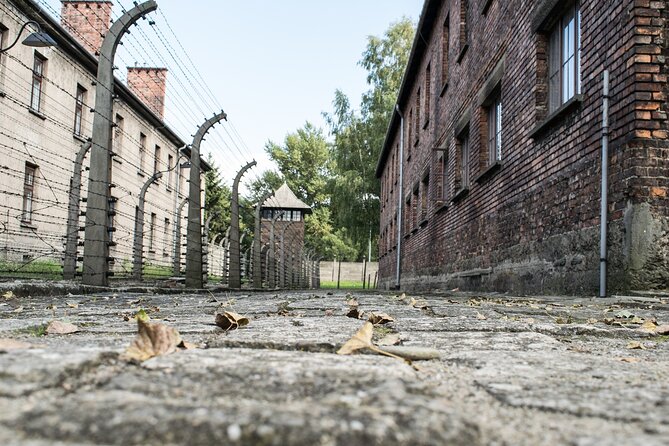
You’ll also spend a lot of time outdoors, the plan is that up to 70% of the day is outside, especially at Birkenau. That matters because Auschwitz isn’t a quick indoor museum stop, it’s walking through open areas and remembering what happened in places that do not give you much cover.
More Auschwitz-Birkenau memorial visits from Krakow:
- From Krakow: Auschwitz-Birkenau Guided Tour & Hotel Pickup
★ 4.5 · 33,358 reviews - From Krakow: Auschwitz-Birkenau Guided Tour & Hotel Pickup
★ 4.5 · 29,340 reviews - Krakow: Auschwitz Guided Tour with Optional Hotel Pickup
★ 4.5 · 15,280 reviews
Hotel pickup in Krakow Old Town: convenient, but watch the details
Hotel pickup is a big reason people book a package like this. Instead of wrestling with buses and schedules, you hand off the planning to a driver and focus on the visit.
But Krakow’s Old Town has traffic restrictions, so some hotels cannot be reached directly. If a Mercedes Sprinter cannot enter a street, they will move you to the closest possible pickup point. That is normal in old city centers, just don’t assume your exact hotel door will work.
Pickup time is also not guaranteed. You can be picked up anywhere between 5:30am and 2:30pm depending on museum availability. The operator says they will inform you of the final pickup time at least 12 hours before pickup so you can adjust your day. Still, museum operations can force changes, and Auschwitz Museum reserves the right to alter visiting time due to occupied months and scheduling demands.
If you choose an early departure option, you may face a long wait before the museum opens. The tour notes waiting of 2 to 4 hours is possible in early time slots. That’s not the kind of surprise you want if you planned breakfast, coffee, and comfort right up until the gate.
Auschwitz I: how 2 hours with a guide makes the site click
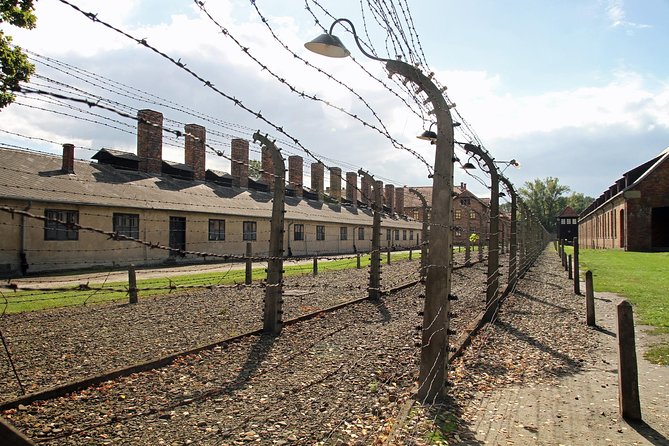
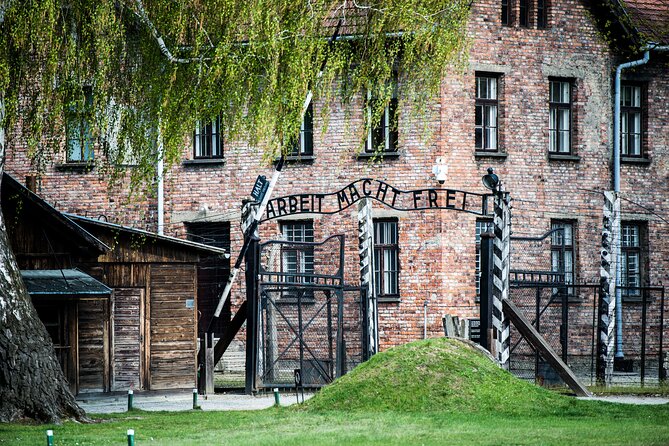
The first stop is Panstwowe Muzeum Auschwitz-Birkenau, Auschwitz I. The visit time here is about 2 hours with the guide. Two hours sounds short until you’re standing in a place where every room and corridor has a story attached to it.
This is where the headset and group format really help. You are not meant to keep your own pace, the tour explicitly warns that keeping your own sightseeing pace isn’t possible because there are hundreds of people each day. Instead, you follow the guide’s route so the information comes in a logical order rather than as disconnected facts.
You also get tickets included for this part, and the tour includes equipment so you can hear clearly. In practice, that means you spend more time looking at what the guide points out and less time trying to catch words in a noisy environment.
A key practical note: you must provide full participant names to enter Auschwitz, and everyone has to bring ID. That sounds bureaucratic, but at Auschwitz it is the kind of rule that can prevent you from walking in, even if you already paid.
Birkenau II: the one-hour contrast and why clothing matters
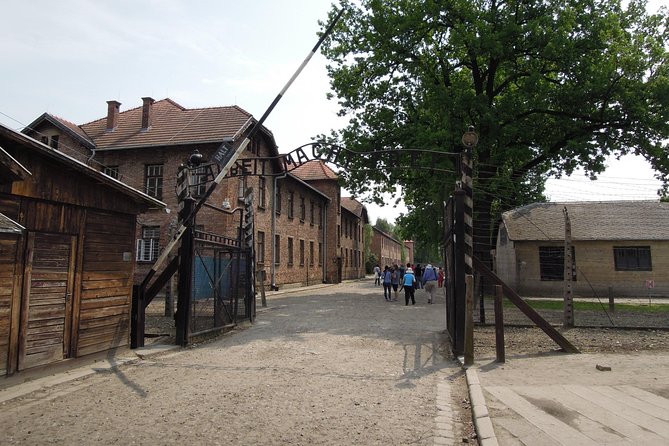
After Auschwitz I, you get a short break, about 10 minutes, then you transfer by bus to Birkenau II. The Birkenau visit is about 1 hour with the same guide, again with tickets included.
Birkenau is physically different from Auschwitz I. It is more open, more exposed, and it often feels colder even when the weather report says it should not. Since the tour plans for up to 70% outdoors overall, you should treat warm layers as part of your packing list, not an optional extra.
Bring weather-appropriate clothing because you might be standing around waiting for gates and entry flow. The tour also allows luggage only up to 30x20x10 cm, roughly A4 size. If you bring something larger, you may be able to leave it in a locked bus parked next to the museum, with the driver overseeing it while you’re away.
This is also where the pace feels most intense. An hour at Birkenau is enough for the big, essential areas, but you should understand what that implies: you will not “linger” the way you might in a normal museum. The structure keeps the day from running long, and you leave with context rather than fragments.
A few more Krakow tours worth comparing
- Krakow to Auschwitz Birkenau Guided Tour with Transfer and Ticket
★ 5.0 · 8,197 reviews - Krakow: Wieliczka Salt Mine Fast-Track Ticket & Guided Tour
★ 4.5 · 5,872 reviews - Auschwitz Birkenau Guided Tour with Ticket Hotel Pickup Small Van
★ 5.0 · 4,769 reviews - From Krakow: Wieliczka Salt Mine Tour & Skip the Line Ticket
★ 4.4 · 3,925 reviews
The skip-the-line promise, and what you should assume instead
The tour marketing says you get tickets included and no queuing or waiting time. The idea is that your entry should be smoother than a DIY visit, especially when thousands of people flood the museum daily.
Here’s the practical reality you should plan for: museum entry flow can still affect how quickly your group moves. The tour pickup time can change, and the timing can be influenced by museum scheduling. So even if tickets are included, you might still face waiting at the museum area, especially in cold weather.
My advice is simple: don’t treat any line-skipping claim as a guarantee that you will never wait. Instead, assume you will need patience at some point and dress for it. If you absolutely cannot tolerate waiting outdoors, then you should strongly consider buying official museum tickets yourself in advance and building your day around a reserved entry slot.
Transport and group size: the small things that change your comfort level
The transfer is by air-conditioned minivan, and the tour has a maximum of 30 travelers. That matters more than you might think. A group that large can still feel crowded, but it is small enough that your guide and logistics team can manage the group without total chaos.
The tour also includes headsets, which is not a luxury in a place like this. When you cannot hear, you miss details, and missing details is one of the easiest ways to feel like you “didn’t get it.” With headsets, you spend less energy straining to hear and more energy on paying attention.
You do not have full freedom of pacing. The tour is built to keep everyone moving. That’s not a bad thing here, it’s how you prevent the day from turning into an uneven experience where some people see everything and others feel lost.
Timing and meals: what you can do before you’re stuck waiting
Food and drinks are not included. So you need to plan meals yourself. Since the pickup window can start very early, you should eat before you go if you can, or at least bring simple, non-messy snacks.
The tour description does not promise a meal stop, and you might be outdoors for long stretches. In early time slots, that is where people run into problems, cold plus empty stomach plus long waiting equals a miserable experience long before you even reach the exhibits.
If you are sensitive to cold or have mobility limits, meal planning becomes even more important because you might not get chances to step away when the group is waiting.
Practical rules you must follow, or entry can fail
Auschwitz has very clear requirements, and this tour repeats the key ones you must handle correctly:
- You must provide full names of all participants to the tour provider, or you might not be allowed to enter.
- Every visitor has to bring ID for verification.
- Children must be accompanied by an adult.
- A valid student ID allows a youth discount, if you qualify.
- Luggage is limited to 30x20x10 cm, and larger items can be left in a locked bus by the museum area.
Also, because you are outdoors a lot, packing “comfort” is part of respecting the place. You do not need to bring anything dramatic, just warm layers, gloves if you use them, and shoes that can handle walking on uneven ground.
Price and value: what you’re really paying for
This type of tour usually costs more than you expect, and for one reason: you are paying for logistics, not just the museum entry. The package includes hotel pickup and drop-off, transportation, a guide, and headsets, plus tickets on the operator’s side.
One visitor shared a comparison that a museum guided tour can be much cheaper when booked directly. Their point was not that this tour lacks value, it was that the premium can be significant because you are essentially buying a transport-heavy day designed around timing.
So here’s how I’d judge value for you:
- If you want door-to-door pickup and a guide to manage the route and context, this can feel worth it.
- If you mainly want flexibility and minimal waiting, you might get better control by booking official museum entry yourself and arranging transport separately.
Who this Auschwitz-Birkenau day trip suits best
This tour fits best if you:
- Want a guided experience that keeps the story connected across Auschwitz I and Birkenau II
- Prefer a shared group format with headsets so you do not miss key explanations
- Would rather avoid long DIY transit planning from Krakow
It is less ideal if you:
- Need a perfectly fixed schedule with no early-morning surprises
- Cannot stand outdoors for long periods, even with layers
- Want full freedom to linger at specific points without group pace
If you are traveling as a couple, you may still feel like the group pace is moving fast, but at least the structure helps. If you are traveling solo, you can still benefit from the guide and headset, and the logistics can reduce stress in a day that already carries emotional weight.
Should you book this Krakow to Auschwitz package
I think you should book it only if you want the built-in structure, pickup convenience, and a guided route across both sites. The guide format, headsets, and capped group size are real advantages.
But if your number one priority is avoiding any chance of waiting outdoors, then treat the skip-the-line promise as a starting point, not a certainty. If you want maximum control, consider booking official museum entry directly and arranging your transport to match your own timetable.
If you do book, pack for cold, plan for time flexibility, and make sure your full names and ID details are correct before you travel. That one bit of prep can save your whole day.
Recently reviewed around Krakow
- Krakow: City Golf Cart Tour and Schindler’s Factory Museum★ 5.0 · 4 reviews
- Krakow: City Sightseeing Tour by Shared or Private Golf Cart★ 4.4 · 21 reviews
- Krakow beer review with a local guide★ 5.0 · 4 reviews
- Kraków: Romantic Candlelight Chopin Piano Concert★ 4.9 · 8 reviews
- From Krakow: Chocholow Hot Springs Evening or Daytime Ticket★ 4.7 · 72 reviews
- From Krakow: Zakopane, Tatra Mountains & Thermal Baths Tour★ 4.9 · 52 reviews
- Kraków: VIP Candlelight Concert The Music of Fryderyk Chopin★ 4.8 · 8 reviews
- Krakow: Bottomless Brunch with 3-Course Meal and Drinks★ 3.8 · 30 reviews