
Reviewed · SCHINDLER'S FACTORY TOURS
Krakow Schindler’s Factory & Ghetto & Plaszow Camp Guided Tour
What makes this Krakow tour interesting is that it strings together three major wartime sites into one clear, guided story, starting at Schindler’s Enamel Factory and ending at Plaszow. I like that the factory museum is not a simple biography stop, it is built around life in Krakow under Nazi occupation from 1939 to 1945. I also like the small-group size, advertised as capped at 15 people, which helps the guide keep the details understandable.
One possible drawback: it is a heavy, serious day, and it also adds up physically. You’re in motion for about 5 hours, with two shorter ghetto-area stops and a longer concentration camp visit, so comfortable shoes are not optional.
Key things to know before you go
- Schindler’s museum is about occupied Krakow, not Oskar Schindler’s personal story
- A 12-metre stretch of the original ghetto wall gives you a real sense of scale
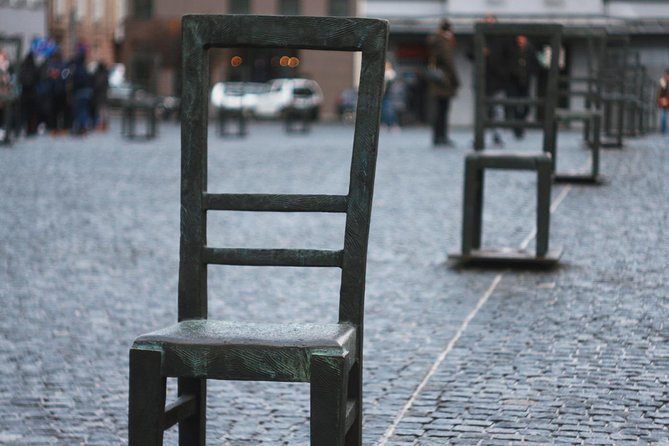
- Ghetto Heroes Square’s cast-iron chair monument represents property and belongings after the ghetto was liquidated
- Plaszow combines the timeline and the function of forced labor as the Nazis expanded it into a concentration camp
- Small group format (15-person cap in the highlights, up to 25 listed as maximum) keeps the pacing workable
- One museum ticket is included, but ghetto-area admission tickets are not included for the two short stops
Schindler’s Enamel Factory: the occupied-Krakow museum you want first
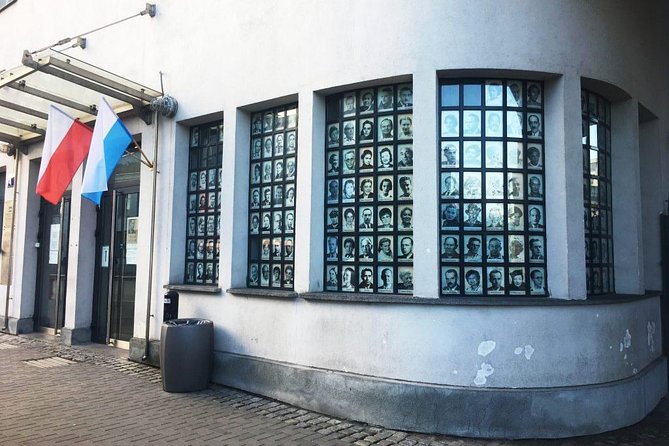
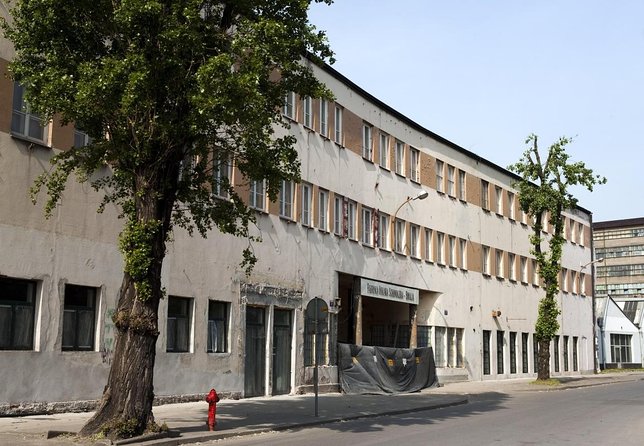
This is a smart first stop because it frames what you’re going to see next. The Fabryka Emalia Oskara Schindlera, on Lipowa 4, is one of Krakow’s most important and most visited museums, and it is part of the Historical Museum of Krakow. Here, you are not doing a “great man” museum. The main exhibition is about Krakow under Nazi occupation, 1939 to 1945, and it focuses on how life changed for the people of the city.
That matters. If you start with a biography-style museum, you can accidentally skip the bigger picture of how the Nazis operated day to day. Starting with the occupation context helps you understand why the ghetto and Plaszow exist in the first place, and why deportations were not a random event. They were a planned, system-level policy.
You’ll spend about 1 hour 30 minutes here. The tour includes your entrance ticket to this museum, so you are not burning time at the door. Since the whole day runs around 5 hours total, getting this stop out of the way early is a practical win.
A quick reality check: the content is serious. This is not a “light history” museum. Go in expecting to absorb a lot, and let your guide do what guides do best, turning a hard timeline into something you can actually follow.
More Schindler's Factory tours to compare:
- Krakow: Oskar Schindler’s Factory Entry Ticket & Guided Tour
★ 4.2 · 3,793 reviews - Krakow: Schindler’s Factory Tour with Entrance Ticket
★ 4.5 · 3,182 reviews - Krakow: Schindler’s Factory Skip-the-Line Ticket
★ 4.4 · 3,105 reviews
Ghetto Wall Fragment and Ghetto Heroes Square: scale, silence, and symbols
After Schindler’s Factory, the tour shifts from a museum into open air spaces that still carry the imprint of the ghetto.
First comes the Ghetto Wall Fragment, a 12-metre stretch of the original wall. It is short, but that’s the point. Real history often survives in small pieces. This is one of the most prominent remnants of the ghetto, and in 1983 a commemorative plaque was installed with a message in Hebrew and Polish that honors the people who lived, suffered, and died at the hands of German torturers, and notes that from here they began their final journey to death camps.
Even though this stop is only about 15 minutes, it is worth treating like a pause. Your guide’s job here is to help you read what you’re seeing. Without that context, a wall fragment can feel like just another old stone bit in a city. With context, it becomes a measurable reminder of how confined and engineered daily life was.
Next is Plac Bohaterow Getta, Ghetto Heroes Square, in the Podgórze district. During 1941 to 1943, this area was inside the ghetto. It was a gathering point for the Jewish population before transports to concentration camps. Today, the monument can be visually surprising: several dozen cast-iron chairs stand individually across the square. They are meant to symbolize property and belongings scattered after the liquidation of the ghetto.
That chair detail is the kind of thing that sticks in your memory. It’s not an abstract memorial. It’s a direct stand-in for everyday life items that were taken, lost, or seized. Your guide can help you connect the monument to the human story, rather than letting it turn into a photo-op scene.
This stop is also around 15 minutes, and admission tickets are not included for it. Practically speaking, that means you are mostly looking at the square and the memorial from outside, rather than sitting in a timed museum space.
Plaszow Concentration Camp: forced labor sites and the machinery of deportation
Plaszow is the emotional and historical heavyweight of the tour. You’ll spend about 1 hour 30 minutes here, and admission is free.
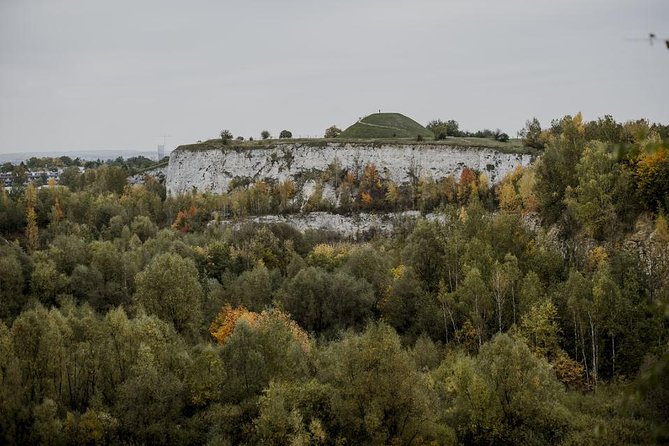
This camp did not start as a static entity. It evolved. Plaszow was a Nazi concentration camp in the southern suburbs of Krakow, founded shortly after the German invasion of Poland. It opened in 1940 as a forced labor camp plan, then expanded in 1941 and was converted into a concentration camp. From October 28, 1942, deportations of Jews from the Krakow ghetto began.
That timeline is important because it helps you understand what your senses will pick up on: the camp is not just about one moment. It is about an expanding system. It was known as a camp supplying military factories and a quarry with labor. In other words, forced labor was not only punishment or terror. It was also a tool to keep the Nazi war machine running.
If you have visited Auschwitz or watched a film that focuses on the bigger Nazi system, this stop can add a crucial layer. The Krakow area experience shows how similar policies played out in different places, with local details you might not expect. A good guide helps you connect the dots without collapsing everything into one generic “Holocaust story.”
One more practical note from a very common reality of this topic: the walking can feel long. Plaszow is not a quick stop you can mentally skim. Build in slower breathing moments. Wear supportive shoes and plan to keep your pace steady.
Price and logistics: what $76.35 gets you in real time
The price is $76.35 per person for about 5 hours. For this kind of subject, I consider that fair value when the day is structured well.
Here’s what you get for your money:
- A professional guide
- Entrance ticket to the Schindler’s Factory Museum
Not included:
- Tram tickets (listed at 4 PLN)
There’s also a mention that the tour is near public transportation, and the start and end points are in different parts of Krakow. That matters because you might not want to rely on a simple backtrack walk. You’ll meet at Lipowa 4, 32-051 Kraków, and finish at Henryka Kamieńskiego 57, 30-644 Kraków. Plan your return route like you’re finishing at a different neighborhood, because you are.
Small-group size is another value factor. The highlights say it’s capped at 15 travelers, and the provided maximum is listed as 25. Either way, you are not stuck in a giant crowd where the guide talks at you. With these sites, understanding beats speed. A smaller group helps you keep the timeline clear.
Also, booking further ahead helps. The average booking window listed here is 103 days. This is one of those tours that sells out, so earlier planning saves disappointment.
More Jewish quarter and heritage tours to compare:
- Krakow: Schindler’s Factory & Ghetto Guided Tour
★ 4.7 · 1,694 reviews - Krakow: Jewish Quarter and Former Ghetto Tour
★ 4.9 · 1,441 reviews - Krakow: Bike Tour of Old Town, Jewish Quarter and the Ghetto
★ 4.9 · 1,155 reviews - Krakow: Kazimierz Jewish Quarter Walking Tour
★ 4.8 · 571 reviews
How the guided format helps you make sense of a hard timeline
A big reason to choose a guided version is simple: the geography and timeline can tangle in your head if you try to do it alone. In Krakow, these sites are close enough to combine, but each one tells a different slice of the story. The guide acts like the glue.
In practice, you benefit from three things:
- You get the context at each stop, so you know what you are looking at and why it matters.
- You stay oriented. WWII history here is chronological and also thematic, and a guide keeps it from turning into random facts.
- You can ask questions when something feels unclear. With heavy topics, that can be the difference between feeling confused and actually understanding.
The pacing is also part of the value. Your time is split between a structured museum visit, two short exterior stops tied to ghetto memory, and then a longer concentration camp segment. That design helps you avoid the classic mistake of doing only one site deeply, or rushing through everything quickly.
One more practical tip: treat this as a half-day commitment, not a casual stroll. Even with short stops, the topic is intense and the walking adds up. If you are thinking of stacking multiple WWII related tours on the same day, I would keep your schedule realistic. This one can already feel like a full day on your feet.
Who should book this Schindler’s Factory and Plaszow tour
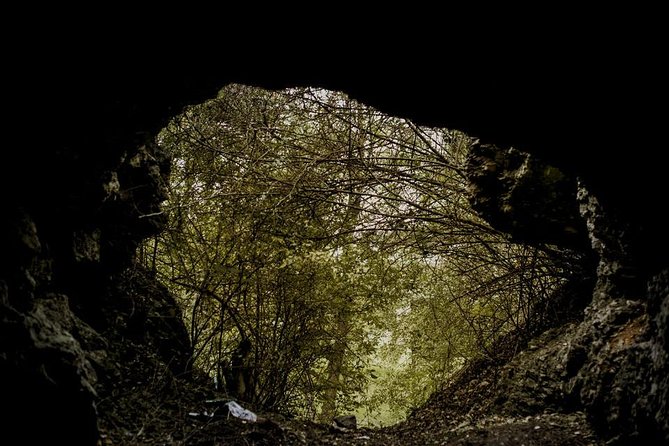
Book this if you want a guided way to understand Krakow under Nazi occupation, starting with a museum that explains the citywide context and then moving into the ghetto sites and the Plaszow camp grounds.
You’ll probably be especially glad you booked if:
- You like history with a clear timeline, not just scattered monuments
- You plan to see more than one Holocaust-related site in Poland and want Krakow’s role to make sense
- You prefer small-group learning instead of a free-for-all audio-guide experience
- You want a professional guide to translate difficult context into something you can hold in your head
If you are short on time, or you expect a light day, this is not a good fit. The subject is brutal, and even though the tour is only about 5 hours, it can leave you mentally tired. Also, because it ends at a different address than where you meet, plan your evening around that.
Should you book it?
Yes, if your goal is understanding. This tour links Schindler’s Factory Museum, the Krakow ghetto memorial points, and Plaszow into a single guided narrative, and it does so in a way that keeps you from getting lost in facts. The included museum ticket and the small-group format also make it feel like solid value for your time.
Skip it only if you are uncomfortable with heavy, serious content, or if you want a totally low-effort day with minimal walking. If you can handle the topic and you wear good shoes, this is one of the most practical ways to connect Krakow’s wartime story across multiple sites.
FAQ
How long is the Krakow Schindler’s Factory, Ghetto, and Plaszow guided tour?
The tour lasts about 5 hours.
What is the price per person?
The price is $76.35 per person.
Which places does the tour visit?
It visits Schindler’s Enamel Factory (Fabryka Emalia Oskara Schindlera), the Ghetto Wall Fragment, Ghetto Heroes Square (Plac Bohaterow Getta), and Plaszow concentration camp.
Is Schindler’s Factory Museum biographical about Oskar Schindler?
No. It is not a biographical museum. The main exhibition is dedicated to Krakow under Nazi occupation from 1939 to 1945, focusing on occupied life rather than Schindler’s personal story.
Are tickets included for all stops?
Your entrance ticket to Schindler’s Factory Museum is included. The Ghetto Wall Fragment stop and Ghetto Heroes Square stop do not include admission tickets. Plaszow admission is free.
How big is the group?
The experience is described as a small-group tour capped at 15 travelers, and it also lists a maximum of 25 travelers.
Where do you meet, and where does the tour end?
You start at Lipowa 4, 32-051 Kraków, Poland. You end at Henryka Kamieńskiego 57, 30-644 Kraków, Poland.
Do I need a tram ticket?
Tram tickets are not included. The tram ticket is listed as 4 PLN, and the tour is noted as being near public transportation.
Does the tour include a guide?
Yes. It includes a professional guide.
What is the cancellation policy?
You can cancel for free up to 24 hours in advance for a full refund. Changes made less than 24 hours before the start time are not accepted, and a full refund requires canceling at least 24 hours before the experience begins.
Recently reviewed around Krakow
- Wawel Castle and Cathedral Guided Tour★ 4.6 · 44 reviews
- Walking Tour: Kazimierz, Jewish Quarter – 2-Hours of Magic!★ 4.7 · 35 reviews
- Wawel Castle and Cathedral Guided Tour★ 5.0 · 8 reviews
- Kraków Holocaust Tour★ 4.9 · 5 reviews
- Wadowice and Kalwaria: John Paul II Route★ 4.8 · 5 reviews
- VIP Club Entry and Booth Booking★ 5.0 · 4 reviews
- Walking Tour of Krakow: Old town – 2-Hours of Magic★ 4.7 · 5 reviews
- Krakow: Zakopane, Thermal Baths and Gorce Park Treetop Walk★ 5.0 · 3 reviews