
Reviewed · JEWISH QUARTER & HERITAGE TOURS
Krakow: River Cruise & Guided Visit to Former Plaszow Camp
Krakow has a way of stacking big stories on top of one another. This mix of a Vistula River catamaran ride and a guided walk through the former Plaszow Camp makes it feel like you are seeing the city from two time periods at once, water and memory in the same half day.
I like how the experience slows down when it needs to, especially at the Monument of Torn-Out Hearts, and how the camp visit is led by a guide who can explain what you are looking at, not just where it is. That combination, a calm moment plus clear context, helps you stay respectful without feeling lost.
One thing to think about first: this is not a sit-and-watch tour. There is a walking component to reach the camp and move around on site, and the ground can be uneven. If you have mobility limits, or if you are traveling with small kids, this may be a tough fit.
Key points to know before you go
- Short Vistula cruise, big views: you get landmark perspectives from the water, with English audio on board
- Ghetto Heroes Square memorial stop: you pass the memorial chairs tied to forced departures
- A guided walkthrough of Plaszow’s layout: you follow the site through surviving elements and key areas
- A pause at the Monument of Torn-Out Hearts: time is built in for careful remembrance
- Schindler’s connection is part of the story: work permits and transfers that saved more than a thousand people
- Walking is real: you should wear comfortable shoes and expect some rough ground
Krakow from the water: the Vistula catamaran ride that sets the stage
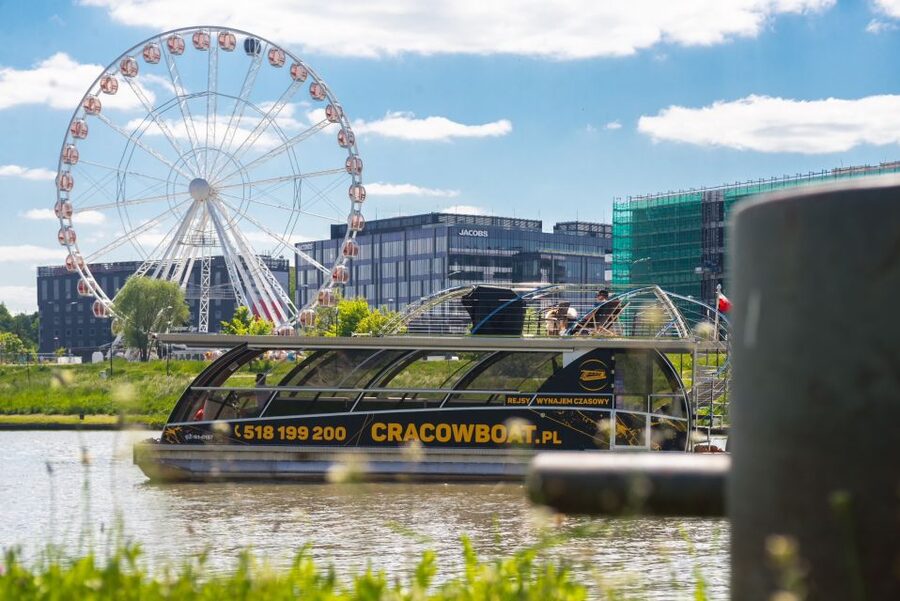
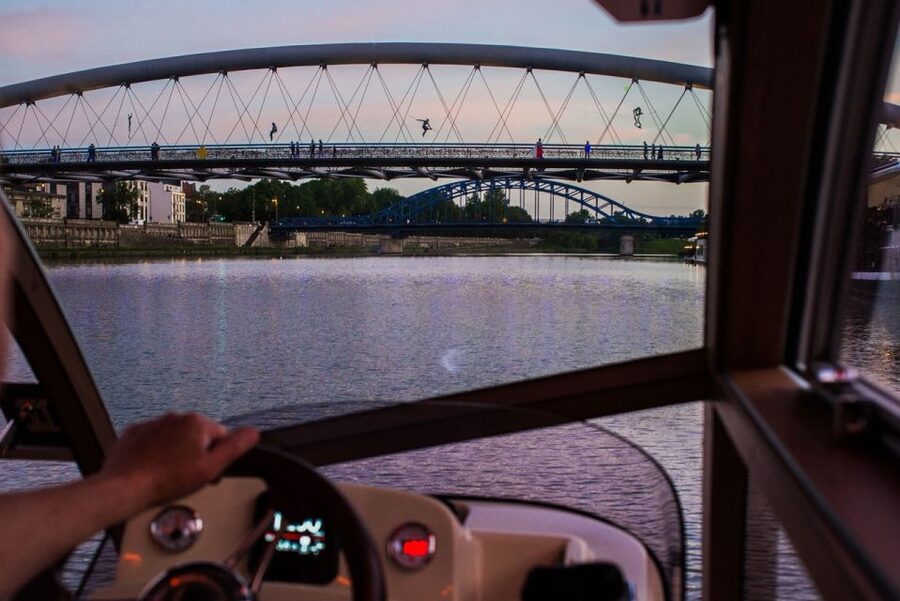
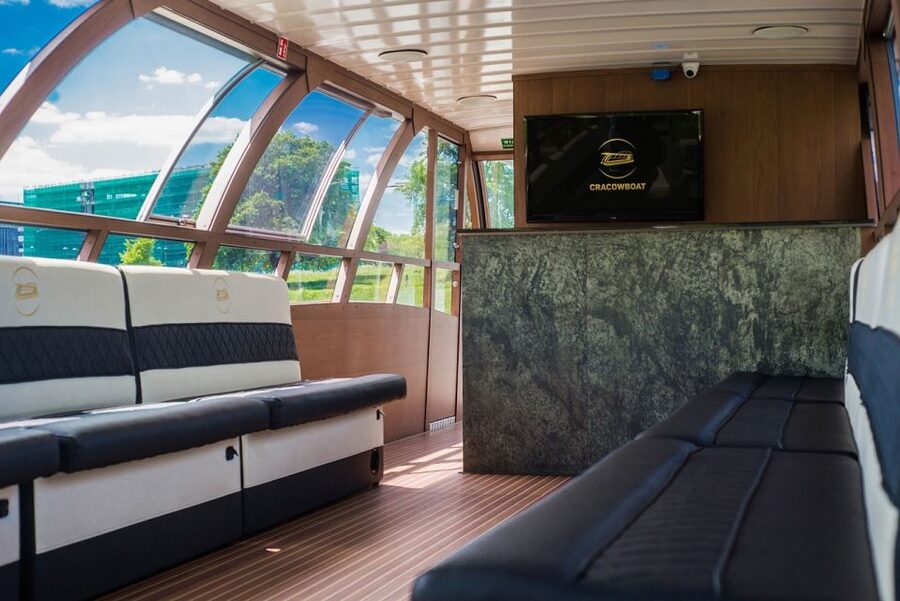
The tour starts with a one-way short cruise on the Vistula River on a catamaran. It is not a long sea-breeze day trip. It is more like a moving introduction to Krakow, where the river gives you a different angle on the landmarks you already hear about in history books.
While you ride, you get an audio guide in English, so you are not left trying to guess what you are seeing. The narration focuses on Wawel’s royal past and the religious sites you can connect to, including the monasteries of Bielany and Skałka. You also hear about bridges linking centuries, which matters because Krakow’s story is not straight-line. It loops through ruling powers, faith, trade routes, and later tragedy.
Why this first part is valuable: when you see the city from the water, you build a simple mental map. Later, when you step onto land for the memorial sites, you are not starting from zero. You already have bearings, plus you get a quiet buffer before the heavier material.
Practical note: bring a layer. Even in decent weather, rivers can feel cool, and the tour runs in all weather.
More Jewish quarter and heritage tours to compare:
- Krakow: Schindler’s Factory & Ghetto Guided Tour
★ 4.7 · 1,694 reviews - Krakow: Jewish Quarter and Former Ghetto Tour
★ 4.9 · 1,441 reviews - Krakow: Bike Tour of Old Town, Jewish Quarter and the Ghetto
★ 4.9 · 1,155 reviews
Ghetto Heroes Square in Podgórze: passing the memorial chairs
After the cruise, you continue on foot and pass Ghetto Heroes Square in the Podgórze district. This is not just a stop with a plaque. The memorial was transformed in 2005 into a memorial space, and the centerpiece is an installation of large metal chairs.
The point of the chairs is simple and brutal: they symbolize forced departures and absence. You do not need a degree in history to understand the emotional effect. It is also the kind of detail that sticks because it is physical. Chairs are ordinary objects, which makes the meaning harder to brush off.
How this fits the bigger experience: Plaszow is the concentration camp story you will focus on next. Ghetto Heroes Square gives you a bridge into Krakow’s ghetto history and the idea that, even after the war, remembering took time to become visible in public space.
The former Plaszow Camp: how the guided visit makes the space readable
The heart of the tour is the guided visit to the former Plaszow Camp, established in 1942 on the grounds of Jewish cemeteries. This is one of those places where the ground itself carries meaning, so the way the guide leads you matters.
The camp narrative has stages: it began as a forced-labor camp, then became a concentration camp. Over time, more than 35,000 people were imprisoned, and thousands lost their lives. With few structures still standing, the site can look empty if you are not guided. That is why the guide’s job is so important. You are not just walking from point to point. You are learning how to read what remains.
During the visit, you trace the camp’s former layout through surviving elements and key areas, including:
- the Grey House
- the roll-call area
- remnants of important buildings
- mass graves
- the Monument of Torn-Out Hearts (a focused stop later)
If you are the type of person who wants clarity, you will probably feel relief here. A strong guide can explain what each area was for and how it connected to daily routine, control, and survival. One English-language guide named Ewa is specifically praised for inviting questions, which is exactly what you want in a place like this. You do not need to swallow everything at once.
Entering a place defined by silence: why the open space hits harder
There is an important design reality at Plaszow: because there are few structures left, the space feels wide. The quiet can feel sudden, and that is partly the point.
The experience is described as having a setting for careful learning, remembrance, and reflection. I think you should treat it like that from the moment you arrive. Keep your phone down. Slow your pace. Let the guide finish. This is one of the rare tours where the best “performance” is restraint.
What you gain here is perspective. In many historical sites, buildings do the heavy lifting visually. At Plaszow, the open areas, the pathing, and the guide’s explanation carry more of the meaning. That shifts you from spectator mode into listener mode, which is usually where the lesson lands.
More Vistula River cruises in Krakow:
- Kraków: Evening or Night River Cruise
★ 4.0 · 7,386 reviews - Krakow: Sightseeing Cruise by Vistula River
★ 4.1 · 1,897 reviews - Krakow: 1-Hour Evening Vistula River Cruise
★ 4.1 · 952 reviews - Krakow: Vistula River Sightseeing Cruise with Audio Guide
★ 4.4 · 820 reviews
Monument of Torn-Out Hearts: the built pause that keeps the tone respectful
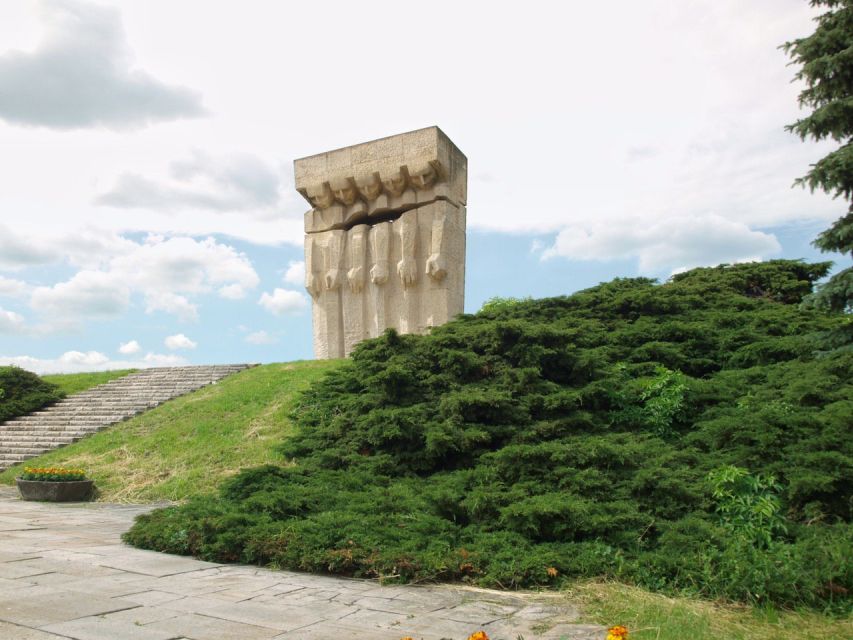
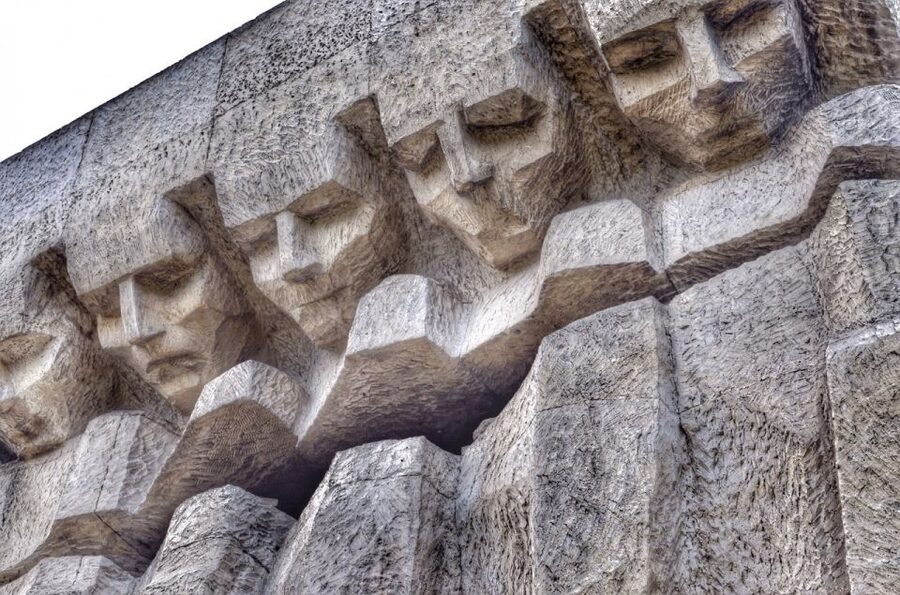
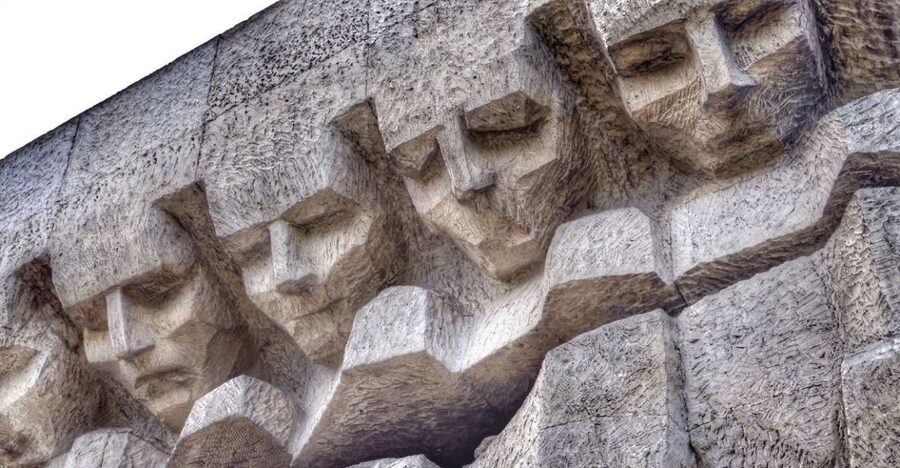
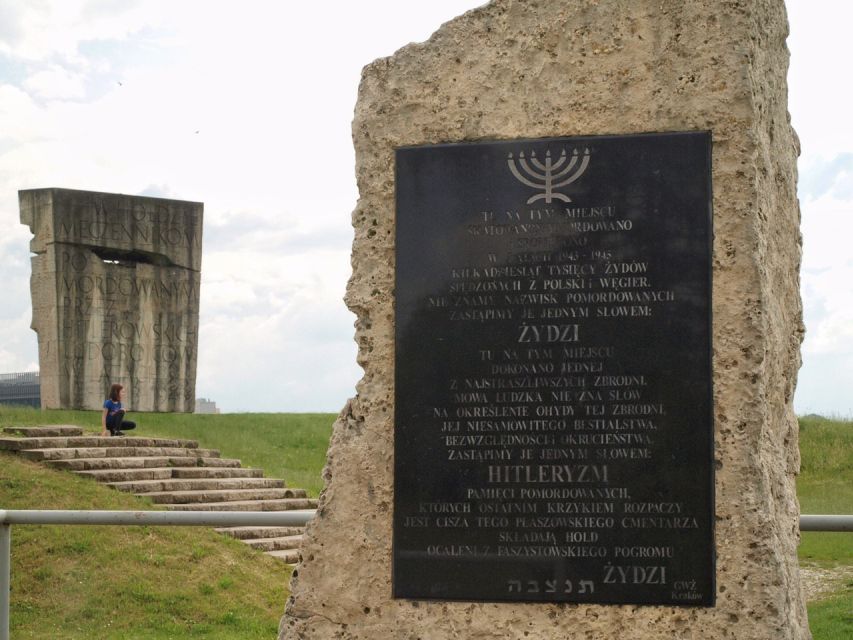
One of the strongest moments is the pause at the Monument of Torn-Out Hearts. The monument is a focal point in the camp route, and the tour stops to give you time for reflection.
Why this matters: grief is not always loud. Sometimes it is set into stone and space, and your job as a visitor is to slow down enough to notice it. A guided pause helps you stay on track emotionally, not just informationally.
Also, the monument is not floating as a separate attraction. It is tied to the camp route and the explanations around it. So when you see it, it reads like part of a sequence, not a photo opportunity.
Schindler’s work permits: the Krakow rescue thread running through Plaszow
A major narrative thread you will hear is the story of Oskar Schindler. In the Plaszow context, the key detail is that he arranged work permits for prisoners who were registered in Plaszow. Later, those people were transferred to his factory.
This is not just a feel-good footnote. It is presented as an actual mechanism of survival and rescue, which changes how you understand the camp story. Instead of only seeing confinement and loss, you also hear how bureaucracy could be used for protection by a person willing to act.
The tour connects this to outcomes, including that more than a thousand lives were saved through these transfers. That number gives the story weight, because it is not vague. It is specific, and it makes the contrast between the camp system and individual choices harder to ignore.
How much walking is involved, and how to dress for uneven ground
This tour is partly walking with a live guide. The rest uses audio. That means you should plan for a day that includes movement, not just transit between seats.
One practical consideration is the route from the general meeting area to the camp area, plus movement through the site. The description includes walking after the cruise and a guided visit through the former camp layout. For footwear, go with comfortable walking shoes. If you prefer simple rules, follow this one: shoes you would trust on uneven sidewalks.
Weather matters too. The tour runs in all weather conditions, so dress for changing conditions. If rain hits, ground conditions can become more slippery or harder to navigate. If the weather is hot, the open areas can feel exposed. Either way, your choice of clothing will affect how mentally available you are for the stories.
Family and mobility fit: the experience is not marketed as a stroller-friendly stroll. If someone in your group has issues with walking, consider skipping or choosing another format. You will likely be more comfortable in a different tour that keeps you on easier surfaces.
Price and value for a 3-hour day with guide + cruise + memorial stops
At $56 per person for about 3 hours, this is priced like a focused, “do a lot in a little time” Krakow experience. The value comes from the combination of three things that are often sold separately:
- a live, expert guided visit at Plaszow
- a Vistula catamaran cruise with English audio
- a single tram ticket included
The live guide portion is where a big share of the cost is likely going, and it is also where you get the most value. In memorial sites, an informed guide is not optional if you want the place to make sense.
The cruise then adds comfort and variety. It is also a reset. Even if you are emotionally prepared for Plaszow, having a calmer segment before you enter the camp can make the day easier to digest.
One trade-off to note: there is no hotel pickup and drop-off, and there is no return transportation at the end of the tour. So you are responsible for getting yourself to the meeting point and then onward after it finishes. If you are staying near the water tram lines, it becomes easier. If you are far away, plan your transit time.
Who should book this tour, and who should skip it
This is a good fit if you:
- want a guided explanation of Plaszow’s layout through the Grey House, roll-call area, mass graves, and key remnants
- appreciate memorial stops that build in time for reflection, especially at the Monument of Torn-Out Hearts
- like mixing city views with serious history, starting with the Vistula cruise and landmark talk
You might consider a different option if you:
- have limited mobility or cannot handle walking on uneven ground
- are traveling with very young kids who may struggle with the pace and the emotional tone
- want an experience with fewer moving parts and less walking
Should you book this Krakow river cruise and former Plaszow camp visit?
If you are coming to Krakow for real history and you can handle a walking day, I think this tour is worth booking. The strongest reason is the way it ties together three layers of meaning: the river city intro, a memorial symbol in Podgórze, and then a guided reading of Plaszow that focuses on what survives and what it meant.
Do it if you want structure. The route gives you stops that build logically, and the guide helps you understand the site instead of only seeing it.
Skip it if mobility is a concern, or if you need a lighter day. This experience asks for attention and patience, and it is not set up for wheelchairs or strollers based on the walking and site conditions described.
FAQ
How long is the Krakow river cruise and Plaszow camp tour?
The duration is 3 hours.
What is the price per person?
The price is listed as $56 per person.
Where do I meet the group?
Meet at Inflancki Boulevard, next to the water tram stop called Paulinska. Look for a person with a Cracow Boat sign.
What languages are available?
The tour is in English.
What is included in the tour?
Included are a live expert guide at the Plaszow, a one-way short cruise on the Vistula River on a catamaran with an audio guide, and a single tram ticket.
Is there hotel pickup or drop-off?
No, hotel pickup and drop-off are not included.
Is the audio guide included, and is it in English?
Yes. The audio guide is included and it is in English.
How much walking should I expect?
The tour includes walking as part of the experience. It involves moving from the cruise toward the camp area and walking within the camp visit. One participant estimated about 2 km to reach the camp and about 5 miles total.
Does the tour run in bad weather?
Yes. The tour operates in all weather conditions, so you should dress appropriately.
What should I wear?
Wear comfortable walking shoes, since part of the tour involves walking and you may encounter different weather and ground conditions.
What will I see at the former Plaszow Camp?
You will trace the camp’s former layout through elements such as the Grey House, the roll-call area, remnants of key buildings, mass graves, and the Monument of Torn-Out Hearts. The story also includes Oskar Schindler and work permits tied to transfers that saved more than a thousand lives.
Recently reviewed around Krakow
- Wawel Castle and Cathedral Guided Tour★ 5.0 · 8 reviews
- Wawel Castle and Cathedral Guided Tour★ 4.6 · 44 reviews
- Walking Tour: Kazimierz, Jewish Quarter – 2-Hours of Magic!★ 4.7 · 35 reviews
- Kraków Holocaust Tour★ 4.9 · 5 reviews
- Wadowice and Kalwaria: John Paul II Route★ 4.8 · 5 reviews
- VIP Club Entry and Booth Booking★ 5.0 · 4 reviews
- Walking Tour of Krakow: Old town – 2-Hours of Magic★ 4.7 · 5 reviews
- Krakow: Zakopane, Thermal Baths and Gorce Park Treetop Walk★ 5.0 · 3 reviews