
Reviewed · JEWISH QUARTER & HERITAGE TOURS
Krakow: Old Town, Jewish Kazimierz and Ghetto Sightseeing by Electric Golf Cart
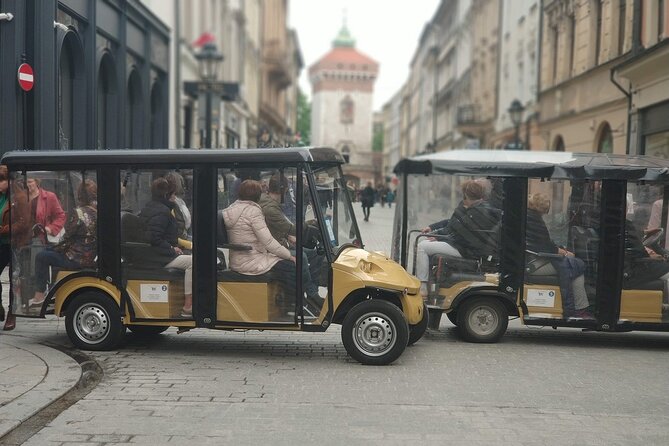
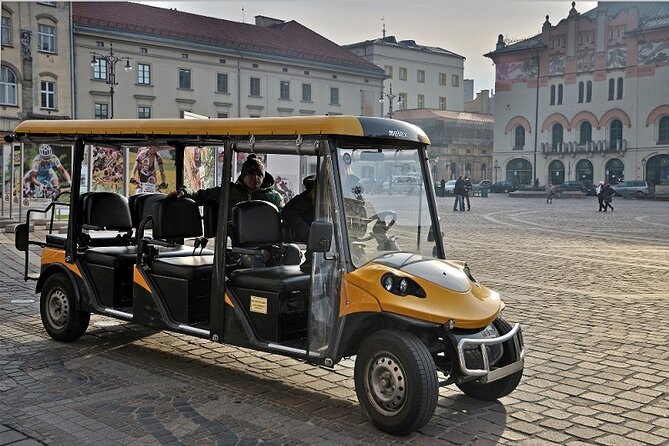
This is an easy, time-efficient way to get oriented in Krakow. You cover major sights across Old Town, the Jewish quarter of Kazimierz, and the WWII-era ghetto area in one smooth electric-cart loop, with an audio system in English filling in the story as you roll past the landmarks.
I really like two things about this setup: first, the small-group size (up to 8 people) keeps it from feeling like a mass parade. Second, you get a guided route that strings together key monuments, including the Market Square and the Kazimierz synagogues, so you are not stuck piecing together public transport between far-flung neighborhoods.
One drawback to plan for is pacing. Some stops are tight, and busy areas like Stare Miasto can feel crowded, which can limit how long you get for photos or for stepping in and out of places.
Key things to know before you ride
- Electric golf carts make it realistic to see a lot in about 2.5 hours without burning your legs down.
- Small-group limit of 8 tends to make the experience feel more personal than the bigger bus tours.
- English audio system means you can follow along even when you are not hearing a live guide at every moment.
- Kazimierz + ghetto area in one loop is a major value if you only have one day (or half a day) in Krakow.
- A few quick photo stops are built in, so have your camera ready and your questions short and focused.
Electric golf cart sightseeing: how it fits a packed Krakow day
If Krakow is on a tight schedule, this tour is built for that reality. The electric carts let you cover ground fast, then hand you enough time at each highlight to understand what you are looking at. In practice, it feels like doing your orientation ride early, then using the rest of your day to go back to whatever hit hardest.
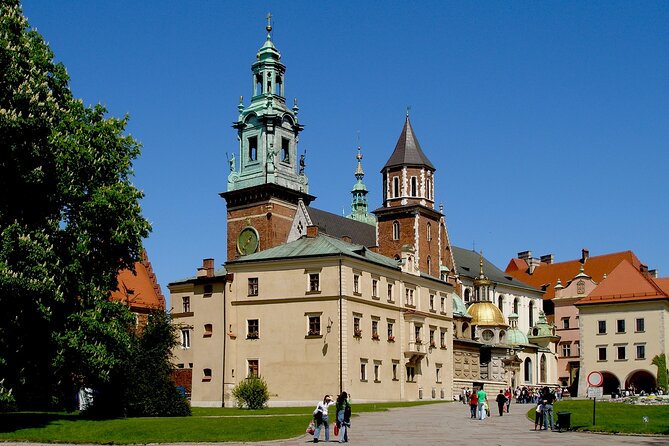
The route is also clever for first-timers. Instead of hopping randomly between Old Town and Kazimierz, you get a logical flow: the medieval core first, then Renaissance and fortress landmarks nearby, then the Jewish quarter, and finally the ghetto area in Podgórze. You come away with a mental map, not just photos.
And yes, it is eco-friendly in the simple, sensible way you want on a city tour: electric carts, quiet movement, less fuss than parking and traffic.
More Jewish quarter and heritage tours to compare:
- Krakow: Schindler’s Factory & Ghetto Guided Tour
★ 4.7 · 1,694 reviews - Krakow: Jewish Quarter and Former Ghetto Tour
★ 4.9 · 1,441 reviews - Krakow: Bike Tour of Old Town, Jewish Quarter and the Ghetto
★ 4.9 · 1,155 reviews
Meeting point to drop-off: where you start and where you finish
Your start point is Mikołaja Zyblikiewicza 2, 31-029 Kraków. You finish at Mikołaja Kopernika 3, 31-034 Kraków. Both are in the city center area and listed as near public transportation, which matters because you can plan your day without a complicated taxi puzzle.
A practical tip: arrive a few minutes early. This is a set-time group tour, and the vehicles only have room for passengers to sit, so there is not space for waiting around with big bags.
Also, the cart ride itself is designed for comfort, but it is not a rolling lounge. Think light and ready. If you travel with a backpack, keep it with you and avoid bulky luggage.
Old Town highlights on wheels: Market Square, Cloth Hall, Town Hall Tower
The ride begins in the historic heart, where you will see why Krakow’s Old Town stays on so many “top cities in Europe” lists.
Market Square: Krakow’s main public stage
You start with Kraków’s Market Square, the big medieval centerpiece that gathers the most characteristic city energy in one place. It is not just pretty architecture. It is the public square concept made grand, the kind of space where everyday life, commerce, and ceremonies all used to happen.
On a cart, you get a wide view quickly, and the audio helps connect what you are seeing to what it used to mean. This is ideal if you want context early rather than later.
More Old Town walking tours to compare:
- Old Town Krakow & Wawel Castle Walking Tour
★ 5.0 · 1,508 reviews - Krakow: Rynek Underground Museum Guided Tour
★ 4.6 · 1,122 reviews - Krakow: The Old Town Walking Tour
★ 4.8 · 794 reviews - Krakow: Old Town Guided Segway Tour
★ 4.7 · 756 reviews
Sukiennice (Cloth Hall): Renaissance trading in a medieval setting
Next comes Sukiennice, Krakow’s oldest commercial center, described as a pearl of Renaissance architecture. Even if you are not shopping, you can appreciate the scale and the way it visually anchors the square.
The Cloth Hall is a good “stop for orientation” sight. Once you know where it is, you can understand where the main streets lead from the square, even after you leave the tour.
Town Hall Tower: 700 years, 110 stone steps, and a stubborn skyline
Then you see the Town Hall Tower, with its history reaching back over eight centuries. It is also built on a dramatic physical promise: 70 meters tall and 110 stone steps.
You may not climb it on this tour, but it is still worth registering. It is one of those landmarks that makes it easier to recognize where you are in Krakow from almost any direction.
St Mary’s Basilica, Juliusz Słowacki Theatre, and the Barbican fortress
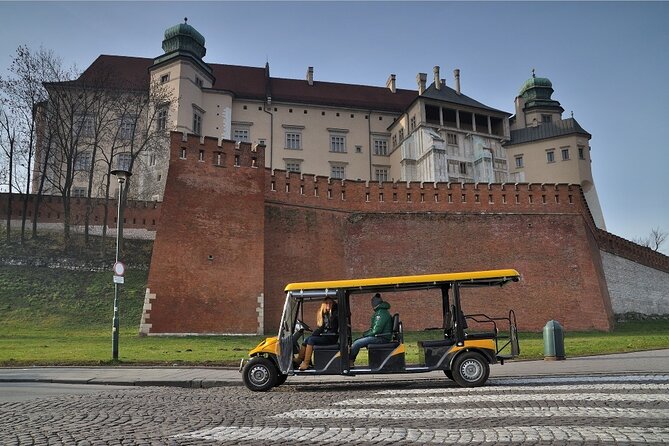
After the square, the tour pivots from civic life to the city’s cultural and military identity. This is where Krakow feels like multiple centuries stacked together, not just one pretty area.
St Mary’s Basilica: altar art, murals, and a church that grabs your attention fast
A major highlight is St Mary’s Basilica, described as having an extraordinary interior story: a high altar by Veit Stoss, star-strewn murals by Jan Matejko, and even a bugle call tradition tied to the church.
What you should take away as a visitor is simple: this is not just a “pretty church exterior.” It is a dense concentration of Polish art and religious culture. If you want to spend a bit of extra time inside, the timing can feel tight on a cart route, so if stepping in matters to you, you should ask the guide if there is a quick option.
Juliusz Słowacki Theatre: a famous stage in the center of town
You also pass the Juliusz Słowacki Theatre, known for continuous operation since 1893. The building itself is described as precious theatre architecture in Europe, which is a big claim, and you can sense it in the way the space is meant for performance.
Even if you do not attend a show, it is a strong stop because it reminds you that Krakow is not only about medieval squares and churches. It has a modern cultural heartbeat too.
Barbican: medieval fortifications with a legend attached
Then comes the Barbican, one of Krakow’s fortification pearls. It is described as an exquisite example of medieval military architecture and, notably, as never captured during a siege.
The story tied to it is memorable: defenders repulsed the attackers with a single shot. That is the kind of detail you do not get from just looking at a wall from the street. With the audio and route framing, the Barbican becomes more than a stone structure.
Kazimierz synagogues and Szeroka Street: seeing Jewish Krakow in context
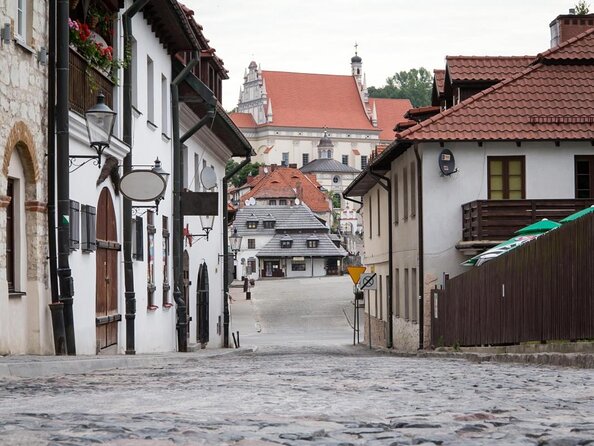
Kazimierz is the emotional core of this tour, and it is handled thoughtfully by the route. You move from general Old Town sights into a neighborhood where multiple eras overlap, including Jewish community life that shaped Krakow for centuries.
Tempel Synagogue: stained glass and a non-orthodox feel
In Kazimierz, you visit the Tempel Synagogue. Two reasons are highlighted: its stained glass windows are among the best preserved of their kind in Poland, and the synagogue is noted for its non-orthodox character.
If you are coming with curiosity about architecture and community traditions, this stop helps you see that Judaism in Krakow was not one single uniform style. Different movements and artistic choices existed side-by-side.
Szeroka Street: a former hub where several synagogues once stood
You also cover Szeroka Street, described as the heart of Jewish Kazimierz, with evidence that four synagogues used to stand on the street, something described as unheard of elsewhere in Europe.
Even from the cart, the takeaway is powerful: this street was an everyday center, not a distant museum site. It is one of those places where you can feel the density of community life through the mere fact that so many religious spaces were clustered together.
The smaller synagogue (renovated in April 2016): quiet scale, important role
There is also a stop at the smallest of Krakow’s seven synagogues. The description notes its more modest decor compared to the others, and that after renovation completed in April 2016, it became the main prayer site for the Jewish community in Krakow.
This is a good reminder that “smaller” does not mean “less meaningful.” In fact, smaller rooms can feel more intimate and focused, which often makes the history land harder.
Podgórze ghetto sites: the ghetto wall fragment and Umschlagplatz
The final section shifts from community heritage into the architecture of tragedy, and it is handled via specific locations tied to WWII.
St Joseph’s Church by Podgórze Market Square
You pass St Joseph’s Church in Podgórze, described as a distinctive devotion site that dominates over Podgórze Market Square. This market square is noted as becoming part of Kraków only in the 20th century.
That detail matters. It frames Podgórze as its own place that was later incorporated, which helps you understand how the city’s neighborhoods connect geographically and historically.
A preserved fragment of the ghetto wall with a plaque
Then you see a small fragment of the original ghetto wall with a commemorative plaque. This is the kind of “you are looking at a survivor object” stop, even if it is only a portion of what used to be there.
If you are the type who processes history by seeing physical remnants, this is one of the most important stops on the route.
Plac Zgody and Umschlagplatz: where deportations were staged
You then reach Plac Zgody, described as being designated Umschlagplatz during Nazi occupation, the gathering place where Jews were forced to congregate for deportation.
It is a heavy stop, and the value of doing it on a cart tour is that you reach it with the right geographic understanding. You are not trying to guess where things happened. You are being guided from the surrounding areas into the specific place where the occupation machinery worked.
Tadeusz Pankiewicz: the pharmacy story tied to survival
The route also includes Tadeusz Pankiewicz, with a note that he took over his father’s pharmacy and made history through that enterprise.
This is a different kind of WWII framing, more about action and responsibility than only about loss. It gives the last part of the tour a human thread to hold onto.
The guides and what to expect from the ride
Most of the value comes from two sources: the structure of the route and the way the guide handles questions in the moment. Several guide names are associated with stand-out experiences, including Radic, Filip W, Michael, Tom, and Peter.
A few patterns showed up in the feedback style of those guides: they were attentive, they kept information organized for a short format, and they often added more than the audio track. If you want to maximize your time, treat the guide like an information shortcut. Ask one or two good questions rather than ten vague ones.
Pacing and photos: plan like this is a quick-hit tour
This is built for seeing a lot, not for long museum-style stops. One common wish is more time to take photos at each site. If you have one or two must-shoot locations, keep them in mind before you start so you can ask for the best moment for pictures.
Also, if you can choose your departure time, I’d lean earlier. Later in the day, the Old Town area can feel crowded with other carts and tours, and that can make it harder to see through the traffic of sights and vehicles.
Who should book this Krakow electric golf-cart tour
This is a strong fit if:
- You have limited time and want a big overview of Old Town plus Kazimierz plus ghetto-area memorials.
- You want the convenience of an electric cart without giving up the chance to understand what you are seeing.
- You prefer small-group energy, capped at 8 travelers.
It may not be the best fit if:
- You want lots of inside time at each monument. The format suggests quick moments, not slow wandering.
- You dislike crowds. Even with carts, the city center gets busy.
If you have mobility limits, this cart format can also be a practical compromise because the vehicle does most of the moving. Just remember the note about luggage size, and keep your gear minimal.
Price and value of a 2.5-hour Krakow loop at $56.47
At $56.47 per person for about 2 hours 30 minutes, you are paying for two things: transport plus interpretation that helps you connect the dots across neighborhoods.
Here is how I think about value:
- Electric carts reduce the time cost of getting from site to site, which is the real currency in a short Krakow visit.
- The route covers major landmarks you would otherwise need multiple trips, plus it threads in Kazimierz and ghetto sites, which are not in the same “walk-around” radius.
- The English audio system supports your understanding even when you are not reading signs.
So the price is fair if you care about getting orientation and context fast. If you only want one neighborhood and you will spend the rest of your day wandering calmly, you might prefer a slower, cheaper self-guided plan.
Should you book this tour?
I’d book it if you want a smart one-session overview of Krakow, with Old Town icons plus Kazimierz identity sites plus ghetto memorial locations, all without spending your day in transit. The small group limit, the electric carts, and the stop list that hits both beauty and hard history make it a good use of time.
I’d skip it if your ideal day is long museum time, deep inside-the-church access, or you hate moving quickly between stops. This is a get-your-bearings-fast kind of tour, not a linger-and-stay-lost kind.
If you do book, pick an earlier slot when possible, travel light, and bring a short list of questions. You will get more out of the ride that way.
FAQ
How long is the Krakow Old Town, Kazimierz and Ghetto electric golf cart tour?
The tour is approximately 2 hours 30 minutes.
What is the price per person?
The price is $56.47 per person.
Is the tour offered in English?
Yes. The tour is offered in English, with an audio system.
How many people are in the group?
The tour has a maximum of 8 travelers.
Where do I meet the tour, and where does it end?
You start at Mikołaja Zyblikiewicza 2, 31-029 Kraków, Poland, and end at Mikołaja Kopernika 3, 31-034 Kraków, Poland.
Is there a luggage limit?
You should not bring large baggage, since the vehicles only have enough room for passengers to sit.
Do I need to confirm anything after booking?
Confirmation will be received at the time of booking.
Can I cancel for a full refund?
Yes. You can cancel up to 24 hours in advance for a full refund.
Is it suitable for most people to participate?
The tour notes that most travelers can participate, and it is near public transportation.
More Electric Buggy and Golf-cart Tours to Compare
- Krakow: City Sightseeing Tour by Electric Golf Cart
★ 4.5 · 3,264 reviews - Krakow: City Sightseeing Tour Eco Electric Buggy Golf Cart
★ 4.7 · 3,143 reviews - Krakow: Extended City Sightseeing Tour – Eco Buggy Golf Cart
★ 4.7 · 794 reviews - Krakow: Electric Car Sightseeing Tour
★ 4.4 · 450 reviews
Recently reviewed around Krakow
- Wawel Castle and Cathedral Guided Tour★ 4.6 · 44 reviews
- Walking Tour: Kazimierz, Jewish Quarter – 2-Hours of Magic!★ 4.7 · 35 reviews
- Wawel Castle and Cathedral Guided Tour★ 5.0 · 8 reviews
- Wadowice and Kalwaria: John Paul II Route★ 4.8 · 5 reviews
- Kraków Holocaust Tour★ 4.9 · 5 reviews
- VIP Club Entry and Booth Booking★ 5.0 · 4 reviews
- Walking Tour of Krakow: Old town – 2-Hours of Magic★ 4.7 · 5 reviews
- Krakow: Zakopane, Thermal Baths and Gorce Park Treetop Walk★ 5.0 · 3 reviews