
Reviewed · JEWISH QUARTER & HERITAGE TOURS
Krakow Kazimierz and Jewish Ghetto Tour with Synagogues
Krakow’s Kazimierz and the old Jewish Ghetto sites hit hard in a way that feels real, not staged. You walk through Kazimierz as it is today, then you slow down at memorials and synagogues that carry the weight of what happened here. This is also a private tour, so your guide can pace the story to your questions.
I especially like how the tour blends places with people, not just dates. And I like that guides such as Helena can make the facts feel human, with stories of resilience and strength woven into what you see. One consideration: synagogues can be closed on Saturdays, Jewish holidays, and sometimes during prayer time, so your exact stop mix can shift by day and opening hours.
Key things to know before you go
- Private, your-party-only format: it is tailored, so you spend less time waiting and more time understanding what you are seeing.
- Schindler’s List connections built into the route: you will see film locations tied to Krakow under Nazi occupation.
- Synagogue tickets depend on tour length: Tempel or Old Synagogue tickets are included for longer options, while Remuh plus the Old Jewish Cemetery are only included on the 4-hour option.
- Memorial stops for the ghetto experience: expect to spend time at Plac Bohaterow Getta and around ghetto wall remains.
- A mix of major sites and smaller sights: you might also get chances to request entry to places like Galicia Jewish Museum or see other synagogues.
- Time zones are local and rules matter: if you book for a day with holiday closures, your itinerary may adjust.
Why Kazimierz and the Jewish Ghetto walk feel different
This tour works because it refuses to stay abstract. You move from a neighborhood that is now lively and fashionable into spaces that preserve the memory of persecution and loss. The contrast is the point, and it comes through as you walk, turn corners, and read the memorials where they belong.
You are not just collecting “important buildings.” You are also learning how Krakow’s Jewish community shaped city life for centuries, then how that life was broken and erased. Even the quieter moments help. One of the calmest parts is simply walking Kazimierz streets and letting the architecture and street layout suggest how everyday life once fit here.
If you want a tour where the guide actually talks, not just recites facts, this is the kind of route that rewards that approach. The best moments tend to be when the guide connects the street scene to what the community was doing there.
More Jewish quarter and heritage tours to compare:
- Krakow: Schindler’s Factory & Ghetto Guided Tour
★ 4.7 · 1,694 reviews - Krakow: Jewish Quarter and Former Ghetto Tour
★ 4.9 · 1,441 reviews - Krakow: Bike Tour of Old Town, Jewish Quarter and the Ghetto
★ 4.9 · 1,155 reviews
Tour length, price, and what $97.21 really buys you
The price is $97.21 per person, and the tour runs about 2 to 4 hours depending on the option. That range matters because the included admissions change, especially for synagogue tickets and cemetery time.
Here’s the practical breakdown based on what is included:
- The 2-hour option focuses on the Kazimierz and ghetto walk with some key synagogue viewing, but tickets for Tempel or Old Synagogue are not included.
- The 3-hour option adds one synagogue ticket (either Tempel or Old Synagogue, depending on opening hours and your preference).
- The 4-hour option becomes the big one: Remuh Synagogue plus the Old Jewish Cemetery are included, along with two synagogues total.
So when you are deciding, do the math with your priorities. If you care most about synagogue interiors and cemetery time, the 4-hour option is usually the better value. If you want the key streets and memorials without committing to a full afternoon, the 2-hour option can work well, as long as you are okay paying for synagogue entry separately.
You also get practical ticketing support, like mobile tickets, plus group discounts. It is also booked about 26 days in advance on average, which tells me you should not wait until the last minute if you are traveling in peak season.
Timing rules: synagogues close for Shabbat, holidays, and prayer
Plan around Jewish calendar closures. The tour info is clear that Jewish heritage sites and synagogues are closed on Saturdays, Jewish holidays, and during prayer time. That can affect whether you see specific interiors or how long you spend at certain stops.
If you are traveling with a fixed schedule, pick your tour day carefully. One day you might get synagogue time inside, another day you might only see the exterior and the surrounding memorial context. Your guide will adjust to what is open, but your itinerary mix depends on timing and opening hours.
Also note that it is private and your guide is licensed, fluent in the language you choose when booking. You will receive important details by email the day before, so check that message before you leave your hotel.
Service animals are allowed, and the start point is near public transportation, which helps if you are juggling Krakow transit.
Stop by stop: Kazimierz, the old Jewish district turned neighborhood
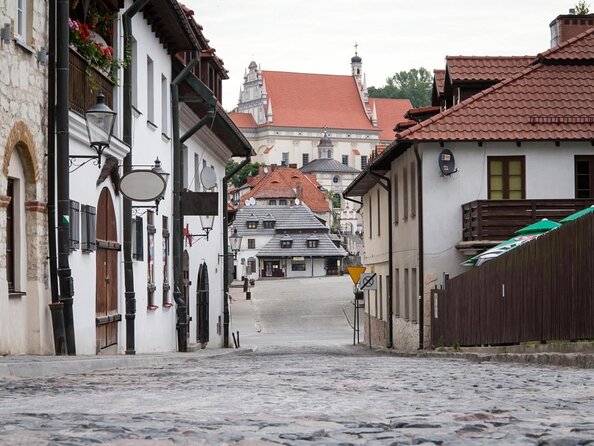
The tour often starts in the Kazimierz area, historically where many Krakow Jews moved at the end of the fifteenth century. Kazimierz became the main cultural center of Polish Jewry for centuries, so this is not just a pretty neighborhood story. It is the backdrop for how Jewish life became deeply woven into Krakow.
On a walking route like this, Kazimierz is where you get orientation fast. You see how the streets connect the synagogue cluster, the public squares, and the old ghetto-adjacent areas. Even if you feel overwhelmed by the subject, the neighborhood rhythm gives you something to hold onto.
Kazimierz today is trendy and active. That does not erase the past, but it changes how you experience it. You might find yourself imagining conversations on corners, people moving toward prayer, markets, and everyday errands, because the street layout still makes those patterns feel plausible.
This stop is usually free of admission costs, and it sets the tone for everything that follows. If you only remember one thing about Kazimierz, make it this: the Jewish community was not a side note in Krakow. It was a cultural center.
Another way to spend a day around Krakow:
- From Krakow: Auschwitz-Birkenau Guided Tour & Hotel Pickup
★ 4.5 · 33,358 reviews - From Krakow: Auschwitz-Birkenau Guided Tour & Hotel Pickup
★ 4.5 · 29,340 reviews - Krakow: Auschwitz Guided Tour with Optional Hotel Pickup
★ 4.5 · 15,280 reviews - Krakow–Zakopane: Cable Car, Chocholow Baths, Cheese & Vodka
★ 5.0 · 10,720 reviews
Film connections and Schindler-era reminders on your route
The route includes a stop at Fabryka Emalia Oskara Schindlera, the enamel factory linked to Oskar Schindler. The exhibition covers Krakow under Nazi occupation from 1939 to 1945, and it is located in a former administrative building tied to the factory.
Entry is possible by request, and admission is not included in the tour price. So treat this as an optional or timing-dependent add-on. If it is open and you can get in, it adds a strong layer to the story by putting the occupation era into a structured setting.
This part of the tour is also connected to Schindler’s List, since the route includes locations featured in the film. One of the most moving stop points is tied to the Tempel Synagogue scene from Schindler’s List. It is striking to see how a movie location maps to a real room, with real details, and to understand how architecture and light frame a story.
If you are a film fan, this section can feel like the bridge between storytelling you know and history you need to understand. If you are not, it still matters because it anchors Krakow under Nazi occupation to physical places you can stand near.
Plac Bohaterow Getta, empty chairs, and the ghetto wall reality
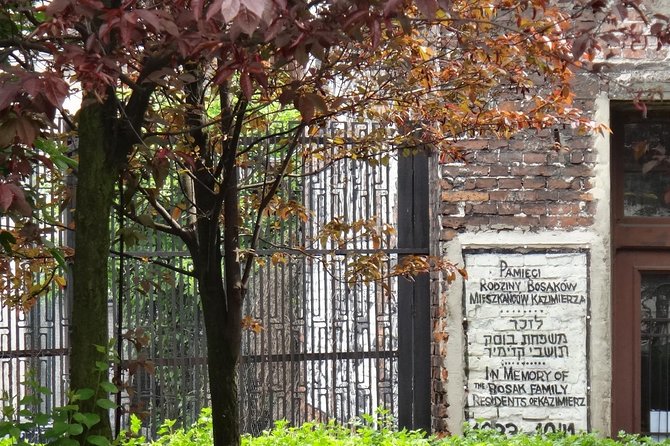
Plac Bohaterow Getta is a special square, built to show Jewish history through a memorial language you can feel. The key image here is the power of empty chairs. It is one of those details that stays with you because it makes absence visible.
From there, you move toward the former ghetto area context. You will also see remnants of old ghetto walls with pictures that portray Jewish life years ago. This is not the kind of display that pretends the story is simple. It shows daily life and then forces you to confront what was taken away.
The route also includes a bridge over the Vistula River between Kazimierz and Podgorze, decorated with many padlocks attached by people from around the world. That sounds like a romantic tradition, and it is, but placed after the memorial square, it can feel like a contrast you did not ask for. That is part of the experience too: the city lives on, even when its past demands you pause.
If you are sensitive to heavy subject matter, pace yourself. Take a moment at the square, then keep moving. The walk pattern helps, because it gives your brain space to process.
Synagogues: Old Synagogue, Tempel Synagogue, and what their interiors mean
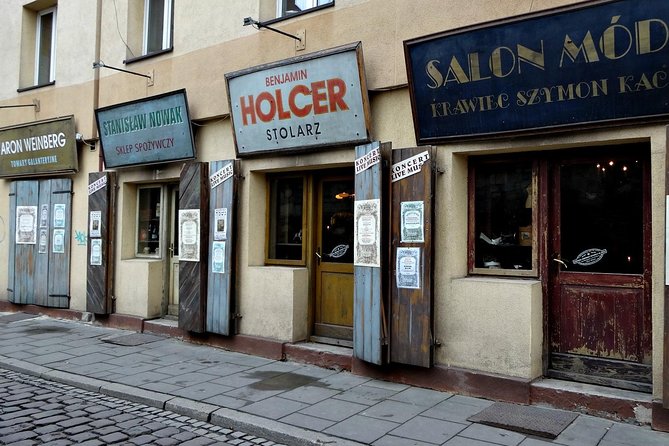
Synagogues are the heart of the tour, but which ones you enter depends on your selected length.
Stara Synagoga (Old Synagogue) and the Jewish Museum
One major stop is the Muzeum Krakowa – Stara Synagoga, a Gothic synagogue that was restored after World War II. It now houses a Jewish Museum. Tickets are included for the 3-hour and 4-hour options, and it is listed as an included admission point when your option covers it.
This stop is valuable because it lets you see how a building survives and changes purpose while keeping a link to community memory. Gothic synagogues are rare in Europe, and that rarity adds weight to the experience.
Tempel Synagogue (and the Schindler’s List scene)
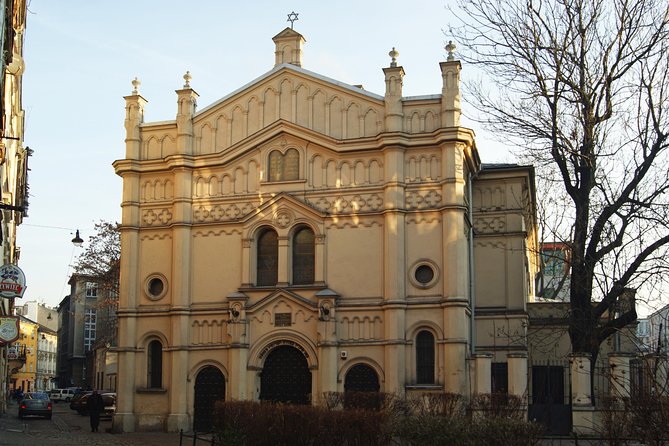
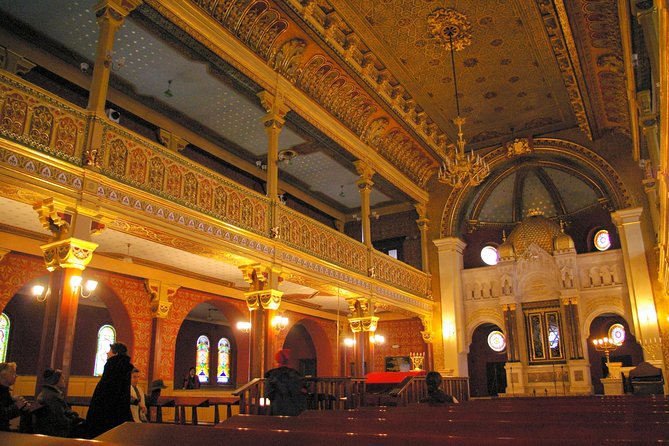
The Tempel Synagogue is smaller than you might expect from its reputation, but it is stunning inside, with stained glass windows and ornate gold etching. Tickets are included on the 3-hour and 4-hour options.
This is also the place tied to one of the most disturbing and moving scenes from Schindler’s List. Even if you know the story already, seeing the synagogue interior in person changes how your brain holds it. It turns the scene from a sequence into a space where real people once prayed.
Remuh Synagogue and the Old Jewish Cemetery
On the 4-hour tour, you go inside Remuh Synagogue, a small Renaissance synagogue from around 1557. It is named after Moses Isserles, also known as Rabbi Remu’h, and it still holds regular services for the small Jewish community in Krakow. Tickets are included on this option, and you also include time at the Old Jewish Cemetery.
This part of the tour matters because it adds continuity. Many sites you visit tell you about what was lost. Remuh and the old cemetery connect you to what remains, the living thread that survived.
One practical note: since prayer time can affect access, your guide may need to adjust around service schedules.
New Square, Jan Karski statue, and why the walk includes “in-between” moments
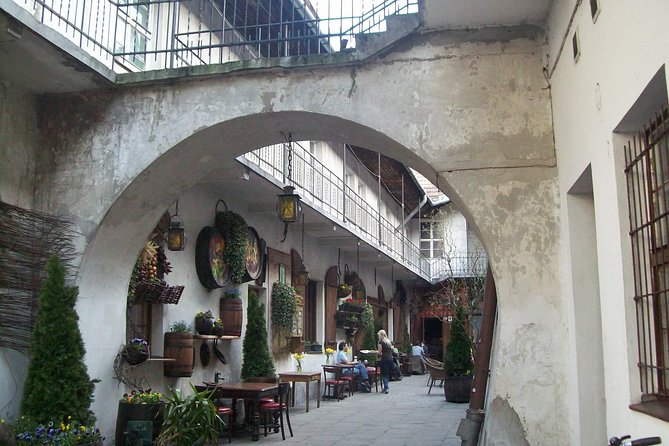
A tour like this works best when it does not keep you in solemn mode the entire time. The route includes The New Square, known for life, charm, good food nearby, and a friendly local atmosphere. It is one of those places that lets your body reset while your brain still holds the story.
Another memorable pause is the statue of Jan Karski sitting on a bench, carved out of the same metal, placed so you can literally sit with him for a moment. Karski is a name that fits the theme of testimony and moral courage, and sitting there helps you slow down. It is not just a photo spot. It gives you room to think about what it means to know, to report, and to try to make others understand.
These “in-between” moments also help you experience Kazimierz like a real person would, not like a museum itinerary. That can be a relief when the memorial parts get heavy.
Galicia Jewish Museum, other synagogue chances, and how flexibility works
Depending on the day, you may have opportunities for extra stops or requests. For example, the Galicia Jewish Museum exists to commemorate Holocaust victims and celebrate Jewish culture from Polish Galicia, presenting Jewish history from a new perspective. Entry is listed as possible by request, and admission is not included.
Similarly, the route mentions possible viewing of Izaak Synagogue and includes context about the High Synagogue. The text notes chances to see them for request, but tickets are not listed as included. That means these can be timing dependent.
How to use this practically: if you care about maximizing interiors, pick the longer option and ask your guide about what is realistically open on your date. If you prefer a tighter walk, focus on the included synagogue admissions and memorial time. Either way, the guide can shape your pace because it is private.
Cemeteries: Old and New, where silence becomes information
The tour includes cemetery time, and it is handled differently based on the option.
- On the 4-hour tour, you include the Old Jewish Cemetery along with Remuh Synagogue.
- On the longer route, you also include the New Jewish Cemetery, described through its peacefulness and the presence of lives lived.
Cemeteries are not just about sadness. They are about continuity, time, and how communities marked who they were and what they valued. When your route makes room for that quiet, the earlier memorials land differently. You stop thinking only about the ghetto as an event, and you start seeing it as something that interrupted a long human story.
The New Jewish Cemetery in particular is described with a sense of flow of Jewish history. I like how this frames the cemetery not only as a place of loss, but also as a place where identity persists through names, generations, and memory.
Logistics that actually matter: pace, walking, and comfort
This is a 2 to 4 hour walking experience. That sounds simple, but the real factor is pacing. Synagogue entry plus museum stops plus memorial square time means you will spend real parts of the day standing and moving through concentrated emotional sites.
If you plan it as a standalone activity, you will get more from it. If you stack it back to back with a long museum day, you might rush the hardest parts. Build in breathing space.
You also get a private group setup, so if you need a restroom break or you want the guide to pause for a question, the pace can be adjusted. That is one of the strongest reasons to choose a private tour for this kind of subject.
For your comfort, wear shoes that work on city sidewalks. Krakow’s old streets can be uneven, and you will want stability without thinking about your feet all the time.
Who this tour is for (and who might want a shorter or different plan)
This is a strong fit if you:
- want synagogue interiors, not just exterior photo stops
- care about how Jewish life in Krakow developed over centuries and how the ghetto disrupted it
- appreciate routes that connect history to physical places, including Schindler’s List locations
- prefer a guide who can answer questions and tailor the pace, since it is private
It may be less ideal if you:
- want a purely light, casual neighborhood stroll with no memorial focus
- are traveling on a day that is likely to hit closures due to Saturday or Jewish holidays, and you cannot flex your schedule
- only have a very narrow time window and do not want to deal with the fact that synagogue ticket inclusion depends on tour length
Should you book this Kazimierz and Jewish Ghetto tour?
I think you should book it if your goal is a serious, place-based understanding of Krakow’s Jewish story, with real moments in synagogues and cemeteries and with film-related locations that help you visualize what happened. The private format is especially valuable here because the subject can be intense, and a guided pace makes a difference.
If you are torn between options, use this rule of thumb: choose the 4-hour tour if you want the most complete synagogue and cemetery experience, including Remuh and the Old Jewish Cemetery. Choose the 2 or 3-hour tour if you want the core walk and memorials, with fewer admissions to manage, but confirm which synagogue tickets are included for your selected option.
FAQ
What is the duration of this Kazimierz and Jewish Ghetto tour?
It runs about 2 to 4 hours depending on the option you choose.
Is this tour private?
Yes. It is a private tour/activity, so only your group participates.
Which synagogue tickets are included?
Tickets to the Tempel or Old Synagogue are included for the 3-hour and 4-hour options only. Tickets to Remuh Synagogue and the Old Jewish Cemetery are included for the 4-hour option only.
Are Jewish heritage sites and synagogues open every day?
No. Jewish heritage sites and synagogues are closed on Saturdays, Jewish holidays, and during prayer time.
Where does the tour start and end?
It starts at Hotel Kazimierz, I Miodowa 16, 31-055 Kraków, Poland. It ends back at the meeting point.
Is free cancellation available?
Yes. You can cancel for a full refund up to 24 hours in advance of the experience’s start time. If you cancel less than 24 hours before, the amount paid is not refunded.
Recently reviewed around Krakow
- Wawel Castle and Cathedral Guided Tour★ 4.6 · 44 reviews
- Walking Tour: Kazimierz, Jewish Quarter – 2-Hours of Magic!★ 4.7 · 35 reviews
- Wawel Castle and Cathedral Guided Tour★ 5.0 · 8 reviews
- Wadowice and Kalwaria: John Paul II Route★ 4.8 · 5 reviews
- Kraków Holocaust Tour★ 4.9 · 5 reviews
- VIP Club Entry and Booth Booking★ 5.0 · 4 reviews
- Walking Tour of Krakow: Old town – 2-Hours of Magic★ 4.7 · 5 reviews
- Krakow: Zakopane, Thermal Baths and Gorce Park Treetop Walk★ 5.0 · 3 reviews