
Reviewed · JEWISH QUARTER & HERITAGE TOURS
Krakow: Jewish Ghetto Walking Tour
This tour is interesting because it keeps history close to the ground. You walk through Podgórze, the neighborhood that became the Kraków Ghetto in WWII, and your guide helps you picture what life felt like behind the walls.
I especially like the mix of real, visible remnants and clear storytelling. The stops around Ghetto Heroes Square and the Chair Memorial make the scale of loss feel concrete. One drawback: it is only 1 hour, so you will leave with questions, and the subject matter is emotionally heavy even with a respectful pace.
Key Stops That Make This Tour Worth Your Time
- Podgórze street walk that turns the map into lived space
- Remains of the original Ghetto Wall, where the boundary line becomes real
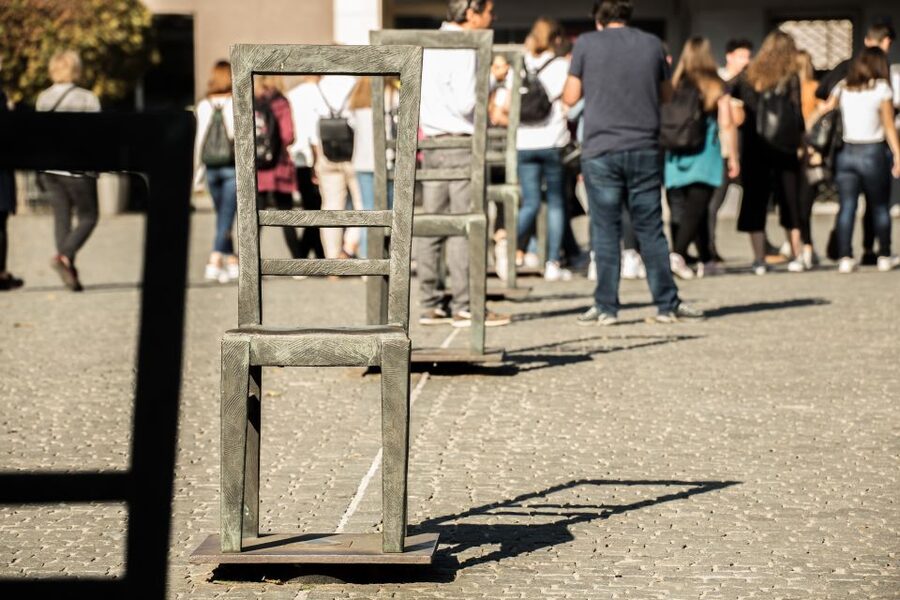
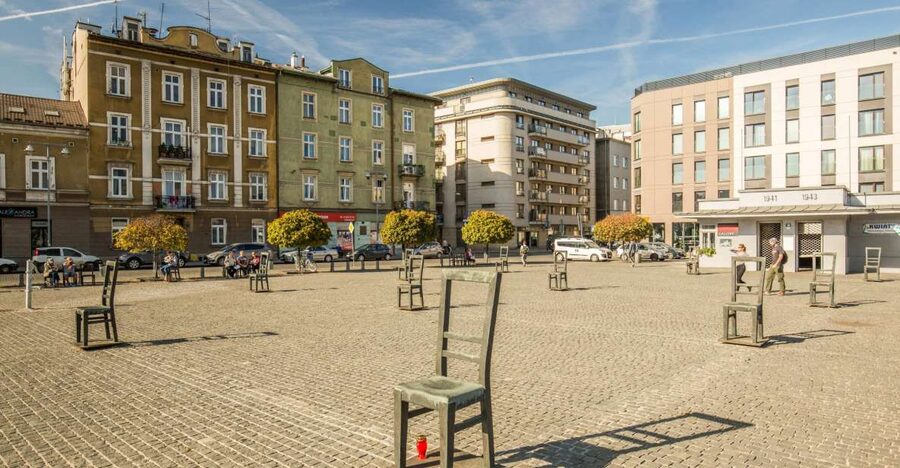
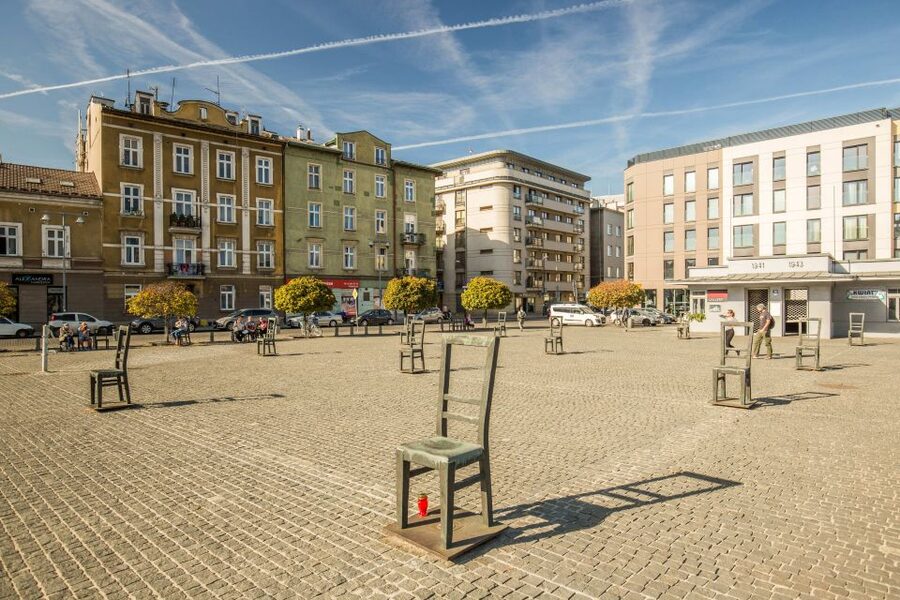
- Ghetto Heroes Square and the symbolic Chair Memorial
- Under the Eagle Pharmacy and the rescue story tied to Tadeusz Pankiewicz
- Headsets or ear mics in many groups for easier listening
- A guide who connects daily life, deportations, and survival into one thread
Podgórze Is Where Kraków’s WWII Story Becomes Personal
Kraków’s Jewish Ghetto story is often told through famous landmarks. This walk adds something different. You see the neighborhood as a series of street corners, buildings, and small spaces where routine life was forced to shrink, harden, and break.
That matters because the ghetto was not only a border on a map. It was a place where fear structured your day, where neighbors had to help each other, and where Nazi plans moved step by step toward deportation and destruction. On this tour, you get the story in the order it unfolded, not just as a list of dates.
What I like most is how the tone stays human. You are not only looking at memorials. You are listening to why certain corners mattered, why certain choices were made, and how people tried to keep hope alive, even when the outcome was being decided for them.
More Jewish quarter and heritage tours to compare:
- Krakow: Schindler’s Factory & Ghetto Guided Tour
★ 4.7 · 1,694 reviews - Krakow: Jewish Quarter and Former Ghetto Tour
★ 4.9 · 1,441 reviews - Krakow: Bike Tour of Old Town, Jewish Quarter and the Ghetto
★ 4.9 · 1,155 reviews
Finding the Meeting Point and Getting Oriented in 10 Minutes
Your meeting point may vary depending on the option you book. A practical move is to check your confirmation and arrive early. The tour asks you to be there about 10 minutes before it starts. Once the group leaves, latecomers cannot join and tickets are not refundable.
Many participants also connect this walk with other Holocaust-era sites in Kraków. You may meet near the Schindler’s Factory area, at least for some departures, which is a smart pairing since both tours deal with occupation and survival. If you already did Schindler’s Factory, you will have more context in your head, and this ghetto walk becomes the next logical step.
Logistics are simple: it is a walking tour with a licensed guide, and the pace is designed for a focused 1-hour experience. You do not need to be a marathoner, but you should expect steady walking on city streets.
The Original Ghetto Wall Remains, And Why They Matter
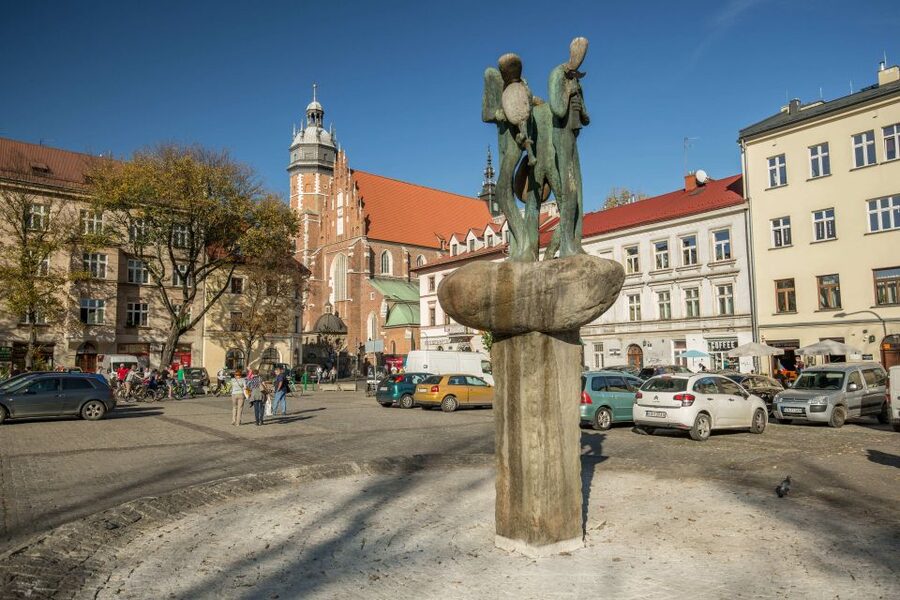
One of the first stops is the remains of the original Ghetto Wall. Even if what you see is fragmentary, it hits hard because it is physical evidence of an artificial boundary drawn through real streets and homes.
Your guide walks you along the wall line and explains how thousands of people were enclosed within a few city blocks. That detail is important. It helps you understand why daily life under occupation felt claustrophobic, controlled, and constantly threatened. The wall was not only about separation. It was also about surveillance and power.
A helpful thing your guide does is connect the wall to what happened after. You start to see how restrictions became routines, and how routines became steps toward deportation. Without that context, wall remnants can feel like a sad relic. With it, they become the start of a story you can follow to the memorial square and the rescue sites.
Ghetto Heroes Square and the Chair Memorial’s Quiet Impact
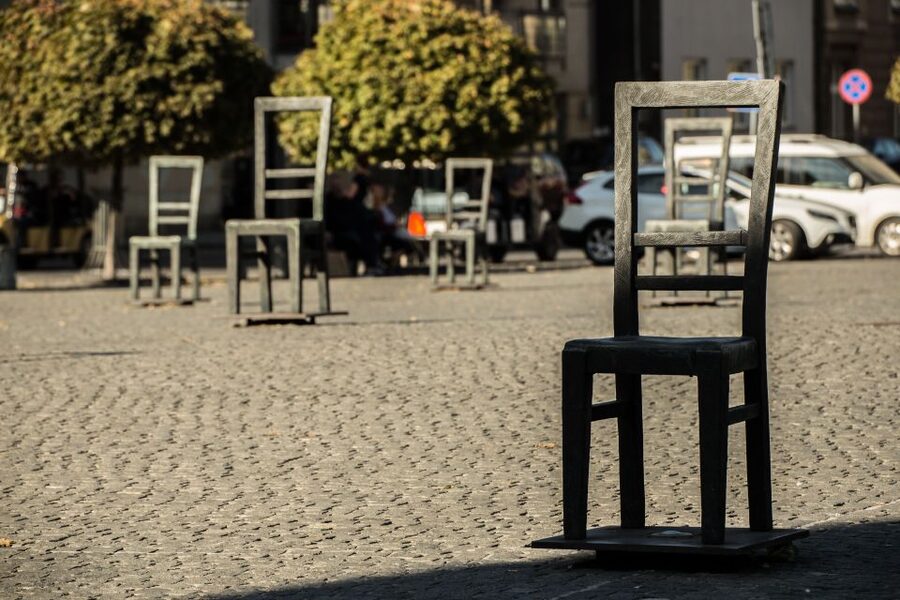
Then you reach Ghetto Heroes Square, which was once a gathering area for deportations. Today it is a memorial with dozens of empty metal chairs, each one symbolizing lives lost during the Holocaust.
This is one of the strongest parts of the tour because it is both simple and specific. You are not looking for clues. The chairs are the message. And because the square is calm, you feel the contrast between what the space was used for and what it became later: remembrance instead of forced assembly.
Your guide also explains why this location still matters in Kraków’s memory landscape. It is not just grief displayed once. It is a place that keeps the story in circulation, so people do not treat the ghetto like a distant chapter.
I recommend slowing your pace here, even if the group keeps moving. Take a moment. Read what your guide says, and look at the chairs as symbols rather than decorations. That shift makes the stop land.
More walking tours in Krakow:
- Old Town Krakow & Wawel Castle Walking Tour
★ 5.0 · 1,508 reviews - Creepy Krakow: 2-Hour City Walking Tour
★ 4.7 · 1,131 reviews - Krakow: The Old Town Walking Tour
★ 4.8 · 794 reviews - Krakow: Kazimierz Jewish Quarter Walking Tour
★ 4.8 · 571 reviews
Under the Eagle Pharmacy and Tadeusz Pankiewicz’s Courage
Across the square stands the historic Under the Eagle Pharmacy. This stop adds something crucial to the ghetto narrative: resistance and help.
Here, your guide shares the story of Tadeusz Pankiewicz and his staff, who risked their lives to help ghetto residents. They provided medicine and shelter. The tour does not treat this like a movie-style heroic moment. It frames it as a choice made under extreme danger, when helping someone could cost you everything.
This is where many guides do their best work at storytelling. You can expect a tone that is respectful and very human, and in multiple tour departures, guides have been praised for sensitivity and compassion when describing the horrors of Nazi occupation. That matters because this stop is uplifting in a careful way, not by minimizing suffering, but by showing moral courage inside it.
If the pharmacy is open, you get more context on the site itself. If it is closed, the guide’s explanation still gives you the meaning, and the building’s presence does the rest.
Daily Life, Deportations, and Survival: How the Tour Connects the Dots
A lot of ghetto tours risk becoming a slideshow of tragedy. This one is built to explain mechanisms. You learn about daily hardships, solidarity, deportations, and survival during WWII, with the tour moving through sites that reflect each stage.
In plain terms, the tour helps you understand that:
- The ghetto did not begin as an apocalypse. It began as policy and confinement.
- Deportations did not happen randomly. They happened through a system designed to move people where the Nazis wanted them.
- Survival and resistance were not slogans. They were small choices made under pressure.
One reason guides score so well is that they connect the past to present lessons without turning the tour into a lecture. Some guides, including people like Aga and Krzysztof (names that have shown up in guide feedback), are described as linking the Nazi occupation to what can happen when hatred is allowed to grow. That framing can be unsettling, but it is also practical. It pushes the message toward awareness, not just memory.
This tour also encourages you to notice something easy to miss. Even in terror, people still had routines, relationships, and responsibilities. That is part of what makes the story so painful, and so important.
A Respectful, 1-Hour Format, With Weather and Listening in Mind
The tour lasts 1 hour. That is short, which is both a plus and a limitation. Plus, you can fit it easily into a Kraków day. Limitation, you cannot linger in every spot long enough to absorb every detail.
Some departures provide headsets or ear mics, which is a big deal in winter or on windy streets. Reviews often mention how this helps you hear the guide clearly. If your guide speaks with passion, the audio support keeps that from turning into struggle.
The tour goes ahead in all weather, rain or shine. You will want warm layers in cold months and sturdy shoes year-round. The subject matter is heavy, so comfort matters more than usual. If you are shivering, you will not process the story as well.
Also note the emotional rhythm. The tour ends with a moment of reflection, so you are not just marched from stop to stop. That matters if you want the walk to feel like remembrance, not a performance.
Price and Value: Why $11 Feels Fair Here
At $11 per person, this is strong value for a guided historical walk. You are not paying for extras like food. Instead, you are paying for someone licensed to interpret a sensitive site, explain the context, and lead you through a specific route tied to real locations.
For many people, this tour hits a sweet spot. It gives you the ghetto’s key landmarks in a manageable time frame, without forcing you to commit half a day. If you are also doing another major WWII site, this walk can function as the focused “people and place” add-on that ties the broader narrative together.
The best value sign is consistency in what people appreciate: clear explanations, meaningful pacing, and guides who show both expertise and compassion. When a tour is short and charged modestly, the quality of the guiding makes or breaks it. The feedback here leans heavily toward guides being friendly, informative, and emotionally sensitive.
Who Should Book This Kraków Jewish Ghetto Walk?
This is a great fit if you want a structured, respectful walking tour that focuses on the ghetto experience in Podgórze and the most powerful memorial sites.
I think it works especially well for:
- People who already did Schindler’s Factory and want the ghetto story connected to occupation realities
- Travelers who prefer a guided route over trying to self-navigate memorial sites
- Anyone who wants a compact, high-impact experience in 1 hour
You might choose differently if you want a longer deep-history session or if you know you will struggle with emotionally intense content. Also, remember that some of the original buildings and streets can feel changed over time. One review note was that there is not much left of the old buildings, which is true for many cities after occupation and war. The way the tour compensates is through context and storytelling, not through seeing a perfectly preserved street.
Should You Book This Tour?
Yes, I would book it if you are in Kraków and want a focused way to understand the Jewish Ghetto in Podgórze. For the price, the route hits the key sites that most self-guided visitors either miss or misread: the wall remnants, Ghetto Heroes Square, and the Under the Eagle Pharmacy story tied to Tadeusz Pankiewicz.
Go in ready for emotion. Bring warm clothes. Arrive a little early so you start calm, not rushed. And if you have only one guided option for this theme, this is a very solid choice.
FAQ
How long is the Krakow Jewish Ghetto Walking Tour?
The tour lasts 1 hour.
What does the tour cost?
It is priced at $11 per person.
Where does the tour start, and does the meeting point stay the same?
The meeting point may vary depending on the option booked, so you should check your specific booking details.
Do I need to bring food or is it included?
Food and drink are not included.
Will the tour run in bad weather?
Yes. The tour goes ahead in all weather, rain or shine.
What languages are available for the live guide?
Live tour guide languages include French, German, Italian, English, Spanish, Russian, Portuguese, Swedish, Slovak.
Is the group tour available in multiple languages at once?
Our group tours are only in 1 language, so you should select your preferred language when booking.
How early should I arrive?
Please arrive 10 minutes before the tour begins. Latecomers cannot join once the group has departed and tickets cannot be refunded.
Can I cancel for a full refund?
Yes. There is free cancellation up to 24 hours in advance for a full refund.
Recently reviewed around Krakow
- Krakow: City Golf Cart Tour and Schindler’s Factory Museum★ 5.0 · 4 reviews
- Krakow: City Sightseeing Tour by Shared or Private Golf Cart★ 4.4 · 21 reviews
- Krakow beer review with a local guide★ 5.0 · 4 reviews
- Kraków: Romantic Candlelight Chopin Piano Concert★ 4.9 · 8 reviews
- From Krakow: Chocholow Hot Springs Evening or Daytime Ticket★ 4.7 · 72 reviews
- From Krakow: Zakopane, Tatra Mountains & Thermal Baths Tour★ 4.9 · 52 reviews
- Kraków: VIP Candlelight Concert The Music of Fryderyk Chopin★ 4.8 · 8 reviews
- Krakow: Bottomless Brunch with 3-Course Meal and Drinks★ 3.8 · 30 reviews