
Reviewed · JEWISH QUARTER & HERITAGE TOURS
Krakow Jewish District and Ghetto Guided Tour in a Small Group
This tour is interesting because it links the big emotional and historical geography of Krakow’s Jewish Quarter to the reality of the ghetto in one guided loop. You get a small group walk, capped at 10, so you can actually keep up with the story as you move place to place.
I like that it keeps you from wandering in circles, with a guide showing you exactly where to look from start to finish. I also like how it hits multiple key sites in a short window, from Szeroka Street and major synagogues to Plac Bohaterów Getta and a ghetto wall fragment. One possible drawback: much of the tour is viewing historic synagogues from the outside, so if you want extensive interior time, you may need to pair this with other stops.
Key things to know before you go
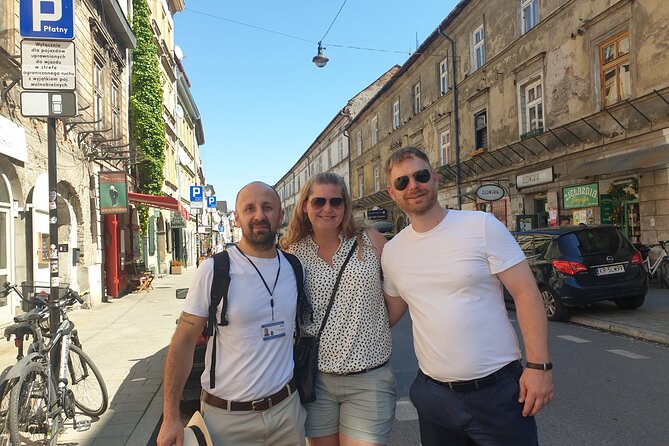
- Small group capped at 10 keeps the pace human and the Q&A possible.
- A tight 2-hour route covers a lot of named locations, without feeling rushed between stops.
- You start on Szeroka Street and end at Plac Bohaterów Getta, so the walk tells a clear story arc.
- Jan Karski is built into the route, adding the resistance and warning side of WWII.
- All stops are on a walkable path with frequent short stops that help you absorb each location.
- Mobile ticket delivery means fewer hassles when it is time to check in.
Walking the Jewish Quarter with a plan (and not a maze)
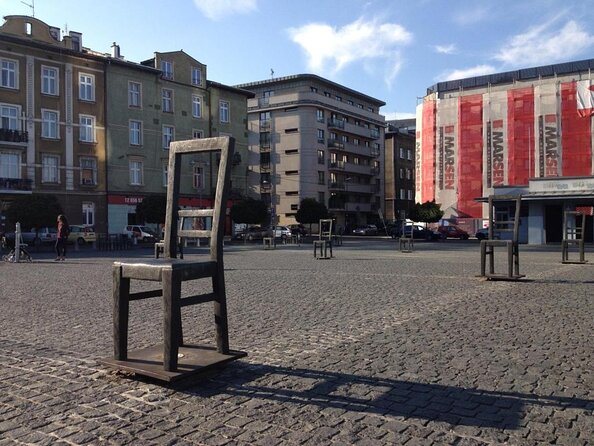
If you’ve ever tried to explore Krakow’s old Jewish streets on your own, you know the feeling. Streets are close together, signage can be hit or miss, and the important places are easy to overlook. This tour solves that problem with a guided route that does the mental work for you. You move with purpose from Szeroka 6 to the Square of Ghettos Heroes, Plac Bohaterów Getta. That end point matters, because it reinforces the shift from community life to the ghetto’s boundaries.
The small group size is a real quality-of-life upgrade. With no more than 10 travelers, your guide can pace the tour based on what you are noticing. It also means you are less likely to get stuck behind a big crowd at photo stops.
The other thing I appreciate is the time structure. The route is broken into short segments, often around 5 to 15 minutes each. That is important here, because the subject matter is not light. Short, guided stops make it easier to focus on one place at a time without your brain going numb.
More Jewish quarter and heritage tours to compare:
- Krakow: Schindler’s Factory & Ghetto Guided Tour
★ 4.7 · 1,694 reviews - Krakow: Jewish Quarter and Former Ghetto Tour
★ 4.9 · 1,441 reviews - Krakow: Bike Tour of Old Town, Jewish Quarter and the Ghetto
★ 4.9 · 1,155 reviews
Szeroka Street to the synagogues: how the story begins
The tour kicks off on Szeroka Street, often described as part of the oldest area of Krakow’s Jewish Quarter. Even if you only have a short time in Krakow, starting here gives you the sense that you are not just passing landmarks. You are entering a district with deep roots.
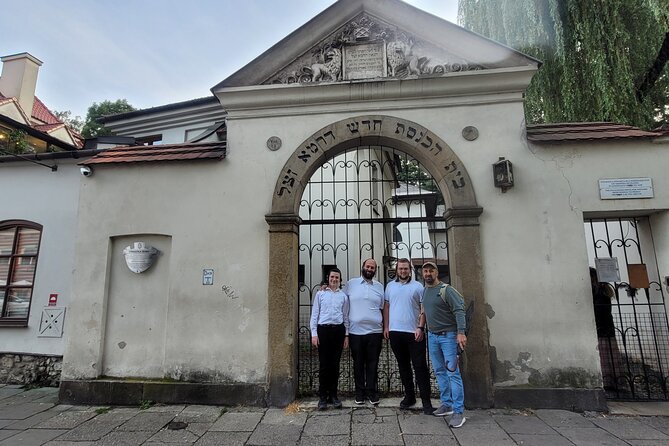
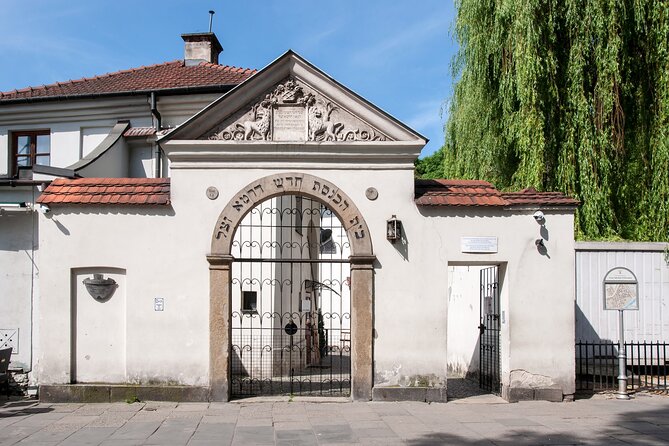
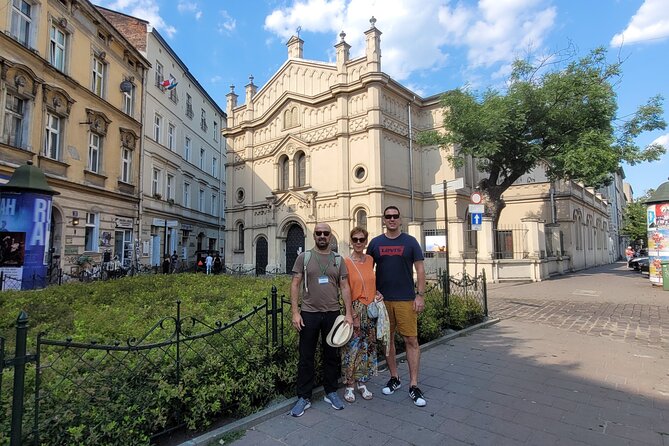
From there, you move toward the synagogue cluster. You will see places like Remuh Synagogue and the Old Synagogue from the outside. The key point is not the wall-to-wall sightseeing. It is what the guide helps you notice: how Jewish religious life was organized in Krakow, and how certain buildings became stable anchors through changing eras.
You also get Wolf Popper Synagogue from outside viewpoints. The stop is brief, but it adds another layer to the same theme: Krakow’s Jewish community was not one single story. It was made up of different communities, traditions, and institutions, and the built environment reflects that.
If you are the type who learns best by location, this “outside view, guided focus” approach works well. You are not scrambling for tickets or trying to guess what is important. Your guide frames what you are looking at.
A small consideration: because these are mostly outside views, you should not expect a long indoor museum-style experience at every stop. But for many people, that is exactly the right tradeoff. You get the map of the district in one go.
Jan Karski statue: the resistance perspective in the middle of the route
One of the stops I found especially meaningful is the statue of Jan Karski, known as the man who tried to stop the Holocaust. It is not just a photo op. It functions like a narrative hinge.
Up to this point, you are learning about the Jewish community and its institutions. Then the guide brings in the broader WWII context, the urgency of what was happening, and the effort to get information out and acted on. Even in a short segment, this kind of moment helps prevent the tour from feeling like it is only about buildings.
If you want your historical tour to connect local history to the bigger story, this stop is a strong reason to choose a guided format instead of solo wandering.
Plac Nowy and the Jewish community institutions
Next, the route reaches Market Square, Plac Nowy, which was a center for trade for the Jewish community in earlier centuries. This is where the tour shifts from worship spaces to daily life.
Trade and marketplaces are not just background detail. They explain why a community had the strength to endure disruptions over time. You are also better able to understand ghetto history later, because you see what life looked like before it was forced into confinement.
From there, you pass the JCC Krakow (Jewish Community Center) stop. Even though the time is short, it adds a contemporary thread to what you are learning. It signals that community structures and public life are part of the story too, not only what happened in wartime.
You then encounter more synagogue exteriors along the way, including an outside look at the Izzak Synagogue, and an outside look at the High Synagogue. The point of stacking these sites is not to memorize every façade. It is to show the density of Jewish cultural and religious presence in the district.
If you are into architecture, you will likely enjoy comparing how each building looks from the outside. If you are more into history, you will still get value because the guide ties each location back to what it represented for the community.
A few more Krakow tours worth comparing
- From Krakow: Auschwitz-Birkenau Guided Tour & Hotel Pickup
★ 4.5 · 33,358 reviews - From Krakow: Auschwitz-Birkenau Guided Tour & Hotel Pickup
★ 4.5 · 29,340 reviews - Krakow: Auschwitz Guided Tour with Optional Hotel Pickup
★ 4.5 · 15,280 reviews - Krakow: Auschwitz-Birkenau Guided Tour with Pickup & Lunch
★ 4.5 · 9,800 reviews
Eagle Pharmacy and what changes when you hit the ghetto boundary
As the route approaches the ghetto area, you reach the Eagle Pharmacy in Krakow Ghetto from outside. The stop lasts around 10 minutes, and the location choice matters. Pharmacies are everyday places. They help you imagine daily needs: medicines, care, and practical survival.
Then the tour moves to Plac Bohaterów Getta, the main place of Krakow Ghetto. This is the emotional pivot point for the entire route. Standing in this space with a guide framing it helps you connect the dots between community institutions you saw earlier and the forced confinement you are now learning about.
I also liked that the tour does not just jump from one “big” site to the next. It uses transitional moments. That keeps the ghetto from feeling like an isolated chapter. It is shown as something that came after, shaped by policies and geography, not something that appeared out of nowhere.
Ghetto wall fragment: using what remains to understand the past
The final major historical stop is the ghetto wall fragment, remnants of Krakow Ghetto Walls. A wall fragment is small compared to what people imagine a wall should be, but that is part of the point. It is one of the few physical reminders left that lets you grasp the boundary reality.
This is also the kind of stop where the guide’s tone and pacing really matter. When the story is handled carefully, you can take in the weight of what happened without it turning into a checklist.
Practically speaking, this last stretch is also where you get closure on the walking route. The tour ends at the Square of Ghettos Heroes, Plac Bohaterów Getta. So you do not feel like you must reverse your steps to make sense of what you just learned.
Price and what $60.21 gets you in real terms
At $60.21 per person for about 2 hours, you are paying mainly for two things: a guided interpretation and a managed small group experience. Admission is listed as free for the stops on this route, so your money is not going into ticket costs.
For me, the value case comes down to your priorities:
- If you want a guided path that keeps you oriented and helps you understand what you see, this price feels fair.
- If you already know the sites well and you prefer to wander slowly alone, the cost might feel less justified.
One sign this tour is in demand is timing. It’s typically booked around 33 days in advance, so planning ahead is wise.
Also, the tour uses a mobile ticket, which is practical. You can keep everything on your phone and focus on the walk rather than paperwork.
Logistics that make the tour easier day to day
This is a walking-focused experience, so bring comfortable shoes. You will be making many short moves and quick orientation moments, not staying seated for long blocks.
The tour is in English, and it is set up so most travelers can participate. It runs near public transportation, which is useful if you want to pair it with other Krakow plans.
It also helps that the route starts at Szeroka 6 and finishes at Plac Bohaterów Getta. That one-way feel reduces the “now what?” problem that hits some tours. You exit into the ghetto memorial area, and from there you can continue your day on foot or by transit.
Finally, there is a max group size of 10. That keeps the tour from becoming a slow shuffle, which matters when you only have about 2 hours.
Should you book this guided Jewish District and Ghetto tour?
Book it if you want:
- A small-group guided route that prevents you from getting lost.
- A focused way to cover major Krakow Jewish Quarter and ghetto locations in 2 hours.
- Clear commentary at key stops, including the Jan Karski statue and the ghetto wall fragment.
Consider skipping or pairing it with something else if:
- You specifically want lots of time entering buildings, not just viewing many synagogues from the outside.
- You prefer long, self-paced museum-style time rather than a guided walk with many short segments.
For most people, though, this is a strong “first-pass” tour. It gives you a map of places and meaning in a short window, and it sets you up to explore the area with confidence afterward.
FAQ
How long is the Krakow Jewish District and Ghetto Guided Tour?
It lasts approximately 2 hours.
What is the group size limit?
The tour has a maximum of 10 travelers.
Is the tour offered in English?
Yes, it is offered in English.
Where does the tour start and end?
The tour starts at Szeroka 6, 31-053 Kraków, Poland, and ends at the Square of Ghettos Heroes, Plac Bohaterów Getta, 30-527 Kraków.
Will I receive a mobile ticket?
Yes, you get a mobile ticket.
What is the cancellation policy?
You can cancel for a full refund up to 24 hours before the experience starts. Cancellation within 24 hours is not refundable.
Recently reviewed around Krakow
- Wawel Castle and Cathedral Guided Tour★ 4.6 · 44 reviews
- Walking Tour: Kazimierz, Jewish Quarter – 2-Hours of Magic!★ 4.7 · 35 reviews
- Wawel Castle and Cathedral Guided Tour★ 5.0 · 8 reviews
- Kraków Holocaust Tour★ 4.9 · 5 reviews
- Wadowice and Kalwaria: John Paul II Route★ 4.8 · 5 reviews
- VIP Club Entry and Booth Booking★ 5.0 · 4 reviews
- Walking Tour of Krakow: Old town – 2-Hours of Magic★ 4.7 · 5 reviews
- Krakow: Zakopane, Thermal Baths and Gorce Park Treetop Walk★ 5.0 · 3 reviews