
Reviewed · JEWISH QUARTER & HERITAGE TOURS
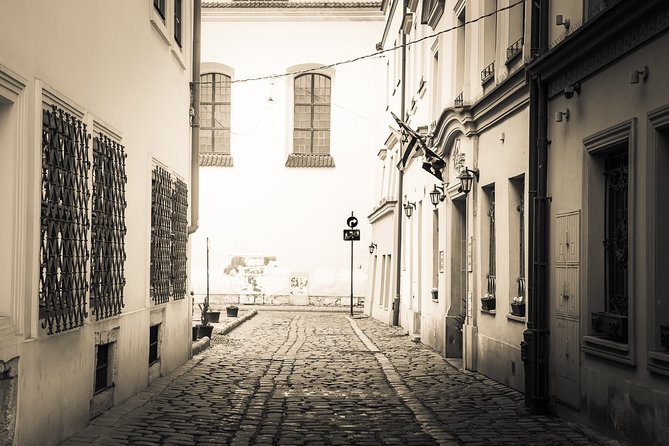
Kazimierz District, the Wawel Hill and Cracow Old Town
This tour is interesting because it stitches together three of Krakow’s most meaningful areas, Kazimierz, Wawel Hill, and the Old Town core, into one smooth half-day route. You get story with your steps, not just photo stops.
Two things I especially like. First, the included whisper system means you actually hear the guide without craning your neck or losing the thread at busy corners. Second, you move from the Jewish quarter to royal Krakow and then into the Main Square, so the city clicks into place fast. My favorite touch here is the guide, Marta, who comes across friendly and well prepared, and keeps timing tight without feeling rushed.
One drawback to consider: some of the biggest interiors are optional and have extra admissions, like Remuh Synagogue, Wawel Cathedral, and St Mary’s Basilica. Also, this is a walking route, and it is not recommended for travelers with impaired mobility.
Key highlights to know before you go
- Whisper system included, so you hear every detail while you walk
- Kazimierz cemetery visit optional, with names like Rabbi Moses and Natan Spira
- Wawel sights from the outside first, then you choose whether to add the Cathedral
- Jagiellonian University stops that connect medieval Krakow to Nicolaus Copernicus
- Old Town anchor points, including Rynek Main Square, Cloth Hall, and St Mary’s
- Final views at the Kraków Barbican, with the city wall and Saint Florian’s Gate nearby
A 4-hour Krakow walk that strings together three eras
If you only have half a day in Krakow, this tour is built for exactly that reality. The route goes in a logical arc: start in Kazimierz, lift your eyes up to Wawel, then finish in the Old Town core around Rynek and the city fortifications. It is a smart pacing trick, because each area has its own mood and the guide keeps the connections clear.
At 4 hours, you are not trying to do everything. Instead, you get the must-sees plus a few optional interior moments if you want them. The guide also uses a whisper system, which matters more than you might think. Krakow’s historic streets can be noisy, and without that kind of audio support, you end up guessing what you missed.
One more reason I like this format: it is a private tour for your group only. That usually means fewer delays and more chances for the guide to answer your questions in real time. Marta’s style, as reflected in what people say about the tour, lands on friendly, helpful, and genuinely organized.
More Jewish quarter and heritage tours to compare:
- Krakow: Schindler’s Factory & Ghetto Guided Tour
★ 4.7 · 1,694 reviews - Krakow: Jewish Quarter and Former Ghetto Tour
★ 4.9 · 1,441 reviews - Krakow: Bike Tour of Old Town, Jewish Quarter and the Ghetto
★ 4.9 · 1,155 reviews
Remuh Synagogue and the Jewish cemetery: quiet weight, great context
You begin on Szeroka Street, in Kazimierz, at Remuh Synagogue (Synagoga Remuh). This stop is your starting key, because Remuh ties the neighborhood’s long Jewish life to specific places you can stand in front of.
You have about 20 minutes here, and the highlight is the opportunity to enter the 16th-century synagogue and its adjacent cemetery. The cemetery is described as one of the oldest Jewish cemeteries in Europe, and that alone gives you the feeling that you are not just touring buildings, you are walking near resting places of major figures. The names that come up include Rabbi Moses and Natan Spira.
This is also where I’d slow down mentally. When a tour includes a cemetery, it changes the tone. You’ll want to follow the guide’s pacing and be respectful, because this is not the kind of stop where you rush for the next selfie angle. Even if you choose not to go inside, the surrounding setting still helps you understand why Kazimierz was such an important center of religious and civic life.
Optional admission is not included, so if Remuh matters to you, plan for additional tickets. But even with that in mind, this is a high-value stop because it gives a reason for everything else you’ll see later.
Kazimierz streets: the Schindler’s List courtyard and the “why” behind the architecture
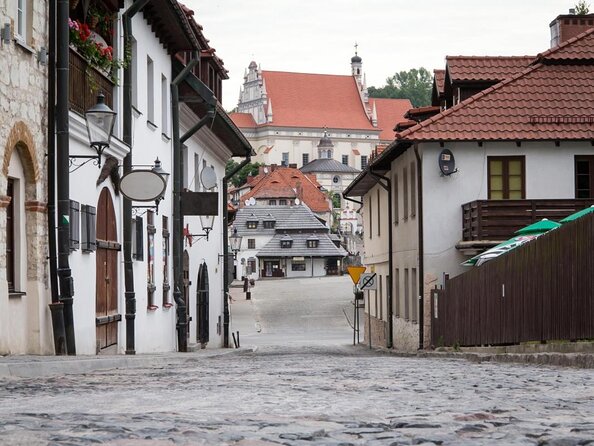
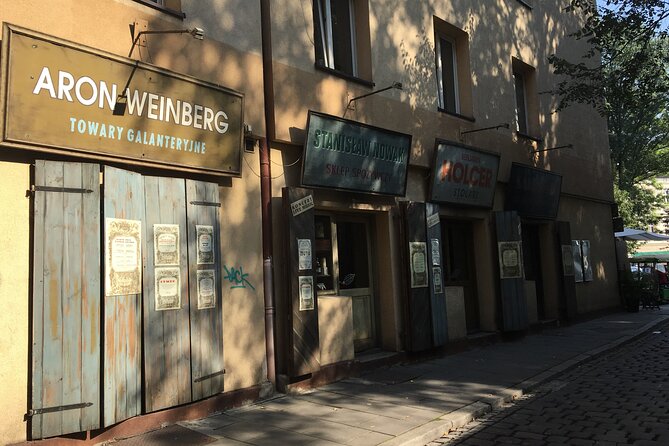
From Remuh, you continue through Kazimierz for about 45 minutes of walking and visual storytelling. The guide keeps you moving along Szeroka Street and around the key squares and lanes that define the neighborhood.
You pass near Isaac’s Synagogue, cross Nowy Square, and then head toward a famous courtyard between Józefa and Meiselsa streets. That courtyard appears in Schindler’s List by Steven Spielberg. It is one of those cinematic touchpoints that makes a place feel instantly familiar, but what’s more important is what you learn around it, how Kazimierz’s streets and community spaces shaped daily life.
This stop is also a good reminder that Kazimierz is not a theme park. It is an active district with buildings that survived wars, political changes, and time. You’ll spend enough time here to orient yourself, rather than just seeing one postcard and moving on.
Ticket cost is not the issue for these parts. This leg is described as free, so you get the guidance value without needing another admission. That makes it ideal for travelers who want a structured walking experience but still prefer not to stack up entrances.
If you like photography, this is where you’ll work hardest. If you do not, it is still rewarding because the guide’s explanations make the street layout meaningful.
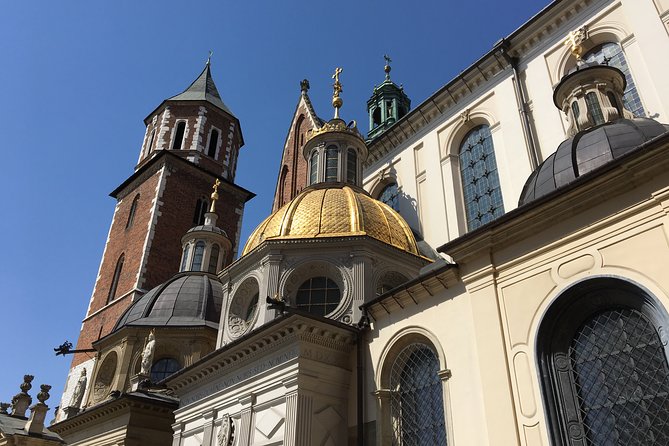
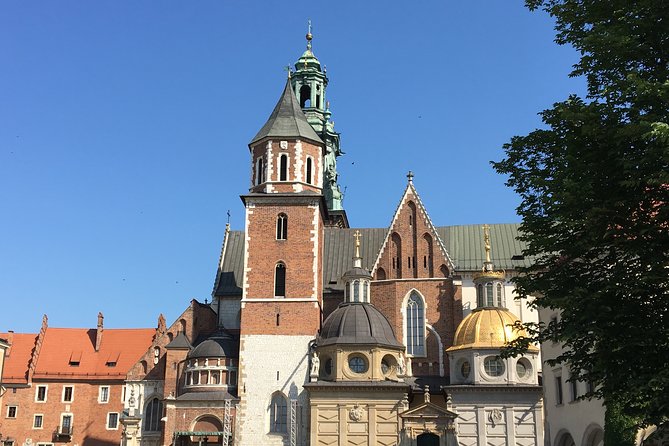
Wawel Hill: Royal Castle details first, Cathedral optional when you have energy
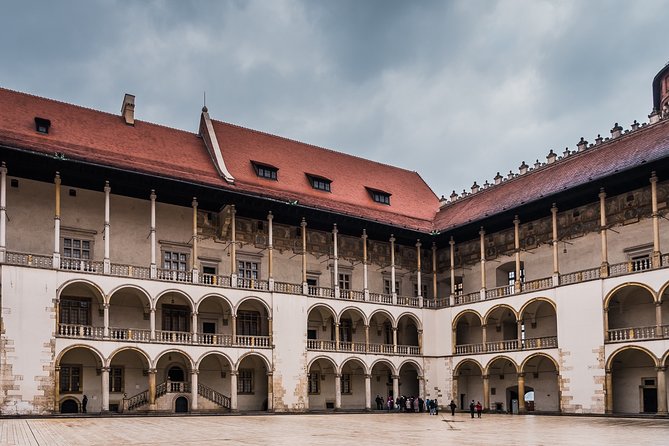
Next you head to Wawel Hill and the royal complex. The pacing here is smart: you start by admiring the Royal Castle patio area in about 15 minutes, focusing on architectural details and why they matter.
The patio is linked to major Renaissance work credited to Francesco Fiorentino and Bartolomeo Berrecci. Even if you do not go deep into the castle interiors, seeing the Renaissance style from the outside helps you connect Wawel’s role as a seat of power to the look of the stonework.
After that, the Wawel Cathedral option is there if you want it. You’ll have about 40 minutes allocated for the cathedral choice, but admission is not included. This is the kind of interior that rewards attention, because the cathedral is described as having more than one thousand years of history and serving as the place of coronation for Polish kings and their burial site.
My advice: choose the cathedral if you want a more solemn, “meaning per minute” stop. If you are feeling museum fatigue, you can still keep strong value by staying with the exterior and the patio views.
Either way, this Wawel segment is a turning point. Kazimierz asks you to think about community and memory. Wawel asks you to think about state power and centuries of ceremony. When those two ideas sit next to each other, Krakow makes sense faster.
More Wawel Castle tours to compare:
- Krakow: Wawel Castle & Cathedral Guided Tour
★ 4.7 · 2,111 reviews - Old Town Krakow & Wawel Castle Walking Tour
★ 5.0 · 1,508 reviews - Krakow: Wawel Royal Hill with Optional Castle and Cathedral
★ 4.2 · 1,220 reviews - Krakow: Wawel Castle and Cathedral Guided Tour
★ 4.6 · 595 reviews
Franciscan basilica and the university quarter: art, stained glass, and Copernicus
After Wawel, the route moves down through Kanonicza and Grodzka toward the Franciscan church area, then transitions into the university quarter.
First comes Bazylika i Klasztor Franciszkanow, the gothic basilica of the Franciscan friars. You have about 15 minutes, and the emphasis is on polychromy and stained glass windows designed by Stanislas Wyspiański. That name matters here because it signals the windows are not only old, they also reflect later artistic direction.
One practical note: with a stop like this, you’ll get the most from it if you let yourself look slowly at the color and the glass design. Even a short visit can feel long in a good way if the guide tells you what to notice before you walk in or up to the windows.
Then you reach Collegium Novum, where you spend about 10 minutes. This is a 19th-century building and it is described as the seat of rector of the Jagiellonian University. It is not just a backdrop. It helps you understand how old institutions keep operating in modern forms.
Finally, you get the medieval anchor points of the Jagiellonian University area, about 15 minutes for the medieval buildings such as Collegium Maius. Here, the tour connects the university to King Casimir the Great, who funded it in 1364. It also names Nicolaus Copernicus as a student at Collegium Maius.
This portion is a great fit if you like your sightseeing to include a little science and civic context. Copernicus shows up in Krakow not as a random trivia fact, but as a reason the university buildings are worth your attention beyond aesthetics.
Rynek Main Square, Cloth Hall, St Mary’s, and the Hejnał
Now you hit the heart of Krakow’s sightseeing zone: Rynek (Main Square). This is the big one, described as the largest medieval square in Europe and dating back to 1257, laid out after a Mongolian invasion that ravaged Krakow in 1241.
You have about 30 minutes here, and the time is used well because you do not just stand in the middle and point. You’ll enter the Cloth Hall, a textile market dating back to the 13th century, then remodeled in the 16th century thanks to Santi Gucci. Seeing the hall helps you grasp that Rynek was not only a stage for events. It was a commercial engine too.
From there you can optionally visit St Mary’s Basilica. You’ll have about 20 minutes on this option, and admission is not included. If you do go in, the highlight is the wooden High Altar from the 15th century, carved in linden wood by German artist Veit Stoss. The altar depicts scenes from the lives of Virgin Mary and Jesus Christ, and it is described as a gothic masterpiece.
Even if you skip the interior, the basilica area is still important because it sets you up for the next stop.
Right by the basilica is the spot for plac Mariacki 5, where you listen to the famous Hejnał. It is an old melody played each hour four times from the tower of the church. You only spend about 10 minutes here, but it is one of those moments that gives Krakow its identity sound. Try to be ready to pause your walking and let it happen.
Ending at Kraków Barbican and Saint Florian’s Gate
The tour closes near the fortifications, after a walk along Floriańska Street. You finish at the Kraków Barbican, with the nearby Saint Florian’s Gate and city walls dating back to the 14th century.
This is a good ending for two reasons. First, you get to see how the city once protected itself, and those angles feel very different from the religious and academic sites you visited earlier. Second, it gives you a natural launch point for continuing on your own. When the tour ends near the Barbican, you can keep wandering Old Town while your legs are still fresh enough to enjoy the streets.
You also get about 20 minutes here, which is enough time for orientation photos and a sense of scale, without turning it into a long history lecture.
Price, tickets, and what to expect from the included experience
The listed price is $65 for an approximately 4-hour group experience. Since the tour includes a whisper system and a guided route that touches a lot of top-tier landmarks, I think it is fair value, especially if you care about being guided through the meaning behind the sights.
Here’s what is included:
- A whisper system for better audio on the route
- A private group setup where only your group participates
And what is not included:
- Admission tickets for optional interiors such as Remuh Synagogue, Wawel Cathedral, and St Mary’s Basilica
- Bottled water, coffee or tea, and soda/pop
What this means for your budget: your total cost may climb if you choose all optional entries. But you also have control. If you pick just one or two interiors based on your interests, you can keep spending in check.
What to bring matters for comfort. The tour does not include water, and you’ll be walking for hours. I’d pack a small bottle of water and wear shoes you can stand and walk in for real city distances.
Also, note the tour is not recommended for travelers with impaired mobility. If mobility is a concern, this tour may feel like too much walking and turning. If you are unsure, it’s worth checking with the operator before booking.
Who should book this Krakow tour
Book it if you want a structured half-day that hits the main ideas of Krakow: Jewish Kazimierz, royal Wawel, and the Old Town center around Rynek. It is especially good for first-timers who want order without feeling like they’re sprinting between stops.
It also suits you if you care about hearing the details out loud. The whisper system is a practical upgrade. And if you like guides who keep things moving while still explaining the why, the Marta experience is a strong sign. People describe her as friendly, helpful, and full of knowledge, with the pacing and details landing in the right places.
Skip or rethink if you want a slow, unstructured day, or if you cannot do walking comfortably. Also consider whether you want multiple paid interiors. This tour gives options, but you’ll decide.
Should you book this Kazimierz, Wawel, and Old Town tour?
Yes, if your goal is a high-impact Krakow day with a clear route and a guide who keeps the city legible. The value comes from the combination of the major districts you cover, the included whisper system, and the mix of free sights plus optional interiors that you can choose based on your interests.
I’d book it rather than trying to stitch this together yourself if you like learning as you walk. The courtyard reference from Schindler’s List, the Remuh cemetery context, the Copernicus connection at Jagiellonian University, and the Rynek anchors like Cloth Hall and St Mary’s all land better when you hear the pieces connected.
FAQ
How long is the tour?
The tour is about 4 hours.
What does the tour cost?
The price is $65.
Where does the tour start and end?
It starts at Szeroka 40, 31-053 Kraków, Poland at 9:30 am. It ends next to the Kraków Barbican on Basztowa Street, 30-547 Kraków, Poland.
Are entrance tickets included?
Some admissions are optional and not included, including Remuh Synagogue, Wawel Cathedral, and St Mary’s Basilica. Other stops on the route are free.
Is this tour private?
Yes. It is described as private, and only your group will participate.
Can I cancel for a full refund?
You can cancel for a full refund if you cancel at least 24 hours before the experience’s start time. If you cancel within 24 hours of the start time, the amount paid is not refunded.
More Old Town Walking Tours to Compare
- Krakow: Rynek Underground Museum Guided Tour
★ 4.6 · 1,122 reviews - Krakow: The Old Town Walking Tour
★ 4.8 · 794 reviews - Krakow: Old Town Guided Segway Tour
★ 4.7 · 756 reviews - Kraków: Old Town & Wawel Castle Walking Tour in English
★ 4.8 · 532 reviews
Recently reviewed around Krakow
- Wawel Castle and Cathedral Guided Tour★ 4.6 · 44 reviews
- Walking Tour: Kazimierz, Jewish Quarter – 2-Hours of Magic!★ 4.7 · 35 reviews
- Wawel Castle and Cathedral Guided Tour★ 5.0 · 8 reviews
- Kraków Holocaust Tour★ 4.9 · 5 reviews
- Wadowice and Kalwaria: John Paul II Route★ 4.8 · 5 reviews
- Walking Tour of Krakow: Old town – 2-Hours of Magic★ 4.7 · 5 reviews
- VIP Club Entry and Booth Booking★ 5.0 · 4 reviews
- Krakow: Zakopane, Thermal Baths and Gorce Park Treetop Walk★ 5.0 · 3 reviews