
Reviewed · JEWISH QUARTER & HERITAGE TOURS
Jewish Krakow in German
Jewish Krakow in German is interesting because it connects architecture and neighborhood streets to real stories, including the places tied to the Holocaust in Krakow. I like tours that slow you down and explain what you are looking at, not just where you are standing. Here, you get that kind of guided reading of Kazimierz and Podgórze.
Two things I especially like are the clear focus on meaning behind the sites, and the fact that the tour is built around a structured story with an expert local guide. A possible drawback to keep in mind is that it is only 150 minutes, so you may wish you had more time at one or two spots along the way.
If you want more than a quick walk, this one can hit hard in the best way, while still making room for what Jewish culture in Krakow looks like today.
Key points worth your attention
- German live guide who can explain the context clearly and with real energy
- Kazimierz, with seven old synagogues that survived WWII, used as anchors for the story
- Podgórze in WWII context (1941 to 1943), where the former ghetto’s tragedy is still visible in place
- A carefully structured story that moves from community life to destruction, then to revival
- Good pacing for a short tour, with a downside that a couple of places may feel a little time limited
First stop: Kazimierz and the pace of a real walking story
This tour is designed as a walk through Krakow’s Jewish districts, not a museum-style lecture. You meet on the stairs in front of the old synagogue on the main street of the Jewish district, so you start in the neighborhood itself, with buildings and street scale doing part of the work for you.
The timing is tight in a good way. At 150 minutes, you will cover the key emotional and historical beats without feeling like you are spending your whole day in one topic. I also appreciate that the guide is local and gives you a structured story. That structure matters because Jewish history in Poland is not one straight line. It changes by decade, by law, by war, and by community life.
One practical tip: arrive about 10 minutes early so you can get grouped up and start on time without stress.
More Jewish quarter and heritage tours to compare:
- Krakow: Schindler’s Factory & Ghetto Guided Tour
★ 4.7 · 1,694 reviews - Krakow: Jewish Quarter and Former Ghetto Tour
★ 4.9 · 1,441 reviews - Krakow: Bike Tour of Old Town, Jewish Quarter and the Ghetto
★ 4.9 · 1,155 reviews
What you will actually see in Kazimierz
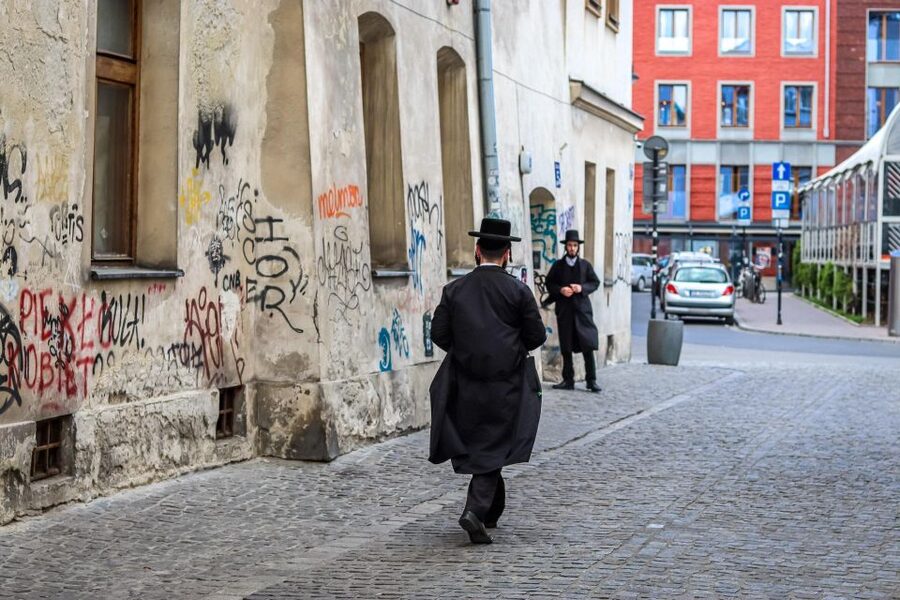
Kazimierz is often the name people remember, and that is for a reason. This is Krakow’s historic Jewish quarter, and the tour treats it as more than a postcard area. You are there to understand how the neighborhood’s layout and architecture connect to community life.
A big draw is the way the tour uses the seven old synagogues in the area as visible testimony from the past. The details you learn are what turn these buildings from background to evidence. The fact that these synagogues surprisingly survived WWII and the Holocaust is central to the tour’s message. It helps you see survival not as an abstract idea, but as something you can literally point at.
The guide also sets the scene with historical context for the local Jewish community. That means you are not just hopping between stops and guessing what everything means. You get a framework that makes the later wartime sections hit harder.
If you are wondering how long you will spend in Kazimierz specifically, expect the tour to lean into the neighborhood, its cultural heart today, and the pre-war story that led into WWII.
The seven synagogues focus, and why exterior views still matter
You might think you need inside access to appreciate synagogues. But even when you are mostly taking things in from the street, synagogues carry strong signals through style, placement, and survival.
This tour’s emphasis on the seven old synagogues is valuable because it gives you a sense of how layered community life was. Multiple synagogues usually means different traditions, needs, and social realities. You start to understand why so much of Jewish culture was not one monolithic thing, but a network of institutions.
You also learn to look at them with the right question in mind: what did these buildings stand for before the war, and what did their survival represent after? That question is exactly what makes the later Holocaust sites feel connected rather than random.
And yes, one small tradeoff: because the tour is 150 minutes, you may want to linger longer when a building catches your attention.
WWII, death, and destruction, handled as a guided sequence
The tour does not stay in the comfortable past. It moves into the period of death and destruction of WWII and the Holocaust. The way it is set up helps you follow the story in order, instead of feeling like you are hearing isolated facts.
That matters because Holocaust history is heavy, and context is what keeps the information from becoming a blur. A structured story lets you make sense of what changed, when it changed, and why the impact was so devastating for local communities like the one centered in Krakow.
In the tour’s flow, you learn about the historical Jewish community, then you shift to the war years. After that, you do not stop at tragedy. You also get to see how Jewish culture revived in today’s Krakow, which is a key part of what makes this experience feel complete rather than one-note.
This is also where a strong guide makes a difference. In the German language, you need clarity, and you want the words to land right. Feedback on the tour highlights that the guiding is very well done in German, with guides who explain with strong facts and a tone that keeps you engaged even when the subject is difficult.
Another way to spend a day around Krakow:
- From Krakow: Auschwitz-Birkenau Guided Tour & Hotel Pickup
★ 4.5 · 33,358 reviews - From Krakow: Auschwitz-Birkenau Guided Tour & Hotel Pickup
★ 4.5 · 29,340 reviews - Krakow: Auschwitz Guided Tour with Optional Hotel Pickup
★ 4.5 · 15,280 reviews - Krakow–Zakopane: Cable Car, Chocholow Baths, Cheese & Vodka
★ 5.0 · 10,720 reviews
Podgórze and the former ghetto story, 1941 to 1943
Podgórze is where the WWII ghetto story becomes impossible to ignore. This tour specifically includes Podgórze, the area of the former Jewish ghetto in WWII, and it calls out the timeline of 1941 to 1943.
You will not just hear dates. You will connect those dates to the reality that the original buildings experienced tragedy during those years. That framing helps you understand why place matters in Holocaust remembrance. When you stand in the neighborhood, it is easier to grasp that this was not a faraway event. It was lived in real streets, within real buildings, and for real people.
What I like about this approach is that it does not treat memory like a checklist. The guide links the ghetto story to what you learned earlier in Kazimierz, so the contrast is not confusing. The result is a clearer sense of continuity broken by violence.
One note for your own expectations: the tour is moving. You will see the key areas and hear the core story, but this is not designed to be a long, quiet research session in one exact location.
Jewish Krakow today, and why the revival section isn’t just a happy ending
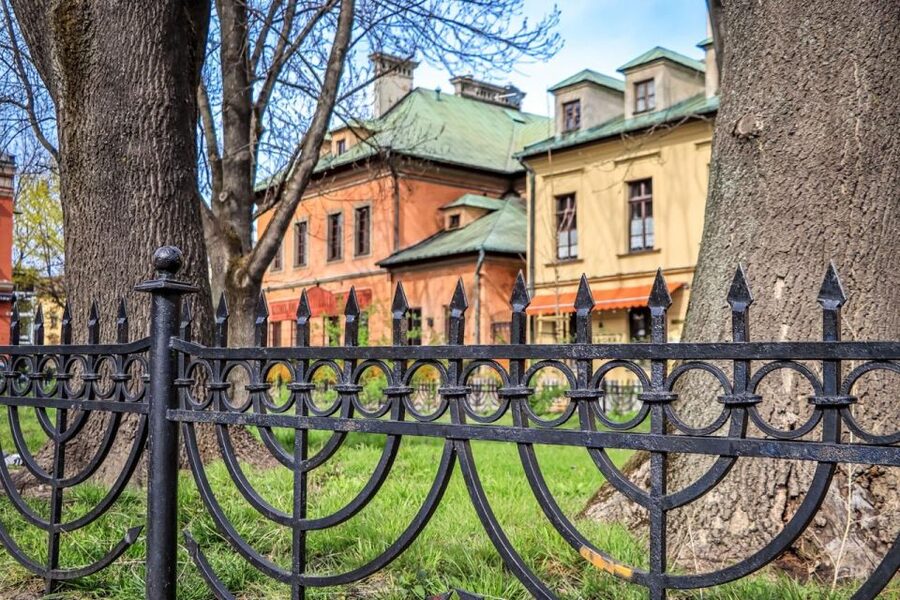
After the war section, the tour turns toward the amazing revival of Jewish culture in today’s Krakow. This part is important because it refuses to freeze Jewish life in the past.
In practical terms, it also changes the tone of your walk. You start to notice the neighborhood as living space again, including Kazimierz as a cultural heart of the modern city, with a small but lively Jewish community.
That does not erase what happened. It does something better. It shows you that communities rebuilt, traditions continued, and Jewish culture did not simply end in 1945. You get to hold both realities in your head at the same time: destruction and survival, loss and renewal.
If you like city walking tours that help you read a place like a document, the revival section gives you that next layer. You start understanding not only what the neighborhood was, but what it became.
The guide matters, and the German delivery is a big part of the value
This tour is led by a live guide in German. That is a core part of the experience, not a minor detail. If German is your comfort zone, you will likely get more out of the story because the guide can use nuance and clear explanations.
The strongest feedback points to guiding that is both informative and engaging. One guide named Max specifically stood out for leading the group to different places while demonstrating lots of factual knowledge. Another highlight was that the guide speaks excellent German, with a storytelling style that feels like it pulls you along rather than talking at you.
There is also a lighter edge mentioned in feedback, where the tour can be informative and still feel fun in places. That balance is helpful. When you are dealing with Holocaust history, you do not need the guide to be cheerful. You do do need them to keep you able to listen and process.
Price and value: what $26 buys you for 150 minutes
At $26 per person for a 150 minute tour, this sits in the reasonable, mid-range category for Krakow. But what matters is what you are paying for: an expert local guide and a carefully structured story.
The tour also includes the note that it is set up as a pay as you wish general tour. In that case, the amount you pay covers the reservation fee and the guide’s payment. For you, that usually means two things. First, you are not locked into a fixed upcharge model where you feel boxed in. Second, you can reflect on the quality of the guide and reward accordingly.
If you are choosing between a general walking tour and a specialized history tour, this is the specialized one. It targets Jewish heritage, WWII destruction, Holocaust-linked places in Krakow, and the revival story after the war. For that combination of topics, $26 can feel like good value, especially when the guide’s German is strong and the tour stays organized.
Who this Jewish Krakow tour is best for
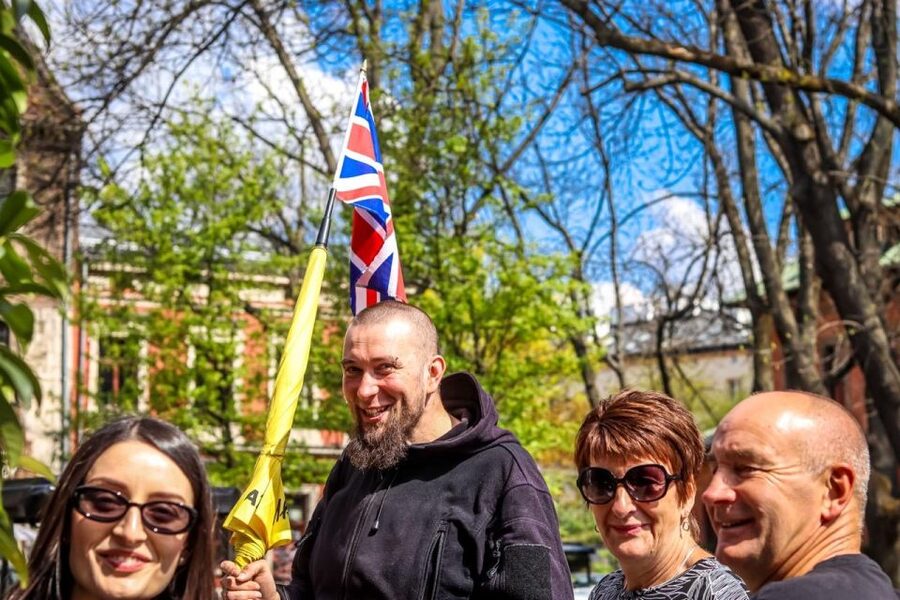
I think this tour is a strong fit if you:
- want Jewish Krakow context tied to real neighborhoods, not only landmarks
- speak or comfortably understand German and want a live guided narrative
- prefer a walking format where the guide helps you interpret what you see
- are interested in both the pre-war community story and the WWII ghetto timeline of 1941 to 1943
It is also a good option if you want a short, focused outing rather than a half-day that disappears into long museum time. But if you need maximum time at a few sites, you might feel slightly rushed, simply because 150 minutes has to cover Kazimierz and Podgórze and keep the story flowing.
Practical tips so you get the most out of the walk
A few small things will make this smoother.
First, plan for a walking tour. You will move between areas and cover key sections of Jewish Krakow, including the Holocaust-related parts and the revival story.
Second, bring a respectful mindset. This tour includes the places where the Holocaust took place in Krakow, so your listening tone matters. It also helps to stay present rather than multitasking your phone during the harder sections.
Third, wear comfortable shoes. The meeting point is on stairs in front of the old synagogue, and the tour moves through neighborhoods where you will want stable footing.
Finally, show up ready to connect dots. This is not a random highlight walk. The guide is building a structured narrative, so if you pay attention to the story order, everything clicks more quickly.
Should you book Jewish Krakow in German?
Book it if you want a guided Jewish Krakow walk that takes you beyond surface sightseeing. For $26 and 150 minutes, you get an expert local guide in German, a story that links Kazimierz to WWII tragedy, and a clear inclusion of Podgórze with the ghetto timeline of 1941 to 1943. The best part is the way the guide’s explanations turn streets and synagogues into meaning.
Skip it or consider alternatives if you do not want Holocaust-linked sites in your itinerary, or if German is a barrier. Also, if you are the type who always wants extra time at one specific building, be aware that some stops may feel like they pass too quickly in a half-day format.
If you can handle the subject thoughtfully and you want context with real storytelling, this is a solid choice for an authentic, place-based experience in Krakow.
FAQ
What language is the tour offered in?
The tour is guided in German with a live tour guide.
How long is Jewish Krakow in German?
The duration is 150 minutes.
Where do we meet for the tour?
You meet on the stairs in front of the old synagogue, in the main street of the Jewish district.
What time should I arrive at the meeting point?
Please arrive 10 minutes before the activity starts.
What is included in the ticket price?
It includes an expert, local travel guide and a carefully structured story.
What is not included?
Hotel pickup and return transport are not included, and snacks are not included.
Is the tour connected to Holocaust sites in Krakow?
Yes, the tour includes the places where the Holocaust took place in Krakow.
Can I cancel and get a refund?
Yes, free cancellation is offered up to 24 hours in advance for a full refund.
Recently reviewed around Krakow
- Krakow: City Golf Cart Tour and Schindler’s Factory Museum★ 5.0 · 4 reviews
- Krakow: City Sightseeing Tour by Shared or Private Golf Cart★ 4.4 · 21 reviews
- Krakow beer review with a local guide★ 5.0 · 4 reviews
- Kraków: Romantic Candlelight Chopin Piano Concert★ 4.9 · 8 reviews
- From Krakow: Chocholow Hot Springs Evening or Daytime Ticket★ 4.7 · 72 reviews
- From Krakow: Zakopane, Tatra Mountains & Thermal Baths Tour★ 4.9 · 52 reviews
- Kraków: VIP Candlelight Concert The Music of Fryderyk Chopin★ 4.8 · 8 reviews
- Krakow: Bottomless Brunch with 3-Course Meal and Drinks★ 3.8 · 30 reviews