
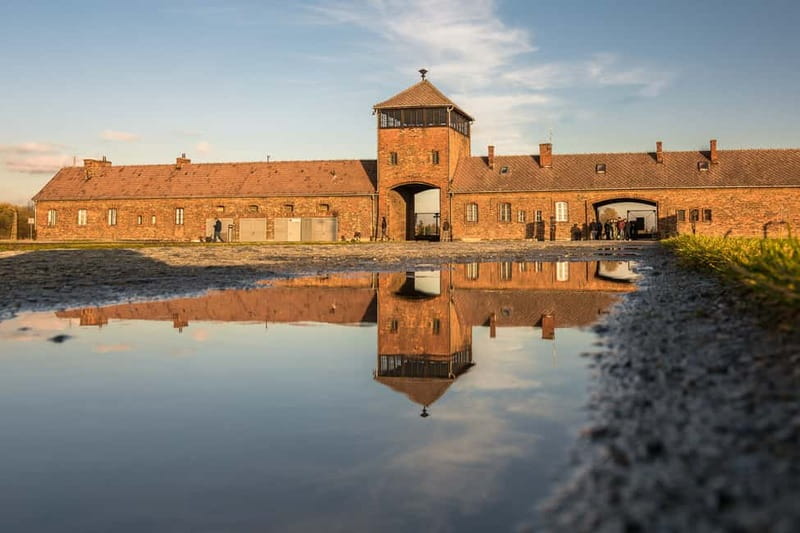
Reviewed · AUSCHWITZ-BIRKENAU MEMORIAL VISITS
From Krakow: Auschwitz-Birkenau Tour with Transportation
Auschwitz-Birkenau is one of those places that hits you fast, not with spectacle, but with facts. Visiting Auschwitz I and Auschwitz II-Birkenau in one day helps you see how a system was built and how it worked, step by step, and why the world still remembers it.
I like two things right away: you get skip-the-line entry plus a properly run coach setup, and you wear a portable headset so the guide stays clear even in crowded areas. Guides I saw mentioned by name included Mateusz, Jakub, Vlad, Martin, and Margarette, and the best ones keep a calm, respectful pace.
The main consideration is the day is intense and not slow. You’ll be walking for hours, and the visit can feel fast in the biggest sections, especially if you’re hoping for extra museum time at each building.
Key things to know before you go
- Meet at Plac Matejki 2 in Kraków, then you head straight out by coach with no hotel pickup.
- Two distinct parts, two time blocks: Auschwitz I for about 2 hours, then Birkenau for about 50 minutes.
- Portable headsets help you hear your English-speaking guide, even when groups are everywhere.
- Short breaks are built in (often 10 to 15 minutes) so you can reset, use the bathroom, or grab a book.
- You’ll follow museum rules closely: small bag limits, no flash, and no smoking inside the grounds.
Why this tour format works: transport plus a guided pair of sites
There are two ways to visit Auschwitz-Birkenau: self-guided, or guided. This tour style is built for a third option, the one that makes sense if you want the context without turning the day into a logistics puzzle. You leave Kraków in the morning, go out to Oswiecim, and get taken between Auschwitz I and Birkenau.
The best part is that the day is structured around learning. Auschwitz was not one static place and one moment in time. It grew, changed purpose, and expanded, and your guide’s job is to connect the dots while you’re standing in front of the evidence.
And yes, the emotions are real. This is not the place for a casual walkabout. You’ll likely feel a heavy quiet in your group, and you’ll want your guide to keep the tone steady.
More Auschwitz-Birkenau memorial visits from Krakow:
- From Krakow: Auschwitz-Birkenau Guided Tour & Hotel Pickup
★ 4.5 · 33,358 reviews - From Krakow: Auschwitz-Birkenau Guided Tour & Hotel Pickup
★ 4.5 · 29,340 reviews - Krakow: Auschwitz Guided Tour with Optional Hotel Pickup
★ 4.5 · 15,280 reviews
Meeting at Kraków’s Plac Matejki 2, then the early start reality
This tour meets at Plac Matejki 2 in Kraków. From the city center, the bus stop and the office are on your right-hand side. The office is marked with the Cracow City Tours logo, so you should be able to spot it quickly.
There is no hotel pickup, so you should plan to arrive early enough to find the office and get settled. Once the group loads, the coach ride begins and you head for Oswiecim. On past departures, people mention early departures such as around 4am or 6am depending on the scheduled slot, so bring patience for the wake-up call.
Practically, that early start is one of the reasons the day runs smoothly. You’re not fighting for your turn in line, and you have more time to be inside the memorial spaces with guided pacing.
Also, your day is not meant to run late into Kraków. One of the nice bonuses is that you can often be back in the city by early afternoon, which leaves you time for the rest of your trip without feeling wrecked all day long.
The coach experience: comfortable ride, plus headsets you actually need
You’ll travel by coach with a driver and an English-speaking tour leader. The tour includes portable headset systems for each visitor. That matters because once you’re inside, you’re dealing with crowds, groups moving at different speeds, and quiet passages where you don’t want to lose words.
On the bus ride, some departures include an introductory film or documentary. Even if you just catch a small part, it can help you get your bearings before you see the first gate and buildings.
For the practical side, reviews commonly call out comfortable coaches and professional drivers. Still, keep in mind that audio tech can be imperfect. A few people reported headset cutouts or uncomfortable sound, so if you’re sensitive to audio issues, test your equipment early and tell the guide right away if something isn’t working.
Auschwitz I: how the guide turns buildings into a timeline
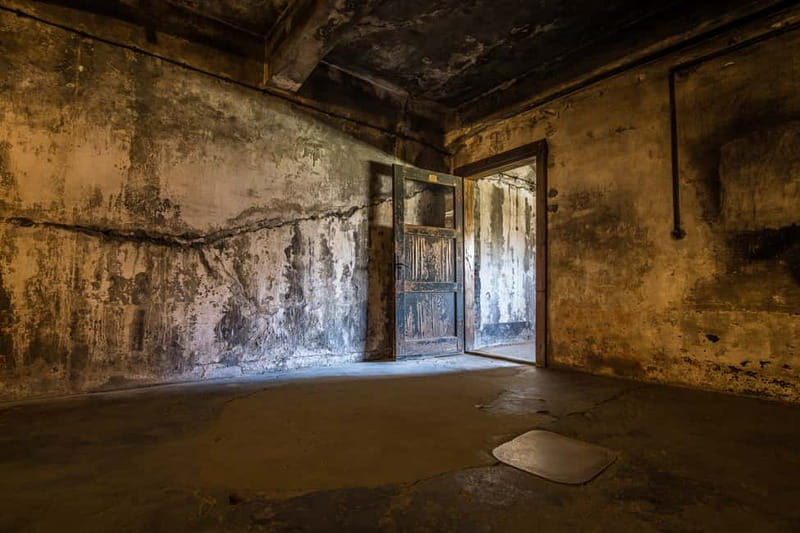
Auschwitz I is the part most people think of first, and it’s where the tour usually starts making the story feel real and chronological. You’ll spend about 2 hours here, with time guided through key areas of the camp, including prison blocks and other core spaces.
The route tends to focus on the camp’s creation and early development, including why it was set up in 1940 near Oświęcim. Your guide explains the Nazi approach to mass arrest and overcrowding and then connects that to the escalation into the Final Solution in 1942. That historical thread is not just background. It changes how you interpret what you see in front of you.
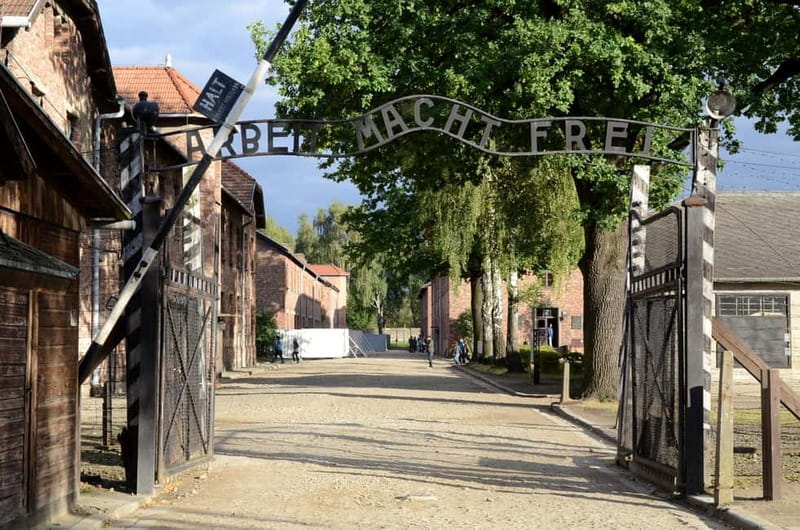
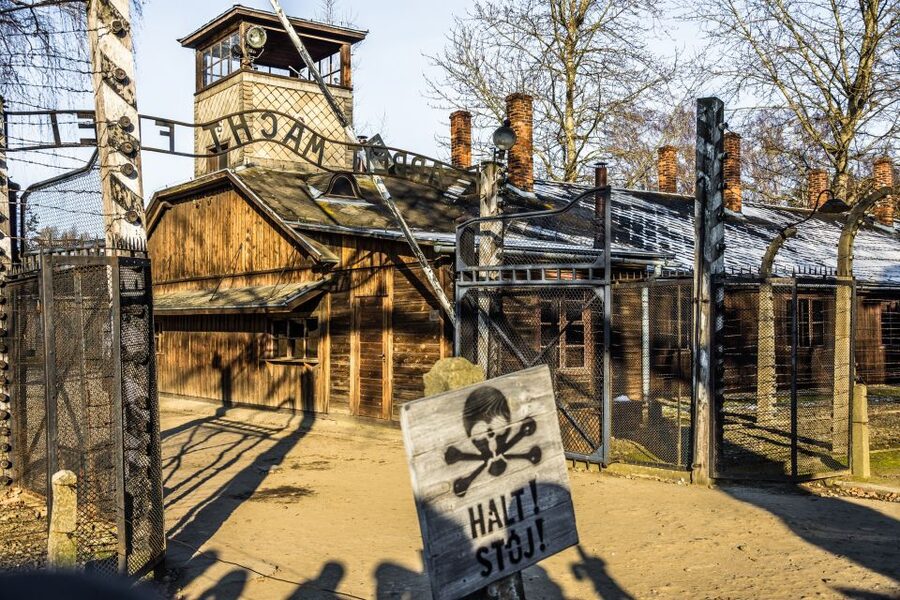
One detail that’s often mentioned is that you’ll see the main gate of Auschwitz and hear tragic stories guided by your leader. The best guides handle this with care, using the right amount of time per stop, and not rushing through the moments that deserve stillness.
Time pressure is real here too. Some groups feel the pacing is tighter than they’d like, especially during the busiest stretches. If you’re the type who likes to read every plaque slowly, plan to accept that this tour is an overview with careful guidance, not a self-paced museum marathon.
Another way to spend a day around Krakow:
- Krakow–Zakopane: Cable Car, Chocholow Baths, Cheese & Vodka
★ 5.0 · 10,720 reviews - Krakow: Auschwitz-Birkenau Guided Tour with Pickup & Lunch
★ 4.5 · 9,800 reviews - From Krakow: Wieliczka Salt Mine Tour
★ 4.6 · 9,393 reviews - Krakow: Auschwitz-Birkenau Guided Tour Pickup/Lunch Options
★ 4.5 · 9,057 reviews
Break time at the memorial complex: small pauses that help
Between Auschwitz I and Birkenau, you get short break windows, often around 20 minutes, plus a smaller break later. These breaks matter more than you’d think.
You can use the restroom, grab bottled water or a small snack if permitted outside the museum spaces, and reset your brain. The tour also provides the option to buy a book in the gift shop during short breaks.
If you’re the kind of person who needs a mental breather to keep your composure, these pauses are a gift. If you skip them, the long day can feel even more relentless.
Auschwitz II-Birkenau: seeing the scale and why it matters
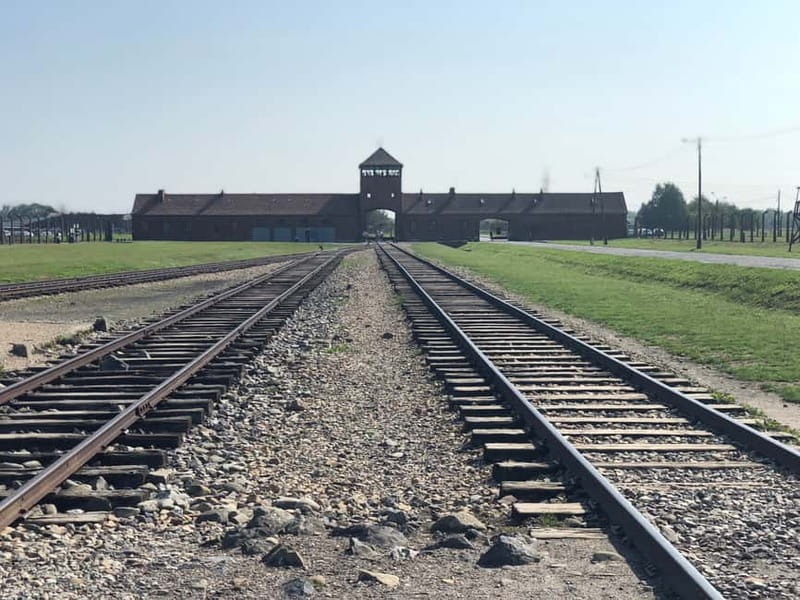
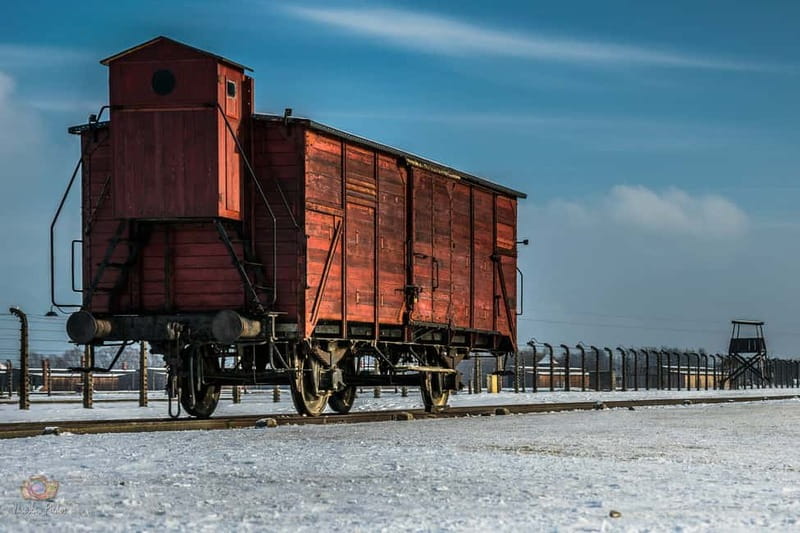
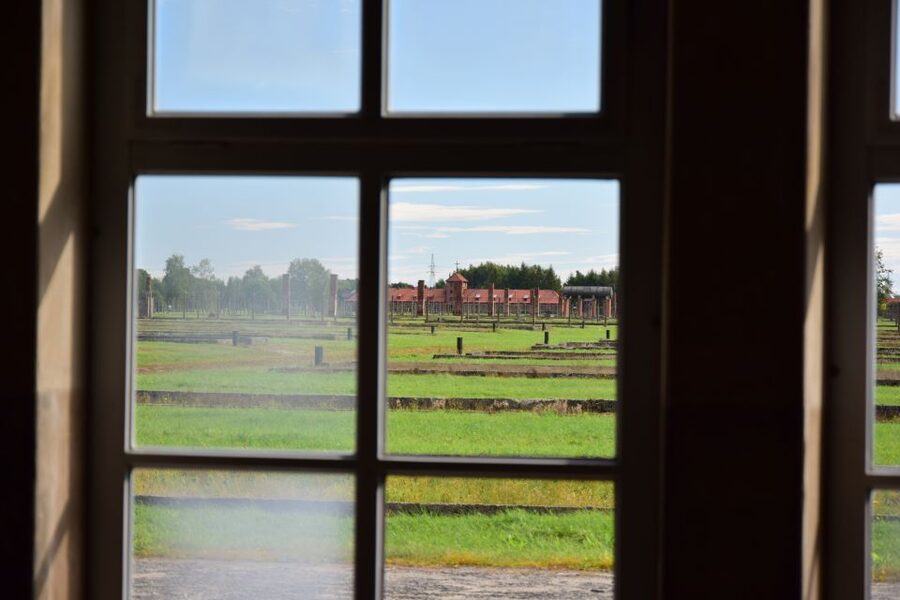
Birkenau is Auschwitz II, and it’s where scale hits you hardest. The visit here is shorter, about 50 minutes, but it’s a powerful chunk of time. You’ll see major areas connected to mass deportation and the camp’s function, including places tied to gas chambers and crematoriums.
This is also where good guiding makes a difference between seeing objects and understanding a system. Your leader’s job is to connect Auschwitz I to Birkenau, and to explain how Nazi crimes expanded beyond a single facility into a sprawling mechanism of extermination.
Crowds can be intense at Birkenau, and the site is large. That can make it feel like you’re moving quickly, even with a guide. Some people feel they saw only the most emphasized stops. Others appreciate that the guide keeps a respectful pace and ensures you don’t miss the essential story points.
A headset makes the difference here. In open areas, it’s easy to drift away. If you lose your guide at Birkenau, you can quickly lose the context. Stay close, and when the guide pauses, don’t treat it like a photo opportunity. Use it to listen.
Walking, crowd flow, and how not to miss the point
This is a tour where you should plan to move on purpose. You’ll do a lot of walking, and the camp grounds are not set up like a theme route. Even if you’re traveling with a guided group, you’ll need to slow your pace at the moments your guide asks you to slow down.
Two practical tips help:
1) Keep your headset volume comfortable so you hear clearly without straining.
2) Use the short breaks to reset posture and breath, because your body will feel it later.
One more reality check. This is not a silent, private visit. You’ll likely share spaces with many other groups. That means there may be a mix of behaviors, and the respectful tone depends partly on your own choices too. The tour format gives you structure, but the memorial asks you to take your time in your own way.
Price and value: what you’re really paying for
At $86 per person, you’re not paying only for the bus. You’re paying for the combination that can be worth a lot in practice:
- Entrance tickets to Auschwitz-Birkenau
- Transportation from Kraków to Oswiecim and between Auschwitz I and Birkenau
- An English-speaking tour leader
- Portable headsets for each participant
- Insurance for the tour duration
If you were to piece it together yourself, you’d still need timed entry tickets, a reliable way to get between the two sites, and a plan for understanding what you’re seeing. This tour bundles those needs into one price, and it does so with the kind of scheduling that helps you avoid wasting precious time while you’re already at the memorial.
The other value piece is skip-the-line entry. When the gates and paperwork are the limiting factor, saving that time is genuinely practical.
What to bring, wear, and avoid on memorial day
Bring your passport or ID card. The tour requires providing your full name and contact details as part of booking, and entry can be refused if your name doesn’t match the ID exactly.
Wear for comfort and respect. For example, sleeveless shirts are not allowed. Keep your layers in mind, because your comfort matters when you’re walking for hours.
On luggage, keep it tight. No smoking, and no luggage or large bags. The maximum bag size for entry is 30x20x10 cm. If you have bigger items, the guidance is to leave them in the cars or buses or lockers.
Photo rules are simple. You’re allowed to take photographs, but do not use flash inside the blocks.
Food and drinks are not included. If you want a snack, you’ll need to handle it during the break windows or before you go, since the day’s schedule includes short stops.
Who this Auschwitz-Birkenau tour is best for
This tour fits best if you want:
- a guided overview across both Auschwitz I and Birkenau
- a day plan that removes transport stress
- headset audio support so you don’t miss explanations
It’s not ideal for young kids. It’s listed as not suitable for children under 14.
If you’re traveling alone or with a partner and you don’t want to spend your energy planning buses and entry times, you’ll probably appreciate this format. If you’re the kind of person who needs a slow, deep read of every exhibit, you might want to pair this with extra time later, when you can return with fresh energy.
If something feels off: audio issues, pacing, and group flow
Most experiences people describe are smooth and well-run, but there are a few real-world friction points to know.
Some people reported audio problems with headsets, including cutouts or discomfort. Others felt the tour was rushed, usually because the camps are huge and groups move in parallel. That’s not a sign the guide is careless. It’s a sign you’re visiting a place with intense demand and limited time per visitor.
There can also be meeting point chaos in rare cases if multiple language groups board at once. The fix is simple: arrive early, and be ready to find the right office marked with the Cracow City Tours logo.
Should you book the Auschwitz-Birkenau tour with transportation from Kraków?
Yes, if you want the practical help that makes this kind of visit possible: coach transport, skip-the-line entry, headsets, and a guide who keeps the story coherent across two major sites.
I’d book this instead of trying to DIY your way if you:
- have limited time in Kraków
- want one guide handling both Auschwitz I and Birkenau
- care about hearing the explanations clearly through headsets
Skip it or rethink if you:
- strongly prefer slow, independent museum wandering
- are sensitive to group pacing and tight time blocks
- expect a light, easy day (this is not that kind of outing)
FAQ
Where do we meet for the tour in Kraków?
The meeting point is Plac Matejki 2 (Matejki Square 2) in Kraków. The bus stop and the Cracow City Tours office are on your right-hand side when heading from the city center.
How long is the tour?
The duration is listed as 450 minutes, which is a full day with transport, guided visits, and short breaks.
Is transportation included between Auschwitz I and Auschwitz II-Birkenau?
Yes. Transportation is included to/from Oswiecim and between the two parts of the Museum.
Do we need to bring identification?
Yes. You need a passport or ID card for entry. Driver’s license is listed, and you should also bring ID details for children if applicable.
Are bags allowed inside the museum?
You can bring only small items. Luggage or large bags are not allowed, and the maximum bag size is 30x20x10 cm. Larger items should be left in the car or bus or in lockers.
Are flash photos allowed?
No. You are allowed to take photographs, but flash photography is not allowed inside the blocks.
Recently reviewed around Krakow
- Krakow: City Golf Cart Tour and Schindler’s Factory Museum★ 5.0 · 4 reviews
- Krakow: City Sightseeing Tour by Shared or Private Golf Cart★ 4.4 · 21 reviews
- Krakow beer review with a local guide★ 5.0 · 4 reviews
- Kraków: Romantic Candlelight Chopin Piano Concert★ 4.9 · 8 reviews
- From Krakow: Chocholow Hot Springs Evening or Daytime Ticket★ 4.7 · 72 reviews
- From Krakow: Zakopane, Tatra Mountains & Thermal Baths Tour★ 4.9 · 52 reviews
- Kraków: VIP Candlelight Concert The Music of Fryderyk Chopin★ 4.8 · 8 reviews
- Krakow: Bottomless Brunch with 3-Course Meal and Drinks★ 3.8 · 30 reviews