
Reviewed · CYCLING TOURS
Discover Kraków by Bike with a Dutch guide
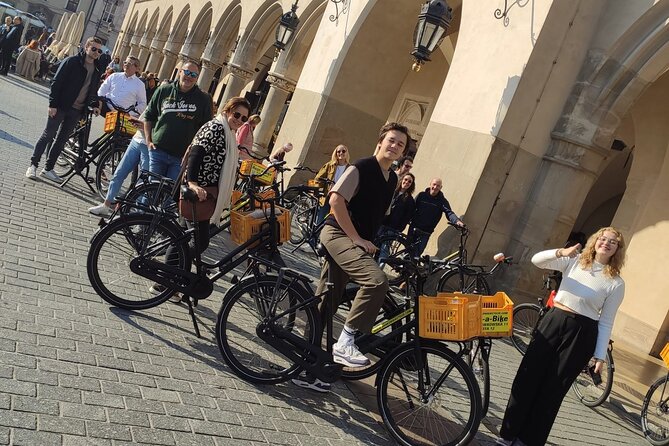
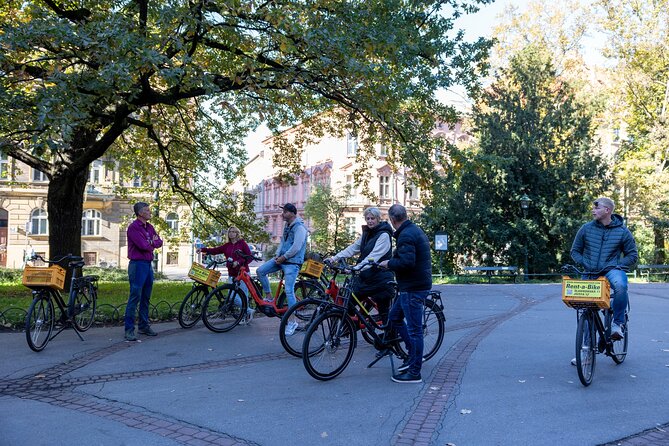
Kraków is one of those cities where you feel like you need a second day just to catch up. This bike tour makes it interesting because you cover big-hitter landmarks fast, while a Dutch guide connects the dots between the old town, Kazimierz, and the WWII story around Schindler. If you are lucky enough to ride with guides like Johan, Wesley, Max, or Jeroen, the storytelling is a big part of the fun.
What I like most is how the tour keeps the pace human. You get classic must-sees like Rynek Główny and the Collegium Maius, plus you also hit places many visitors only see from the edge. The second thing I love is the mix of light and heavy moments, from a legend about the Wawel dragon to thoughtful stops around the ghetto and Schindler’s List locations.
A possible drawback to know up front: some stops are not included in the price, especially Schindler’s Enamel Factory and the Stara Synagoga area. So if you plan on entering everything, expect a little extra cost on the day.
Key highlights worth planning for
- Dutch guide-led route that links landmarks into a story, not just a checklist
- Rynek Główny and historic university buildings with quick, high-impact stops
- Kazimierz and former ghetto sites that balance walking distance with context
- Schindler’s List Passage and Schindler factory area for WWII history reference points
- Classic plus modern Kraków in one ride, from medieval walls to Father Bernatek’s Bridge
- E-bike option for an easier pace, with a clear add-on fee
Why a Dutch-Style Bike Makes Kraków Add Up Fast
The big value here is time. Kraków’s sights are close on a map, but on foot you still lose time to hills, detours, and simply getting around crowds. A bike turns your half-day into a city overview, without feeling like you are sprinting.
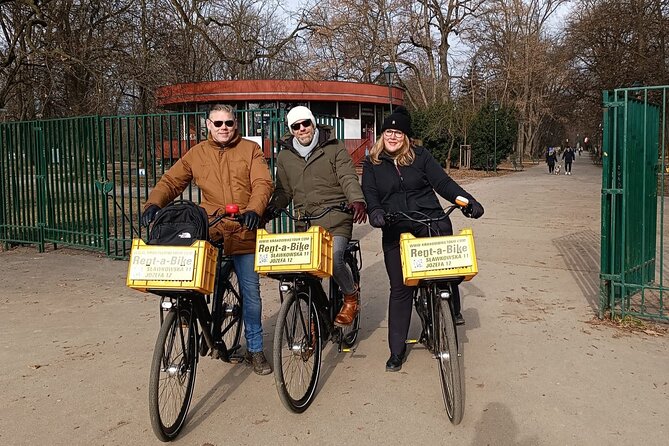
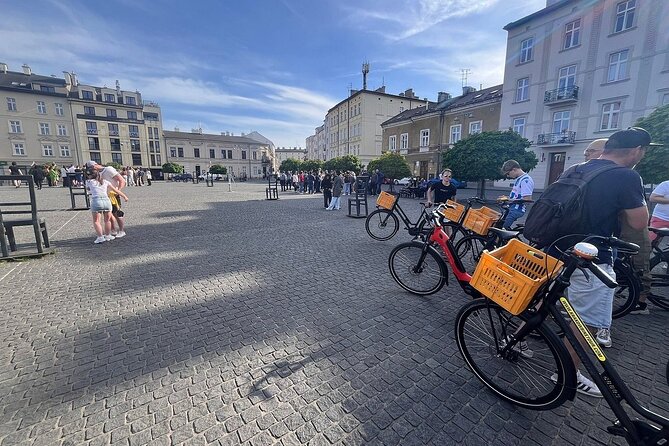
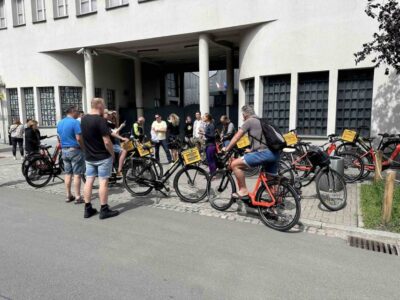
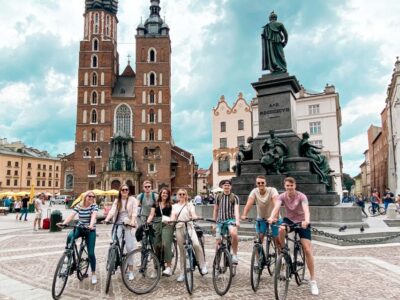
The tour uses Dutch-style bikes (and you can also opt for an e-bike for a fee). That matters because comfort changes the whole experience. When your legs are not doing all the work, you can actually pay attention to what your guide is pointing out.
You also get a short-stops rhythm: most stops are around 10 to 15 minutes, with a couple of longer pauses for the heavier memorial points. That structure helps you avoid the classic problem of a “sightseeing day” turning into one long queue.
Finally, the group size is capped at 20. That usually means you get a guide who can keep an eye on the route and on the pace, which makes it easier to ask questions when something catches your attention.
More bike tours in Krakow:
- Complete Cracow Bike Tour (small group of maximum 15 people!)
★ 5.0 · 1,322 reviews - Krakow: Bike Tour of Old Town, Jewish Quarter and the Ghetto
★ 4.9 · 1,155 reviews - Highlights of Krakow Bike Tour – Small group
★ 5.0 · 662 reviews
Getting Oriented at Stare Miasto and Kraków’s Main Square
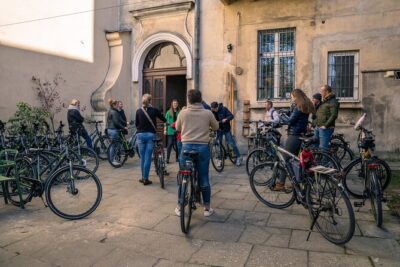
You start in the city center at the meeting point near Hotel Alexander on Garbarska 18, and you return to that same general starting area to wrap up. Right away the team helps you pick the right bike and gives instructions, which is key if you are not a daily cyclist. There is also a chance to use the restroom before you set off, which sounds small until you are halfway through a ride and it becomes not small.
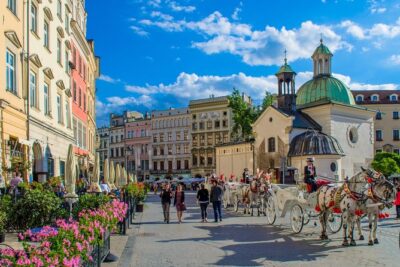
The first real landmark hit is Rynek Główny, Kraków’s famous central square. This is the largest medieval market square in Europe, so even if you have seen photos, it hits differently in person. You will look at major structures like the Cloth Hall and the Town Hall Tower, and you get a stop for St. Mary’s Basilica.
What makes this more than scenery is the way the guide brings the square to life. Expect talk about medieval trade customs and a legend about a trumpeter. There is also a story line that includes Stalin and Lenin, which gives you a quick lesson in how big politics can cast a long shadow over a city center.
This is also where the bike tour earns its keep. You see the square from multiple angles while still keeping momentum. On foot, you would likely spend longer just repositioning and orienting yourself.
Collegium Maius, Maria Magdalena Square, and the Wawel Dragon Story
After the main square, the tour shifts to academic and architectural Kraków. One of the best stops is Muzeum Uniwersytetu Jagiellonskiego Collegium Maius, the Gothic complex of Poland’s oldest university. You also hear the connection to Copernicus, which is the kind of fact that turns a pretty building into a real-time history lesson.
From there you pass Maria Magdalena Square. It is one of those places where the architecture looks instantly photogenic, but the guide’s context is what makes it memorable. You get a brief stop for the historical significance and the character of the square, so you leave with a reason for caring, not just a picture.
Then comes the fun dramatic beat: the Wawel dragon monument. The guide tells the tale of the dragon that once terrorized the city, and the story includes how a clever craftsman outsmarted it. Even if you already know the broad outline, the way it is told here fits the overall vibe of the tour, a mix of real history and local legend that keeps you from feeling overloaded.
The ride continues toward Wawel Hill for the Wawel Royal Castle stop. This is the seat of Polish kings, so even the quick stop gives you a sense of the power center of the country’s past. The guide’s role here is important because you are not going inside with a long tour. Instead, you get the big stories and the legend threads that connect the hill to Polish identity.
If you like history that is explained in plain language, this segment usually lands well. If you want deep museum time, you may wish you had scheduled separate visits, but the bike stops are designed for overview and orientation.
Kazimierz and Former Ghetto Stops You Can Feel in Your Legs
This is the part of the tour that many people are most drawn to, because it is both specific and respectful. The route heads into Kazimierz, the historic Jewish district, and you spend real time absorbing how the neighborhood evolved into today’s mix of galleries, cafés, and creative energy.
The tour includes a stop at Plac Wolnica, which used to rival the central square in size and importance. The guide talks about the area’s roots, including that it was founded in 1335 and that it served as a marketplace for goods like furs, tobacco, salt, and amber. You also get time at a remaining town hall building that now relates to the Ethnographic Museum, plus a plaque about the medieval arrival of Jews in Poland.
Then you continue on through Kazimierz itself. This is where the bike tour changes from “look at things” into “understand a place.” You are moving at a pace where you can notice street layout and neighborhood character, but you are still getting guided context that helps the streets make sense.
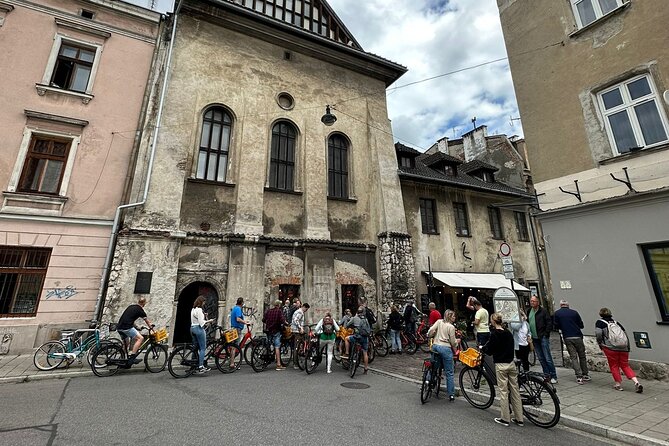
Next comes a key historical stop: Muzeum Krakowa – Stara Synagoga. This is a site tied to the Old Synagogue, and the stop includes guide-led explanation, but entrance is not included. That matters because you may have two very different kinds of experiences depending on whether you enter or not. If you want to go in, plan for the extra ticket. If you prefer to just get the orientation and keep moving, the guided stop still helps.
Then the tour transitions into WWII memory points. You pause at the Schindler’s List Passage, where you reflect on the significance made famous through Spielberg’s film. The pause is designed for quiet attention rather than photo-chasing.
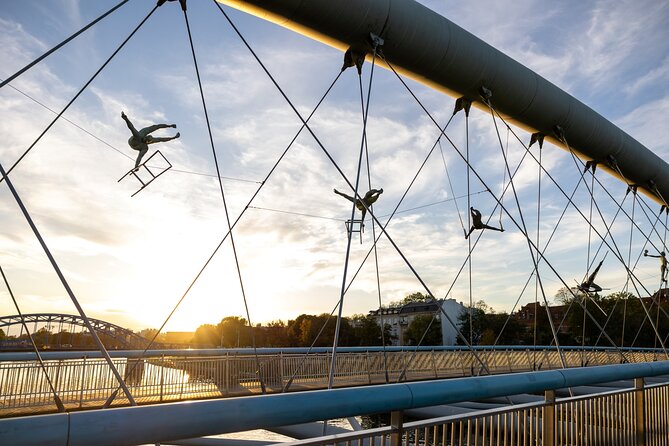
After that, you ride across Father Bernatek’s Bridge. This bridge is modern and very photogenic, and it serves as a mental reset between heavy topics and the next memorial segment. It is a good example of why the bike tour works: you do not just march from one site to the next without breathing room.
You also reach Plac Bohaterow Getta, with a monument for the victims of the Jewish ghetto and the Pharmacy Under the Eagle. After that, you see remains of the ghetto wall, a fragment that makes the history physical.
This part of the route is not light, and you should go in prepared for that. But because the stops are short and guided, you get context without feeling like you are stuck in a long, emotionally draining line all afternoon.
A few more Krakow tours worth comparing
- From Krakow: Auschwitz-Birkenau Guided Tour & Hotel Pickup
★ 4.5 · 33,358 reviews - From Krakow: Auschwitz-Birkenau Guided Tour & Hotel Pickup
★ 4.5 · 29,340 reviews - Krakow: Auschwitz Guided Tour with Optional Hotel Pickup
★ 4.5 · 15,280 reviews - Krakow: Auschwitz-Birkenau Guided Tour with Pickup & Lunch
★ 4.5 · 9,800 reviews
Schindler’s Enamel Factory and the Schindler’s List Link
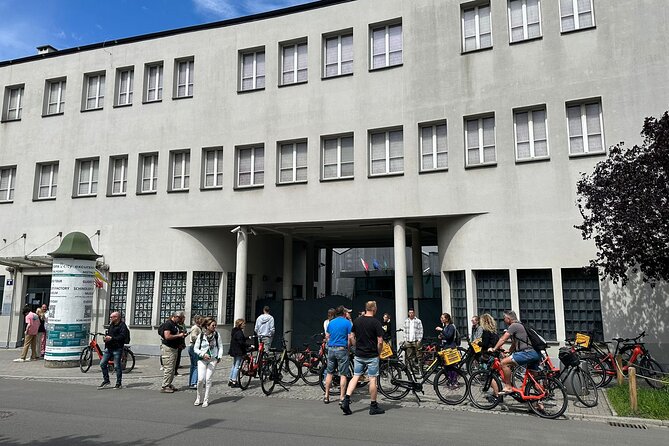
The bike tour does something clever here: it connects a pop-culture reference point with the real place. You do the Schindler’s List Passage pause earlier, and then later you reach the Fabryka Emalia Oskara Schindlera, Oskar Schindler’s Enamel Factory area.
That factory stop is included as a stop on the route, and you get time for explanation. However, the entrance fee is not included, so you will likely have to decide on the day whether you want to pay extra to go inside. If you are doing the factory visit for deep history, budget that extra time and money. If you just want the outside reference and the guide’s framing, you can still get a lot out of the stop.
One practical note: tours like this work best when you do not overload your schedule right after. If you plan to keep going with other intense WWII visits the same day, you may want a calmer dinner break before anything else.
This is also where the guide’s narration matters most. When your guide explains why these locations matter, you stop treating the route like a filming location and start seeing it as a layered set of real-life decisions, crimes, and survival stories.
And if you are also planning Auschwitz, the timing can make sense. Doing this Kraków-focused ride first helps you ground the later experience in broader context, especially the local history thread around ghetto life and the aftermath.
A Green Ride, Medieval Walls, and St. Florian’s Gate Finish
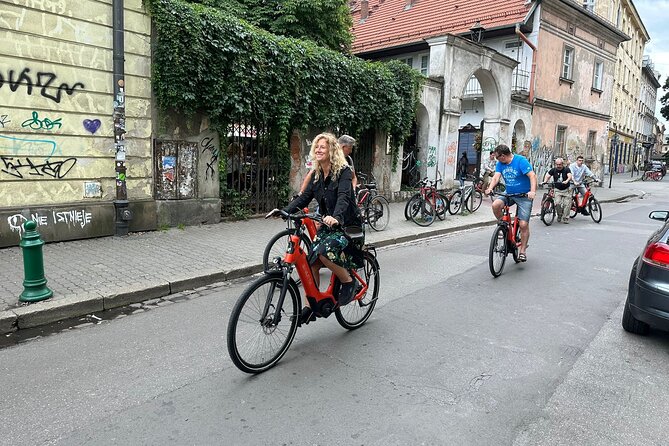
After the heavy stops, the tour gives you a breather. You get a relaxing ride through a green strip around Kraków’s old town center. This is where you can reset your focus and just enjoy the motion and city air.
Then the route shifts back into Kraków’s medieval defenses. You have a stop at the Barbican and the Museum of Krakow, where you see fragments of the old fortifications. Even if you are not going deep into the museum, the exterior stop and guide framing help you understand what these walls were built to protect and how the city was shaped.
The final big landmark moment is St. Florian’s Gate, described as a medieval gate and a main entrance to Kraków. It is one of those sights that feels like a real threshold, not just an old building. The bike makes it easy to end with a clear “we did the city” feeling before you return your bicycle.
The wrap-up includes returning the bikes to the rental on Slawkowska and concluding the tour back at the meeting point area. Translation for you: you do not have to solve transportation at the end, which is a big deal when you are tired.
Price and What You Actually Get for It
At about $31.53 per person, this is a very solid value if you like guided city context. You get the bicycle and a Dutch guide included, and you cover major locations in roughly 3 to 3.5 hours. Group size is capped at 20, which also supports a more personal experience.
The price becomes even better if you consider how much it would cost to rent a bike on your own and pay for a guide separately. Here, you are paying for both, plus the route planning and storytelling.
There are two clear add-ons to factor in:
- E-bike fee: €15 if you want the extra help
- Entrance fees not included: Schindler’s Enamel Factory and Stara Synagoga area
So if your goal is to go inside every site on this route, your total day cost will be higher than the base price. If your goal is orientation, outside views, and guided context, the base price can feel very efficient.
Also, plan your expectations around time. You get short stops, not long museum sessions. That is intentional and part of what makes the tour good as a first pass through Kraków.
Who This Tour Fits Best (and Who Might Want to Adjust)
This bike tour is a great fit if you:
- Want to get an overview fast without missing the big sights
- Enjoy history that mixes legend and real events in a guided way
- Like moving through neighborhoods like Kazimierz without spending the whole day on your feet
- Prefer a structured route with stops built in, rather than building your own plan
It may not be the best fit if you:
- Want long indoor time at multiple museums
- Are sensitive to emotionally heavy WWII memorial topics and want a lighter city-only ride
- Need an ultra-specific focus, like only medieval architecture or only museums
You also should consider weather. One review notes enjoying the tour despite rain, which is a good sign that the company keeps the experience going even when conditions are not perfect. Still, bring what you need for comfort.
Most travelers can participate, and the route is designed for cycling. If you have mobility concerns, you will want to think carefully about whether biking suits you better than a walking tour.
Should You Book This Kraków Bike Tour?
I’d recommend it if you want a smart half-day plan that connects neighborhoods into a story. The price is reasonable for what you get: major landmarks, a Dutch guide, and a route that includes both the famous views and the harder history. The fact that guides like Johan and Wesley are repeatedly praised for clear answers and enthusiasm is exactly what you want from a city tour.
Book it if you are doing Kraków for the first time and you want to choose what to revisit later. The short stops help you decide. Book it even more if you are planning Auschwitz too, because it gives Kraków’s WWII context without turning your schedule into pure museum mode.
Skip or rethink it only if you know you want deep, long ticket-based museum time at multiple sites. This tour is about seeing and understanding, not about extended indoor visits.
FAQ
How long is the bike tour?
The tour runs about 3 hours to 3 hours 30 minutes.
What is included in the price?
You get use of the bicycle and a Dutch guide. You also use a mobile ticket.
Is there an extra cost for an e-bike?
Yes. If you want an e-bike, there is an additional €15 fee.
Are museum or site entrances included?
No. Entrance to Schindler’s Enamel Factory is not included, and the stop at Stara Synagoga also notes that admission is not included.
Where does the tour start?
The meeting point is Hotel Alexander, Garbarska 18, 31-131 Kraków, Poland. The tour ends back at the meeting point area.
Can I cancel for a full refund?
Yes. You can cancel up to 24 hours in advance for a full refund. If you cancel less than 24 hours before the start time, the amount paid is not refunded.
Recently reviewed around Krakow
- Wawel Castle and Cathedral Guided Tour★ 4.6 · 44 reviews
- Walking Tour: Kazimierz, Jewish Quarter – 2-Hours of Magic!★ 4.7 · 35 reviews
- Wawel Castle and Cathedral Guided Tour★ 5.0 · 8 reviews
- Kraków Holocaust Tour★ 4.9 · 5 reviews
- Wadowice and Kalwaria: John Paul II Route★ 4.8 · 5 reviews
- VIP Club Entry and Booth Booking★ 5.0 · 4 reviews
- Walking Tour of Krakow: Old town – 2-Hours of Magic★ 4.7 · 5 reviews
- Krakow: Zakopane, Thermal Baths and Gorce Park Treetop Walk★ 5.0 · 3 reviews
Cycling Tours, compared.
Complete Cracow Bike Tour (small group of maximum 15 people!)
Read our review →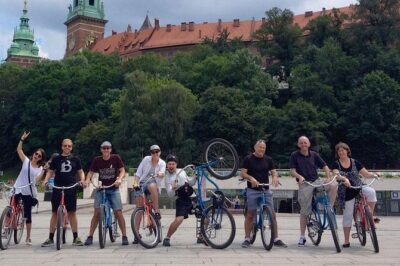

Browse the lists this tour appears in