
Reviewed · AUSCHWITZ-BIRKENAU MEMORIAL VISITS
Auschwitz-Birkenau – Skip the Line Tickets
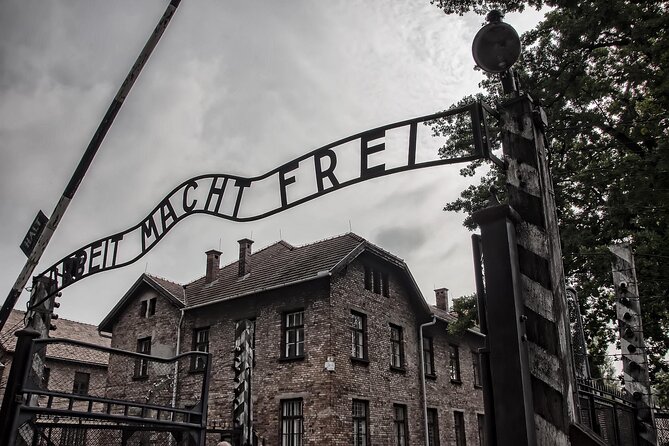
Auschwitz-Birkenau is one of the hardest places on Earth to visit, and what makes this experience especially compelling is the way a guided visit helps you make sense of what you’re seeing without getting lost in names, dates, and chaos. With skip-the-line entry, you also lose less time to crowd flow and can focus on the site itself.
I love that you get a licensed local guide who can turn the grounds into a clear, chronological story, from Auschwitz I to Auschwitz II-Birkenau. I also like that you’ll be using headsets so you can actually hear the guide, even when the group is moving along. The main drawback to consider is that the visit can feel time-pressured, and a few visitors have reported issues like hard-to-hear audio or a guide moving faster than ideal for people who need extra time.
Key Highlights You’ll Care About
- Skip-the-line entry to save your day from long queues at the memorial
- Headsets included, so your understanding does not depend on standing in the right spot
- Small groups (max 30), which usually makes it easier to follow the guide than in huge crowds
- Balanced timing, about 1.5 to 2 hours in Auschwitz I, then 60 to 75 minutes in Birkenau
- Meets at Brzezinka (Męczeństwa Narodów 14), with a local host guiding you to the official guide
- A real official-guided route, moving through both Auschwitz and Birkenau with context
Skip-the-Line Entry Means More Time for What Matters
This tour is built for one very practical reason: Auschwitz-Birkenau is busy, and queues can steal focus. Prebooked skip-the-line tickets help you step into the experience with less waiting and fewer last-minute plan issues.
You’ll start at Męczeństwa Narodów 14 in Brzezinka, which is close to where people typically concentrate when they base themselves in that area. From there, a local host meets you and then walks you through the handoff to the official Auschwitz-Birkenau guide. This matters, because the grounds can be confusing if you arrive without a structure.
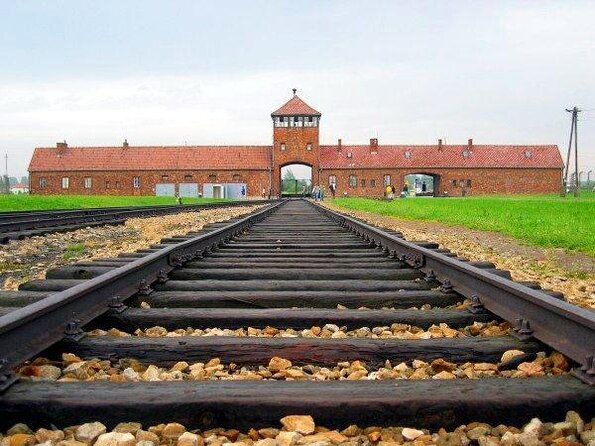
One more thing I like about guided entry here is that you are not forced to guess what each building, rail line, or exhibit is trying to communicate. That does not make the visit easier emotionally, but it can make it clearer mentally.
More Auschwitz-Birkenau memorial visits from Krakow:
- From Krakow: Auschwitz-Birkenau Guided Tour & Hotel Pickup
★ 4.5 · 33,358 reviews - From Krakow: Auschwitz-Birkenau Guided Tour & Hotel Pickup
★ 4.5 · 29,340 reviews - Krakow: Auschwitz Guided Tour with Optional Hotel Pickup
★ 4.5 · 15,280 reviews
The 4-Hour Flow: Auschwitz I First, Birkenau Second
Expect around 4 hours total, with about 3.5 hours of tour time. The pacing is split, and that split is the whole point of covering both sites.
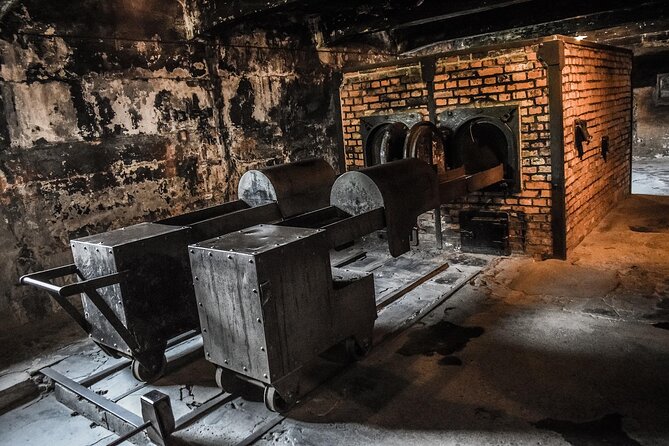
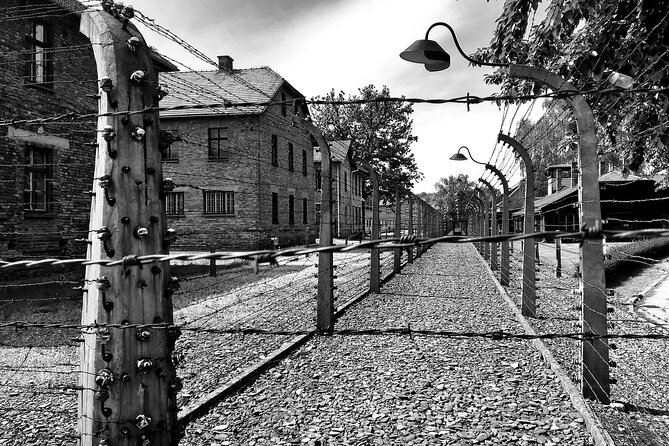
In Auschwitz I, you’ll spend roughly 1.5 to 2 hours. This time usually works best for visitors who want enough room to read key signs, look at artifacts, and understand the progression of what happened here. Auschwitz I is often the denser, more “museum-like” section, so a guide’s narrative helps you connect the dots instead of treating each display like a separate fact.
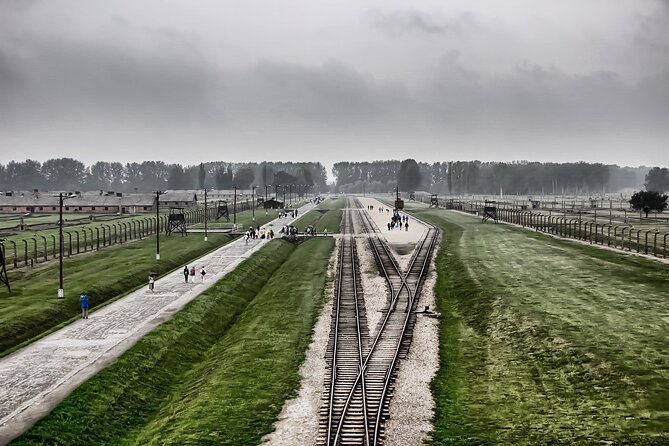
Then you move to Auschwitz II-Birkenau for 60 to 75 minutes. Birkenau is larger and more open, and it can hit harder because so much space is still there. With a shorter window here, you’ll need to accept that you will not see everything at maximum detail. But you still get the structure: you go where the story matters most, and the guide explains what you’re looking at along the way.
Practical note: the tour is described as having a moderate physical fitness level requirement. The grounds involve walking and standing. If you know your energy is limited, plan for slower movement and bring the mindset that you may need to focus on the main points.
Headsets and Group Size: Why You’ll Understand More Than You Think
This is one of those tours where the technical details really matter. A headset is included, so you’re not stuck craning your neck or chasing sound across a moving group.
That said, Auschwitz is also a place where audio quality and your position can still matter. Some visitors have reported headset issues like static or unclear audio. So I recommend you do the boring-but-smart thing: when you receive the headset, do a quick sound check and adjust it right away. If it’s not clear, speak up early rather than waiting until the guide is deep into a hard topic.
The group size is capped at up to 30 travelers. In theory, that’s manageable. In practice, even with 30 people, parts of the route can feel crowded because the site itself is crowded. Still, compared with very large tours, a smaller group tends to keep the guide’s pace more readable and gives you better access to what you’re hearing and seeing.
Meeting Point in Brzezinka: How to Start Smoothly
Your starting point is Męczeństwa Narodów 14, 32-600 Brzezinka. The tour also ends back at the meeting point, which is useful because you don’t have to figure out a separate exit plan.
The flow works like this:
- You meet at the stated address.
- A local host meets you there.
- The host gives you tips on how to plan your visit.
- Then you join the official authorized guide and continue through the two areas.
This structure is a big deal on arrival day. If you’ve ever shown up to a major site and spent your first 20 minutes trying to find the right checkpoint, you already know how quickly that can raise your stress level. Here, the host layer reduces that uncertainty.
Also, the tour is described as near public transportation. That’s helpful if you’re traveling by train or bus and you want a straightforward last mile.
A few more Krakow tours worth comparing
- Krakow to Auschwitz Birkenau Guided Tour with Transfer and Ticket
★ 5.0 · 8,197 reviews - Krakow: Wieliczka Salt Mine Fast-Track Ticket & Guided Tour
★ 4.5 · 5,872 reviews - Auschwitz Birkenau Guided Tour with Ticket Hotel Pickup Small Van
★ 5.0 · 4,769 reviews - From Krakow: Wieliczka Salt Mine Tour & Skip the Line Ticket
★ 4.4 · 3,925 reviews
Entering Auschwitz I and Auschwitz II: What the Guide Actually Adds
Auschwitz-Birkenau is full of information, but it’s the kind of information that can become overwhelming on your own. A guided route helps you prioritize what to notice.
In Auschwitz I, the guide typically helps you understand the early framework of the camp system and how the museum displays connect to the wider story. You’ll move through key areas, and the tone is intentionally somber and explanatory, not casual sightseeing. The time you get, about 1.5 to 2 hours, is long enough to make the visit feel coherent if you pay attention to the guide’s sequence.
In Birkenau, the guide’s role is just as important, because the openness can trick your brain. Without context, it’s easy to wander and think you’re looking at “things,” but not really understand how those things functioned in practice. With about 60 to 75 minutes, the guide helps you focus on the areas that carry the most historical meaning and explains what you’re looking at as you go.
Two guide details from real visits that stand out: some guides have been praised for clear English at a correct pace, and others have been praised for answering questions and keeping the narrative moving. Names that have come up include Halina and Magdalene, and both are cited as examples of guides who kept people engaged while still being respectful of the subject.
When the Pace Feels Fast: Timing, Captions, and Mobile Limitations
One recurring consideration with this kind of memorial tour is pace. Even with skip-the-line entry and a structured route, you have a limited time window in each area.
Some visitors have felt rushed, especially in the sections where there are captions and photo documentation. If you’re the type who likes to slow down and read every label, this tour might not satisfy that style of museum time. Instead, think of this as a guided orientation with enough time to grasp the main storyline.
There’s also the reality of movement. The tour is described as having a moderate physical fitness level. In the negative feedback, a few people reported that the guide did not slow down enough for visitors with mobility challenges, and that the experience was shortened for someone who needed a slower pace. So if mobility is a concern for your group, you should plan on going slower than you want and ask for accommodations where possible.
If you know your needs in advance, I’d rather you show up with the plan: tell yourself you might not be able to take in every written detail, and instead focus on the core sections your guide points out.
Language and Guide Style: Picking a Tour That Fits Your Comfort
This tour is described as having a licensed local guide, but language and speaking style can vary from guide to guide. Many visitors reported strong experiences with guides who spoke good English and maintained an appropriate pace. Some praised guides for professionalism and knowledge, and others noted that the headset made the narration easier to follow.
On the other hand, there have been reports of audio problems and accents that made listening difficult. If your plan is to rely heavily on spoken interpretation, then clear audio is not optional. It’s worth double-checking the language you expect from the time you book, and bringing patience if the first minutes feel like you’re getting your bearings.
In a heavy place like this, guide tone matters. Some accounts describe guides as caring and question-friendly. Others describe a less pleasant experience with a guide’s attitude and speed. There’s no way to guarantee how any specific guide will be on the day you go, but you can reduce risk by choosing a time slot that feels right for you, and arriving early enough to get oriented.
Value for Money: Is $48.15 a Smart Spend?
At $48.15 per person, this tour positions itself as a value option compared with tours that include private transport or more add-ons. You are paying for three main things: skip-the-line entry, a licensed local guide, and headsets.
If you tried to do this fully on your own, you’d likely spend time figuring out entry logistics and then spend energy translating and connecting historical threads without a guide’s structure. The $48.15 cost is essentially buying you time, clarity, and audio support, so you can spend your mental energy on what matters.
Is it “worth it” for everyone? Not automatically. If you already have deep World War II research, and you know the site well enough to follow it without help, you might prefer a more self-paced plan. But for many people, especially those visiting for the first time, a guide reduces confusion and helps the visit land in a way that feels more complete.
That said, remember this is also a live, timed group experience. The value is best when you accept the group flow and listen for the big picture, not when you expect slow, quiet, read-everything museum wandering.
What’s Included, What’s Not, and the One Thing You Must Bring
This experience includes:
- a licensed local guide
- headsets
- admission ticket included
- the guided experience itself, covering both Auschwitz I and Auschwitz II-Birkenau
- it ends back at the meeting point
It does not include transportation. So if you are arriving from Krakow or somewhere else, you need to plan how you’ll get to Brzezinka on your own.
Also, one practical tip that came up strongly in guidance: bring your passport or national ID. This is the kind of detail that can ruin a day if you forget it, and it’s easy to fix if you do not.
Tips That Improve Your Experience Without Changing the Meaning
You’re visiting a memorial. That means the usual sightseeing rules still apply, but you should adjust them.
Here’s what I’d do to get more out of the time you have:
- Arrive early and settle in before the group moves. Your first 10 minutes determine whether you’re relaxed or scrambling.
- Wear comfortable shoes. You will walk and stand.
- Use the headset. If you feel like the sound is off, adjust and tell someone quickly.
- When the guide points out a key item or photo, pause for a moment. That’s where the story usually becomes easier to remember later.
- If you need to read captions slowly, decide in advance which areas matter most to you. You can’t read everything in the time given.
And mentally, give yourself permission to process. This place is built to be remembered, and your reaction is not something to “optimize away.”
Should You Book Auschwitz-Birkenau Skip-the-Line Tickets?
I’d book this if you want a structured, guided walkthrough that saves time on entry and gives you clear commentary with headsets. At $48.15, you’re paying for the guide plus the audio support, and that’s exactly what helps most first-time visitors understand what they’re looking at.
I would think twice if you:
- need a very slow, self-paced museum experience and want maximum time for reading at each display
- have mobility needs and require a slower group pace than a standard tour typically provides
- are very sensitive to audio quality, because there have been reports of headset issues in some situations
- are booking through a third party and want to reduce the risk of miscommunication, in which case you should double-check that the operator has your name on the day
If you want the most value, aim for the tour as a guided orientation through Auschwitz I and Birkenau, not a solo marathon. With the official guide and headset, you’ll spend more of your limited time actually understanding the site, and less time trying to figure it out on the fly.
FAQ
How long is the Auschwitz-Birkenau skip-the-line tour?
The tour lasts about 4 hours (approx.), with around 3.5 hours guided time, split between Auschwitz I and Auschwitz II-Birkenau.
What’s included with the ticket?
You get a licensed local guide, headset, and the admission ticket included for the visit.
Where do we meet for the tour?
The tour starts at Męczeństwa Narodów 14, 32-600 Brzezinka, Poland.
How much time do we spend at Auschwitz I vs Birkenau?
You’ll typically spend about 1.5 to 2 hours at Auschwitz and 60 to 75 minutes at Birkenau.
Is transportation included?
No. Transportation is not included.
Can I cancel and get a full refund?
Yes. You can cancel up to 24 hours in advance of the experience for a full refund. If you cancel less than 24 hours before the start time, the amount paid will not be refunded.
Recently reviewed around Krakow
- Wawel Castle and Cathedral Guided Tour★ 4.6 · 44 reviews
- Walking Tour: Kazimierz, Jewish Quarter – 2-Hours of Magic!★ 4.7 · 35 reviews
- Wawel Castle and Cathedral Guided Tour★ 5.0 · 8 reviews
- Kraków Holocaust Tour★ 4.9 · 5 reviews
- Wadowice and Kalwaria: John Paul II Route★ 4.8 · 5 reviews
- VIP Club Entry and Booth Booking★ 5.0 · 4 reviews
- Walking Tour of Krakow: Old town – 2-Hours of Magic★ 4.7 · 5 reviews
- Krakow: Zakopane, Thermal Baths and Gorce Park Treetop Walk★ 5.0 · 3 reviews