
Reviewed · SCHINDLER'S FACTORY TOURS
Krakow: Schindler’s Factory, Jewish Ghetto & Salt Mine Tour
This is an intense, practical one-day mix: World War II Krakow on the surface, then a literal trip underground in Wieliczka Salt Mine. The day is built to move you from heartbreaking history to an almost surreal place of salt halls and underground churches, all without you having to plan every transfer yourself.
I really like two parts of this format. First, Schindler’s Factory is handled by a licensed museum guide, so the story lands clearly instead of turning into random facts. Second, the ghetto walk is built around specific, recognizable stops, like the Empty Chair Monument and the pharmacy called Under the Eagle.
One thing to think about: the schedule is strict. Schindler’s Factory Museum does not accept late arrivals, and the whole day runs like a timed itinerary, so you will want to show up early and stay flexible.
Key things I’d put on your radar
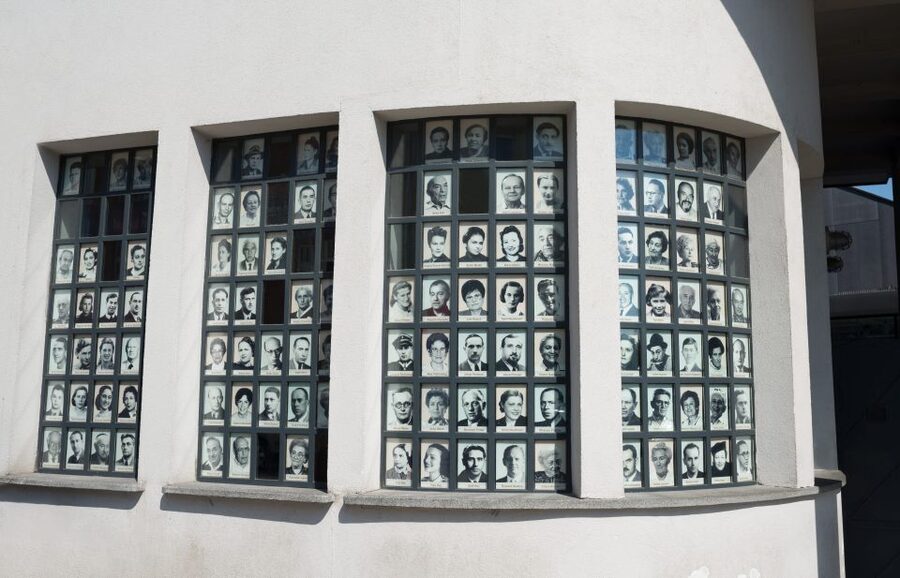
- Licensed museum guidance at Schindler’s Factory, for context that’s hard to piece together alone
- Podgórze ghetto highlights, including part of an undestroyed wall and houses from displaced families
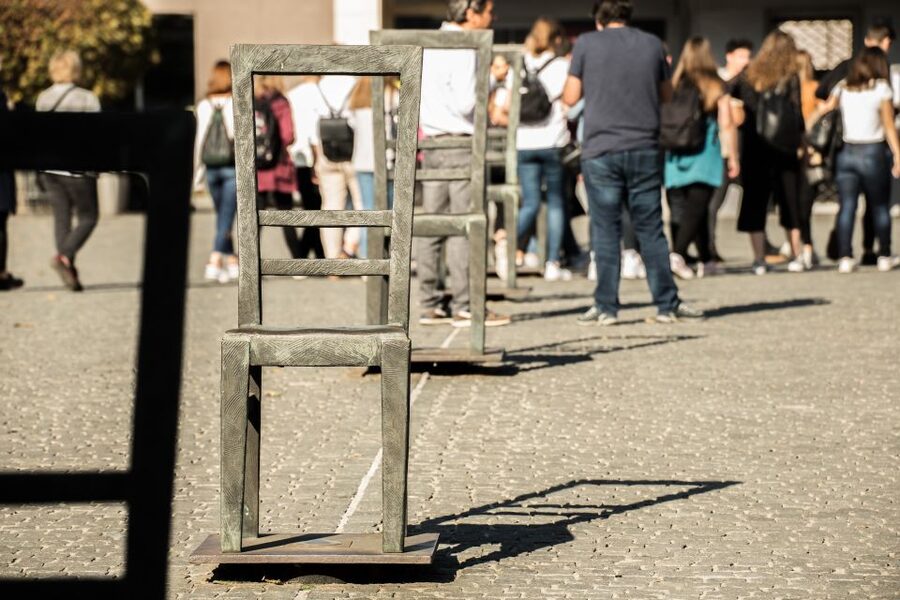
- Empty Chair Monument in Heroes’ Square, with its set of 68 symbolic chairs
- Wieliczka Salt Mine depth and scale, 340 meters down and 245 kilometers of corridors and tunnels
- A self-paced mine visit after pickup, so you can go at your own speed underground
A 7-hour loop through Krakow’s WWII sites and Wieliczka
This tour is designed as a full-day circuit, roughly 7 hours in total, with transportation included between Krakow and Wieliczka, about 10 kilometers away. It’s small-group style, limited to 15 participants, and it stays focused: two major historical areas in Krakow, then the salt mine.
The best way to think of it is as two different kinds of travel brain. In Krakow, you are walking and learning in a city neighborhood, with stops that connect directly to what happened there during the Second World War. Then you switch to a physical, sight-heavy underground visit where you follow a route of more than 3 kilometers and see 20 halls.
Because it’s a group tour with a tightly defined schedule, it’s not the best choice if your plan is to wander freely or linger for long photo breaks. It’s built for efficient viewing and clear interpretation, which is exactly what I want on days when I have limited time in Krakow.
More Schindler's Factory tours to compare:
- Krakow: Schindler’s Factory, Jewish Ghetto & Salt Mine Tour
★ 5.0 · 9 reviews - Krakow: Oskar Schindler’s Factory Entry Ticket & Guided Tour
★ 4.2 · 3,793 reviews - Krakow: Schindler’s Factory Tour with Entrance Ticket
★ 4.5 · 3,182 reviews
Schindler’s Factory Museum: guided history with a clear narrative
You start at the Oskar Schindler’s Enamel Factory Museum, with the guide waiting in front of the entrance holding an excursions.city sign. From the start, the tone is serious, and the pace is controlled, because this stop depends on timing. Schindler’s Factory Museum especially does not accept late arrivals, so I’d treat the meeting time as a hard deadline.
Inside, the museum guide leads you through the story connected to Oskar Schindler’s wartime efforts, including the larger context of German entrepreneurship helping many Jews during the war. The museum is also known globally because it appears in Steven Spielberg’s Oscar-winning film Schindler’s List, and even if you’ve seen the movie, this visit is about understanding the people and the choices behind it.
What I like most about a licensed guide here is how they connect the dots. Holocaust-era history can feel like a pile of separate tragedies if you don’t get the timeline and cause-and-effect laid out. With a guide, you get a story structure, and you can then look at exhibits with less confusion.
Practical note: you skip the ticket line, which saves time for the rest of your day. But the tradeoff is clear timing, so keep your morning plan simple.
Podgórze and the former Jewish ghetto: walls, homes, and Under the Eagle
After the Schindler’s Factory portion, you spend time walking around Podgórze, the part of Krakow tied to the former Jewish Ghetto. This is not a vague “ghetto overview” stop. It’s a route with specific remnants and named locations that help you picture what life was like in a trapped community.
The tour includes evidence you can still see today, such as part of the undestroyed wall surrounding the ghetto and areas connected to the houses where thousands of displaced Jews used to live. Even if you’re not a history buff, seeing an actual wall segment in place changes the feel of what you learn. It turns history from something abstract into something spatial.
There’s also a marked stop for the pharmacy Under the Eagle. That detail matters because it brings the focus from only persecution to also the day-to-day infrastructure that people relied on when everything else was taken away.
And then you reach the emotional centerpiece: the Empty Chair Monument at Heroes’ Square. The monument uses 68 chairs as a symbolic count tied to the story the site tells, so it’s not just an art installation. It’s meant to be read as remembrance.
This whole section works best when you slow down for a minute at each stop and let your mind catch up. You are walking through places that are still standing, and the tour’s strength is that it keeps the connections clear instead of rushing past.
Heroes’ Square and the 68 chairs that tell the story
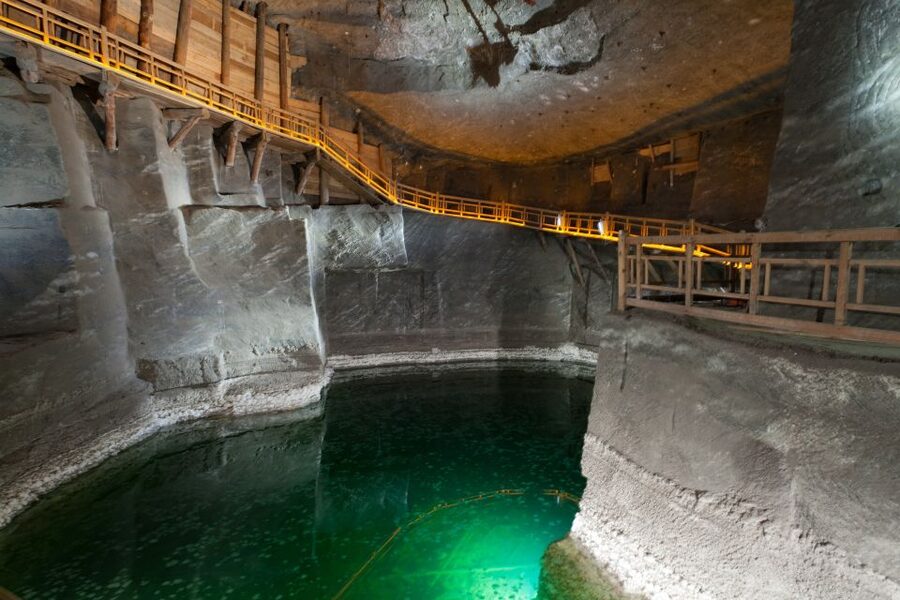
Heroes’ Square is where the tour’s tone shifts from “historical facts in the street” to “stand and absorb.” The Empty Chair Monument is designed around symbolism, with 68 chairs creating a visual reference point that anchors the memorial.
I like this part because it gives you a moment of quiet structure in a day that otherwise alternates between guided museum learning and moving-on walking. You get a chance to stand still, look, and think, without needing to interpret complex text.
If you tend to get overwhelmed by heavy history, this is a good place to regulate your pace. Take a breath, look at the arrangement of the chairs, and consider how a memorial can function like a “story in objects.” Then you can move on with more clarity rather than emotional whiplash.
More Jewish quarter and heritage tours to compare:
- Kraków: Jewish Quarter, Auschwitz, And Salt Mine 3-Day Tour
★ 4.8 · 5 reviews - Krakow: Schindler’s Factory & Ghetto Guided Tour
★ 4.7 · 1,694 reviews - Krakow: Jewish Quarter and Former Ghetto Tour
★ 4.9 · 1,441 reviews - Krakow: Bike Tour of Old Town, Jewish Quarter and the Ghetto
★ 4.9 · 1,155 reviews
Wieliczka Salt Mine: 340 meters down and over 3 kilometers of tunnels
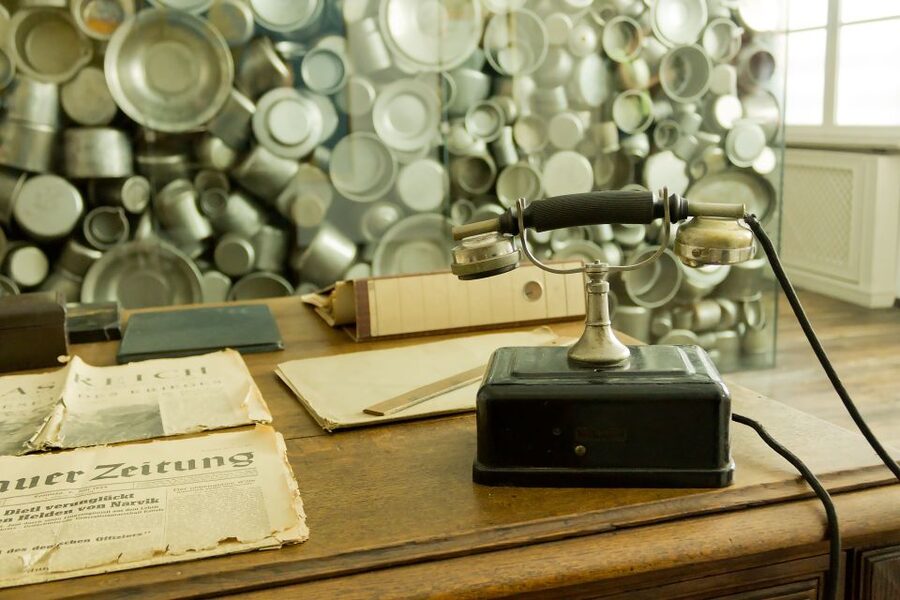
The second half of the tour is a drive to Wieliczka, and then the transition is immediate. You trade city streets for a world that feels carved by time and labor.
Here, the tour does something smart: after you arrive, you explore the mine at your own pace without a guide. That’s valuable because the mine is built for wandering. You will see signs of age, shifts in design, and chambers that invite you to pause as long as you want.
The scale is impressive on paper. The mine is 700 years old, it reaches 340 meters underground, and it has more than 245 kilometers of corridors and tunnels. You won’t walk all of that in one visit, but those numbers help you understand why the route matters.
Your route includes more than 3 kilometers of walking and 20 halls. This is why footwear and energy level matter. It’s not a casual stroll, and you’ll be on your feet for a meaningful chunk of time.
One more practical detail: the mine experience has a change in air feel and temperature compared with Krakow. That’s not just comfort, it also contributes to the story of why this place became known for its health traditions.
St. Kinga’s Church and the mine’s microclimate
Among the halls, the route highlights St. Kinga’s Church, named for the patroness of miners. This is a big stop, and for good reason. The church interior includes decorative elements like chandeliers and sculptures of saints carved out of salt.
Even if you’re not a religious traveler, you’ll probably appreciate the craftsmanship. Salt carving has a different texture and visual logic than stone, and seeing a church-like space made from the same material as the tunnels gives the whole mine a distinct identity beyond being “a tourist cavern.”
Another included concept is the mine’s curative microclimate and its sanatorium, located 135 meters below ground. That part is interesting because it explains why people came here historically, not just for curiosity. It connects the physical environment to a human purpose.
I also like that this tour does not overload you with explanations underground. The self-paced walking is a good match for the mine’s atmosphere. You can read what you want, then look longer when something catches your eye.
Price and value: what you get for $147
At $147 per person, this is not a bargain-basement tour, but it also isn’t just “transport and a ticket.” The value comes from three bundled things:
- You get admission tickets to both Schindler’s Factory Museum and the Wieliczka Salt Mine.
- You get a museum guide at Schindler’s Factory, which is where interpretation matters most for accuracy and context.
- You get transportation between Krakow and Wieliczka, which can otherwise eat up time and coordination.
If you were trying to DIY this, you’d likely spend time lining up tickets, figuring out timing, and managing the switch from museum to neighborhood walking to a mine outside town. Paying for a structured day helps you use your limited Krakow time efficiently.
The main “cost” you are paying is your flexibility. This is a schedule-based tour, and it includes no food. So you may want to plan a snack or meal strategy on your own so you don’t get hungry at the wrong moment.
Who this tour suits best (and who might want a different plan)
This is a good fit if you want a guided introduction to two heavyweight parts of Krakow’s WWII story, then a high-impact underground day trip. The small group size and the licensed guide at Schindler’s Factory make it more manageable than larger bus-style tours.
You’ll also like it if you enjoy a tour that is not only “see this, see that,” but that connects named sites. The stops are specific: the undestroyed ghetto wall segment, Under the Eagle pharmacy, the Empty Chair Monument, and then the major mine halls including St. Kinga’s Church.
It might be less ideal if you want long free time for wandering. The day is structured around set stops and a strict entry window at Schindler’s Factory. Also, if you need a fully guided experience inside the mine, this one gives you self-paced time there instead.
Should you book this Krakow history and salt mine tour?
I’d book this if your goal is one strong day with minimal planning: Schindler’s Factory with an English licensed guide, a focused walk through ghetto-era sites in Podgórze, and a practical trip to Wieliczka Salt Mine with a route that hits the essentials like St. Kinga’s Church.
I’d skip it or look at alternatives if you know you hate timed schedules or you’re the type who gets stressed by strict entry windows. Also, because food and drinks are not included, factor that into your budget and your energy plan.
If you can be punctual and you want a day that mixes sober history with an unforgettable underground setting, this is a solid use of a limited day in Krakow.
FAQ
How long is the Krakow Schindler’s Factory, Jewish Ghetto & Salt Mine tour?
The tour lasts about 7 hours, and starting times vary, so you should check availability for the exact schedule.
Is the tour guided in English?
Yes. The live tour guide is English, and the tour includes a museum guide for Schindler’s Factory and the Wieliczka Salt Mine museum.
What’s included in the price?
Admission tickets to Schindler’s Factory Museum and Wieliczka Salt Mine are included, along with a museum guide for those parts and transportation between Krakow and Wieliczka.
Is food included?
No. Food and drinks are not included, so you’ll want to plan your own meal or snacks during the day.
Do I go into the salt mine with a guide?
You go to Wieliczka as part of the tour, and then you explore the salt mine at your own pace without a guide.
Where do I meet the group, and what happens if I’m late?
You meet in front of the entrance to the Oskar Schindler’s Enamel Factory Museum, where the guide waits holding an excursions.city sign. Schindler’s Factory Museum does not accept late arrivals, and late participants will not be admitted to the tour without the possibility of returning the money.
More Wieliczka Salt Mine Tours to Compare
- Krakow: Wieliczka Salt Mine Skip-the-Line Live Guided Tour
★ 4.5 · 462 reviews - From Krakow: Wieliczka Salt Mine Guided Tour
★ 4.4 · 323 reviews - From Krakow: Wieliczka Salt Mine Half-Day Trip with Pickup
★ 4.5 · 140 reviews - From Krakow: Wieliczka Salt Mine Guided Tour
★ 4.5 · 115 reviews
Recently reviewed around Wieliczka
- Krakow: Wieliczka Salt Mine and Auschwitz-Birkenau Tour★ 4.3 · 34 reviews
- Krakow: Wieliczka Salt Mine Tour with Private Transfers★ 4.7 · 6 reviews
- Krakow: Vistula River Cruise and Wieliczka Salt Mine Tour★ 4.6 · 3 reviews
- Kraków: Street Food and Historical Adventure★ 4.8 · 3 reviews
- Krakow: Schindler’s Factory, Jewish Ghetto & Salt Mine Tour★ 5.0 · 9 reviews
- Krakow: River Cruise and Wieliczka Salt Mine Group Tour★ 1.7 · 3 reviews
- Krakow: River Cruise and Wieliczka Salt Mine Group Tour★ 3.9 · 5 reviews
- Kraków: Jewish Quarter, Auschwitz, And Salt Mine 3-Day Tour★ 4.8 · 5 reviews