
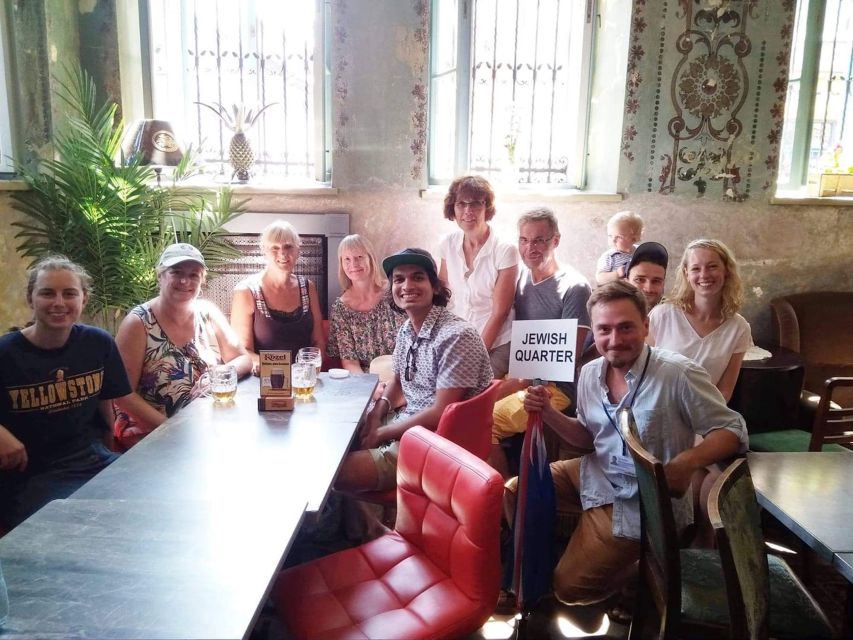
Reviewed · JEWISH QUARTER & HERITAGE TOURS
Krakow: Jewish Quarter and Former Ghetto Tour
Krakow’s Kazimierz and the former ghetto area hit you because you can still read the city in real space. You walk through surviving synagogues, memorial sites, and neighborhoods that once held a thriving Jewish community before the catastrophe of WW2.
I especially like that this tour pairs big landmarks with human stories, so places like the Old Synagogue and Heroes of Ghetto Square feel specific, not generic. I also like the guide quality, with many named guides such as Bart and Magda praised for clear, engaging storytelling and for answering questions.
One consideration: it’s a long, steady walk in about 150 minutes, so if you want to slow way down at every stop, you may feel the pace is tight and you will likely want to revisit key sights on your own.
Key things to know before you go
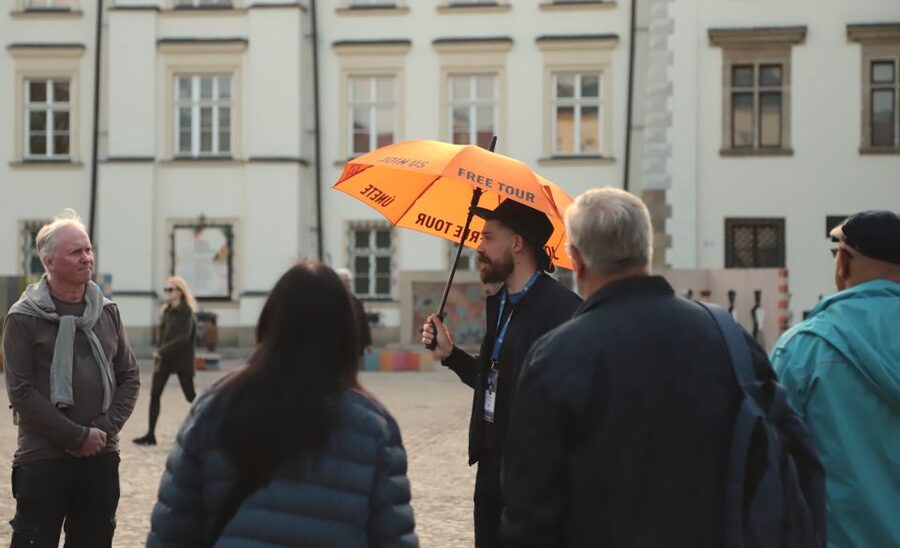
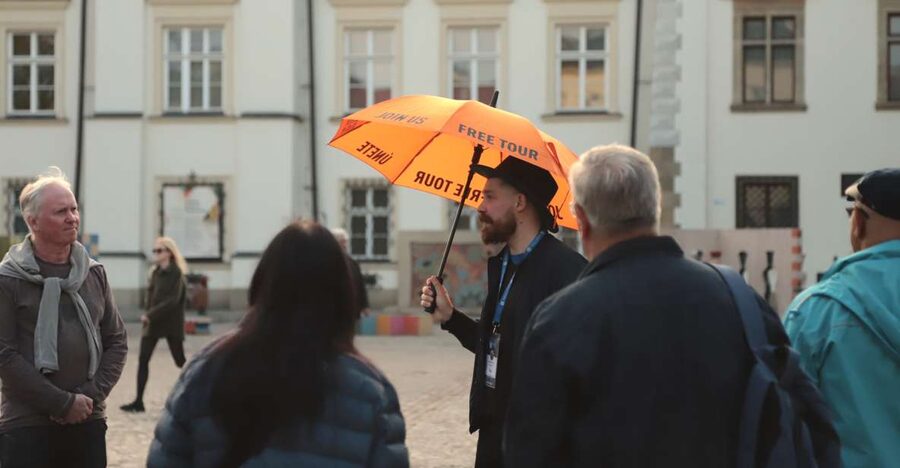
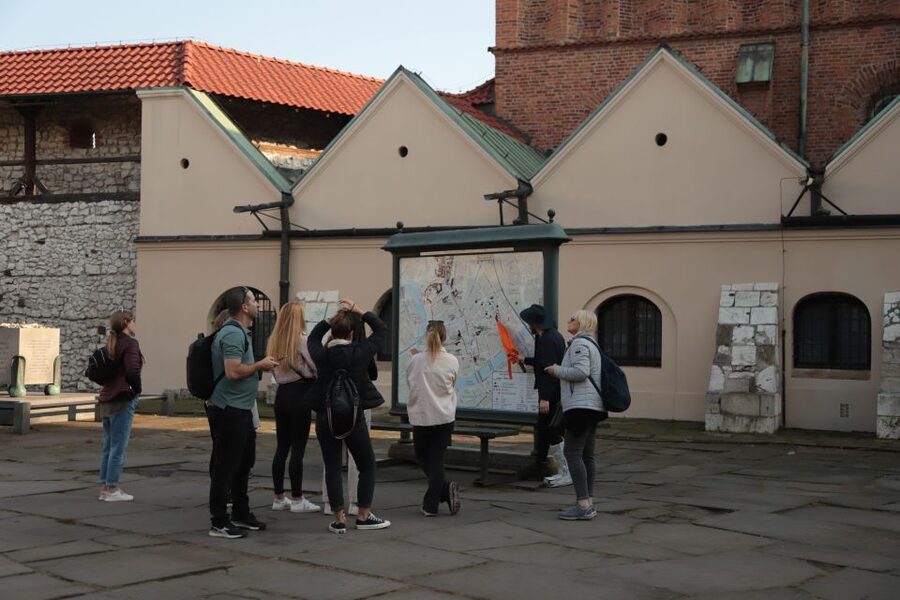
- Old Synagogue start at ul. Szeroka 24, with guides using an orange umbrella
- Holocaust memorial and Heroes of Ghetto Square keep the focus respectful and factual
- Jewish cemetery adds context that goes beyond the street-level sights
- Schindler’s List filming spots are treated as a story tool, not just photo stops
- Many guides are strong storytellers, with frequent praise for how easy they are to hear and follow
- 2.5 hours of walking means you should plan for comfort and warmth
Why Kazimierz and the Former Ghetto Start the Story Where Krakow Leaves Off
Kazimierz was designed to compete with Krakow, and that ambition mattered. In the Middle Ages, Jews facing persecution in Western Europe began settling in the Kazimierz area, and the neighborhood grew into a center of Jewish prosperity. That contrast is part of what makes this tour so compelling: you’re not only seeing sites linked to tragedy, you’re also seeing the cultural life that existed right before it.
You can wander Kazimierz on your own, but you would miss the map in your head. A good guide helps you connect the dots between community life, the streets you’re walking, and what the Holocaust memorials are trying to make you understand. The tour’s focus on names and traditions, not just stone and dates, is a big reason it lands.
More Jewish quarter and heritage tours to compare:
- Krakow: Schindler’s Factory & Ghetto Guided Tour
★ 4.7 · 1,694 reviews - Krakow: Bike Tour of Old Town, Jewish Quarter and the Ghetto
★ 4.9 · 1,155 reviews - Krakow: Kazimierz Jewish Quarter Walking Tour
★ 4.8 · 571 reviews
Finding the Group: Old Synagogue Meeting Point and Orange Umbrella
You meet in front of the Old Synagogue, ul. Szeroka 24. The practical detail I like here is how easy it should be to spot your group: look for the guides with an orange umbrella.
This matters because the tour is compact time-wise. You will be on foot for about 150 minutes, and you do not want to waste even 10 minutes trying to track your group down. If you like taking photos, I’d still do it, just keep one eye on where the group is heading. One common frustration from people who attend similar tours is that stepping out to shoot a photo can cause you to lose the correct group if two groups are nearby.
Walking Kazimierz Streets and Learning Ashkenazim vs Sephardim
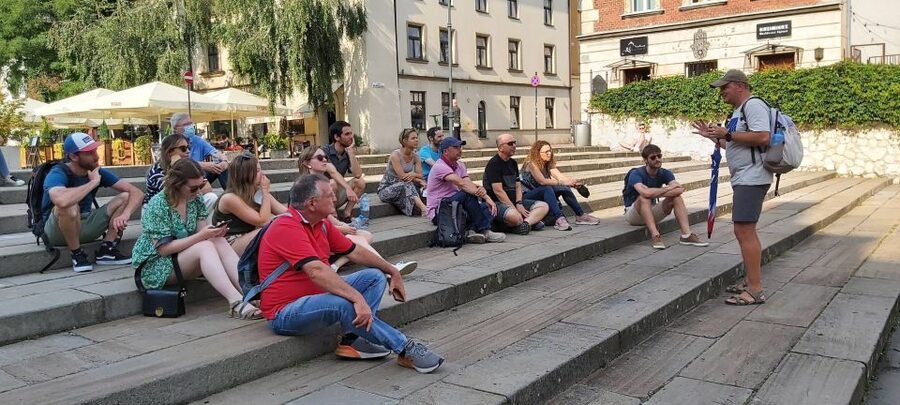
Kazimierz is famous for tiny, cozy streets, and that scale makes your walking route feel intimate. You’re not moving through a museum layout, you’re moving through a living neighborhood that has layered meanings.
One of the most useful parts of this tour is the way it teaches you terms that pop up in Jewish life and history. You’ll learn the difference between Ashkenazim and Sephardim, which helps you interpret who lived where and how traditions developed across communities. It also sets you up to understand the people you’ll hear about later in the tour, including famous names tied to culture, medicine, and literature.
I also like that the tour doesn’t treat this as a distant history lesson. It connects daily life and tradition to the people who shaped Polish Jewish culture, which gives you a stronger base before the WW2 material.
Old Synagogue Stop: Second Oldest in Europe and Why It Matters
The tour highlights the second oldest synagogue in Europe, and you’ll experience it through the Old Synagogue stop. This is the kind of place where details count. Even if you only catch a portion of the architecture and atmosphere, the point is clear: a synagogue is not just a building. It is a community anchor.
Here’s what makes this stop valuable for you as a visitor. It gives you a “before” moment. You are not only learning about what was destroyed, you’re learning what was built and sustained. Then, when the tour shifts to the darker sites, the change in mood feels earned, not sudden.
Another way to spend a day around Krakow:
- From Krakow: Auschwitz-Birkenau Guided Tour & Hotel Pickup
★ 4.5 · 33,358 reviews - From Krakow: Auschwitz-Birkenau Guided Tour & Hotel Pickup
★ 4.5 · 29,340 reviews - Krakow: Auschwitz Guided Tour with Optional Hotel Pickup
★ 4.5 · 15,280 reviews - Krakow–Zakopane: Cable Car, Chocholow Baths, Cheese & Vodka
★ 5.0 · 10,720 reviews
Holocaust Memorial and Heroes of Ghetto Square: Respectful, Specific, Not Vague
This is the part of the tour that becomes emotionally serious, and it should. The Holocaust memorial content and the Heroes of Ghetto Square stop place you in a space designed for remembrance, not just sightseeing.
I like how this tour stays concrete. Instead of throwing facts at you, the guide format you’ll see in the better-run sessions tends to combine what happened with what the sites represent now. That matters because memorial locations can feel abstract if you do not know what story each one is holding.
Also, you’ll get a better sense of what resilience looked like in that setting. The term heroes in Heroes of Ghetto Square is not meant as a vague honor roll. It pushes you to think about people and choices, not only about suffering.
Jewish Cemetery: Moving Beyond the Streets
The Jewish cemetery stop is another anchor point that broadens your understanding. Walking through a cemetery changes the way you perceive everything else you saw. Streets and buildings can be loud with activity even in memory. A cemetery is quieter, and it asks you to slow down.
This is a stop you will feel in your own pace. The information presented here helps connect the community that lived in Kazimierz with the longer arc of Jewish life in the region. It’s not just about names on stone; it’s about continuity and how loss reshapes a community.
If you’re the type who likes to process as you go, this stop helps. If you’re rushing photos and moving on, I’d suggest you give yourself a moment here to actually absorb what you’re seeing.
Schindler’s List Filming Spots: How Film Scenes Can Be Helpful
Schindler’s List filming spots show up on this route, and that can be both exciting and tricky. Exciting, because you recognize places from a well-known film. Tricky, because film imagery can flatten the real history into a set of recognizable frames.
The value of including these spots is that your guide can point you to what to look for and how to separate cinematic memory from historical reality. You’ll learn to treat each filming spot as a clue, not as a shortcut to understanding.
I’d treat photo time here like a trade. Get your picture, then listen for the context. A few people have said the tour can feel fast, so this is where you will want your attention the most.
The People Behind the Names: Rubinstein, Polanski, Zamenhof, Faktorowicz
One of the smartest parts of this tour is that it names people and connects them to the Jewish story in Poland. You’ll hear about Helena Rubinstein, Roman Polanski, Ludwick Zamenhof, and Maximilian Faktorowicz. Each name is a thread, and the tour’s job is to show you how those threads fit into a bigger cultural picture.
This is where the guided component really pays off. On your own, you might recognize a name and assume you already understand the link. With a guide, you get the context that explains why those people matter to the community that shaped and was shaped by Poland’s Jewish history.
I also like that the guide format here often includes a tone that can handle trauma while still maintaining clarity. People who attend often praise how the guide keeps the message respectful and how they respond to questions with patience. That combination helps you leave with understanding, not just a list of stops.
How the 2.5 Hours Feels: Pace, Breaks, and Photo Strategy
This tour runs about 150 minutes, so it’s more like a focused walk than a relaxed stroll. Many guides are praised for keeping the pace solid, and for building in moments that let you catch your breath. Even so, it is still a walking tour.
A practical note from people attending in winter: wear layers and wrap up warm. If you’re visiting in cold months, the time outside adds up faster than you think. Comfortable shoes also matter, since you are moving between key points.
My best photo strategy:
- stop for photos, but do it with the group’s motion in mind
- if you step away, make sure you know which guide you should be following
- do not assume every group walks in lockstep, especially near well-known landmarks
One person reported missing part of the tour after losing the guide when two groups were nearby. That is avoidable with simple awareness.
Price and Value: What $19 Buys in Real Terms
At $19 per person, this tour is priced like a practical city experience, not a splurge. And in a place like Krakow, that’s the real value question: will you get enough meaning from it to justify the cost versus walking Kazimierz alone?
Here’s where the math improves. You pay for an experienced local guide and a tightly focused route that includes specific sites: Old Synagogue, Holocaust memorial, Heroes of Ghetto Square, the Jewish cemetery, and Schindler’s List filming spots. You also pay for the interpretive layer, where guides like Bart, Magda, Slavek, Matt, Emily, and Chris are frequently praised for making the history feel clear and for keeping their explanations easy to follow.
You also get a structured way to learn about traditions and people, including Ashkenazim vs Sephardim and the named figures tied to Polish Jewish life. That’s hard to replicate in the same time on your own without spending extra time piecing together information.
What’s not included is also part of the value picture: food and drinks are not part of the price. If you’ll be hungry, plan a snack stop outside the tour time.
Finally, there are restrictions that help keep the experience respectful. Alcohol and drugs are not allowed, and party groups are not allowed. That’s a small detail, but it tends to protect the tone of the tour.
Who This Tour Suits Best (and When It Might Not Fit)
This is a strong fit if:
- you want a guided walk through Kazimierz with clear storytelling
- you care about understanding what you’re seeing, not only photographing it
- you like history tied to real people, including familiar names like Rubinstein and Zamenhof
It may feel less ideal if:
- you dislike emotionally heavy topics, since the Holocaust memorial and related sites are central here
- you hate walking and want something slower
- you need long time at each stop to fully process every detail
One attendee comment noted that the tour can feel a bit rushed, and that they needed to repeat parts later. That’s not a reason to skip. It’s a reason to plan your follow-up. If you do this tour, consider returning to 1 or 2 sites on your own afterward while your notes and context are still fresh.
Should You Book This Jewish Quarter and Former Ghetto Tour?
I think you should book this tour if you want Kazimierz to make sense fast and feel real. The route covers the core sights you’d struggle to interpret on your own, and the best sessions are led by guides praised for strong storytelling, clear explanations, and thoughtful pacing.
If you’re sensitive to trauma-heavy content, go in knowing that respect and remembrance are not optional on this route. Bring comfortable shoes, dress for the weather, and give yourself a bit of mental space.
For the price of $19 and the 150-minute structure, this is one of those Krakow experiences that does not just show you places. It helps you understand why those places matter.
FAQ
How long is the Jewish Quarter and Former Ghetto Tour?
The tour duration is 150 minutes (about 2.5 hours).
How much does the tour cost?
The price is $19 per person.
Where do we meet for the tour?
You meet in front of the Old Synagogue at ul. Szeroka 24, and you should look for the guides with an orange umbrella.
What is included in the price?
It includes an experienced local tour guide and a 2.5-hour walking tour.
Is food or drinks included?
No, food and drinks are not included.
What language is the tour in?
The tour is in English.
Which main sights does the tour cover?
The tour highlights include the Old Synagogue, a Holocaust memorial, Heroes of Ghetto Square, the Jewish cemetery, and Schindler’s List filming spots.
Are there any restrictions during the tour?
Yes. Alcohol and drugs are not allowed, and party groups are not allowed.
What’s the cancellation and booking setup?
Free cancellation is available up to 24 hours in advance for a full refund. You can also reserve now and pay later. Starting times depend on availability.
Recently reviewed around Krakow
- Krakow: City Golf Cart Tour and Schindler’s Factory Museum★ 5.0 · 4 reviews
- Krakow: City Sightseeing Tour by Shared or Private Golf Cart★ 4.4 · 21 reviews
- Krakow beer review with a local guide★ 5.0 · 4 reviews
- Kraków: Romantic Candlelight Chopin Piano Concert★ 4.9 · 8 reviews
- From Krakow: Chocholow Hot Springs Evening or Daytime Ticket★ 4.7 · 72 reviews
- From Krakow: Zakopane, Tatra Mountains & Thermal Baths Tour★ 4.9 · 52 reviews
- Kraków: VIP Candlelight Concert The Music of Fryderyk Chopin★ 4.8 · 8 reviews
- Krakow: Bottomless Brunch with 3-Course Meal and Drinks★ 3.8 · 30 reviews