
Reviewed · JEWISH QUARTER & HERITAGE TOURS
Krakow: Guided Tour of the Jewish Ghetto
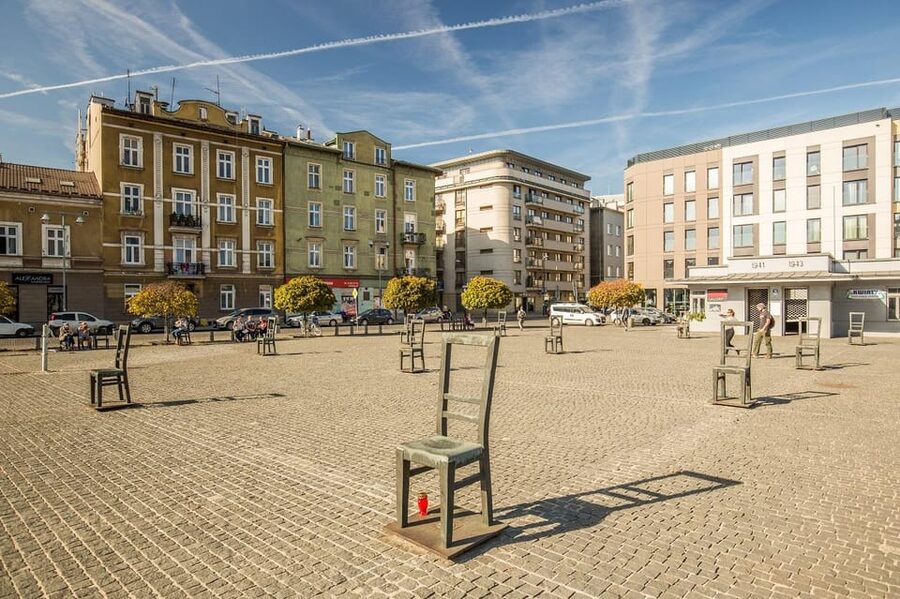
This guided walk through Kraków’s former Jewish Ghetto in Podgórze is interesting because it turns city streets into something you can actually feel, not just read about. I especially like the visit to Ghetto Heroes Square with its empty chair memorial, and I like the way the tour brings the story of Under the Eagle Pharmacy to life through the bravery of Tadeusz Pankiewicz and his staff.
A key consideration is that it lasts just 1 hour, so it is focused and intense. If you want a lot of extra historical background time, plan to follow up on your own afterward.
Key takeaways at a glance
- Original Ghetto Wall remains: see one of the surviving fragments that once enclosed more than 15,000 people in a few city blocks
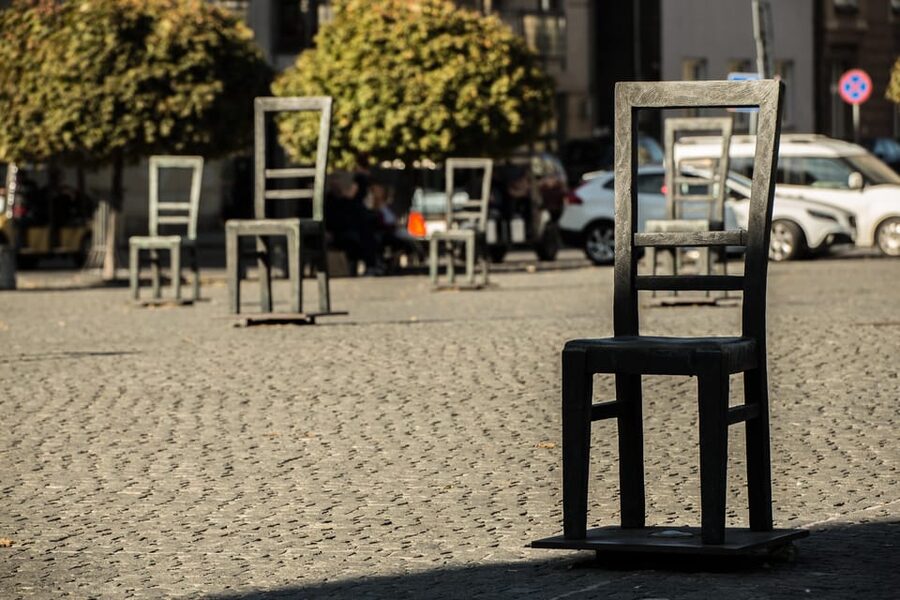
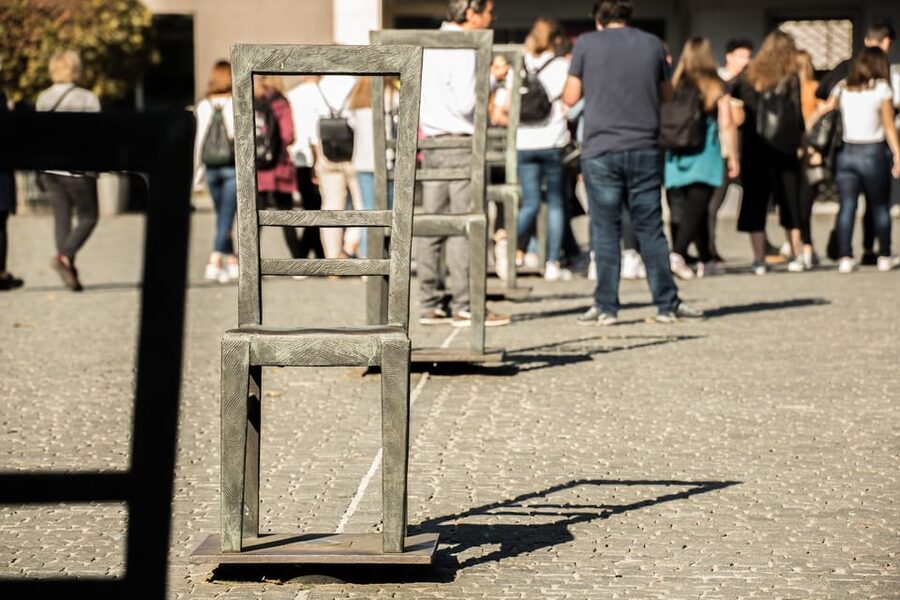
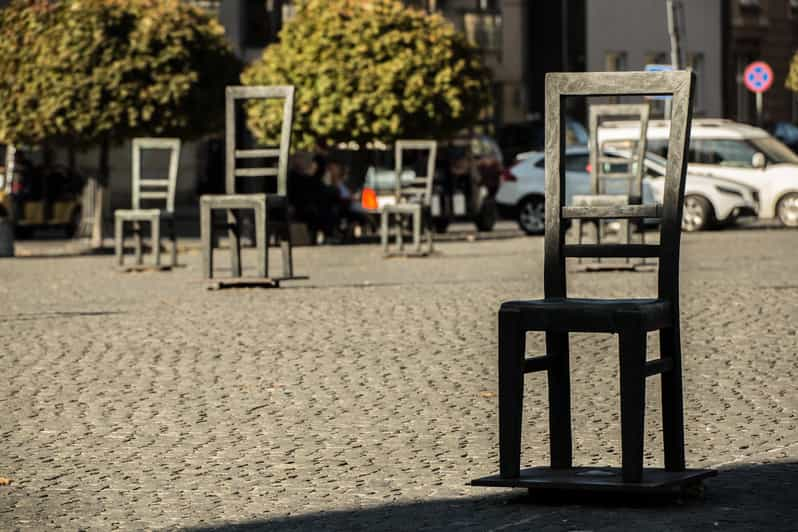
- Ghetto Heroes Square Chair Memorial: dozens of empty metal chairs, each representing a life lost
- Under the Eagle Pharmacy: hear stories of medicine and shelter provided at great personal risk
- Wartime street layouts: walk the same kinds of routes that shaped daily life during the German occupation
- Clear focus on daily life and deportations: the guide connects survival, fear, and resistance into a real timeline
Podgórze streets, the Ghetto Wall remains, and why geography matters
You start in Podgórze, the district that became the site of the Kraków Ghetto during World War II. What makes this opening so strong is that the area feels quieter than you expect. As you walk, your guide helps you slow down and notice the street pattern and scale, so it is easier to grasp how daily life could be controlled by enclosure.
The tour’s first big stop is the remains of the original Ghetto Wall. Even though you are not seeing a fully intact wall, the surviving pieces do a useful job. They show you that this was not a vague idea. This was architecture. This was a boundary. And at the time, it held more than 15,000 people within a few city blocks, which is a staggering number when you try to picture it in real space.
I like that the guide ties what you see to what people faced. You hear about daily hardships and acts of solidarity inside the ghetto boundaries. That matters because the wall is not only a symbol. It is a clue to how tightly normal life was squeezed, and how even small kindness could become risky.
One practical point: this part of the walk is emotionally heavy. You do not need to force the right reaction. Just give yourself permission to absorb it, and keep your pace steady so you are not rushing past the moments that will stick with you.
More Jewish quarter and heritage tours to compare:
- Krakow: Schindler’s Factory & Ghetto Guided Tour
★ 4.7 · 1,694 reviews - Krakow: Jewish Quarter and Former Ghetto Tour
★ 4.9 · 1,441 reviews - Krakow: Bike Tour of Old Town, Jewish Quarter and the Ghetto
★ 4.9 · 1,155 reviews
Ghetto Heroes Square and the Chair Memorial: seeing deportations in a human way
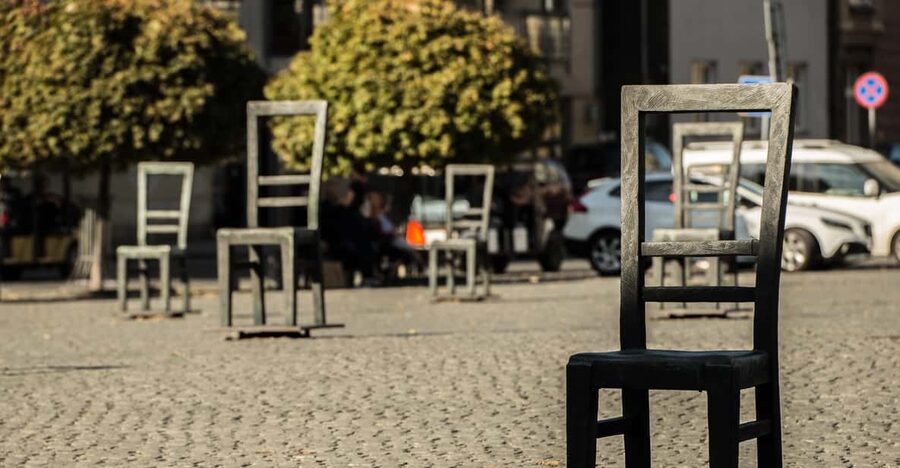
Next you reach Ghetto Heroes Square, described as the heart of the ghetto. This is where the tour becomes especially direct about what happened next for many residents.
The square was once a place where people gathered before deportations to concentration camps. Today, it functions as a memorial, and the visual language is unforgettable. Dozens of empty metal chairs fill the space, each one representing a life lost during the Holocaust. Seeing chairs in an outdoor public square does something subtle and powerful. It shifts the focus from statistics to people you can imagine sitting down, waiting, and losing their future.
If you have ever wondered why memorials can feel so effective, this is the reason. You are not only learning facts. You are noticing symbols that make it hard to stay detached. The guide’s storytelling helps you connect the chairs to the human rhythm of everyday life that was broken, then replaced with fear and forced movement.
There is also a sense of stillness here. Even with other visitors around, the square is not performative. It is quiet, reflective, and built for remembering. I recommend you give yourself a few extra seconds at each viewing angle so your brain can catch up with your eyes.
Under the Eagle Pharmacy and Tadeusz Pankiewicz: bravery you can picture
Across from the memorial space, the tour moves to a historic building tied to one of the best-known stories of underground aid: Under the Eagle Pharmacy.
This stop is where the tour shifts from remembering tragedy to recognizing courageous action. The guide shares stories of Tadeusz Pankiewicz and his staff, who risked their lives to help ghetto residents. They provided medicine and shelter, which may sound simple until you consider what medicine and shelter meant when people were trapped, monitored, and denied basic safety.
What I like here is the way bravery is handled in a grounded way. It is not framed as movie heroics. It is framed as real, dangerous work done by ordinary people with extraordinary courage. When your guide explains how the help was offered, it becomes easier to understand why survival was not only about endurance. It was also about networks of people willing to act.
This pharmacy stop also helps the whole tour feel more complete. The ghetto was a system of persecution, but it was also full of human decisions. Some choices led to suffering. Other choices created small windows of life. The tour keeps both ideas in view.
If you want photos, take them with respect. This site is part of remembrance, not a background for casual shots. A quick snapshot is fine, then look back up and keep listening.
Authentic wartime buildings and street layouts: what you are really walking through
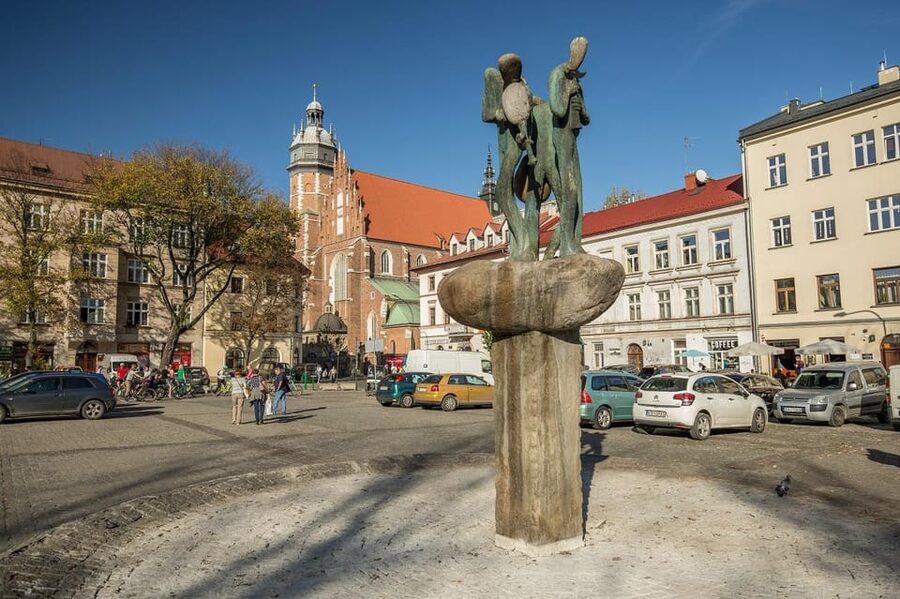
One of the tour’s strengths is that it keeps your feet on the ground. It is not just a museum lecture. You are walking between key locations, and the guide points out how authentic wartime buildings and street layouts shaped life.
That is important because your brain understands streets differently than it understands pages. When you can follow the same lines of travel, it is easier to imagine how movement was restricted, how crowded conditions could become worse, and how information spread in a place where people feared what they might hear next.
Also, because the tour is walking-based, the stories land in sequence. Podgórze becomes the starting point, the wall becomes the boundary, the memorial square becomes the outcome, and the pharmacy becomes the counterpoint of help and resistance. It is a tight emotional arc, and that is exactly why the 1-hour format works.
Keep expectations realistic: it is not designed to turn every stop into a full research project. But it gives you a strong, readable route through one of Kraków’s most powerful historical sites, and it does it in a way that feels grounded in place.
A few more Krakow tours worth comparing
- From Krakow: Auschwitz-Birkenau Guided Tour & Hotel Pickup
★ 4.5 · 33,358 reviews - From Krakow: Auschwitz-Birkenau Guided Tour & Hotel Pickup
★ 4.5 · 29,340 reviews - Krakow: Auschwitz Guided Tour with Optional Hotel Pickup
★ 4.5 · 15,280 reviews - Krakow: Auschwitz-Birkenau Guided Tour with Pickup & Lunch
★ 4.5 · 9,800 reviews
A 1-hour tour that still packs meaning: timing and how to get the most out of it
The tour lasts 1 hour, which can sound short, especially for a topic this heavy. But short is not automatically bad. In this case, it is focused. You get a guided path through the major checkpoints without endless detours.
To get the most out of it, I suggest you treat the first few minutes like you are setting your brain for the right mode. Arrive on time, pay attention right away, and do not spend the start fiddling with your phone. Your guide is doing the heavy lifting of connecting the sites, so your job is simply to stay present.
Also, because food and drink are not included, you should think about your timing if you are pairing this with other sightseeing. If you plan to eat afterward, that is easy. But if you tend to get lightheaded when you walk, bring a bottle of water for your own comfort. (Just don’t expect refreshments to be part of the tour.)
Weather matters too. You are outside for much of it, and you will be standing still at key points. Plan layers, even in seasons when Kraków looks mild at first glance.
Finally, the tour ends with a moment of reflection. That is not the kind of thing to rush. Let your last stop be your last stop. Take a breath. Let the information settle.
Why the $15 price feels like good value for this route
At $15 per person for a guided hour, this is priced like something aimed at access, not exclusivity. The big value is the professional guide, because the tour depends on interpretation, not just location-hopping.
You are paying for three things at once:
- Someone to explain what you are seeing at each stop, including the meaning behind memorial design
- Context for why daily life, deportations, and survival happened the way they did
- A respectful flow that connects sites rather than turning them into random photo stops
If you were to visit these places independently, you could certainly read afterward. But a good guide helps you notice what matters while you are there, and it saves you time sorting what is important from what is just noise.
There is also a practical flexibility bonus. The experience offers free cancellation up to 24 hours in advance and a reserve now, pay later option. That is handy when your schedule in Kraków is still forming.
Who this guided Jewish Ghetto walk is best for
This tour is best for you if:
- You want a guided route through Podgórze’s Jewish Ghetto sites that is not overwhelming
- You like learning through specific places, not only through books
- You care about the human stories behind deportations, survival, and help
I would also say it is a good fit if you appreciate a guide who can make a historical topic feel understandable. In one account from early 2025, the guide was described as fantastic, and the person even received a local recommendation (a rugby bar) based on their trip timing. That kind of extra, while not the main reason to book, usually means the guide is comfortable speaking with real visitors and adapting to their interests.
Who might not love it: if you are only looking for light sightseeing, or if you need more time to process heavy topics slowly, consider pairing it with a day that has space before and after. The emotional weight is real.
Meeting point and languages, so you can plan smoothly
Meet at the entrance to the Schindler Factory Museum, and look for a guide with an excursions.city sign. That start point is straightforward, and it helps you avoid the classic travel problem of wandering around trying to find the right person.
The tour is offered with live guides in German, Italian, English, French, and Spanish. If you speak one of these, choose your language carefully. It matters here because the guide’s storytelling carries the emotional meaning at each stop.
Should you book the Kraków Jewish Ghetto guided tour?
Book it if you want a tightly guided, respectful walk through the most meaningful Podgórze sites, including the Ghetto Wall remains, Ghetto Heroes Square and the Chair Memorial, and Under the Eagle Pharmacy tied to Tadeusz Pankiewicz. For the $15 price, the professional guidance and the concentration of major stops make it strong value.
Skip it or reconsider if you already planned a lot of intensive historical visiting in the same day. Because it is only 1 hour, you might still find it manageable, but the content is heavy. Give yourself recovery time, and you will get more out of it.
FAQ
How long is the Krakow Guided Tour of the Jewish Ghetto?
The tour lasts 1 hour.
Where do I meet the guide?
Meet at the entrance to the Schindler Factory Museum. Look for a guide with an excursions.city sign.
What sites will we see during the tour?
You’ll visit the remains of the original Ghetto Wall, Ghetto Heroes Square with the Chair Memorial, and the Under the Eagle Pharmacy, while learning about daily life, deportations, and survival during WWII.
Is food or drink included in the tour price?
No. Food and drink are not included.
What languages are available for the live tour guide?
The live tour guide is available in German, Italian, English, French, and Spanish.
Is there free cancellation?
Yes. You can cancel up to 24 hours in advance for a full refund.
Recently reviewed around Krakow
- Wawel Castle and Cathedral Guided Tour★ 4.6 · 44 reviews
- Walking Tour: Kazimierz, Jewish Quarter – 2-Hours of Magic!★ 4.7 · 35 reviews
- Wawel Castle and Cathedral Guided Tour★ 5.0 · 8 reviews
- Kraków Holocaust Tour★ 4.9 · 5 reviews
- Wadowice and Kalwaria: John Paul II Route★ 4.8 · 5 reviews
- VIP Club Entry and Booth Booking★ 5.0 · 4 reviews
- Walking Tour of Krakow: Old town – 2-Hours of Magic★ 4.7 · 5 reviews
- Krakow: Zakopane, Thermal Baths and Gorce Park Treetop Walk★ 5.0 · 3 reviews