
Reviewed · AUSCHWITZ-BIRKENAU MEMORIAL VISITS
Krakow: Auschwitz-Birkenau Guided Tour with Hotel Transfer
This day trip from Krakow is interesting because the travel is organized, so your attention can stay where it belongs at Auschwitz-Birkenau. I like the hotel pickup from Stare Miasto and the skip-the-line entrance, which cuts down time spent waiting before you even step onto the grounds. It is also framed with a sensitive English-language guide route, so you are not left trying to piece the story together alone.
The main drawback is timing. Pickups can be very early, and that can mean a long day, including potential waiting before the site tour slots kick in. Add in seasonal factors like low winter light at Birkenau, and you should plan for a visit that feels emotionally heavy and physically busy.
Key things to know before you go
- Skip-the-line entrance using a separate entrance to reduce queuing time
- One memorial day, two camp experiences, with a longer stop at Auschwitz I and a shorter one at Birkenau
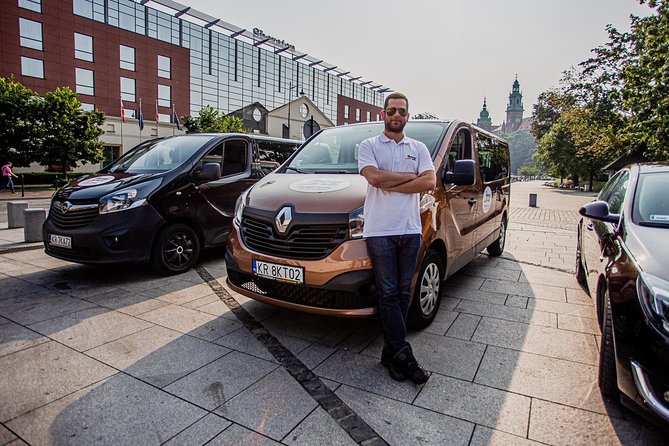
- English narration plus a coordinated driver, including strong communication, for a smoother start in Krakow
- UNESCO World Heritage status, with the memorial founded in 1947 and designated in 1979
- Strict gate rules, including the need for your full name and contact details, matching your ID exactly
- Light and heat can change what you feel, in winter the Birkenau part may be in the dark, and in summer there can be brutal sun
A 7-hour Auschwitz-Birkenau day trip, starting in Krakow and ending back at Stare Miasto
This tour is built as a full single-day circuit. You are picked up in Krakow, typically from Stare Miasto, then you ride about 1.5 hours to Oświęcim. After your guided time at the memorial sites, you head back and arrive again at Stare Miasto.
The total duration is listed as 7 hours, but I treat that as a minimum. Your real experience can feel longer because pickup times can shift. The operator notes pickups can land anywhere between 5:30AM and 3:00PM, with the most common time shown around 9:30AM, then confirmed the day before your trip. If you hate early mornings or you like tight schedules, this is the part that needs your planning.
There is also a break time built in around the initial memorial visit period, so you get a chance to reset before the longer guided sections. Still, this is not a sightseeing day where you can wander off and snack whenever you want. You are on a schedule that is shaped by site entry timing.
More Auschwitz-Birkenau memorial visits from Krakow:
- From Krakow: Auschwitz-Birkenau Guided Tour & Hotel Pickup
★ 4.5 · 33,358 reviews - From Krakow: Auschwitz-Birkenau Guided Tour & Hotel Pickup
★ 4.5 · 29,340 reviews - Krakow: Auschwitz Guided Tour with Optional Hotel Pickup
★ 4.5 · 15,280 reviews
Price and value: what $22 includes, and what that means for your day
At $22 per person, this tour is one of the more affordable ways to do Auschwitz-Birkenau with real guidance and transport. What you are paying for is not just the bus. You also get hotel pickup and drop-off (depending on your option), an air-conditioned coach, an English-speaking driver, an entrance ticket, and a professional licensed guide.
That matters because Auschwitz-Birkenau can become exhausting if you are doing it “on your own” and spending your energy figuring out timing, ticket entry, and where to go. Here, the day is assembled into a guided flow with an official route approach, plus skip-the-line entrance via a separate entrance. You are trading some flexibility for a lot of structure and less stress.
There is an add-on option for a lunchbox if selected at checkout. If you do not add it, plan to handle food on-site within the time you are given. For me, that is where you either feel comfortable or you start looking for the nearest place to buy something right when you are trying to listen.
Getting to Oświęcim: the transfer ride and why early pickup changes everything
The transfer is air-conditioned and part of the overall experience. You will spend about 1.5 hours on the way to the memorial, then about 1.5 hours back to Krakow after. That is a long enough ride that you should bring what you need to stay comfortable: layers, water if allowed for your own use, and a small bag you can manage without stress.
Two timing issues show up in real-world experiences. First, your pickup might be much earlier than the time you see on the voucher. One trip started at 6AM even though the selection looked like 9:30AM. Second, early pickup does not always mean you start touring immediately. There can be a wait before the guided part begins, which can be tough if you are tired and you do not have much to do outside.
A good trick is to treat this day like a travel day, not a casual excursion. Set expectations for a long early morning, then focus on the guidance once you arrive.
Entering Auschwitz-Birkenau Memorial: UNESCO protection and the first guided orientation
Your first on-site moment is at the Auschwitz-Birkenau Memorial and Museum area. The memorial was founded in 1947, and it was designated a UNESCO World Heritage Site in 1979. You are also told it is the only concentration camp under UNESCO protection, which helps explain why the place is managed with special care and strict expectations.
When you first arrive, you should expect a guided orientation before the longer camp tours. The schedule includes a guided segment where you walk and get sightseeing context, plus a break time. This is where a good guide does more than list facts. A sensitive narration helps you understand what you are seeing, why certain preserved elements were kept, and what it means that so many people were sent to the camps and killed during World War II. The information shared on this tour focuses on the scale, including more than 1.5 million people sent to the camps and put to death.
The memorial and museum approach also emphasizes original features and personal possessions. That can hit hard in a way that photographs cannot reproduce. If you like understanding the story in a linear way, the early guided setup matters because it gives the later camp visuals context.
And yes, you enter the site. This is not an external viewing only experience. The skip-the-line entrance is a practical perk here, because it helps you reduce the waiting time that can steal your attention right at the start.
A few more Krakow tours worth comparing
- Krakow to Auschwitz Birkenau Guided Tour with Transfer and Ticket
★ 5.0 · 8,197 reviews - From Krakow: Auschwitz Birkenau Tour with Transfer
★ 4.0 · 6,134 reviews - Krakow: Auschwitz-Birkenau Guided Tour with Ticket and Transfer
★ 4.5 · 3,784 reviews - Krakow to Wieliczka: Salt Mine Guided Tour with Ticket & Transfer
★ 4.5 · 3,193 reviews
Auschwitz I guided tour: where the longer time helps you process details
The day then moves to Auschwitz I, the first camp area on the route. You get about 2.5 hours of guided time here, which is a meaningful chunk. Compared with the later Birkenau stop, this is where you should expect the guide to slow down and connect more points with explanation.
This is also where the tour framework leans into the day-to-day reality of camp life and the horrors that unfolded. The guided format and the preserved elements, plus the emphasis on prisoners’ personal possessions, give you a sense of how ordinary items and original structures became part of a system built for dehumanization.
One practical note: you might feel a strong emotional shift as you move through Auschwitz I. The longer time can feel exhausting, but it also gives your brain room to keep up with what you are being told. If you rush through this part, you lose the meaning of why the camp design and artifacts were preserved as evidence.
There is also an order conversation worth considering. One person felt the day would have made more sense emotionally if Birkenau had come first, then Auschwitz. You cannot always change the sequence, but it is useful to know that the order affects how the story lands for different people. If you know you prefer seeing the scale first, keep that in mind when you mentally prepare.
Auschwitz II-Birkenau: the scale is intense, and the weather can affect visibility
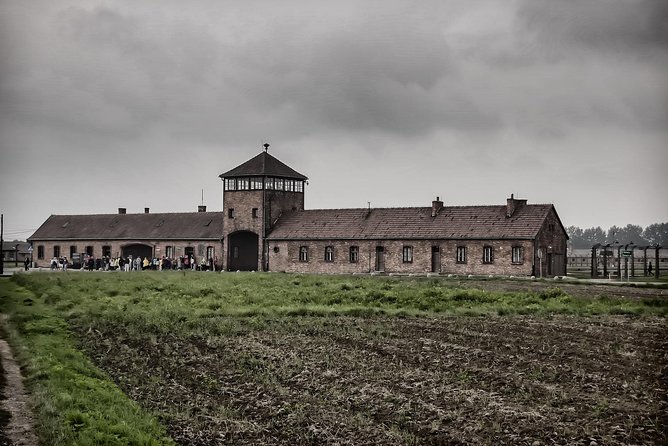
Next comes Auschwitz II-Birkenau, with about 1 hour of guided time. This part is often the one that feels most open and most difficult to grasp, because the grounds stretch out and the preserved sections are spread across a vast area.
You are still seeing key parts of the camp system. In one account, the route included stops around the entry gate area, the railway car section, and remnants of housing, including women’s housing structures. Even with that, a shorter guided slot means you are not going to see everything in equal depth. The point here is understanding the overall reality and scale, not collecting an item-by-item checklist.
Weather can shape the experience in a big way. One person described visiting in around 30 degrees Celsius with little shade and limited ability to pause, then felt unwell from the heat. Another noted that during winter or darker seasons, the Birkenau part was in the dark, which can change how much you can visually take in.
I would plan for both possibilities. If you go in warm weather, protect yourself from sun exposure and hydration stress. If you go in colder months, dress for cold and consider that low light can limit what you notice, even when the guide is doing their job. Either way, you will leave with the sense that this was a place built for industrial-scale cruelty.
The guide and driver teamwork: what makes the English narration feel controlled, not chaotic
A major reason this tour scores well is the human coordination behind it. You have an English-speaking driver for the road portion, and a professional licensed guide for the on-site narration. That pairing matters because your day runs on timing. When pickup and transfers are smooth, you are less likely to arrive flustered, which helps for a place this intense.
One review specifically named the driver Stephan, praising both knowledge and communication. That is the kind of detail you want when you are dealing with strict entry rules and fixed site schedules. Even if you are not focused on the logistics, you still benefit from having someone on the transport side who can keep you informed about when to be ready.
On-site, the guides handle the tone. The tour information emphasizes that the narration is sensitive, focused on what life was like for prisoners and how the Nazi regime carried out the genocide. The practical value is that you are not stuck reading every sign yourself in a fog of shock. Instead, you hear the story in English with a guided route format.
What to bring and what gets you turned away at Auschwitz gates
Auschwitz-Birkenau has strict requirements, and the tour rules reflect that. Bring your passport or ID card. You also need to provide your full name and contact details. The operator warns that entrance may be refused if the name you book with does not match the name on your ID exactly. Double-check spelling, including middle names, if your documents use them.
There is also a bag limit: the maximum size permitted is 30 x 20 x 10 cm. That affects real decisions, like whether you can bring a small daypack or you need a slimmer bag. If you show up with something larger, you risk losing time dealing with it at the gate.
Photo and behavior rules are clear:
- Flash photography is not allowed
- Alcohol and drugs are not allowed
- Baby carriages are not allowed
Also remember the tour tickets are non-refundable, so book only when you are confident you can make the dates and the schedule.
If you follow these rules, the day flows. If you do not, the day can become more stressful than it needs to be at the start.
Who this tour is for, and who might want a different plan
This tour is not suitable for children under 14. That alone tells you how serious and intense the visit is, and why the pace and emotional content are not set up for younger kids.
It is a strong fit for:
- Adults who want both Auschwitz I and Auschwitz II-Birkenau in one guided day
- People who value English narration and a structured route
- Travelers staying in Krakow who want pickup and drop-off without navigating transport
It might not be the best fit for:
- Anyone who cannot handle very early starts, because pickups can be earlier than expected
- People who are sensitive to heat or long standing and walking in open areas
- Anyone who dislikes the idea that they cannot control the timing once they enter the grounds
And one more real-world point: this is a walking-heavy day. One account noted lots of walking, though it was considered worth it. In other words, plan your body, not just your head.
Should you book this Auschwitz-Birkenau tour from Krakow?
Book it if you want an organized way to do Auschwitz-Birkenau with hotel transfer, entrance ticket included, and English guidance that keeps the story grounded. The value is strong at this price point because you are also getting skip-the-line entry, which helps you use your time for what matters.
Consider skipping this exact option if early mornings will derail your energy, because pickup can be very early and you might still have a wait. Also think carefully about season. In winter, Birkenau might be in low light. In summer, heat and sun exposure can hit harder than you expect.
If you do book, go in with a simple mindset: this is not a checklist day, it is a memorial day. Follow the rules, keep your bag small, bring the ID that matches your booking name, and let the guide do the heavy lifting of explanation so you can stay present.
FAQ
How long is the Auschwitz-Birkenau guided tour from Krakow?
The tour duration is listed as 7 hours, with about 1.5 hours each way by coach, plus guided time at the memorial sites.
Where do you get picked up in Krakow?
Pickup is from Stare Miasto (and hotel pickup is offered depending on the option selected).
Is the entrance ticket included, and do you skip the line?
Yes. An entrance ticket is included, and you enter through a separate entrance that supports skip-the-line access.
What language is the tour guide?
The tour guide and live experience are in English.
What documents do I need to bring?
You need a passport or ID card. You also must provide your full name and contact details for the required site entry process.
Can I take photos with flash?
No. Flash photography is not permitted.
Is this tour suitable for children?
No, it is not suitable for children under 14.
Recently reviewed around Krakow
- Krakow: City Golf Cart Tour and Schindler’s Factory Museum★ 5.0 · 4 reviews
- Krakow: City Sightseeing Tour by Shared or Private Golf Cart★ 4.4 · 21 reviews
- Krakow beer review with a local guide★ 5.0 · 4 reviews
- Kraków: Romantic Candlelight Chopin Piano Concert★ 4.9 · 8 reviews
- From Krakow: Chocholow Hot Springs Evening or Daytime Ticket★ 4.7 · 72 reviews
- From Krakow: Zakopane, Tatra Mountains & Thermal Baths Tour★ 4.9 · 52 reviews
- Kraków: VIP Candlelight Concert The Music of Fryderyk Chopin★ 4.8 · 8 reviews
- Krakow: Bottomless Brunch with 3-Course Meal and Drinks★ 3.8 · 30 reviews