Reviewed · TOURS
Kraków Holocaust Tour
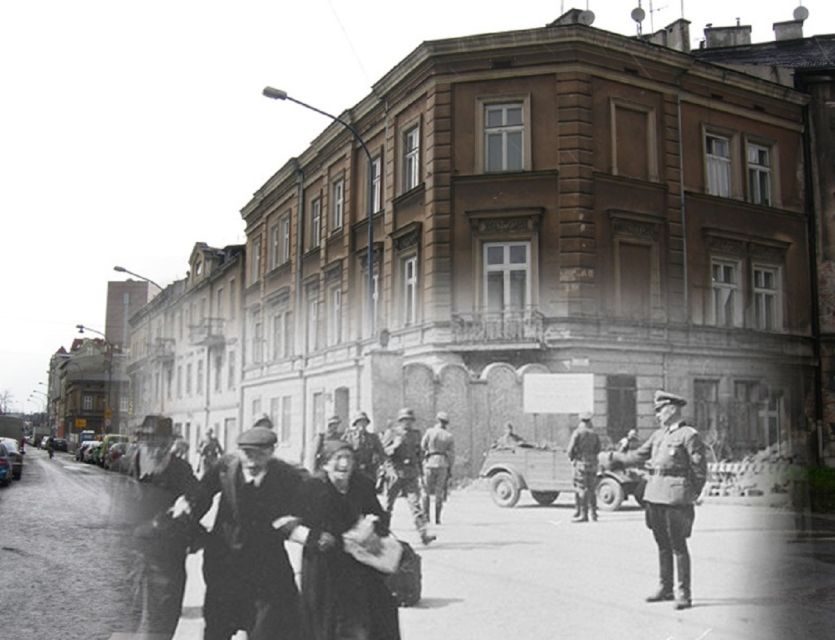
Kraków’s Nazi-era ghetto still looks startlingly like it did at the end of the war, which is exactly why this tour hits hard. You walk through a district shaped to control people’s daily life, and you do it with a historian’s guidance rather than a quick highlight reel of plaques.
What I love most is that this tour covers the entire Jewish ghetto area and keeps the story grounded in how the system worked day to day. The other big plus is the stop at the Pharmacy Under the Eagle, which gives the history a tangible museum finish. One possible drawback is that two hours is fast for the amount of ground you cover, so come with comfortable shoes and expect a steady pace.
Key points you will actually feel on the walk
- The full ghetto route, not just the most famous corners
- Two wall fragments that help you picture how confinement was built
- Ghetto Heroes Square (Square of Chairs) as a powerful place to orient the story
- Real institutions and control points like the Judenrats, labor organizations, hospitals, and prison
- Factories and orphanages, which widen the focus beyond suffering to how lives were managed
- Pharmacy Under the Eagle at the end, tying the route to a major museum stop
Why this Kraków Jewish ghetto route feels different from a typical Holocaust tour
Most Kraków tours touch a few top sites, then move on. This one is built around the idea that the ghetto was a whole functioning space, not a single memorial location. You are walking an area where many buildings and organizational structures largely remain in the look they had during the years of the German occupation.
That matters because the ghetto was not just geography. It was policy made physical. Nazi planning used walls, doors, checkpoints, and specific institutions to control who could work, where people could live, and what daily life looked like. When you cover the entire district, those pieces connect in your head instead of staying as separate facts.
I also like that the tour explains purpose, not just events. You hear how ghettos were designed to operate during the occupation and how Kraków compares with other ghettos across Poland. That makes it easier for you to understand the broader logic behind what you are seeing on the street.
More Krakow tours worth comparing:
- From Krakow: Auschwitz-Birkenau Guided Tour & Hotel Pickup
★ 4.5 · 33,358 reviews - From Krakow: Auschwitz-Birkenau Guided Tour & Hotel Pickup
★ 4.5 · 29,340 reviews - Krakow: Auschwitz Guided Tour with Optional Hotel Pickup
★ 4.5 · 15,280 reviews
Two-hour reality check: what timing means for your experience
This is a two-hour live guided tour, in Spanish, with wheelchair access. That time box is important. It means the guide has to move efficiently, and you should too. If you want to stand for a long time at every single point, you may feel slightly rushed.
The good news is that the route is focused on key categories. You are not doing a slow wander. You are going from one kind of site to another, so your brain keeps getting the map of how the system worked.
Here is what helps most: keep your questions short and practical. If something confuses you, ask for how that building or institution fit into the ghetto’s daily operation. That is the kind of question the tour is set up to answer.
Meeting point: the grey umbrella and how to spot your group fast
Your guide uses a clear visual cue: a grey umbrella. That makes meeting up much easier in a busy city center. Arrive a few minutes early so you are not scanning streets while holding your phone like a panic device.
From there, you get orientation and the story starts on the ground. The guide’s background is in geography and history, which you feel right away in the way the tour connects streets, buildings, and administrative purpose.
And yes, the pace is human. The tour reviews praise the guide as very good, and especially for keeping the topic engaging and easy to follow in Spanish. If you are nervous about understanding history tours, this is a good sign.
The ghetto wall fragments: seeing confinement as architecture
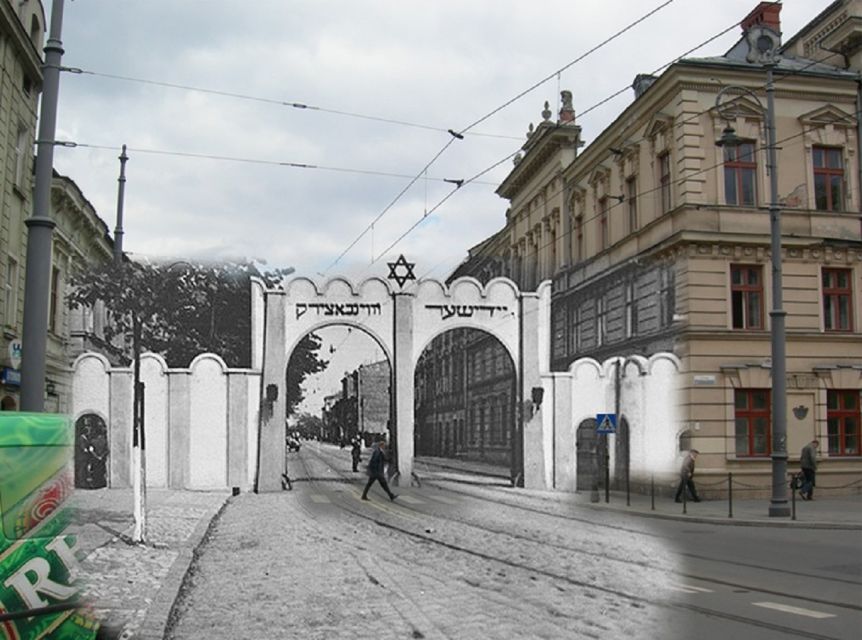
One of the most direct parts of the tour is going to the two fragments of the wall. Even when you know the words, your body understands walls differently. Seeing remnants helps you grasp scale. It turns the idea of a boundary into something made of real material that once shaped real movement.
This is also where you can start to notice details that you might otherwise miss. For example, you can look at how the space was structured so people knew where they could not go. Later, when you see the locations of old doors and other control points, the wall stops feeling like an abstract concept.
A small tip: take a few seconds to look up and around, not only at the wall piece itself. The context tells the story, especially in a district where many buildings remain in place.
Another way to spend a day around Krakow:
- Krakow–Zakopane: Cable Car, Chocholow Baths, Cheese & Vodka
★ 5.0 · 10,720 reviews - Krakow: Auschwitz-Birkenau Guided Tour with Pickup & Lunch
★ 4.5 · 9,800 reviews - From Krakow: Wieliczka Salt Mine Tour
★ 4.6 · 9,393 reviews - Krakow: Auschwitz-Birkenau Guided Tour Pickup/Lunch Options
★ 4.5 · 9,057 reviews
Ghetto Heroes Square (Square of Chairs): where the story gets personal
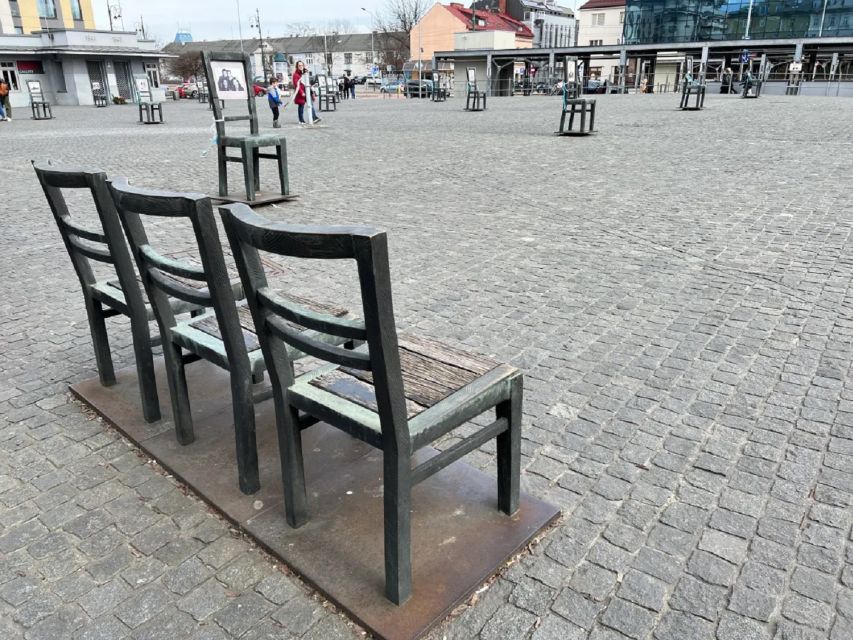
Next comes Ghetto Heroes Square, also called the Square of Chairs. Names like this are not random. They are a way of organizing memory in the middle of a former system of oppression.
This is a good stop for getting your bearings. You are shifting from physical boundaries into people and resistance, and the guide helps explain how the ghetto’s internal life was shaped by both survival and organized responses.
If you like history that connects emotions and facts, this is a strong pivot point. You also get a break from the constant attention on walls and doorways, which helps you process what you have already seen.
How the Judenrat and other institutions shaped daily life
The tour doesn’t just say the ghetto existed. It shows how it worked.
You will visit the Judenrats, along with other structures tied to internal administration such as labor organizations, police agencies, and buildings connected to intellectual meetings and resistance. The point is not to simplify responsibility, but to explain the roles different bodies were forced to play inside the Nazi system.
In a tour like this, the most valuable moments often come when you hear the purpose behind an institution. A place like a council or an office is not just a building. It becomes a mechanism for decisions that affected food access, employment, and the rules people had to navigate.
Here is what to watch for: when the guide mentions each institution, try to picture the workflow. Who used it, what it controlled, and what people hoped to change through it. That mental model is what turns a list of sites into understanding.
Hospitals, prison, factories, and orphanages: expanding the focus beyond tragedy
A Holocaust tour can easily become one-note if it only emphasizes death and destruction. This one keeps a broader view by walking through different kinds of ghetto institutions.
You will see places tied to:
- Hospitals
- Prison
- Synagogue
- Factories
- Orphanages
That variety is powerful because it shows you the ghetto was built to run like an enforced society. People still had medical needs, work needs, religious life, and childrearing, even when those systems were under brutal control.
When you hit the hospital and prison-related stops, notice how those roles map onto the daily pressure. The guide also connects these institutions back to the Nazis’ purpose during occupation, and you start to see the ghetto as an engine for control rather than a temporary holding area.
The factory and labor-related elements matter too. They show how exploitation was woven into the daily routine. And the orphanage connections add another layer, reminding you that the future of children was shaped inside this system as well.
The old doors and major buildings: how streets reveal the control system
The route includes the location of the old doors, plus important buildings tied to meetings, resistance, and policing. Doors matter here because they represent access, permission, and restriction in a very physical way.
When you look at these locations, try to keep one idea in your mind: a ghetto was designed to manage movement. Doors were not only entrances. They were boundaries with rules behind them.
You will also cover major building types connected to institutional life. This is where the historian-supported approach helps. Instead of only describing what a building looks like now, the guide explains what it represented for how the ghetto functioned at the time.
Pharmacy Under the Eagle: finishing with a museum that anchors the story
The tour ends at the famous Pharmacy Under the Eagle, described as one of the most important museums in Kraków on this subject. Ending here is smart because it gives you a consolidated place to absorb what you have just walked through.
By the time you reach the museum stop, you have already seen the categories of institutions and control points across the district. That makes the museum experience feel less like a separate attraction and more like the final layer of understanding.
If you want to make the museum stop count, take a moment before you enter to think about how the ghetto shaped daily life. Then, when you see exhibits or explanations there, you will connect them to the specific buildings and themes you encountered on the street.
Price and value: is 16 dollars worth two hours of ghetto history?
At $16 per person for a two-hour guided tour, the value is strong, especially for a walking route that covers the ghetto in full rather than a short sampler. You are paying for structured interpretation, not just time in a historical district.
You also get a graduate guide in geography and history, plus historical support from a historian. That combination tends to matter on sites like these, where the details are easy to misread if you are left on your own.
One practical note: food and drinks are not included. So if you plan to schedule this after a long morning, grab a snack before you start and carry water if that is comfortable for you.
Who this tour suits best, and who may want a different pace
This Kraków Holocaust Tour works best if you want:
- A guided walk across the full Jewish ghetto area
- Explanations focused on how the system worked, including daily life
- A Spanish guide who keeps the information engaging
It may not be your ideal match if you prefer a very slow, contemplative route with lots of unscheduled time for lingering. Two hours is tight, and the tour is built for coverage and clarity.
Wheelchair accessible route details are not expanded beyond that, so if you use a wheelchair, it is worth confirming on the day what the route feels like underfoot. You should also bring comfortable shoes even if you do not walk as far as others, since you will still be moving through a historic area.
Practical tips so you get more from every stop
First, wear shoes you can stand in for a while. The tour is about covering multiple site types, so your legs will notice.
Second, keep your attention moving in themes. Ask yourself what you are learning each time you move to a new category: walls, doors, councils, labor, health, confinement, religious life, childrearing. That keeps the story organized.
Third, prepare for emotional weight. This is not just architecture. Even with the practical, explanatory approach, the topic is difficult. Give yourself permission to pause if you need a second.
Finally, if you are Spanish-speaking or learning Spanish, treat this as history practice. The reviews suggest the guide is very amenable and the tour stays interesting, which can make the language feel more useful than rote listening.
Should you book the Kraków Holocaust Tour?
If you want a walk that treats the Kraków ghetto as a whole, with institutions and daily life explained, this is a very solid choice. The strongest reasons to book are the full ghetto coverage and the ending at the Pharmacy Under the Eagle, so you finish with context and a major museum anchor.
Book it if you like clear guidance, you can handle a two-hour pace, and you want your visit grounded in how the system operated. Skip it only if you need a slow, stop-and-stare style tour. Otherwise, this one is a practical way to understand the ghetto as an integrated place, not a handful of isolated stops.
FAQ
How long is the Kraków Holocaust Tour?
It lasts two hours.
What language is the live guide?
The live tour guide speaks Spanish.
Where do I meet the guide?
You meet at the start point where the guide carries a grey umbrella.
Is the tour wheelchair accessible?
Yes, the tour is listed as wheelchair accessible.
What should I bring?
Wear comfortable shoes.
Is food or drinks included?
No, food and drinks are not included.
What does the price include?
The included part is a graduate guide in Geography and History.
Does the tour cover the entire Jewish ghetto?
Yes. It is described as the only tour in Kraków that covers the old ghetto in its entirety.
Can I cancel or pay later?
You can cancel up to 24 hours in advance for a full refund, and you can also reserve now & pay later to keep plans flexible.
Recently reviewed around Krakow
- Wawel Castle and Cathedral Guided Tour★ 4.6 · 44 reviews
- Walking Tour: Kazimierz, Jewish Quarter – 2-Hours of Magic!★ 4.7 · 35 reviews
- Wawel Castle and Cathedral Guided Tour★ 5.0 · 8 reviews
- Wadowice and Kalwaria: John Paul II Route★ 4.8 · 5 reviews
- VIP Club Entry and Booth Booking★ 5.0 · 4 reviews
- Walking Tour of Krakow: Old town – 2-Hours of Magic★ 4.7 · 5 reviews
- Krakow: Zakopane, Thermal Baths and Gorce Park Treetop Walk★ 5.0 · 3 reviews
- From Krakow: Wadowice & Sanctuary of Divine Mercy Tour★ 4.8 · 69 reviews
Tours, compared.
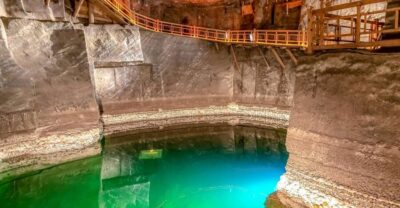
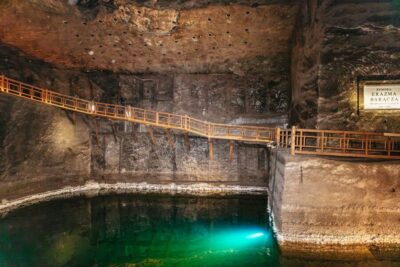
Wieliczka Salt Mine Guided Tour with Transport
Read our review →
Zakopane Tour with Chocholow Hot Baths and Cable Car
Read our review →