
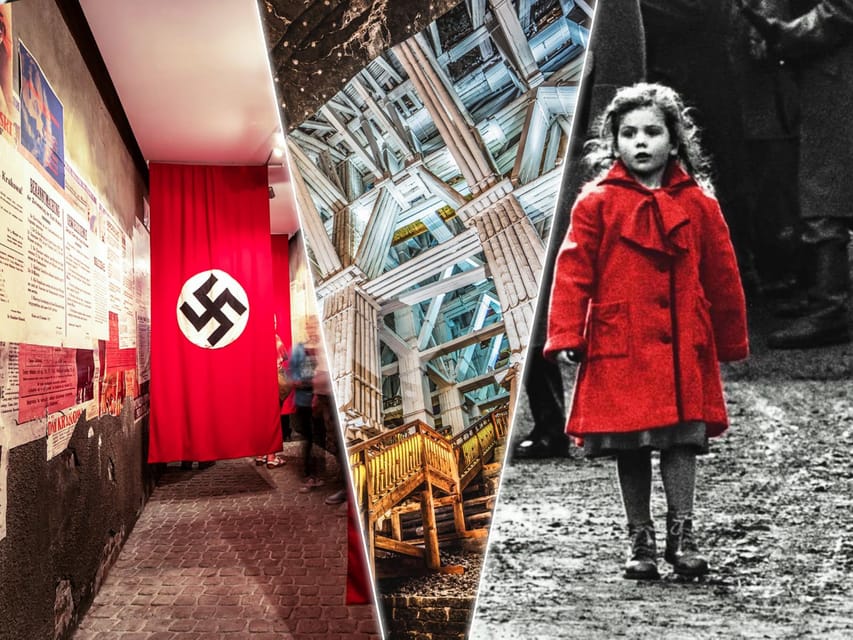
Reviewed · SCHINDLER'S FACTORY TOURS
From Krakow: Half-Day Salt Mine and Schindler’s Factory Tour
This is one of Krakow’s most gripping pairings, salt underground and World War II history above ground, in the same day. I like how the salt mine is not just a ticket stop, it’s an underground world of chapels and chambers, reaching 327 meters deep. I also like the way Schindler’s Factory brings the WWII story into focus through the factory site tied to Oskar Schindler.
The main thing to consider is effort. Expect a lot of walking, tight spaces underground, and limited time to read slowly in museums. If you get anxious in confined areas, or you have limited mobility, you’ll want to think twice.
Key things to know before you go

- Wieliczka’s medieval mine stays in continuous operation from the 11th century, with 9 levels and about 300 kilometers of corridors.
- St. Kinga’s Chapel is the big draw, plus you’ll see lakes and cave-like spaces along the route.
- Skip-the-line access helps you spend more time inside and less time in queues.
- Professional guidance matters here, and you’ll have headsets in the mine so you can actually follow the story.
- A WWII pivot at Schindler’s Factory gives you a sobering look at occupied Krakow and the industrial machinery behind it.
- Finish at Schindler’s Factory instead of backtracking across the city.
Entering Wieliczka Salt Mine, where the depth feels real
Wieliczka Salt Mine is one of those places that changes how you see the world. Salt sounds basic until you picture it as a living underground city, cut over centuries, and still functioning as a showpiece today. The mine reaches a depth of 327 meters, with 9 levels of tunnels, and your guided route is built to show that long evolution from extraction to underground architecture.
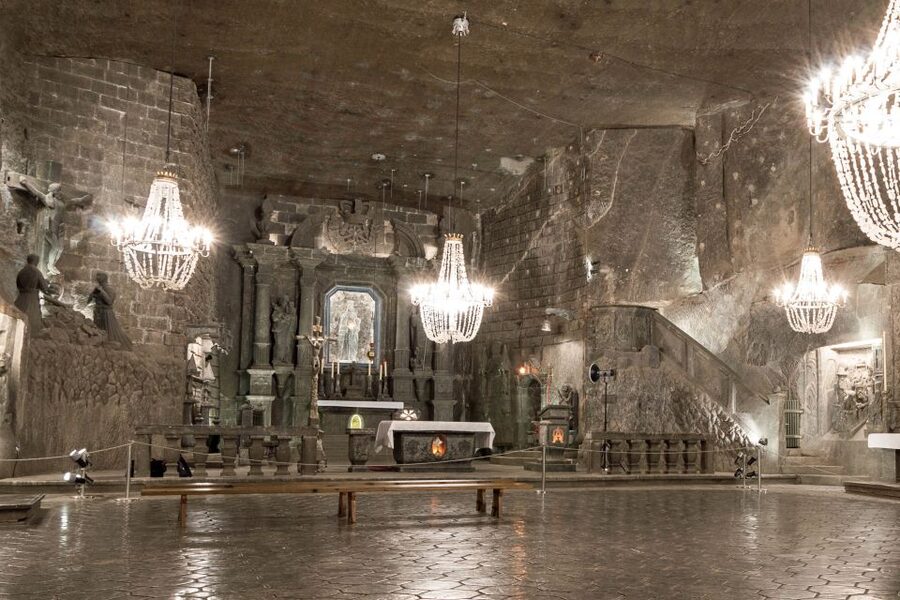
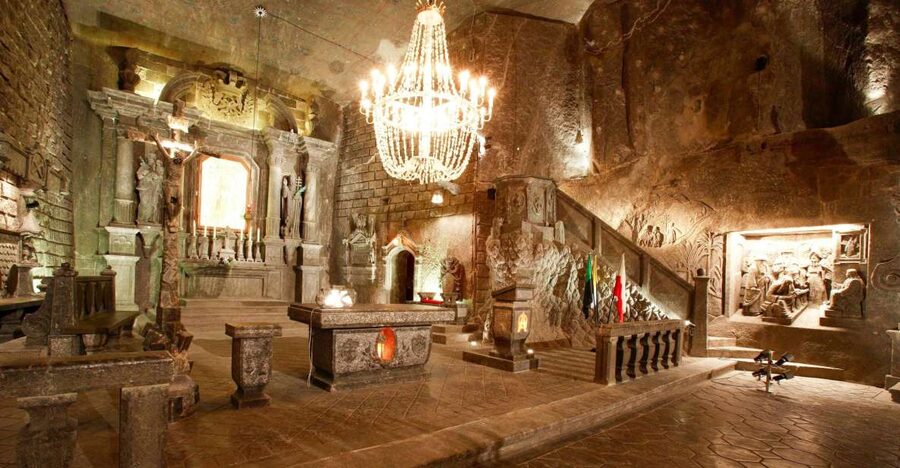
What makes it special is the condition. This is not a movie set feeling. You get a sense of how a major resource shaped a town, then how it kept shaping it for generations. The highlights are the underground halls, the dramatic salt formations, and the famous religious spaces built from salt. St. Kinga’s Chapel is the one almost everyone hopes to see, and it’s famous for a reason.
Two other things you should expect to notice:
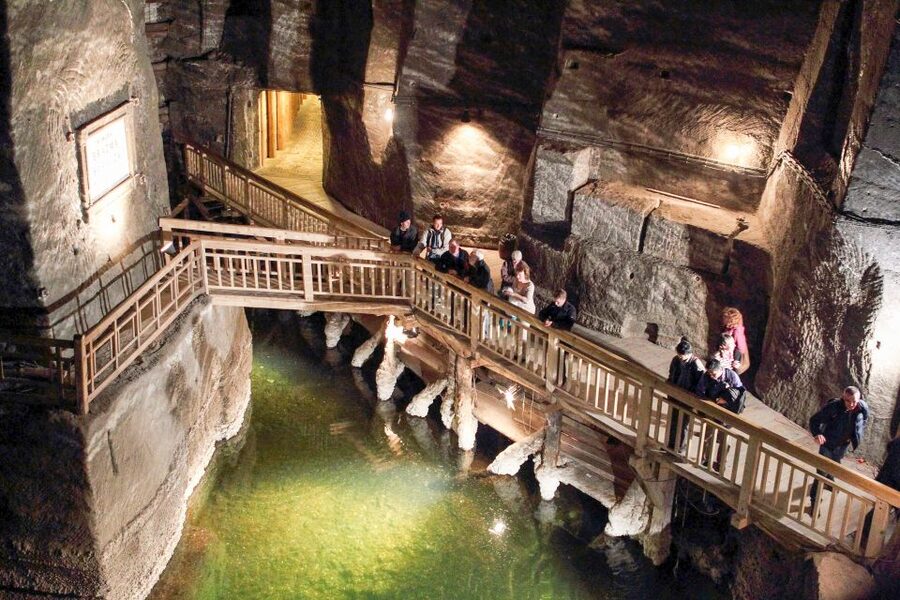
1) The mine is visually stunning, even before the chapels, because the salt lakes and cavern-like areas give you different textures and lighting.
2) The story is as important as the scenery. A good guide will connect the mining techniques, the underground geography, and the idea of an underground city that people used as they worked.
More Schindler's Factory tours to compare:
- Krakow: Oskar Schindler’s Factory Entry Ticket & Guided Tour
★ 4.2 · 3,793 reviews - Krakow: Schindler’s Factory Tour with Entrance Ticket
★ 4.5 · 3,182 reviews - Krakow: Schindler’s Factory Skip-the-Line Ticket
★ 4.4 · 3,105 reviews
The guided route: 2.5 hours underground, more than you think
Your main block of time is a guided visit through the mine, set at about 2.5 hours. That is long enough to feel like you did something substantial, not just a quick pass. It also means your pace is guided, not free-roaming. You’ll stop where the route wants you to stop, and you’ll move along when it’s time.
The practical trick is to plan for the reality of underground sightseeing:
- You’ll likely descend and move through uneven surfaces.
- You’ll spend time looking up, down, and sideways to take in salt carvings and spaces.
- You’ll want to keep your group together, because the guide needs everyone positioned to follow along.
Some groups get praised for guides like Jacob, and others mention Andrew. Either way, I’d treat this as a scenario where the guide really is part of the value. The mine’s scale can make it easy to miss details if you drift behind.
Headsets in the mine: tiny gear, huge difference
The tour includes headsets in the mine, and this is not a small perk. Underground sound behaves differently. Add in the crowd and the acoustics, and you can end up losing half the explanation if you rely on hearing without help.
A few people have pointed out that some groups can end up with too much congestion in narrow corridors. When that happens, even a great guide can struggle to be heard by everyone at once. The headset system helps you stay locked in, but it still pays to be mindful of your spot in the group. If you’re near the front half, you’ll have an easier time hearing and seeing demonstrations.
This is also why your comfortable shoes matter. If you’re busy adjusting your footing, you’ll miss the storytelling beats.
What the St. Kinga moment feels like
St. Kinga’s Chapel is the named must-see for a reason. It turns the mine from industrial extraction into something crafted and ceremonial. That’s what I’d focus on when you’re approaching it: the contrast.
Before the chapel, you’re thinking about tunnels, depth, and mining. In the chapel, you’re thinking about people shaping that environment into something with meaning. If you’ve seen a few churches in Poland already, you’ll recognize the idea of monumental devotion. The difference here is the material and the setting.
Don’t rush it. Take a minute, look around, and get your bearings fast. This is one of those sights where a 20-second glance feels thin.
More Wieliczka Salt Mine tours to compare:
- From Krakow: Wieliczka Salt Mine Tour
★ 4.6 · 9,393 reviews - Krakow: Auschwitz-Birkenau and Salt Mine Guided Tour
★ 4.7 · 9,020 reviews - Krakow: Wieliczka Salt Mine Guided Tour with Transport
★ 4.4 · 7,429 reviews - Krakow: Wieliczka Salt Mine Fast-Track Ticket & Guided Tour
★ 4.5 · 5,872 reviews
Claustrophobia and mobility: the honest trade-off
This tour is not recommended for claustrophobia. Even if you handle tight spaces on normal streets, an underground route can feel different fast. There’s also no wheelchair suitability listed.
The route includes stairs to get you in and out, and there’s mention that the lift back up is in a very small space. If you’re someone who normally plans mobility around elevators and wide corridors, I’d treat the mine as a hard no.
If you’re unsure, ask yourself these quick questions:
- Do you get uneasy in crowded indoor spaces?
- Do you feel trapped in narrow hallways?
- Can you handle a long stretch of walking with uneven footing?
If the answer is yes for discomfort, consider separating the experiences. You can still see Schindler’s Factory with less physical strain.
The gap in the middle: Podgórze break time and real breathing room
Between the two sites, you get a break in Podgórze, with time for coffee, tea, and a lunch option, plus free time. This matters because both locations are intense in their own ways. Salt mine hours can tire your legs and your mind. WWII history can hit harder than you expect.
Don’t treat the break as bonus time you can ignore. Use it to refuel. You’re not going to want to shop for food while your schedule is already moving.
Also, expect that the exact break length can shift a bit. The schedule is set up to protect the flow of guided visits, but road traffic and how long the first tour runs can change the timing.
Oskar Schindler’s Factory: history inside a former industrial space
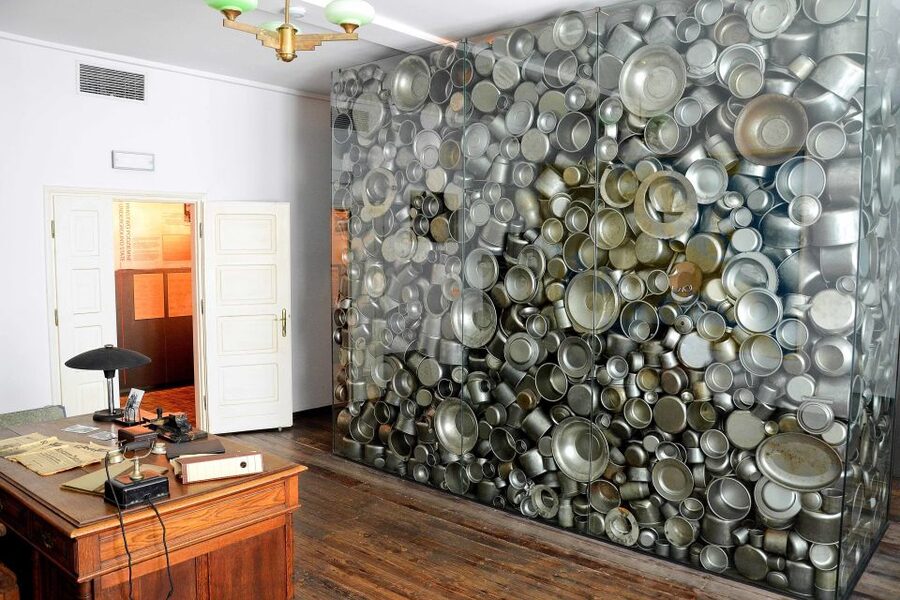
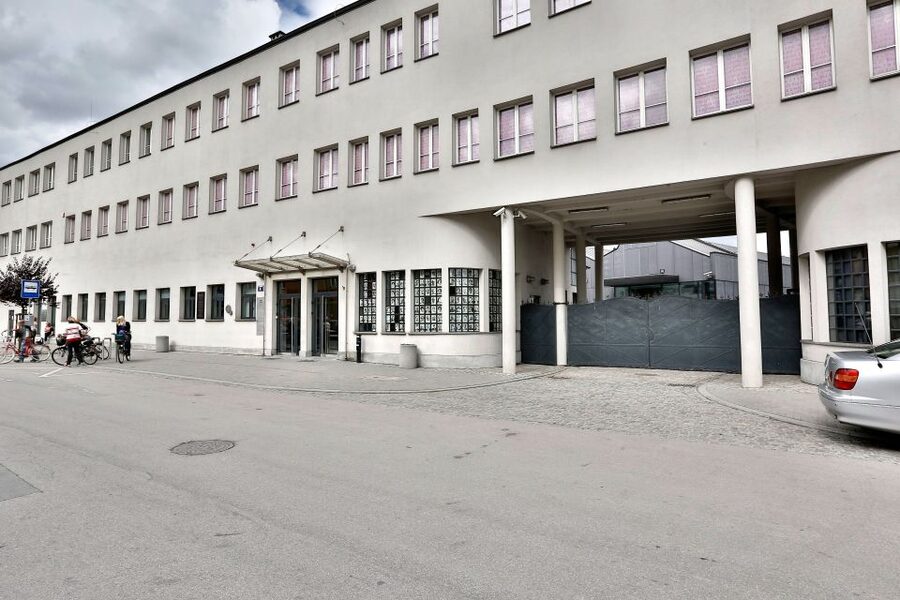
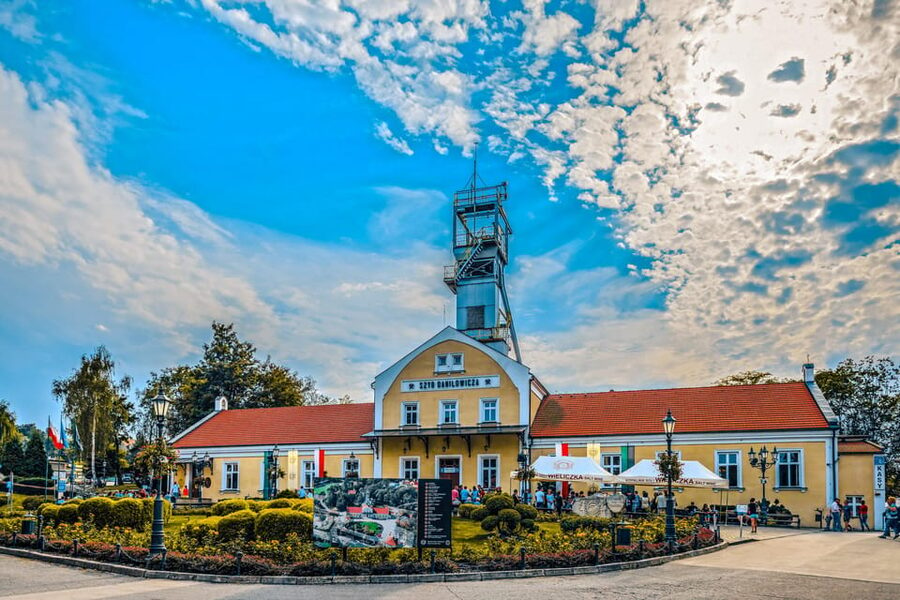
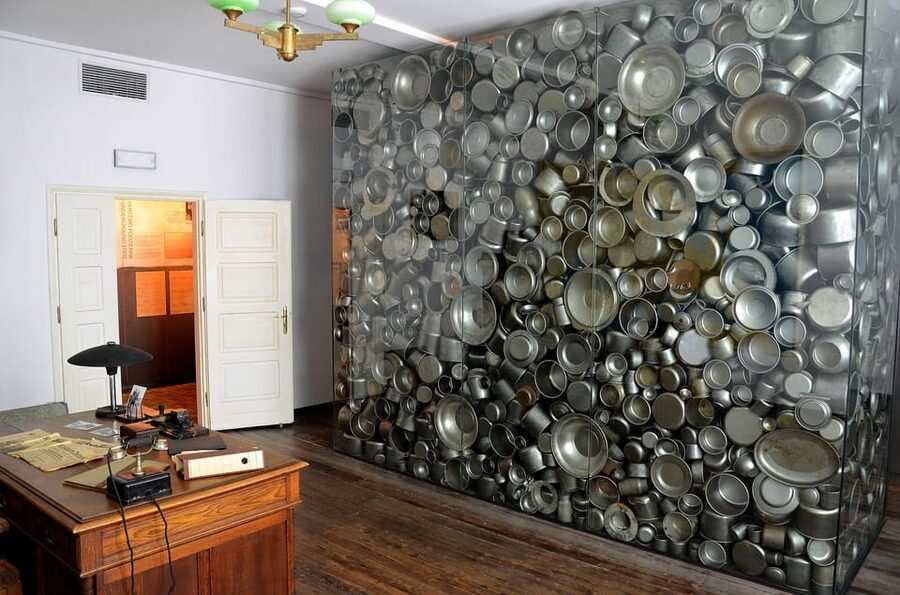
After the salt mine, Krakow’s mood changes. Schindler’s Factory is located in the former factory of Oskar Schindler, the industrialist credited with saving the lives of more than 1,000 people during the Holocaust. The site is known internationally thanks to the film Schindler’s List, but the museum grounds it in the local reality of occupied Krakow.
Your guided portion is about 1.5 hours. That’s enough time to understand what the museum is trying to communicate, but it’s not enough if you want to read every sign slowly. Plan on a guided scan, not a leisurely personal tour.
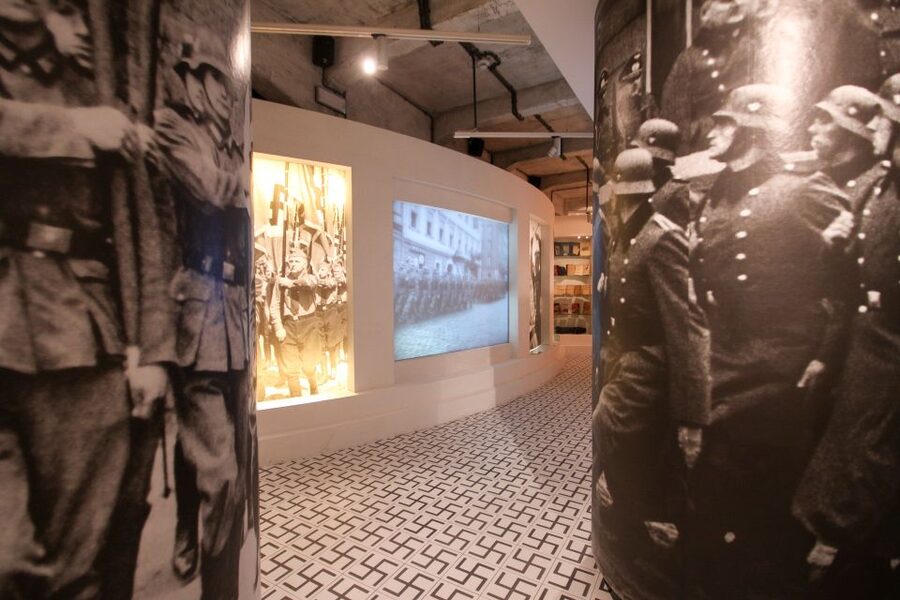
What you’ll likely pick up is how Nazi occupation worked through institutions, businesses, and forced labor networks. The museum style focuses on context, artifacts, and the human impact, so you’re not just looking at names. You’re seeing how systems did what they did.
Museum pacing: when groups and corridors get tight
The museum experience can feel busy, mainly because it’s designed for visitors and because the story is heavy, which encourages people to stop and read. Some people felt the group on the Schindler’s side was too large for narrow corridors, which made it harder to see what the guide was pointing to, especially if you were toward the back.
That doesn’t mean the tour isn’t worth it. It means you should be strategic:
- If possible, position yourself where you can see the guide’s gestures and the display.
- Don’t rely on a perfect audio moment in a crowded room.
- Use the guided time for structure, then take in what you still want during your remaining museum moment.
Also, while the factory is deeply tied to the wartime story, it’s still an exhibition environment. If you expected a look at the exact factory workspaces like in a working 1940s shop floor, you might find it more interpretive than literal.
Getting from stop to stop: transport that keeps you on rails
You get round-trip transportation by modern vehicle, plus hotel pickup is available depending on your selected option. The standard meeting point is the entrance of Radisson Blu Hotel Krakow at the Tourist Bus Stop. Your actual pickup time can change by plus or minus 1 hour, and you’re asked to arrive 15 minutes early.
This is one of the reasons the package feels worth it. You’re not arranging two separate transport plans or dealing with ticket chaos. You’re also reducing the risk of being late to either guided entry, which matters when skip-the-line access is part of the value.
The tour also finishes at Fabryka Emalia Oskara Schindlera. That’s convenient, because you can order a taxi back to your hotel afterward without needing another drop-off puzzle.
Skip-the-line tickets: when they matter most
Skip-the-line access is included for both entries. In a city with heavy sightseeing demand, this can be more than a convenience. It protects your guided timing.
In places like mines and museums, being stuck in a line is not just wasted time. It also makes your guided session feel rushed afterward. If the tour runs long at one site, you feel it at the next one. Avoiding queues helps keep the day stable.
That said, one theme that shows up is crowding can still happen, depending on the day. Even with a fast entry process, narrow corridors and popular rooms can create bottlenecks. You can’t control that entirely, but you can control your position and your expectations.
Price and value: what $89 buys you in practice
At $89 per person, this is not a cheap add-on. I’d frame it as a paid day of structure. You’re paying for transportation, two guided segments, and the skip-the-line advantage, plus headsets in the mine.
Here’s why it tends to feel worth it for the right person:
- You get a professional guide for both major sites, so you’re not trying to piece together what you’re seeing.
- You get official routes and the flow of timing, which helps in two very different environments.
- You’re not organizing logistics. Pickup, transfers, and drop-off remove friction.
Where value can feel thin is if you’re the type who wants lots of unstructured time to wander, read every display, and linger in quiet corners. The day is built for guided coverage. If you want a slower museum experience, you might prefer a more flexible plan that lets you spend longer on Schindler’s Factory.
Small-group feel: the big difference between a good and a stressful day
Some groups are called small group, and that label matters. In tight underground spaces and crowded museum rooms, group size affects whether you hear the guide and whether you can see what’s being shown.
The practical takeaway: if you have the option to choose a smaller group size or a time slot that feels less peak, do it. Your experience will likely be calmer, with fewer moments where you feel squeezed.
Also, if you’re prone to getting separated in crowds, keep close. The mine especially rewards staying together.
What you should bring (and what to leave behind)
Keep it simple. Bring:
- Passport or ID card
- Camera (lots of photo chances underground, and in the museum)
- Comfortable shoes, because walking and uneven surfaces are part of the deal
Don’t bring luggage or large bags. The mine experience also has rules around alcohol and drugs, which you already know to skip.
If you forget something, you’ll feel it immediately. Underground visits don’t allow for easy returns to the bus.
So, who should book this Krakow combo tour?
This tour suits you best if you want a one-day hit that combines a world-famous underground site with a WWII landmark. It’s ideal for first-time visitors who want clear guidance, skip-the-line entry, and a smooth itinerary that does not require extra planning.
You might skip it if:
- You have claustrophobia or strong anxiety around enclosed spaces.
- You need wheelchair access.
- You want a relaxed, reading-heavy museum day more than a guided overview.
If you’re somewhere in the middle, consider how important the mine is to you. The mine is the more physically demanding part of the day.
Should you book this Half-Day Salt Mine and Schindler’s Factory tour?
Yes, if you want guided value in Krakow without wasting time on logistics. The underground experience at Wieliczka is the kind of sight that becomes a highlight of your trip, and the structure of a guided visit keeps it meaningful, not just scenic.
Book it with clear expectations. This is a full day at about 7 hours, even if the mine segment is the main focus. Wear shoes you trust, position yourself to hear the guide, and accept that museum reading time will be limited.
If you’re worried about tight spaces, don’t gamble on it. Choose a different plan that lets you see Schindler’s Factory with less physical pressure.
FAQ
How long is the whole tour from Krakow?
The total duration is listed as 7 hours, with guided time inside Wieliczka Salt Mine for about 2.5 hours and guided time at Oskar Schindler’s Factory for about 1.5 hours, plus transfers and a break.
What stops are included in the tour?
You visit Wieliczka Salt Mine and Oskar Schindler’s Factory. There is also a break time in Podgórze between the two guided visits.
Is food included?
Food and drinks are not included. The schedule includes a break with an opportunity for coffee, tea, and lunch.
Do I need tickets in advance?
Skip-the-line tickets are included, and the tour provides entry for the planned sites.
Is hotel pickup included?
Pickup is optional depending on the selected option. If you are not using optional pickup, the meeting point is the entrance of Radisson Blu Hotel Krakow at the Tourist Bus Stop.
Are headsets provided for the mine tour?
Yes. Headsets in the mine are included so you can hear your guide clearly.
What should I bring?
Bring your passport or ID card, comfortable shoes, and a camera.
Is the tour suitable for wheelchair users?
No. The tour is not suitable for wheelchair users.
Is this tour safe for claustrophobia?
It is not recommended for anyone with claustrophobia.
What happens at the end of the tour?
The last drop-off is provided at Schindler’s Factory, and from there you can order a taxi back to your hotel.
Recently reviewed around Krakow
- Krakow: City Golf Cart Tour and Schindler’s Factory Museum★ 5.0 · 4 reviews
- Krakow: City Sightseeing Tour by Shared or Private Golf Cart★ 4.4 · 21 reviews
- Krakow beer review with a local guide★ 5.0 · 4 reviews
- Kraków: Romantic Candlelight Chopin Piano Concert★ 4.9 · 8 reviews
- From Krakow: Chocholow Hot Springs Evening or Daytime Ticket★ 4.7 · 72 reviews
- From Krakow: Zakopane, Tatra Mountains & Thermal Baths Tour★ 4.9 · 52 reviews
- Kraków: VIP Candlelight Concert The Music of Fryderyk Chopin★ 4.8 · 8 reviews
- Krakow: Bottomless Brunch with 3-Course Meal and Drinks★ 3.8 · 30 reviews