
Reviewed · SCHINDLER'S FACTORY TOURS
Jewish Quarter Kazimierz and Schindler’s Factory Guided Tour
This is one of the more meaningful ways to experience Krakow, because you connect old Jewish life in Kazimierz to the Nazi years through two places that tell the story in very different ways. I love how the walk threads you through Szeroka Street and the synagogues, with names and stories that make the neighborhood feel real. I also love that the second half lands you at Schindler’s factory museum, where paper, photos, and testimonies explain what his choices meant for thousands of people.
The main drawback is time. You’re on a tight schedule for two big topics, so if you want to linger in the museum or read every label slowly, you may feel a little rushed.
Key highlights to look forward to
- Kazimierz on foot, starting on Szeroka Street with major synagogue sites and a strong sense of place
- Remuh and the 16th century story of Rabbi Moses Isseries, brought to life during the walk
- WWII storytelling in the streets, including how people in Kazimierz were herded into the ghetto
- Schindler’s Enamel Factory Museum, focused on Nazi occupation 1939 to 1945 and the lives he saved
- Spielberg’s Schindler’s List location choices, explained as part of the Kazimierz context
- Small-group pacing, capped at 25 people, with a note that museum passageways can feel narrow
Kazimierz and Schindler in 3.5 Hours: The big picture
This tour does something practical: it gives you a timeline you can walk. You start with Jewish heritage in Kazimierz, then you move toward WWII and the ghetto reality, and finally you end at the Oscar Schindler’s Factory Museum, where the story gets harder and more specific.
It’s not just a history lecture. The format matters. A walking start helps you picture where events happened. Then the museum helps you understand why people made the choices they did, and what those choices cost.
The pacing is why the tour works for many people. You get the highlights without needing an entire day, but you also won’t come away with the feeling that you “finished” everything. Think of it as your orientation plus a powerful emotional stop, not as a replacement for a longer museum visit.
More Schindler's Factory tours to compare:
- Krakow: Oskar Schindler’s Factory Entry Ticket & Guided Tour
★ 4.2 · 3,793 reviews - Krakow: Schindler’s Factory Tour with Entrance Ticket
★ 4.5 · 3,182 reviews - Krakow: Schindler’s Factory Skip-the-Line Ticket
★ 4.4 · 3,105 reviews
Meeting on Szeroka Street, then stepping into Kazimierz
Tours begin at Szeroka 24 and end in central Krakow at Lipowa 4, which is a nice way to avoid feeling stuck on a loop. Right away, you’re in the historic heart of Kazimierz, and the guide sets expectations for what you’ll notice on the streets.
Szeroka Street is the right starting point because it’s framed by buildings that date back to the 16th to 18th centuries. As you walk, the guide ties the architecture to Jewish community life before WWII, so you’re not just looking at sights. You’re learning how a neighborhood functioned, where people prayed, and where daily life happened.
From early on, the tour also helps you understand the “why” behind the places. For example, you don’t just hear the names of synagogues, you learn what each one represented within the community.
The Kazimierz synagogue route: Old Synagogue, Remuh, and more
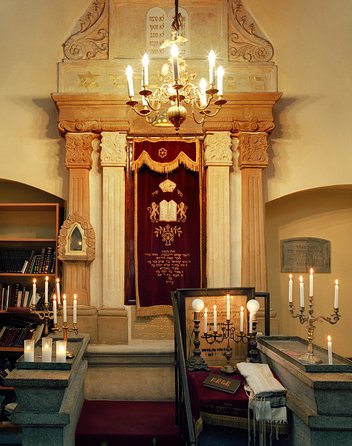
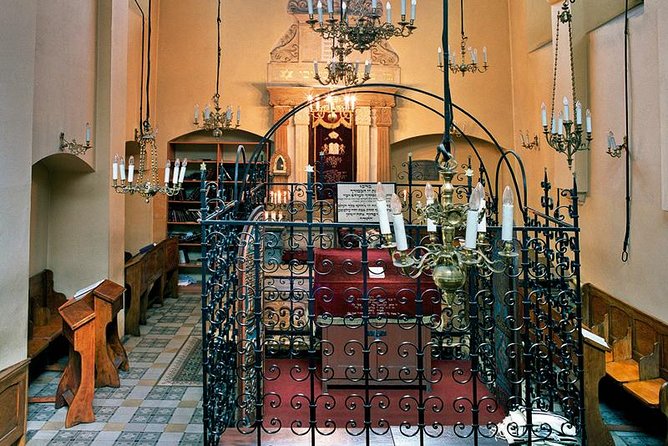
The first walking block is built around major landmarks, and it’s a good mix of well-known and meaningful sites. You’ll pass the Old Synagogue, today a museum of Jewish history and described as the oldest preserved synagogue in Poland. Even if you don’t go inside, the fact that this building still stands tells you a lot about what has survived.
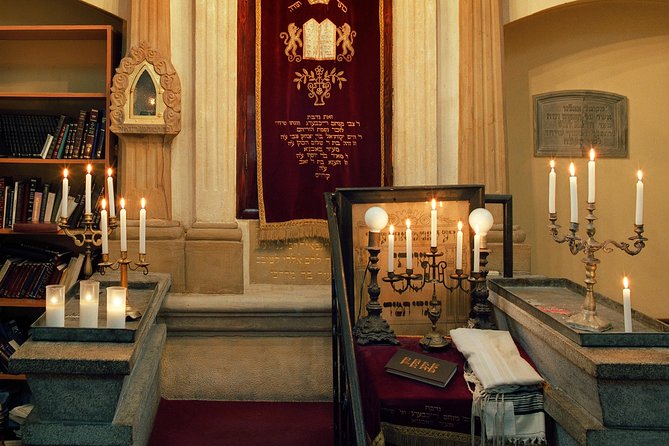
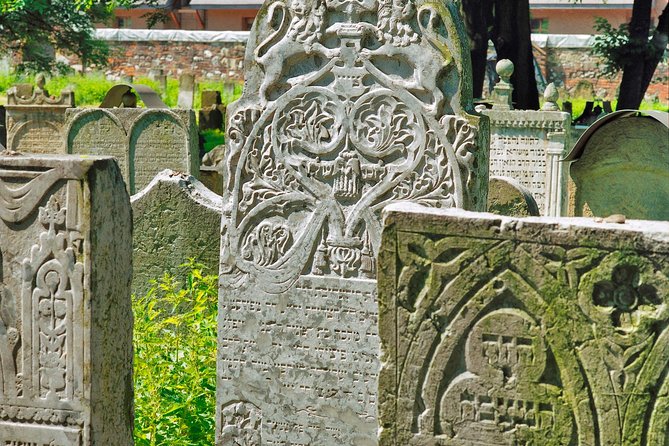
Next comes the Remuh Synagogue and Cemetery, tied to Rabbi Moses Isseries, known as Remuh. The 16th century detail is important because it points to Kazimierz as a long-running center of learning and faith, not only as a WWII location.
Then the route includes the Kupa Synagogue, once associated with the poorest residents. That detail matters because it reminds you that Jewish community life was not uniform. People had different needs, and the institutions of Kazimierz reflected that.
You’ll also pass the Tempel Synagogue, which is now an active center of cultural life. That stop is a helpful emotional counterweight. It gently shifts the story away from tragedy and toward continuity.
A small practical tip here: expect a lot of walking and frequent stops for explanation. Comfortable shoes matter, because you’ll be moving between sites more than you might with a bus-and-stop tour.
Understanding Kazimierz in WWII, including the ghetto story
After you get oriented to how the neighborhood worked before WWII, the guide brings you to the Nazi years. The tour specifically covers what happened in WWII, including how people were herded into the Jewish ghetto.
This part is heavy, and it’s also one of the most valuable sections of the experience because it’s grounded in geography. When you hear stories attached to actual streets, it becomes harder to treat the Holocaust like something abstract. You begin to understand how displacement worked, and how quickly daily life could be stripped away.
One reason this tour stands out for many people is that it connects the WWII story to what you can still see today. Unlike places where entire neighborhoods disappeared, Kazimierz has surviving physical traces. That survival helps you visualize how the transition unfolded.
More Jewish quarter and heritage tours to compare:
- Krakow: Schindler’s Factory & Ghetto Guided Tour
★ 4.7 · 1,694 reviews - Krakow: Jewish Quarter and Former Ghetto Tour
★ 4.9 · 1,441 reviews - Krakow: Bike Tour of Old Town, Jewish Quarter and the Ghetto
★ 4.9 · 1,155 reviews - Krakow: Kazimierz Jewish Quarter Walking Tour
★ 4.8 · 571 reviews
Spielberg’s Schindler’s List locations, and how the guide explains them
If you’ve seen Schindler’s List, you already know some scenes feel strangely specific. This tour helps you understand why that is.
The guide explains how Steven Spielberg chose the Kazimierz area to depict the Jewish ghetto of Podgorze in the film. That detail can be a real eye-opener because it changes how you watch the movie later. You start noticing how filmmakers use existing cities to represent places that history forced people to lose.
In the same section, you’re also guided through the neighborhood context that makes that cinematic choice make sense. So even if you don’t care about film, you’ll still benefit, because it adds another layer of “map awareness” to your learning.
I’d treat this part as a prompt, not a trivia game. It’s there to help you see how the city has been interpreted, and how stories get attached to real streets.
Schindler’s Enamel Factory Museum: what you see inside
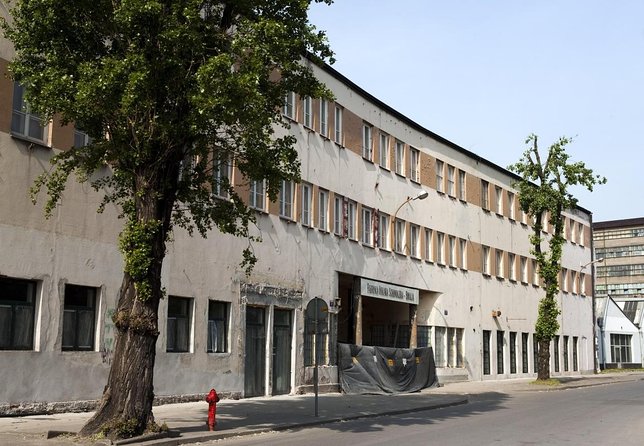
After Kazimierz, you head to Fabryka Emalia Oskara Schindlera, the Oscar Schindler’s Factory Museum. The tour gives you fast-track admission, and the stop is designed as the emotional and historical center.
Inside, you explore the exhibition Kraków under Nazi Occupation 1939 to 1945, through the lens of Oskar Schindler’s actions. The museum focuses on the fact that Schindler employed Jewish workers and used his influence and resources to protect them from deportation. The guide also frames the term Schindlerjuden, explaining how those survivors’ testimonies shaped memory across generations.
This is where the story becomes less about wandering and more about documentation. You’ll see photographs, personal objects, and exhibits that reconstruct streets and daily life under pressure. That combination matters. It doesn’t only list events, it helps you understand fear, uncertainty, and what ordinary routines looked like when everything was collapsing.
A key expectation to set: the museum is in the building that once functioned as an enamelware factory, but it does not contain original production equipment today. So if your mental image is of a working factory floor, you may feel surprised. The experience is about history and testimony, not machinery.
“Not much time” is the real trade-off at the museum
The museum part is scheduled for about 1 hour 30 minutes, and this is the most common tension. Some visitors love having a guide because it gives the timeline structure. Others feel the museum could easily absorb much more time on its own.
That’s not a problem with the content, it’s the format. The guide has to cover the main threads, so you move fairly quickly through rooms and exhibits designed to slow you down emotionally.
If you can, plan a follow-up on your own after the tour. Give yourself a second pass, especially if you want to linger on specific objects or read more than the highlights. The guide can help you choose where to focus, but the museum still rewards your own time.
Also, note the museum layout includes narrow passageways and is set up to reflect the wartime atmosphere. If you’re sensitive to tight spaces, go in mentally prepared, take your time when you can, and don’t feel bad about letting the group move ahead for a minute.
Who this tour fits best
This tour is a strong match if you want three things in one package:
1) A street-level introduction to Jewish Kazimierz, with specific synagogue landmarks
2) A WWII narrative tied to where you’re standing
3) A museum visit that explains how Schindler’s choices helped people survive
It’s especially good for first-time visitors to Krakow who want direction fast. The walking segment gives you a sense of orientation for later exploring. Then the museum segment deepens the emotional and historical impact.
It also fits couples, small friend groups, and solo travelers who want context without building their own itinerary. The group size limit of 25 keeps it from feeling like a cattle line, and the tour runs in English.
Guides and the difference a good explanation makes
One thing that comes through strongly is guide quality. Names like Helena, Margaret, Dominika, Magda, Janna, Barbara, Joanna, Filipe, and Ziggy show up in people’s experiences, often with praise for clear English and a friendly, story-driven approach.
Some guides also repeat key facts in a way that helps the information stick. That matters on this subject, because you’re absorbing names, places, and timeline shifts in a short window. If your guide is good at repetition, you’re less likely to leave with disconnected pieces.
I’d also expect that guides may add personal context. One experience specifically mentions a guide whose family had involvement related to rescuing Jews. That kind of personal layer can make the story feel even more human, but it’s best to think of it as guidance, not an expectation.
Price and value: is $71.20 worth it?
At about $71.20 per person for 3 hours 30 minutes, the value comes from two sources: professional guiding and fast access to a major museum.
Kazimierz without a guide can still be enjoyable, but it’s easy to miss the “meaning layer” behind what you’re seeing. This tour gives you the names (Remuh, Old Synagogue, and the other key synagogues) plus the WWII framing tied to the streets.
Then the museum time is where the guide earns its keep. The Schindler exhibition is structured, but having someone explain what to look for helps you absorb the message quickly. The fast-track admission also reduces a common stress point, since this museum can involve long waiting times.
So the trade-off is time. You pay for access and interpretation within a set window. If you plan to stop afterward on your own, you get the best of both worlds: guided orientation first, then your own pacing.
Practical comfort tips so the experience lands well
A few practical things will make your tour easier and your mind calmer:
- Wear shoes you can walk in for long stretches. The route is walking-first, and the museum passageways can feel tight.
- Bring a light layer. Weather changes Krakow fast, and the tour runs in all weather conditions.
- If you’re sensitive to uncomfortable imagery, prepare yourself emotionally for WWII content. Several people found certain display items deeply unnerving, which is understandable given the museum’s subject matter.
- Don’t arrive late. You should get there at least 10 minutes early, because late arrivals can’t be accommodated once the group enters and tickets are non-refundable.
- Know that tickets for Schindler’s museum are personalized, so you’ll need to provide full participant names when booking.
What I’d do after the tour
After you finish, you’ll likely want two things: one, more time in Kazimierz, and two, a slower museum pass if Schindler’s story hooked you.
In Kazimierz, return to the streets where you stopped the most. If you felt moved by the synagogue sites, it can be worth checking what’s open on your own schedule. The guide’s route gives you a shortlist of where the story concentrates.
At the museum, if you felt rushed, go back when you have energy. The exhibition design is built for absorbing details, and a second visit helps you turn the “main story” into something you remember clearly.
Should you book this Kazimierz and Schindler guided tour?
I’d book it if you want a high-impact way to understand Krakow’s Jewish heritage and WWII history without spending the whole day building an itinerary. The starting point on Szeroka Street helps you see Kazimierz as a living place, not just a historical label. The museum stop then grounds the narrative in documents, objects, and the Schindler story of saving people from deportation.
Skip it or adjust expectations if you’re the type who wants to quietly read everything for hours in the museum. This tour gives you a strong guided overview, not a full day of museum self-study. Also, make sure you understand the setting: you tour the museum in the historic factory building, not an active factory floor full of original production equipment.
If you want a guided map that connects streets, synagogues, Spielberg’s film locations, and the Schindler exhibition in one smooth sweep, this is a very solid choice.
Recently reviewed around Krakow
- Wawel Castle and Cathedral Guided Tour★ 4.6 · 44 reviews
- Walking Tour: Kazimierz, Jewish Quarter – 2-Hours of Magic!★ 4.7 · 35 reviews
- Wawel Castle and Cathedral Guided Tour★ 5.0 · 8 reviews
- Kraków Holocaust Tour★ 4.9 · 5 reviews
- Wadowice and Kalwaria: John Paul II Route★ 4.8 · 5 reviews
- VIP Club Entry and Booth Booking★ 5.0 · 4 reviews
- Walking Tour of Krakow: Old town – 2-Hours of Magic★ 4.7 · 5 reviews
- Krakow: Zakopane, Thermal Baths and Gorce Park Treetop Walk★ 5.0 · 3 reviews