
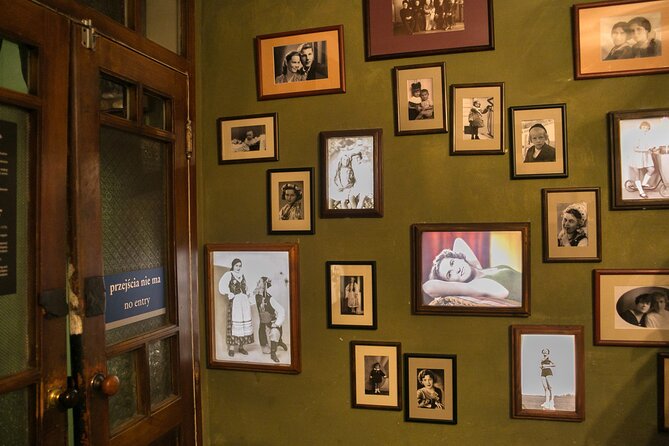
Reviewed · SCHINDLER'S FACTORY TOURS
Schindler’s Factory Small-Group Guided Tour
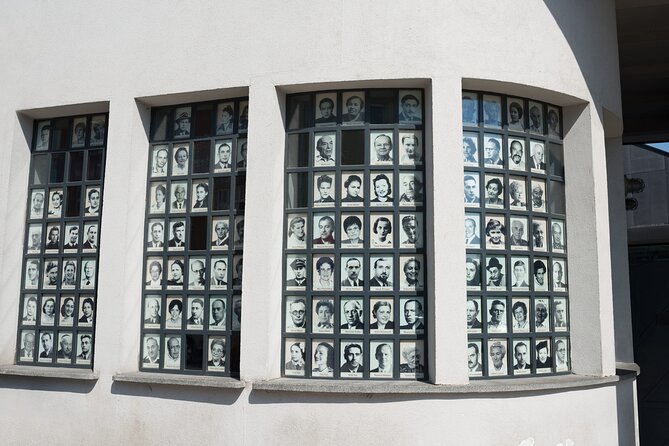
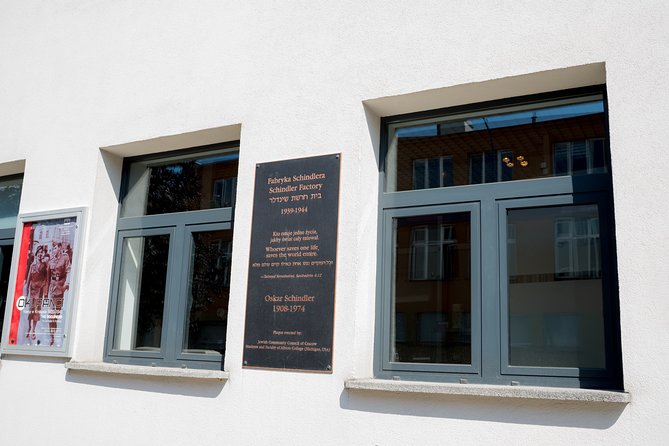
Schindler’s Factory is interesting because it turns a World War II story into something you can walk through, step by step, with recreated spaces and modern multimedia. You start in the former administrative building tied to Oskar Schindler’s enamel factory, and the tour frames what Krakow’s residents went through during the German occupation.
I love how the guide helps you make sense of what you’re seeing in the exhibition Krakow – Occupation 1939-1945. I also love that the stop-by-stop route leads beyond headlines, moving from occupied city life into the ghetto setting and then toward Płaszów. One possible drawback is that it is not a Schindler biography museum, so if you came expecting lots of factory machinery and a film-style focus on Schindler the person, you may feel the balance is more about wartime occupation than about him.
Key Things You’ll Notice on This Small-Group Tour
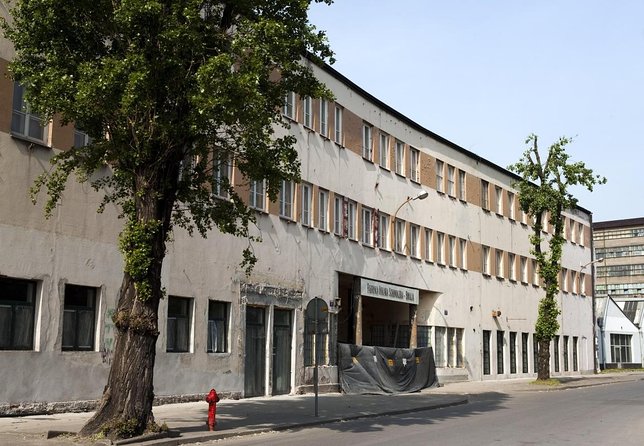
- Krakow – Occupation 1939-1945 is the core exhibition, set in the former administrative building tied to Schindler’s Enamel Factory.
- Not a biography museum, so plan for occupation-focused storytelling rather than a life story of Oskar Schindler.
- Multimedia and recreated rooms help you connect emotionally and understand daily life under Nazi rule.
- A small group (max 25) keeps the pace easier and gives you more chances to ask questions.
- The route includes street-level stops like a hairdresser, photographer, and even an authentic photoplasticon setup.
Why Schindler’s Factory Feels Different From a Typical Museum Walk
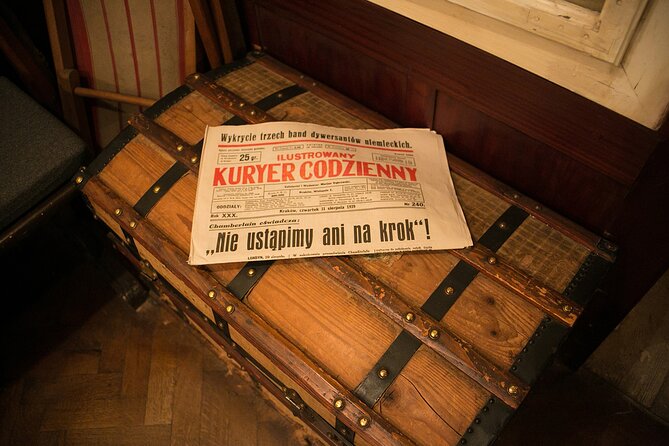
Schindler’s Factory in Krakow is popular for a reason. Even if you know the broad outlines of the Holocaust story from books or movies, this exhibition works hard to show how ordinary life broke apart. The big theme is Krakow under Nazi occupation from 1939 to 1945, told through what Polish and Jewish residents experienced, what German occupiers did, and where Schindler fits into that timeline.
What makes the experience stand out is the way the guide structures the visit. You are not just wandering through rooms on your own. You get help connecting the dots, so the scenes do not feel like random displays. Reviews you’ll see about this tour often point to the same thing: a good guide can set the scene and make the museum feel like a guided narrative rather than a storage room of facts.
The museum is also careful about the kind of “authentic” you expect. One review notes that the office is the only original part internally, with the exterior remaining original. That detail matters because it sets your expectation: this is not a factory floor you can tour like a working workshop. The value is in the story and the preservation of certain real elements, paired with strong presentation.
More Schindler's Factory tours to compare:
- Krakow: Oskar Schindler’s Factory Entry Ticket & Guided Tour
★ 4.2 · 3,793 reviews - Krakow: Schindler’s Factory Tour with Entrance Ticket
★ 4.5 · 3,182 reviews - Krakow: Schindler’s Factory Skip-the-Line Ticket
★ 4.4 · 3,105 reviews
The Core Stop: Krakow Under Nazi Occupation in the Former Administrative Building
The tour’s main anchor is Schindler’s Enamel Factory at Lipowa 4, tied to the Historical Museum of Krakow. The exhibition headline is Krakow under Nazi Occupation 1939–1945, and this is the part that sets the emotional and historical framework.
A key point to get right before you go: this is not designed as a simple biographical walk-through of Oskar Schindler’s life. Instead, it’s about occupied Krakow and multiple aspects of daily existence under Nazi rule. Schindler is part of that story, and his fate is referenced in connection with the well known Spielberg film from 1993, but the exhibition’s emphasis stays on the city, the residents, and the occupation system.
Why I think this framing is valuable for you:
- If you want to understand the environment people lived in, the exhibition focuses on occupation realities, not just one character.
- If you like history that explains how events affected real daily choices, you’ll likely find the pacing makes sense.
- If you prefer clear storytelling, the guide’s role becomes crucial, because occupation history can feel large and abstract unless someone helps you organize it.
What you should consider as a possible mismatch: if your goal is to learn the behind-the-scenes factory craft, machines, and worker routines as your main topic, you might find less of that than you hoped. One review summary explicitly flagged that the tour felt more centered on the war history than on Schindler and that the expected factory focus was not as heavy as imagined. That doesn’t mean the visit is weak, it just means you should match your expectations to the exhibition’s mission.
The Walk Through Occupied Life: Street-Level Stops That Make the Story Concrete
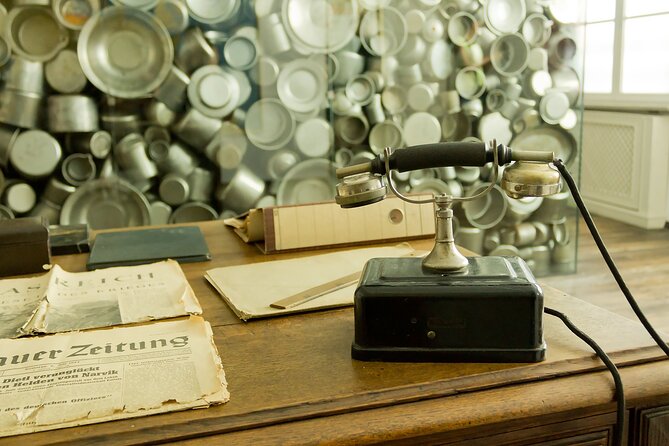
One of the strengths of this tour is that it moves along cobbled streets and pushes you into different kinds of spaces. You do not only see text panels and photos. You’re guided through recreated life settings where people might have visited a hairdresser, a photographer, and an authentic photoplasticon.
These are not just “cool rooms for photos.” They work like a bridge between big history and everyday behavior. Occupation changes how people move, work, and hope. By showing spaces that resemble daily city life, the exhibition helps you feel the contrast between normal routine and the pressure of the occupation system.
The hairdresser and photographer stops are especially effective because they remind you that daily identity and normal services existed right alongside catastrophe. The photoplasticon adds another layer, because it connects image and documentation to the reality of the time. Even if you only remember a few objects after your visit, this kind of set design tends to help your brain hold onto the main idea: daily life did not pause, it continued under danger.
Practical tip: if you tend to rush through museums, slow yourself down here. These small, specific locations are where the occupation story becomes personal.
The Tram Segment and the City Windows Effect
After those street-level moments, the tour includes getting on a tram, and then looking through windows at a film about the life of the city. This part is important because it shifts from room-scale interpretation to city-scale storytelling. You get a sense of how the city itself functioned during the occupation, not just how individual buildings felt.
A tram segment also helps with pacing. Your feet have been on cobblestones, then you get a different kind of viewing angle. That matters for fatigue because the subject matter is heavy, and your attention needs breaks that still keep you in the narrative.
If you’re someone who likes media to support history, you’ll probably appreciate this. The exhibition uses modern multimedia, and this tram moment is one of the ways it brings the past closer without turning the topic into entertainment.
A few more Krakow tours worth comparing
- From Krakow: Auschwitz-Birkenau Guided Tour & Hotel Pickup
★ 4.5 · 33,358 reviews - From Krakow: Auschwitz-Birkenau Guided Tour & Hotel Pickup
★ 4.5 · 29,340 reviews - Krakow: Auschwitz Guided Tour with Optional Hotel Pickup
★ 4.5 · 15,280 reviews - Krakow: Auschwitz-Birkenau Guided Tour with Pickup & Lunch
★ 4.5 · 9,800 reviews
Through the Ghetto Labyrinth: Narrow Spaces and a Jewish Apartment
The tour then moves through the narrow labyrinth of the ghetto. You step into a setting that includes a Jewish apartment in the ghetto, and you see it with the guide’s interpretation rather than only as a staged scene.
This is one of the parts that can feel intense. The design forces you into close space, and that physical experience can make the history hit harder than a flat exhibit might. That is also why a guide matters here. You don’t want to be left alone to interpret a complicated space under your own assumptions. The guide helps you understand what you are looking at and why it mattered for the people living there.
The value for you is clarity. The ghetto story can be overwhelming, especially if you have read widely. A guided route helps you focus on the narrative thread: the movement from everyday existence to confinement and forced change.
From Ghetto Life Toward Płaszów: Linking People’s Journeys
After the ghetto setting, the tour continues with the inhabitants toward the camp in Płaszów. This is the point where the story moves from cramped city life into the machinery of deportation and camp systems.
The exhibition’s goal here is not to shock for shock’s sake. It is to explain, as clearly as possible, how the fate of Polish and Jewish residents unfolded during the war years. The emotional impact comes from the structure, and also from the fact that the route is built like a guided journey, not just a slideshow.
If you are worried about whether this feels like too much, it helps to know the tour length is about 1 hour 30 minutes. That’s enough time to guide you through the key phases without turning the visit into an endurance event. Still, go in with the mindset that this is serious material.
Oskar Schindler’s Place in the Story: Why the Exhibition Still Mentions the Film
The overview emphasizes that Schindler’s fate was recalled in the 1993 film by Steven Spielberg. That mention matters, because many visitors arrive already familiar with the movie and want to connect the film to what actually happened in Krakow.
In practice, the exhibition keeps its priorities on occupied Krakow and the fate of residents under Nazi rule. So you will not get a “film companion” tour that recreates scenes. Instead, you get a broader historical framework that includes Schindler as a key thread within the larger occupation story.
This can be a plus if you want context. It can be frustrating if you came with a specific film-driven checklist.
Group Size, Pace, and Why It Matters Here
This is a small-group tour with a maximum of 25 travelers, and that limit is not just a comfort feature. With a topic like this, the group size affects the quality of your questions and the flow of attention in the rooms.
A smaller group also helps with pace. The museum spaces can feel tight or visually dense, so you do not want 40 people bottlenecking at each doorway. With 1 hour 30 minutes total, the tour needs to keep moving while still giving you time to absorb and ask.
If you prefer a more interactive visit, this group size works in your favor. Reviews you’ll find about this tour stress that a good guide gave opportunities to take photos and ask questions during the visit, which is easier when the group stays smaller.
Price and Value: What $45.38 Buys You in Krakow
At about $45.38 per person, this is not the cheapest museum add-on. But it can be good value because you are paying for two things that are hard to replicate on your own: guided interpretation and included admission.
The museum ticket is included, so you are not stacking extra costs on top. And with the guide’s help, you are more likely to understand the meaning of the exhibition rather than just reading labels. In other words, the price buys you time, context, and a smoother path through a complex subject.
Is it worth it? If you like structured tours and you want help reading the exhibition’s meaning, yes, the value holds up well. If you already know the story deeply and you prefer unguided time at your own pace, you might decide the extra guided interpretation is optional. But for many people, that guide support is the difference between seeing rooms and actually understanding them.
Where You Start and What the Timing Feels Like
The tour begins at Lipowa 4 in Krakow, and it ends back at the same meeting point. That setup is simple, and it matters when you plan the rest of your day. You do not have to worry about how to get to a different drop-off zone.
It runs about 1 hour 30 minutes. That duration is a good match for a focused, emotionally heavy museum visit. Long enough to cover the key exhibition sections and the “walk-through story” elements, short enough that you can still handle dinner and the rest of your itinerary afterward.
You’ll also appreciate that the meeting point is near public transportation. If you’re hopping between Krakow highlights, this location is easy to work into a day.
Who This Tour Is Best For
This is a good fit if you want:
- A small-group guided experience rather than a solo museum wander.
- A clear narrative about occupied Krakow, not only one famous person.
- Multimedia and guided movement through different recreations and spaces.
It may be less ideal if:
- Your main interest is factory machinery, workers’ daily labor details, or a close focus on the physical industrial process.
- You want a purely Schindler-centered biography. The exhibition is not set up that way.
For families, note that children must be accompanied by an adult. The subject matter is serious, so you’ll want to judge what your kids can handle emotionally and attention-wise.
FAQ
FAQ
How long is the Schindler’s Factory small-group guided tour?
It lasts about 1 hour 30 minutes.
What is included in the price?
Admission to the exhibition is included.
Where does the tour start and end?
It starts at Lipowa 4, 32-051 Kraków, and ends back at the meeting point.
What group size should I expect?
The tour has a maximum of 25 travelers.
Is the tour focused on Schindler’s life?
No. The exhibition is not biographical. It focuses on occupied Krakow from 1939 to 1945 and the fate of Polish and Jewish inhabitants, with Schindler included as part of that larger story.
Is it suitable for most travelers?
Most travelers can participate.
Are children allowed?
Children must be accompanied by an adult.
Can I get a refund if I cancel?
You can cancel for a full refund up to 24 hours before the experience starts.
Should You Book This Tour?
Book it if you want a guided, structured way to understand Krakow under Nazi occupation, not just to see the famous factory name. The guide’s role, small-group size, and included admission make it a practical way to get meaning out of the exhibition without turning it into a solo puzzle.
Skip it or reconsider if you’re mainly hunting for a factory-machinery experience or a pure Schindler biography. The exhibition’s center of gravity is occupied Krakow, with recreated spaces, multimedia, and a story that moves from city life into the ghetto and toward Płaszów. If that matches what you want to learn, this is a strong use of your time in Krakow.
Recently reviewed around Krakow
- Wawel Castle and Cathedral Guided Tour★ 4.6 · 44 reviews
- Walking Tour: Kazimierz, Jewish Quarter – 2-Hours of Magic!★ 4.7 · 35 reviews
- Wawel Castle and Cathedral Guided Tour★ 5.0 · 8 reviews
- Kraków Holocaust Tour★ 4.9 · 5 reviews
- Wadowice and Kalwaria: John Paul II Route★ 4.8 · 5 reviews
- VIP Club Entry and Booth Booking★ 5.0 · 4 reviews
- Walking Tour of Krakow: Old town – 2-Hours of Magic★ 4.7 · 5 reviews
- Krakow: Zakopane, Thermal Baths and Gorce Park Treetop Walk★ 5.0 · 3 reviews