
Reviewed · JEWISH QUARTER & HERITAGE TOURS
Krakow Jewish Quarter and Ghetto Tour by Electric Golf Cart
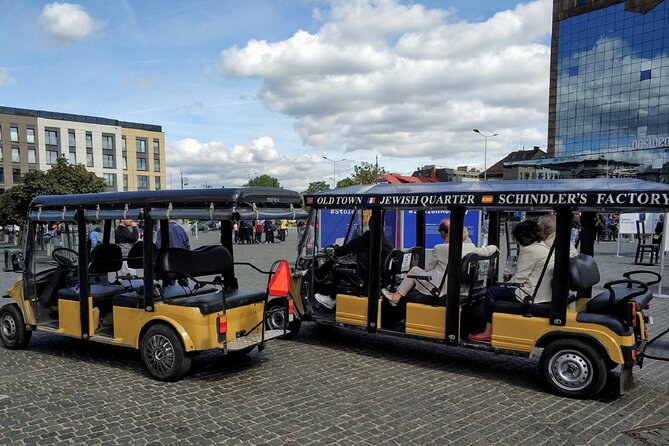
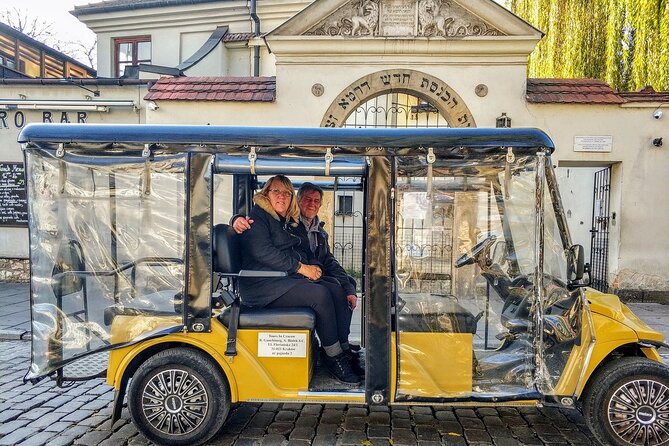
Kazimierz and the former ghetto are tough history, so I like an electric golf cart format that keeps the pace steady and the stops practical. Instead of grinding between neighborhoods on foot, you get movement plus context, with English commentary from guides such as Matt and Natalie.
What I like most is the sheer scope packed into about 1.5 hours: you hit over 20 cultural monuments in Kazimierz, including Szeroka Street and key places tied to the ghetto. The second thing I value is comfort, too, because the cart does the driving for you, which is a real plus on hot days or cold ones.
One possible drawback: interior time can be brief, so if you want to linger inside specific Jewish sites, plan to treat this as a fast orientation, not a long museum day. You may also notice the route includes some Christian churches, even though the tour is centered on Jewish life.
Key highlights you’ll feel on the ground
- Electric cart coverage across Kazimierz and Podgórze, so you see more without exhausting yourself
- Szeroka Street storytelling, where you learn why four synagogues once lined one stretch
- A real ghetto geography moment at the preserved wall fragment with a commemorative plaque
- Umschlagplatz context at Plac Zgody, where Jews were forced to gather for deportations
- The pharmacy survival story, described as shelter and a communications point during deportations
- English-speaking drivers and audio support, including guides like Olivia, Martina, and Michael
Why an electric cart works for Kazimierz and the ghetto
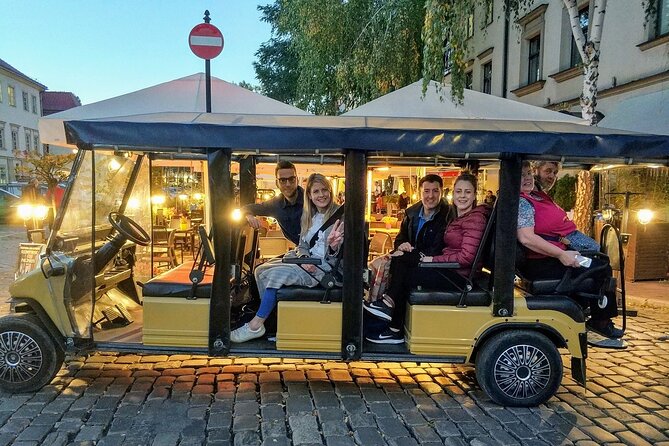
This is a smart setup for a city neighborhood that is both big on landmarks and heavy on meaning. Kazimierz and the former ghetto area move fast on a map. On foot, you can cover ground, but you also end up tired at the exact moment you want to focus on the story. The electric cart solves that. You keep your energy for listening, looking, and stepping into key buildings when the group schedule allows.
The cart also changes how you experience the neighborhoods. You are not just passing street corners. You get a sequence. You hear why certain streets mattered, then you arrive at the places where that mattered becomes visible in stone, street layout, and memorial markers.
It is also practical value. At about 1 hour 30 minutes, the tour gives you a concentrated overview for the price point (around $34.75 per person). You are paying for transportation, timing, and interpretation, not just for seeing a few photoshoot spots.
More Jewish quarter and heritage tours to compare:
- Krakow: Schindler’s Factory & Ghetto Guided Tour
★ 4.7 · 1,694 reviews - Krakow: Jewish Quarter and Former Ghetto Tour
★ 4.9 · 1,441 reviews - Krakow: Bike Tour of Old Town, Jewish Quarter and the Ghetto
★ 4.9 · 1,155 reviews
What you’ll see, from Kazimierz street life to Umschlagplatz
The route begins with the idea that Krakow’s Jewish Quarter was not a side attraction. It was the hub of Jewish life for centuries, once independent from the city’s core near Wawel, and today it is one of Krakow’s biggest tourist magnets.
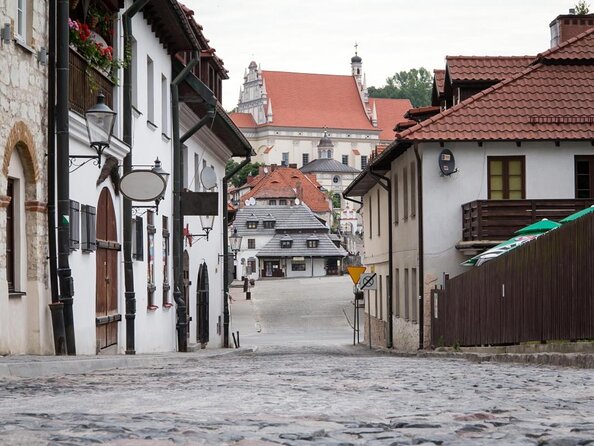
From there, the tour zeroes in on Szeroka Street, which you can think of as the social and spiritual spine of Kazimierz. The stop focus is unusually specific: you are not just told it is important, you learn why it was a rare concentration of synagogues in one area.
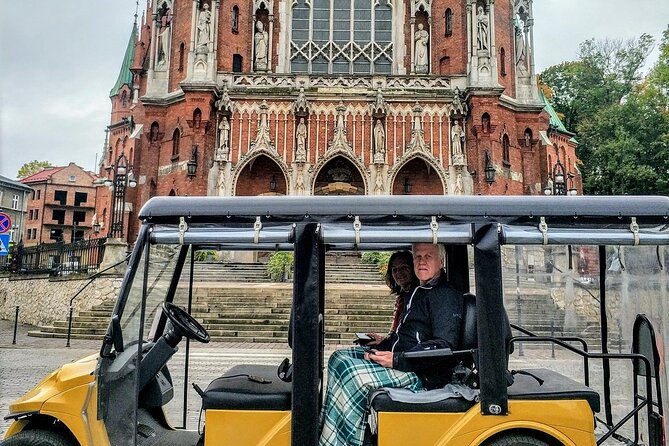
Then you shift toward Podgórze, including the Podgórze Market Square area and its best-known church landmark, St Joseph. After that comes the former ghetto geography: a preserved fragment of wall with a plaque, then Plac Zgody (Concord Square), which under Nazi occupation became Umschlagplatz, the assembly site for deportations.
Finally, you get a small but powerful counterpoint inside the tragedy: the role of a Polish pharmacy near that area, described as acting like shelter and an informal communications link, providing refuge while helping move messages or packages inside and outside the ghetto.
Szeroka Street and the synagogues you can still recognize
Szeroka Street is where this tour feels most grounded in living neighborhood clues. Even if you have never studied Jewish history in Krakow, you can spot the density of religious architecture and the way the street layout shaped daily life.
The key detail here is the story about scale. You learn that four synagogues once stood on Szeroka Street, something presented as unusual across Europe. That detail matters because it explains why Kazimierz was not just one synagogue district. It was a network, with different communities and religious institutions woven into everyday movement.
You also get to see one of the oldest synagogues in Poland preserved in very good condition, reached directly from Szeroka Street. The practical benefit is you are not relying on imagination. You stand where the architecture still communicates the past.
A small reality check, though. Based on what you may experience during the stop times, the tour can be busy and the group schedule can limit how long you linger. Use your time strategically: if you care most about interiors, keep your camera ready and your questions simple so you can absorb more in less time.
St Joseph Church, Podgórze Market Square, and why it shows up on this route
You might wonder why a ghetto tour includes a major church stop. It turns out that in Krakow, religious and civic landmarks overlap in the same neighborhoods. St Joseph Church is described as a distinctive and widely recognizable site of devotion, and it dominates the Podgórze Market Square.
Why that matters for you: market squares are where people gathered, traded, and formed routines. Even when the tour later turns toward deportations and ghetto confinement, the story benefits from understanding the normal public rhythm of the area. St Joseph gives you a geographic anchor for Podgórze, so the later memorial points do not feel like disconnected locations.
This stop can also be visually helpful. The church landmark offers orientation. When you later stand near the preserved ghetto wall and the Plac Zgody area, your brain understands where you are in relation to what came before.
If you personally want the route to focus only on Jewish buildings, this is the main place you might feel a mismatch. Some tours adjust the balance; this one can include churches, and you should expect that tradeoff.
More electric buggy and golf-cart tours to compare:
- Krakow: City Sightseeing Tour by Electric Golf Cart
★ 4.5 · 3,264 reviews - Krakow: City Sightseeing Tour Eco Electric Buggy Golf Cart
★ 4.7 · 3,143 reviews - Krakow: Extended City Sightseeing Tour – Eco Buggy Golf Cart
★ 4.7 · 794 reviews - Krakow: Electric Car Sightseeing Tour
★ 4.4 · 450 reviews
The ghetto wall fragment, Plac Zgody, and the pharmacy story
This is the emotionally strongest part of the tour because it turns history into a place you can stand in. You get a small preserved fragment of the original ghetto wall, with a plaque commemorating the fate of the inhabitants. It is not a big museum-like stop. It is a direct, physical reminder.
Then you move to Plac Zgody, described as the former Concord Square. Under Nazi occupation in 1941, it was designated Umschlagplatz, where Jews were made to congregate before deportations. Knowing the German name helps, because it is a specific historical label tied to forced processing.
What I appreciate here is that the tour does not only point at tragedy. It also includes a human-scale detail: the then Polish pharmacy was described as acting like an asylum or embassy, sheltering people and functioning as a communications link, delivering messages or packages inside and outside the ghetto.
That pharmacy detail gives you something important to hold onto. You see how survival and resistance took forms that were not always dramatic, but still mattered day to day. It is a reminder that history was made by ordinary acts under impossible conditions.
Guide, audio, and timing: how the 90 minutes feels
The tour runs about 1 hour 30 minutes, and the pacing is designed to cover a lot of ground without making you sprint between blocks. You are taken in an electric golf cart, and you also get an audio guide component.
One detail to be aware of: you may receive the audio through headset listening rather than loudspeakers. That can be totally fine, but it affects interaction. If you like to chat with your group during commentary, headset-style listening can limit that flow a bit.
The human element matters a lot here. Multiple guides were praised for being engaging and respectful, including names like Natalie, Olivia, Martina, Phillips, Matt, and Michael. You get the best experience when your guide keeps the story clear and the group moving with enough time to step in and out of key buildings.
Stop times can be short. One review mentioned quick interior pop-ins lasting around 5 to 10 minutes. So if you want deep time inside any one building, treat the tour as your launch pad, not the final word.
Meet points, route flow, and how to plan your day
The tour starts at Mikołaja Zyblikiewicza 2, 31-029 Kraków and ends at Mikołaja Kopernika 3, 31-034 Kraków. That means your day plan should allow for an end point that is different from your start. It also means you can pair this with a return walk through Kazimierz later, when you want a slower pace.
The tour also notes it is near public transportation. That is useful if you want to connect it with other Krakow stops without a long taxi run.
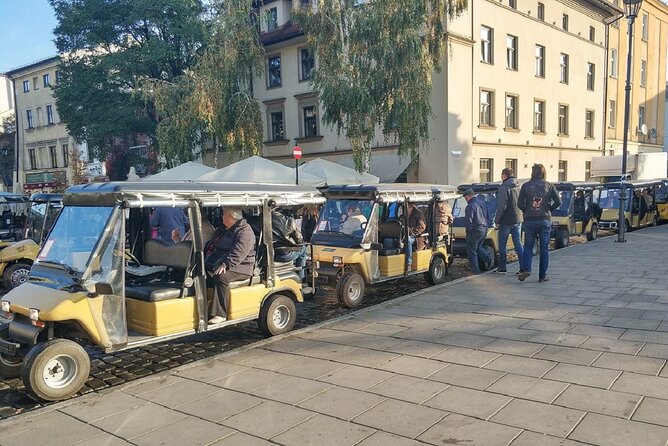
Group size is kept reasonable, with a maximum of 50 travelers. That generally helps the cart logistics stay smooth, but you should still expect some waiting at pickup spots depending on the time of day.
If you are traveling in hot weather, you will probably appreciate the cart time even more. If you are in winter, one guide stop was praised as having a toasty cart. Either way, you get less physical fatigue than a full-on walking-only route.
Price and value: is $34.75 fair for this kind of tour?
At $34.75 per person for about 90 minutes, you are paying for three things at once: the electric transport, the interpretive commentary in English (with an audio guide layer), and guided stops at specific, meaningful locations.
If you compare this to the cost of just grabbing taxis around the area, the cart price starts to look more reasonable. If you compare it to a walking tour, you are paying more for convenience and coverage. And if your schedule is tight, convenience becomes value fast.
I think it is especially good value if you:
- have limited time in Krakow,
- want an organized orientation first,
- want the option to step into buildings during short stops,
- or need an easier physical pace on cobblestone streets.
If you already know you will want to spend long hours inside synagogues and museums, or you prefer slow, unstructured wandering with lots of personal detours, walking-only may suit you better. This tour is built for getting oriented quickly and emotionally landing the main points in the right places.
Who this tour suits best, and who might skip the cart
This tour is a strong fit if you want:
- a time-efficient introduction to Kazimierz and the ghetto area,
- English narration plus audio support,
- and transportation that helps you see more without wearing yourself out.
It is also a good choice if the weather is rough. A rainy-day snag showed up in one experience where the parking process for carts caused stress, so on bad weather days, keep a flexible attitude and arrive early. That said, the cart itself is usually the big win.
Who may prefer walking instead? If your main goal is to spend long, uninterrupted time inside Jewish-focused sites and you know exactly what you want to prioritize, the stop structure can feel a bit rushed. You may also notice a few interior visits lean toward churches when the route is covering major landmarks, which can be a mismatch for strict focus on Jewish interiors.
Quick tips so you get the most from the cart stops
- Sit where you can hear best. One experience mentioned seat placement facing backward, so try for the front if you can choose.
- Bring a notepad or phone notes. When you hear place names like Umschlagplatz, write them down so you can follow up later.
- Dress for quick entries. Since stops can be short, wear layers you can manage fast.
- If you care about Jewish interiors most, decide beforehand which stop you will prioritize, then be efficient during the group’s time.
- If you are sensitive to intense history, take a breath during the ghetto wall and Umschlagplatz moments. The tour moves on quickly, so you may want a quiet second to absorb.
Should you book this Krakow Jewish Quarter and Ghetto Tour?
Yes, I would book it if you want a fast, organized, English-supported overview of Kazimierz and the former ghetto geography in about 90 minutes, with the comfort of an electric cart. The mix of major sites, the preserved wall fragment, the Umschlagplatz setting, and the pharmacy survival story gives you a clear picture that is hard to assemble on your own in a short window.
Skip it or pair it with extra time if you want long interior visits, deep study of specific Jewish sites, or a route that is exclusively Jewish-building focused. In that case, do this tour for orientation, then schedule follow-up time to linger where your interests take you.
If you book, you are not just buying transportation. You are buying a guided route through some of Krakow’s most important memory points, delivered in a pace that keeps your attention on what matters.
FAQ
How long is the Krakow Jewish Quarter and Ghetto Tour by electric golf cart?
It runs for about 1 hour 30 minutes.
How much does the tour cost?
The price is listed as $34.75 per person.
Is the tour offered in English?
Yes, it is offered in English, with an English-speaking driver and an audio guide included.
What is included in the price?
You get an audio guide, transport by golf cart during the tour, and an English-speaking driver.
Where do I meet the tour, and where does it end?
The start point is Mikołaja Zyblikiewicza 2, 31-029 Kraków, and the tour ends at Mikołaja Kopernika 3, 31-034 Kraków.
Are there many stops, and what areas are covered?
You visit over 20 important cultural monuments in Kazimierz, plus key ghetto-related points such as a preserved wall fragment and the Umschlagplatz area at Plac Zgody.
Do you get time to go inside buildings?
The tour includes visits where you can pop into buildings during stops, but the time at each stop can be limited.
Do most people find it physically manageable?
The tour notes that most travelers can participate.
Is free cancellation available?
Yes, you can cancel for a full refund up to 24 hours before the experience start time.
Recently reviewed around Krakow
- Walking Tour: Kazimierz, Jewish Quarter – 2-Hours of Magic!★ 4.7 · 35 reviews
- Wawel Castle and Cathedral Guided Tour★ 5.0 · 8 reviews
- Wawel Castle and Cathedral Guided Tour★ 4.6 · 44 reviews
- Kraków Holocaust Tour★ 4.9 · 5 reviews
- Wadowice and Kalwaria: John Paul II Route★ 4.8 · 5 reviews
- VIP Club Entry and Booth Booking★ 5.0 · 4 reviews
- Walking Tour of Krakow: Old town – 2-Hours of Magic★ 4.7 · 5 reviews
- Krakow: Zakopane, Thermal Baths and Gorce Park Treetop Walk★ 5.0 · 3 reviews