
Reviewed · JEWISH QUARTER & HERITAGE TOURS
Guided Tour in Kraków-Płaszów Former Concentration Camp
This is a moving way to understand the Holocaust in Kraków without hopping straight to Auschwitz. You start in the Podgórze area, then head into Płaszów, a former Nazi concentration camp that sits in the city’s backyard, and you finish by seeing a surviving piece of the Kraków ghetto wall.
I love how the route ties specific places to the stories of Kraków’s Jewish community. I also like that the tour is structured around clear, on-the-ground context, including a noted stop with an original wall fragment and its memorial plaque.
A possible drawback: the topic is heavy, and the site today is uneven, open terrain, so you’ll want comfy shoes and a calm, respectful mindset.
Key things you’ll notice on this tour
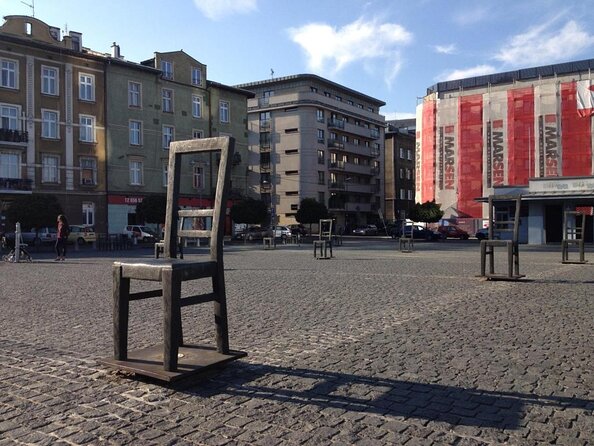
- Ghetto Heroes Square as a memorial space with a controversial 2005 design of 70 metal chairs
- Plaszów feels unexpectedly close to everyday Kraków, near major streets and shopping
- A guided path through real camp ground, where almost nothing is built up to “perform” history
- A 12-meter ghetto wall fragment with a commemorative plaque in Hebrew and Polish
- Small-group feel with a maximum of 25 people, which helps the guide keep it personal
- English delivery with mobile ticketing for an easier start
Why Plaszów in Kraków hits differently than the usual Auschwitz plan
Most people plan Auschwitz first, because it is famous and easy to route. What you might miss is that Kraków also holds a former Nazi concentration camp in its own urban area, the German “Konzentrationslager Plaszow bei Krakau.” Seeing it in Kraków, among normal city life and nearby commercial streets, changes the way you understand how close the machinery of persecution could feel.
I like that this tour doesn’t try to compete with the biggest sites. It focuses on Kraków’s own geography and its own wartime story, so you walk away with a stronger map in your head, not just a list of sights.
There is also a practical side to this. A tour like this, at about 2 hours, fits well if you have limited time, or if you already booked another major museum and want a different kind of context.
More Jewish quarter and heritage tours to compare:
- Krakow: Schindler’s Factory & Ghetto Guided Tour
★ 4.7 · 1,694 reviews - Krakow: Jewish Quarter and Former Ghetto Tour
★ 4.9 · 1,441 reviews - Krakow: Bike Tour of Old Town, Jewish Quarter and the Ghetto
★ 4.9 · 1,155 reviews
From the river to Plac Bohaterów Getta, the chairs that stir controversy
Your tour begins near Plac Bohaterów Getta, across the river in the Podgórze suburb. This spot has carried multiple names and meanings over time. After the war, Plac Zgody was changed to Plac Bohaterów Getta, and a small monument was added, but for decades the space did not feel like a serious memorial.
What I think makes this opening stop effective is the detail about how the square was renovated in 2005 and how that sparked controversy. The memorial design includes 70 large, well-spaced metal chairs intended to symbolize departure and subsequent absence. Even if you do not love the design choices, the idea is hard to ignore, because you are standing in a public square, not a museum room.
You’ll likely appreciate the contrast. One part of the experience is historical memory. The other part is modern use of space, because the square was once treated like a public toilet or parking lot. Starting here helps you get the tone right before you move into the camp area.
Walking into Plaszów concentration camp in a city’s everyday setting
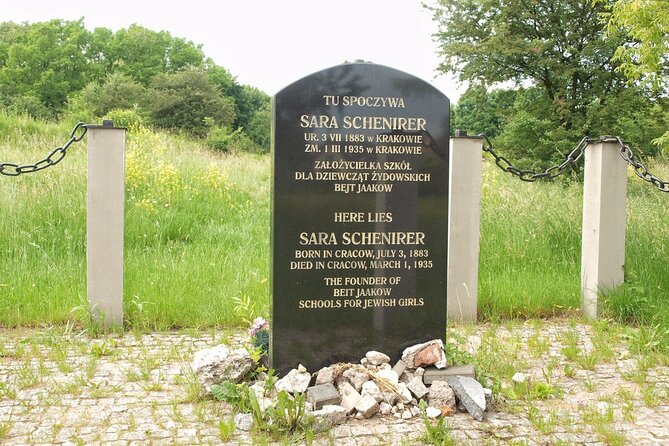
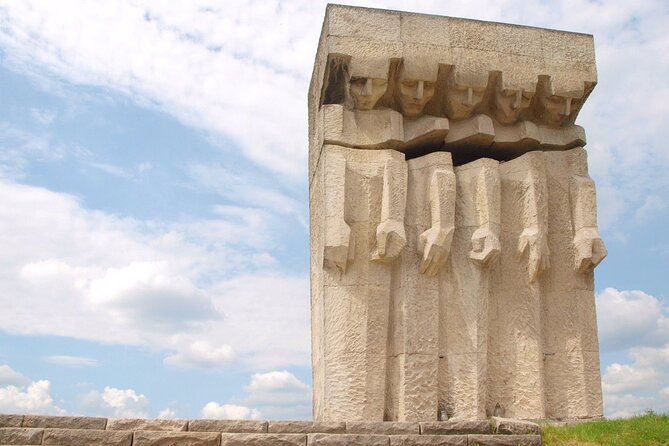
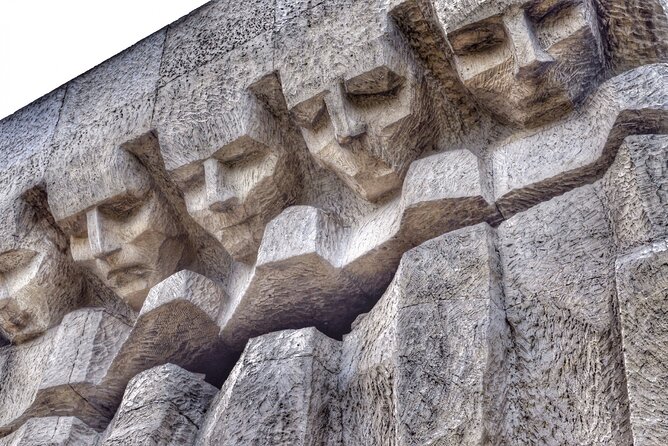
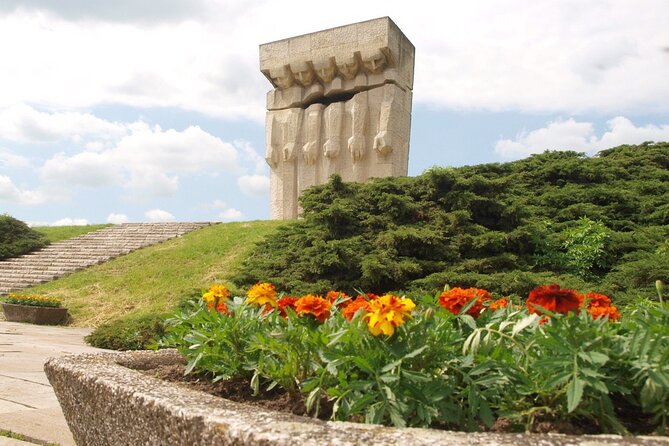
The heart of the tour is the guided visit to Płaszów, a former concentration camp area that today is mostly undeveloped in the sense of formal built structures. Until recently, it did not visually announce its wartime past. That fact matters. You come in expecting a “site,” but you get open ground that forces you to slow down and use your guide’s framing.
I like how the tour helps you notice what’s around the camp. The area is located on a main communication artery, Wielicka Street, opposite the large shopping center Bonarka, and not far from Krakus Mound. In other words, you are not leaving the city behind to learn what happened here. You are learning what happened here while the city keeps moving.
That proximity is part of the lesson. It’s not just about where victims suffered. It is also about how ordinary infrastructure and everyday life existed alongside it, and how modern Kraków is now managing that memory.
What the guide likely focuses on during the camp portion
The camp segment runs for about 1 hour, and the experience notes that the admission ticket is free for this part. Even without seeing heavy built structures, a good guide can still ground you in the key facts: what the camp was, how it functioned, and how Kraków’s Jewish community was affected.
From the reviews, guides are praised for covering the story from start to finish with care, and for explaining details in a way that makes sense in real space. One guide named Olga is specifically highlighted as being well prepared and very kind, including help with getting tram tickets.
For your planning, that matters. If you find you get stressed figuring out transport right after a tour, a guide who can point you toward the right tram options can turn a confusing exit into a smooth one.
A few more Krakow tours worth comparing
- From Krakow: Auschwitz-Birkenau Guided Tour & Hotel Pickup
★ 4.5 · 33,358 reviews - From Krakow: Auschwitz-Birkenau Guided Tour & Hotel Pickup
★ 4.5 · 29,340 reviews - Krakow: Auschwitz Guided Tour with Optional Hotel Pickup
★ 4.5 · 15,280 reviews - Krakow: Auschwitz-Birkenau Guided Tour with Pickup & Lunch
★ 4.5 · 9,800 reviews
A practical note on how to approach the terrain
Because the camp area today is described as a wild, uneven stretch of land, I strongly recommend good walking shoes. You are not touring a tidy indoor exhibit. You’ll want to feel stable so you can focus on the guide’s explanations and the memorial meaning of the ground.
The 12-meter Kraków ghetto wall fragment, and what the plaque says
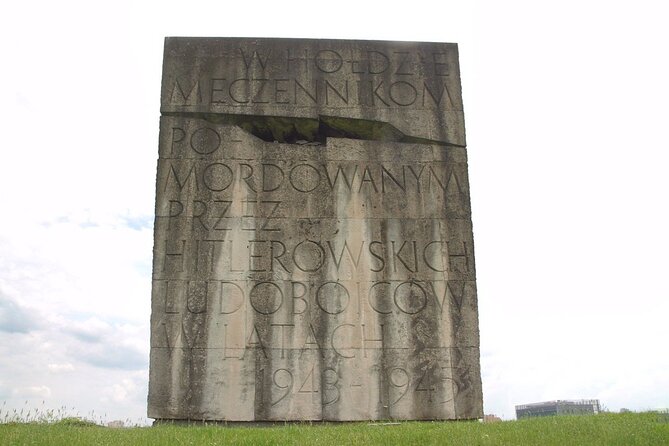
After the main camp portion, the tour passes by one of Kraków’s most important physical remnants of the ghetto: a 12-metre stretch of the original ghetto wall. This is a short stop, but it carries a lot of weight, because it is actual fabric of the past rather than a reconstruction.
The commemoration attached to it adds another layer. In 1983, a plaque was raised with text in Hebrew and Polish. The words are direct: Here they lived, suffered and died at the hands of the German torturers. From here they began their final journey to the death camps.
I like this ending for one main reason. It gives you closure in a concrete way. After moving through Plaszów, where the terrain itself is the main “document,” the wall fragment offers something fixed and unmistakable, with language that does not let you soften the message.
If you have been to other Holocaust sites, you’ll notice the pattern: the most powerful experiences often end on a specific, legible marker that turns “information” into “memory.”
How the 2-hour format works, plus group size and language
This is scheduled as a 2-hour tour (approx.). In real life, that means you’ll get just enough time to walk, listen, and ask questions, without feeling rushed into a checkout line.
A maximum of 25 travelers keeps it from becoming a mass-event. When the group stays small, the guide can slow down and address what you might not know yet, instead of speeding through to finish on time.
The tour is offered in English, and you’ll receive a mobile ticket. For me, that’s a real convenience, because it reduces the chance you arrive with the wrong paperwork or hunt for a voucher.
The meeting and ending points are also arranged to keep you from backtracking. You start near Plac Bohaterów Getta 18 (at Apteka pod Orłem), and you end at Henryka Kamieńskiego 57, near a bus stop on Kamienskiego street. That kind of routing helps you continue your day without adding extra transit chores.
Price and value: what $30.01 buys you here
At $30.01 per person, you’re paying for guided interpretation in a sensitive, real-world setting. Here, “value” is not about a long list of attractions. It’s about having someone translate geography, symbolism, and history into something you can actually understand while you stand in place.
Because the camp portion notes admission ticket free, you’re not paying extra just to stand on the grounds. The price mainly goes toward the guide’s time and the structured walk linking three key anchors: the Ghetto Heroes Square memorial space, the Płaszów camp area, and the ghetto wall fragment.
I also think the small-group ceiling matters for value. A guide can keep attention when the group is not huge, and that affects how much you absorb in a two-hour window.
If you’re trying to build a Holocaust day in Kraków, this tour is a cost-effective way to add local depth. You get Kraków’s own sites, not just general facts that could apply anywhere.
Who should book this tour, and who might want a different option
I think this tour is best for you if:
- you want Holocaust context tied to Kraków itself
- you like guided walks where the guide helps you read what you see
- you have limited time and want a focused experience around Plaszów plus ghetto memory landmarks
This is less ideal if:
- you need a completely level, stroller-friendly route (the camp ground is described as wild and uneven)
- you want only museum-style exhibits with controlled lighting and seating
For many people, the best choice is a blend. Use a larger, more famous site for scale, then use this one for local specificity. It helps you understand Kraków as a place where these events were local, not distant.
A quick checklist so you’re comfortable during a serious visit
This is a two-hour walk in and around memory spaces. To make it easier on yourself:
- bring water if you’ll be outside for stretches
- wear comfy shoes for uneven terrain at Płaszów
- dress for the weather, because outdoor walking is unavoidable
- keep your expectations realistic about what’s built on site today, the ground and markers matter most
If you care about making transport easy, it also helps that guides like Olga are noted for practical support, including helping with tram tickets. That’s not “tour fluff.” It directly affects whether your day runs smoothly after a heavy experience.
Should you book the Kraków-Płaszów guided camp tour?
Yes, I’d book it if you want a grounded Kraków-focused Holocaust experience. The biggest strength is the way it links three places into one understanding of Kraków’s wartime reality: the post-war memorial space at Plac Bohaterów Getta, the Płaszów camp grounds close to everyday city life, and the 12-metre ghetto wall fragment with its clear plaque.
The main reason to hesitate is practical, not philosophical: the camp area is uneven. If that’s a dealbreaker for your mobility needs, you might choose a different type of tour.
If you can walk comfortably and you want local context in a compact 2-hour format in English, this is a strong value at about $30.01. And if your priority is a guide who explains carefully and helps with real-world details, keep in mind the standout mention of Olga and the praise for guides who cover the story end to end.
FAQ
How long is the Guided Tour in Kraków-Płaszów Former Concentration Camp?
It lasts about 2 hours.
How much does the tour cost?
The price is $30.01 per person.
Is the tour offered in English?
Yes, it is offered in English.
Do I receive a mobile ticket?
Yes, the tour includes a mobile ticket.
Where is the meeting point?
The meeting point is Apteka pod Orłem, Plac Bohaterów Getta 18, 33-332 Kraków, Poland.
Where does the tour end?
The tour ends at Henryka Kamieńskiego 57, 30-644 Kraków, Poland, near the bus stop at 57, Kamienskiego street.
What is the group size limit?
The tour has a maximum of 25 travelers.
Is admission included for the camp stop?
The camp stop notes Admission Ticket Free.
What is the cancellation policy?
You can cancel for a full refund up to 24 hours in advance. If you cancel less than 24 hours before the start time, the amount paid is not refunded.
When do I get confirmation after booking?
You’ll receive confirmation at the time of booking.
Recently reviewed around Krakow
- Wawel Castle and Cathedral Guided Tour★ 4.6 · 44 reviews
- Walking Tour: Kazimierz, Jewish Quarter – 2-Hours of Magic!★ 4.7 · 35 reviews
- Wawel Castle and Cathedral Guided Tour★ 5.0 · 8 reviews
- Kraków Holocaust Tour★ 4.9 · 5 reviews
- Wadowice and Kalwaria: John Paul II Route★ 4.8 · 5 reviews
- VIP Club Entry and Booth Booking★ 5.0 · 4 reviews
- Walking Tour of Krakow: Old town – 2-Hours of Magic★ 4.7 · 5 reviews
- Krakow: Zakopane, Thermal Baths and Gorce Park Treetop Walk★ 5.0 · 3 reviews