
Reviewed · JEWISH QUARTER & HERITAGE TOURS
Krakow: Plaszow Concentration Camp Guided Walking Tour
This experience is interesting because it turns a few surviving remnants into a clear, human-scale map of how Płaszów worked and how the war record connects to Krakow before and after. Płaszów Concentration Camp is the emotional core, and I like that the tour doesn’t stop at one moment in time. You also get Oskar Schindler’s story in a way that helps you understand how a business and paperwork could mean life or death. Guides seen leading this tour include Bartholomew, Barbara, and Phil.
The main drawback is that this is hard subject matter. You’ll be walking on uneven ground in and around memorial spaces, and you should plan for comfortable shoes and a moderate fitness level. With a group capped at 25, it stays focused, but you’ll want to arrive on time, because once the group leaves, late entry isn’t allowed.
Key highlights and why they matter
- Ghetto Heroes Square context: Plac Zgody was the logistical heart for control, registry, and transports, later renamed in remembrance.
- What Płaszów actually became: a forced-labor site starting in October 1942, later redesignated a concentration camp and used as a transit point.
- Survivors and absences, explained: your guide pieces together the camp from what survives, including major memorials.
- Grey House, roll-call square, and more: expect to connect specific spaces to how the camp was organized.
- A clear Schindler thread: work permits routed through Plaszów and transfers to Brunnlitz are tied to real outcomes.
- A manageable group size: up to 25 people keeps questions possible and the pacing steady.
Getting Oriented at Ghetto Heroes Square (Plac Zgody)
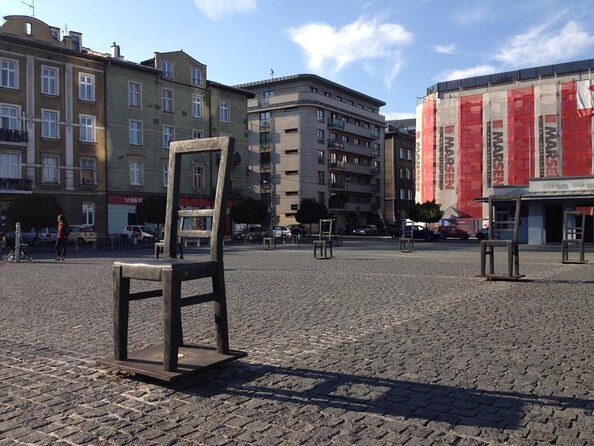
Your walk starts at Ghetto Heroes Square, a spot that used to be called Plac Zgody. That name change matters because it signals the shift from the square as a functioning wartime space to the square as a memory space today. In practical terms, this first stop helps you understand what you are seeing later at Płaszów. It wasn’t only the camp that mattered, it was the system feeding into it.
Here, the guide frames the area as more than a backdrop. This square served as a logistical center, tied to control, registry, and the departure point for transports. That means when you later hear about imprisonment, forced labor, roll calls, and executions, you have a clearer sense of the pipeline that brought people there in the first place.
One tip for getting value out of the first 15 minutes: treat it like your preface. Don’t rush your eyes over the square. Watch for how the guide connects wartime functions to what survives in the city today. Even if the physical layout has changed, the logic of how the system worked is easier to track after this orientation.
More Jewish quarter and heritage tours to compare:
- Krakow: Schindler’s Factory & Ghetto Guided Tour
★ 4.7 · 1,694 reviews - Krakow: Jewish Quarter and Former Ghetto Tour
★ 4.9 · 1,441 reviews - Krakow: Bike Tour of Old Town, Jewish Quarter and the Ghetto
★ 4.9 · 1,155 reviews
Płaszów Camp in Plain Facts: Forced Labor to Concentration and Transit
Once you move into the Płaszów area, the tone stays serious and the pace becomes more explanatory. The camp was set up in October 1942 on grounds that had included two Jewish cemeteries in Krakow. That detail is not just a grim footnote. It helps you understand why today’s memorial spaces can feel like they are built around absences. A cemetery is a place of names and burial. Turning that ground into a prison system changes everything.
At the start, Płaszów operated as a forced-labor camp for Jews from the liquidated Krakow ghetto. Starting in July 1943, it also included a penal-labor section for Poles. Then in January 1944, it was redesignated a concentration camp. Later, it also functioned as a transit camp, including for Hungarian Jews sent onward to Auschwitz.
The guide also gives you the scale in numbers: more than 35,000 people imprisoned, and around 6,000 murdered. I like that these facts are presented as part of a structured explanation, not as a random set of statistics. It helps you avoid the common trap of turning the tour into a blur of places and dates.
A quick reality check: when you hear the terms forced labor, penal labor, concentration camp, and transit camp, you might assume the differences are minor on the ground. During the war, they were not. Your guide uses the evolution of Płaszów to explain how the camp’s functions shifted, even as the core purpose of terror stayed consistent.
Walking the Surviving Parts: Grey House, Roll-Call Square, and Memorials
The heart of the experience is the way the guide builds meaning from what remains. Płaszów today does not offer a fully intact camp the way some people imagine from movies. Instead, you see ruins, memorials, and traces, and your guide pieces the camp together so you understand what each location was for.
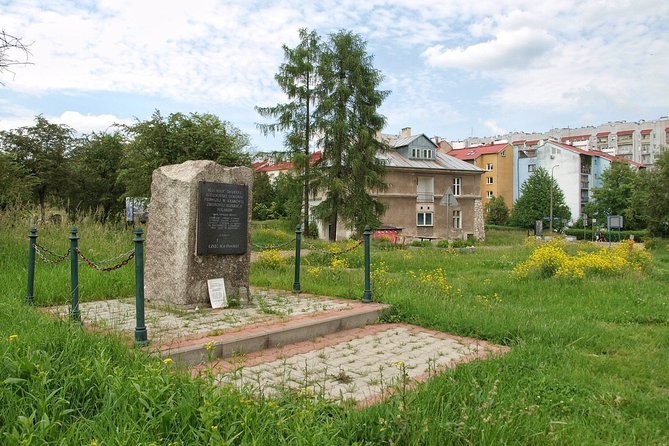
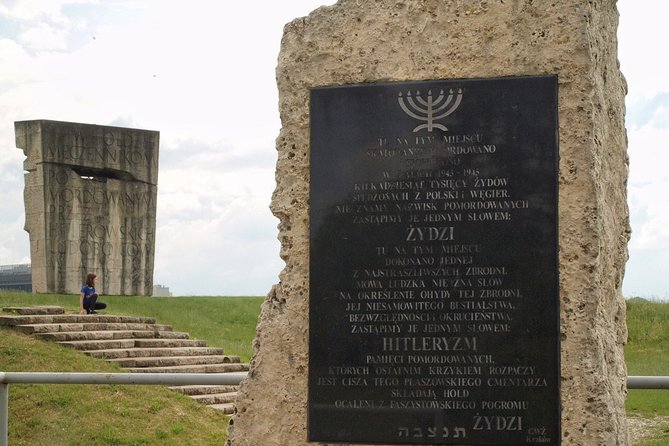
You will spend time at several major points, including the Grey House. You’ll also see the ruins of the pre-burial hall, traces connected to the former Jewish cemeteries, and the roll-call square. A particularly haunting element is the mention of paths where fragments of gravestones were used to pave roads. This is the kind of detail that sounds unbelievable until you understand the logic the occupiers imposed on everything, even the dead.
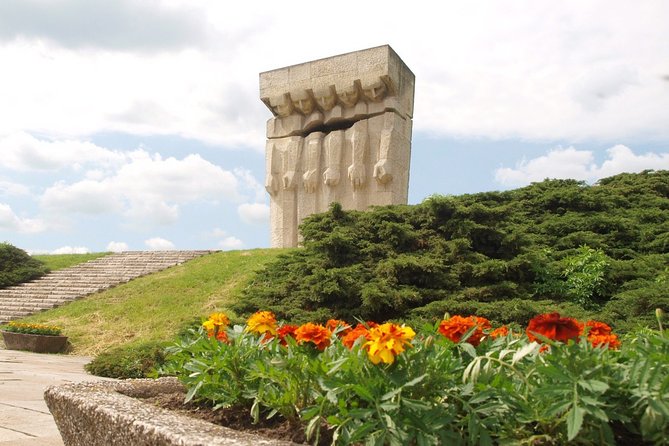
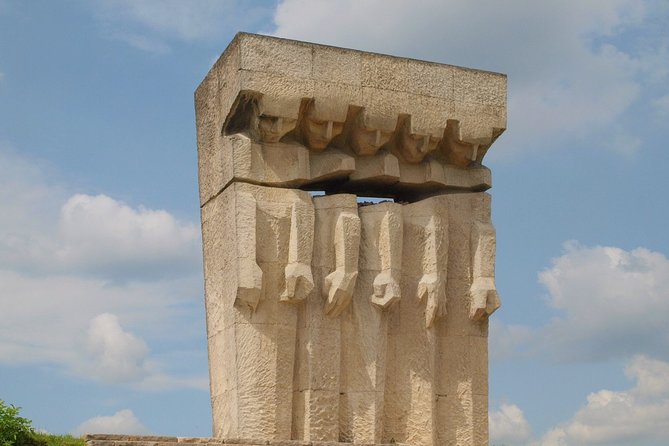
Another key stop is the Monument of Torn-Out Hearts. Memorial sites like this can feel emotionally intense, but they also help you slow down. Your guide uses reflections at these major points to keep the tour respectful and grounded, not rushed.
What I find valuable is the explanation of how the camp was organized into sections tied to day-to-day functioning. The tour talks about living areas, hospital areas, administrative areas, and industrial zones. That organization matters because it gives you a mental model for what daily life inside the camp could look like, even when the buildings themselves are gone.
One small consideration: because this is a walking tour of memorial ground, don’t schedule anything tight right after. You’ll likely need a few minutes afterward to reset, even if you are comfortable with historical sites.
The Schindler Connection: Work Permits, Brunnlitz, and a Lifeline
No other thread links Płaszów to later global memory the way Oskar Schindler does. The tour makes this connection central, not as a separate story tacked onto the camp facts, but as part of the same system that brought people into the camp register.
Here’s the idea your guide will explain. Schindler’s enamelware enterprise aimed to obtain work permits for Jewish prisoners who were registered through Plaszów. That mattered because registration could mean the next step was another transport. In this context, paperwork becomes a shield. Later, Schindler organized their transfer to his wartime plant in Brunnlitz, saving over a thousand lives.
I like how the tour keeps this from turning into a simple hero narrative. Instead, it shows the mechanism: permissions, lists, and transport routes inside the Nazi system. That makes Schindler’s actions feel real and specific, not just legendary.
And yes, if you watched Schindler’s List, you’ll recognize parts of the story’s spatial logic. The guide helps you connect what you saw in film terms to what you can understand on the ground today. Just be prepared: the camp area is not a film set. The details you get here come from the surviving record and the physical reminders that still exist.
More walking tours in Krakow:
- Old Town Krakow & Wawel Castle Walking Tour
★ 5.0 · 1,508 reviews - Creepy Krakow: 2-Hour City Walking Tour
★ 4.7 · 1,131 reviews - Krakow: The Old Town Walking Tour
★ 4.8 · 794 reviews - Krakow: Kazimierz Jewish Quarter Walking Tour
★ 4.8 · 571 reviews
How the Tour Works for Your Time and Comfort
This is built as a focused 2-hour experience, with an English-only guide and a group size capped at 25. You’ll use a mobile ticket, and you’ll likely travel a short distance between the square and the camp area. One guide-led route described includes taking a tram from Heroes Square toward Płaszów, so expect some local transit rather than only foot-only walking.
The meeting point is at Apteka pod Orłem near Plac Bohaterów Getta (Getta Heroes Square area). The walk ends at Henryka Kamieńskiego 57. That end point puts you near a bus stop on Kamienskiego Street, which makes it easier to keep moving afterward.
Two practical notes to keep your day smooth:
- Arrive 10 minutes early. Once the group departs, latecomers can’t join, and tickets aren’t refundable. This matters more here than on a sightseeing tour, because the guide needs everyone present for the flow of the story.
- Bring stamina for uneven ground. The tour asks for moderate physical fitness. Wear shoes you can stand and walk in comfortably, because the stops are spread out and the terrain can be irregular.
Price and Value: About $30 for a Guided Map of a Complex Place
The price is about $30.04 per person for an English-guided walk lasting roughly two hours. What makes that feel like good value is what you get for your money: interpretation at key locations, not just passive viewing. You are paying for an expert-led explanation that connects the start point at Ghetto Heroes Square to how Płaszów operated and how Schindler’s actions fit into the camp’s bureaucratic machinery.
Admission is listed as free for the key parts, so the cost is mostly about the guided content and time. And guides are a real factor here. Multiple named guides have been described as highly informative and able to take their time while showing the main sites and answering questions. That is the difference between reading plaques on your own and actually understanding what you are looking at.
Also, timing can matter. This tour is commonly booked about 39 days in advance on average. If you’re traveling in a busy season or have limited availability, booking early can help you lock in your preferred time slot.
Who Should Book This (and Who Might Want to Skip It)
Book this if you want a structured, site-by-site explanation of Płaszów in Krakow, with the Schindler connection explained clearly. It also suits you if you’re the kind of person who likes understanding systems, not just outcomes, and you want your questions answered in the moment.
You might think twice if you:
- get overwhelmed easily by heavy historical subjects
- aren’t comfortable walking for about two hours over memorial ground
- prefer a lighter pace or less reflective stops
If your goal is quick photos and a fast lap of highlights, this won’t match that style. If your goal is understanding, this tour is built for it.
Should you book the Płaszów guided walking tour?
I think you should book it if you want the place explained in a clear order: start with how people moved into the system, then understand what Płaszów became, then connect the story to Schindler’s work permits and Brunnlitz. The best part is the guided ability to make sense of what survives, including Grey House, the roll-call square, cemetery traces, and the major memorials.
Skip it only if you know you’re not ready for a physically and emotionally heavy, reflection-heavy route. Otherwise, plan your shoes, arrive early, and give yourself time to absorb what you learn.
FAQ
How long is the Krakow Płaszów guided walking tour?
It is about 2 hours.
What language is the tour offered in?
The tour is offered in English.
Where does the tour start and end?
It starts at Apteka pod Orłem, Plac Bohaterów Getta 18, and ends at Henryka Kamieńskiego 57, Kraków. The end point is near a bus stop on Kamienskiego street.
Is there an admission ticket cost for the stops?
The information provided lists admission tickets as free for the stops included.
What kind of physical condition do I need?
The tour asks for moderate physical fitness level, and it includes a fair amount of walking.
Is free cancellation available?
Yes. You can cancel for a full refund up to 24 hours in advance of the experience start time.
Recently reviewed around Krakow
- Wawel Castle and Cathedral Guided Tour★ 4.6 · 44 reviews
- Walking Tour: Kazimierz, Jewish Quarter – 2-Hours of Magic!★ 4.7 · 35 reviews
- Wawel Castle and Cathedral Guided Tour★ 5.0 · 8 reviews
- Kraków Holocaust Tour★ 4.9 · 5 reviews
- Wadowice and Kalwaria: John Paul II Route★ 4.8 · 5 reviews
- VIP Club Entry and Booth Booking★ 5.0 · 4 reviews
- Walking Tour of Krakow: Old town – 2-Hours of Magic★ 4.7 · 5 reviews
- Krakow: Zakopane, Thermal Baths and Gorce Park Treetop Walk★ 5.0 · 3 reviews