
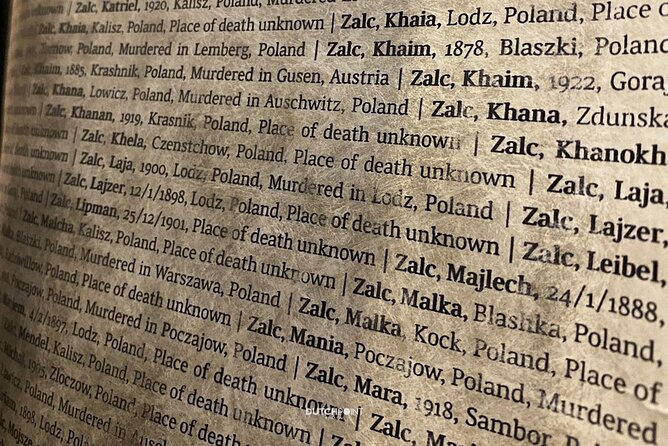
Reviewed · AUSCHWITZ-BIRKENAU MEMORIAL VISITS
from Kraków: Auschwitz excursion with guaranteed Dutch guide
Auschwitz-Birkenau is heavy. Still, this tour stands out because it helps you stay oriented as you move from Auschwitz I to Birkenau, then on to Auschwitz III, Monowitz. I really like the guaranteed Dutch-speaking guide, and I also like how the visit uses the specific Dutch and Belgian memorial connections inside the camp story, not just a generic overview. One drawback to consider up front: it is an early start and a long day, with a fair amount of standing and walking, so it is not for everyone.
You meet at DutchPoint Kraków on Karmelicka 3 at 6:00 am and return to the same place. The day includes official museum tickets for Auschwitz I and Auschwitz II-Birkenau, a (mini)bus transfer from Kraków, and a tour guide system so you can actually hear the details. You also get five restroom stops, which sounds practical until you realize how much you need them. One more thing to plan for: the experience is non-refundable and cannot be changed once booked.
Key points at a glance
- Guaranteed Dutch guide, with guides you might meet like Wesley, Jeroen, Marijke, and Roland
- Auschwitz I includes the Dutch barrack angle, and Belgian guests visit the Belgian barrack
- Birkenau follows the Judenrampe approach, then moves to barracks and the remains of gas chambers II and III
- Monowitz (Auschwitz III) and the Buna works focus, seeing the prison labor side of the system
- Small group size (max 29) plus a tour guide system, which helps you follow details early in the morning
Getting to Auschwitz I: the early departure that shapes the whole day
This is the kind of trip where timing matters. You start at 6:00 am from DutchPoint Kraków on Karmelicka 3, and then you head out by (mini)bus to Oświęcim. The schedule gives you around 80 minutes of transfer time, which is long enough to settle, but not so long that you feel sluggish once you arrive.
Then comes a quick practical rhythm: a short restroom and entry moment, followed by a long, focused visit inside Auschwitz I. Expect it to feel structured and fast. That can be a relief when you are walking into a place that is already overwhelming. It also means there is less time to wander off on your own, which is usually a good thing here. You want a guide to keep the story clear, not a free-for-all.
There is also a reason this tour is often booked well in advance. An Auschwitz visit sells out in peak periods, and having a guaranteed Dutch guide is not something you want to gamble on at the last second.
More Auschwitz-Birkenau memorial visits from Krakow:
- From Krakow: Auschwitz-Birkenau Guided Tour & Hotel Pickup
★ 4.5 · 33,358 reviews - From Krakow: Auschwitz-Birkenau Guided Tour & Hotel Pickup
★ 4.5 · 29,340 reviews - Krakow: Auschwitz Guided Tour with Optional Hotel Pickup
★ 4.5 · 15,280 reviews
Auschwitz I: museum flow, the Dutch barrack connection, and the gas chamber stop
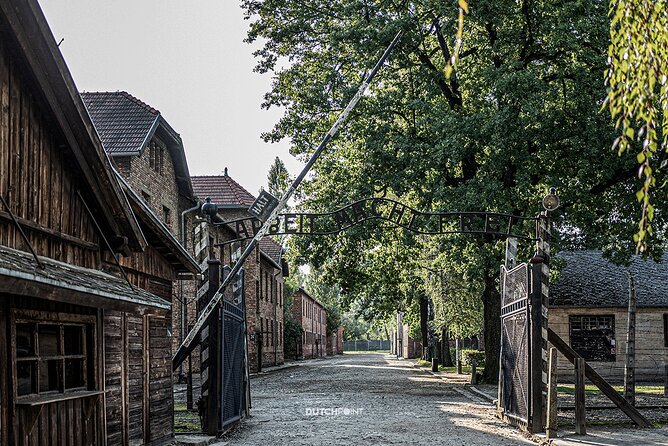
Your first big site is Auschwitz I, the camp that became a museum. The plan is built around a walking route through the former camp, using photos and the original barracks to tell the story from the first deportations to liberation on January 27, 1945.
A key point here is the guide framing. This tour explicitly includes the Dutch barrack. If you are Dutch, you get that specific thread of memory. If you are Belgian, you visit the Belgian barrack instead. That matters because it turns the camp from an abstract site into something anchored to real deportation communities.
You also visit a gas chamber during the Auschwitz I portion. It is not presented for shock value. It is presented as part of the historical system the Nazis built, and your guide uses the walk and exhibits to explain what you are seeing, and why it matters.
The pacing at Auschwitz I
You get about 150 minutes at Auschwitz I, with admission ticket time included. That is enough for a real guided walkthrough without feeling rushed every 60 seconds. You also get one of your planned restroom moments early in the day, before the deeper museum time begins.
A possible drawback: this part is dense. If your goal is lots of photo time and slow browsing, you might feel the pressure of the group schedule. But if your goal is understanding, this timing works well.
Birkenau: following the Judenrampe route and understanding selection
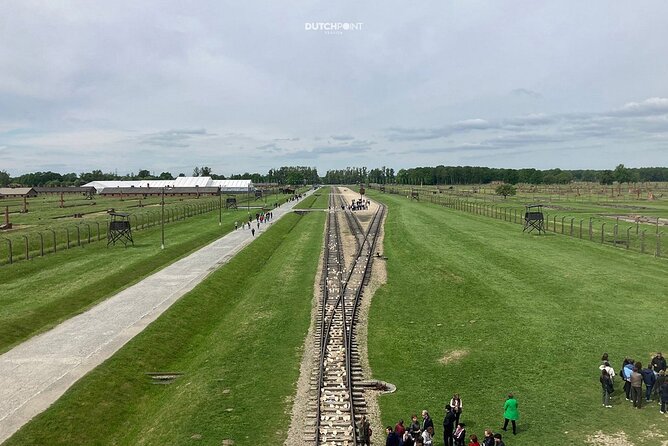
After Auschwitz I, you take a bus transfer to Auschwitz II-Birkenau and get a break. The route moves toward the Judenrampe, the rail arrival point between Auschwitz I and Birkenau. This is one of the most important conceptual stops on the entire tour, because it is where the story shifts from camp life to the arrival and selection system.
From the Judenrampe, you walk the route people were taken to Birkenau. That is powerful because it is not just looking at buildings, it is following a forced pathway through space. Your guide helps you interpret what you see, including the way the camp was laid out and what the movement meant for victims.
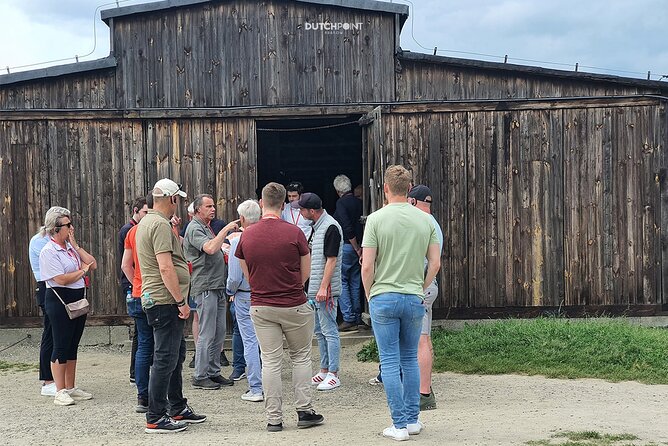
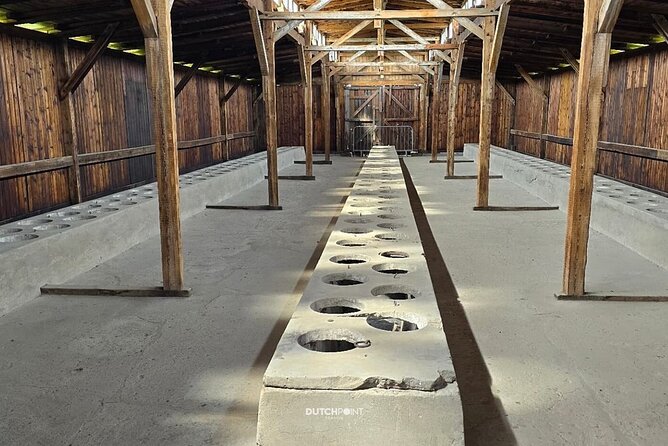
Then you continue into Birkenau’s broader area, where you visit wooden barracks that show the living conditions during the war years. The tour also includes time to view the remains of gas chambers II and III from the outside and in context.
A few more Krakow tours worth comparing
- Krakow: Auschwitz-Birkenau Guided Tour with Pickup & Lunch
★ 4.5 · 9,800 reviews - Krakow: Auschwitz-Birkenau Guided Tour Pickup/Lunch Options
★ 4.5 · 9,057 reviews - Krakow: Auschwitz-Birkenau and Salt Mine Guided Tour
★ 4.7 · 9,020 reviews - Krakow to Auschwitz Birkenau Guided Tour with Transfer and Ticket
★ 5.0 · 8,197 reviews
What you should watch for, as you walk
Focus on the structure, not just the shock. Notice how the camp layout works like a machine for control. Your guide will point out details you might otherwise miss, such as how barracks positioning and pathways shaped daily survival and daily cruelty.
Also remember: the air here can be harsh, and the ground can be uneven. Even if the tour pace feels manageable, your body may get tired faster than you expect. That is why the planned breaks are useful.
The Dutch monument stop at Birkenau: why this memory thread matters
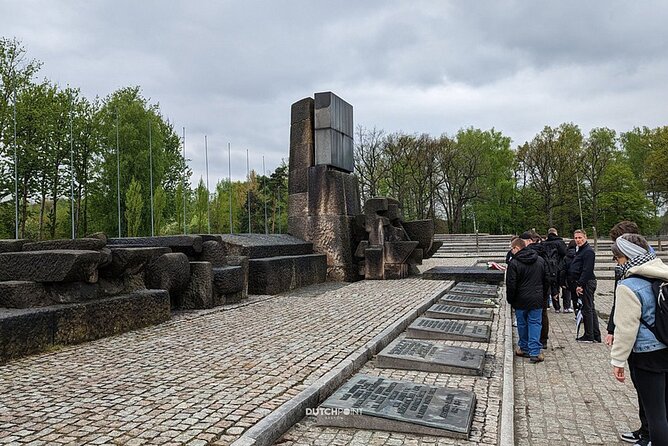
In Birkenau, the tour includes a stop at the Dutch monument. It is not just a photo stop. It is a moment that grounds the site in specific national memory, which can make the history feel more human.
This kind of stop can help if you feel numb during the hardest parts. You get a pause where the story has a clearer emotional and memorial focus. It also balances the technical and structural explanations with a reminder that people had names, families, and communities.
There is also a brief bookstore stop near the gate. This can be helpful after you leave the camp, because you will likely want something to read while the experience is still fresh in your mind. You can look for Dutch-language materials if that is your preference, but the timing is short, so keep your browsing focused.
Auschwitz III Monowitz and the Buna works: seeing the prison labor system
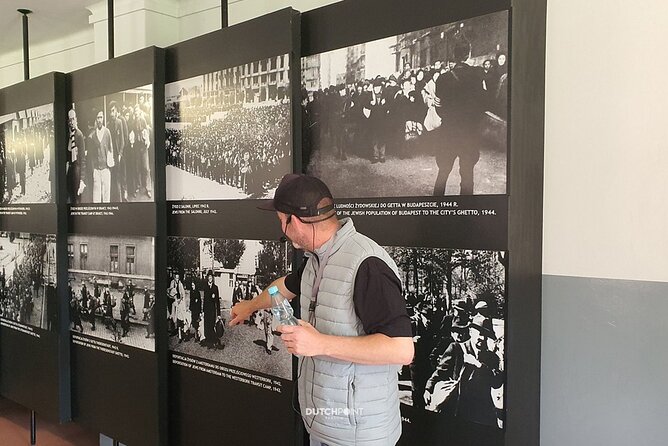
The last major site is Auschwitz III, Monowitz, also known for the Buna works. You take a bus transfer to Monowitz after a short break, and the tour explains how the Nazi system expanded beyond the main camps into large-scale forced labor and industrial production.
This is where many people’s mental map needs adjusting. Auschwitz is often remembered in one dimension, but the Monowitz story highlights another part of the machine. Your guide talks about the factory complex and the Monowitz camp tied to it.
You also learn that the barracks are no longer visible in the same way they are at Auschwitz I and Birkenau. Instead, you see factories and remnants of bunkers. The guide uses that shift to explain what changed in how the camp operated and how prisoners were used inside the industrial landscape.
The Monowitz portion ends at the memorial monument there, and it gives the day a kind of closing frame. It is not a happy ending. It is a structured ending, which is what your brain often needs after absorbing too much for one day.
How the guide system and small group size keep the story clear
This tour is built around small-group touring, with a maximum of 29 travelers. That is a big deal for Auschwitz visits. A smaller group means fewer people between you and the guide, and it makes questions possible without derailing the flow.
You also get a tour guide system. Translation and hearing in open outdoor spaces can be tricky, especially when you are standing in lines or walking from one point to another. The system helps you catch details instead of guessing what you missed.
And the guide quality seems to be a major reason people love this tour. The names that come up again and again include Wesley, Jeroen, Marijke, and Roland. Across these guides, the consistent theme is calm storytelling paired with solid historical knowledge, plus time to answer questions respectfully.
A practical note on questions
If something feels confusing, ask. Not everything will click instantly, especially when your guide uses multiple layers of timeline and camp structure. The best value of this tour is the chance to turn confusion into clarity.
Tickets, transfers, and price: where the value really comes from
The price is listed at $102.14 per person. That is not cheap in absolute terms, but the value is in what is included and how the day is organized.
You get:
- Official tickets for Auschwitz-Birkenau State Museum (for Auschwitz I and Auschwitz II-Birkenau)
- Transfer by (mini)bus from Kraków
- A guided, structured study tour lasting about 6 hours (excluding travel time)
- A Dutch-speaking guide and tour guide system
Monowitz admission is listed as ticket free. So you are not paying extra museum entry fees for the final stop.
What you are really buying here is time and clarity. You are buying someone who can guide you through three different areas, keep the story connected, and help you understand the meaning of each site. You are also buying the peace of mind of having a Dutch guide guaranteed, which is a practical advantage if language is your limiting factor.
Could you do it independently? Sure. You can always try. But Auschwitz is one of those places where a guided structure often beats “figuring it out.” The day is long, and your brain needs support to stay grounded.
What to pack and how to handle the walking
Even though the tour is guided, you still do real walking across multiple sites. You should plan for long periods on your feet. The tour is described as suitable for people with moderate physical fitness, not for mobility impairments.
Here is how to think about packing:
- Dress in layers, because weather swings happen fast around camps and open areas.
- Wear comfortable shoes with grip. You do not want to be thinking about your feet when the stories hit hard.
- Bring a bottle of water if allowed, and use the planned five restroom stops without waiting too long.
The day includes at least five restroom stops, which helps a lot. Still, you will want a sensible pace. If you try to force “speed walking,” you may miss details and you will feel wiped out.
Also, plan for a long day emotionally. This is not a normal sightseeing outing. It is education through tragedy. Your guide’s calm approach helps, but your own pacing and self-care matter too.
Who should book this Auschwitz excursion with a Dutch guide
This tour is a strong fit if you:
- Want a Dutch-speaking guide who stays focused on the sites and the meaning of what you see
- Appreciate a structured route: Auschwitz I, Birkenau, then Monowitz
- Prefer a small group setting so questions stay possible
- Value the Dutch and Belgian memorial connections inside the tour route
It is not suitable if:
- You are traveling with children under 14
- You or anyone in your group has mobility impairments
If you are the kind of visitor who needs flexibility to wander, this may feel a bit tight. If you are the kind of visitor who wants to understand and keep the timeline straight, this is exactly the kind of structure that helps.
Should you book this Auschwitz tour with DutchPoint Kraków?
If you want a guided, Dutch-language Auschwitz day that covers Auschwitz I, Birkenau (including the Judenrampe approach and remains of gas chambers II and III), and Monowitz, this is a very solid choice. The biggest strengths are practical: guaranteed Dutch guidance, tickets included for the main museum sites, and a route that stays coherent across three locations.
I would book it if language matters to you and you want the story explained with care, not guessed. I would hesitate only if your group has significant mobility limits, or if you know you will struggle with a long early start and a lot of walking.
FAQ
What sites are included in the excursion?
You visit Auschwitz I (Miejsce Pamięci i Muzeum Auschwitz I), Auschwitz II-Birkenau (including the Judenrampe area and barracks), and Auschwitz III-Monowitz (Memoriale Auschwitz III).
What time does the tour start, and where do I meet?
The tour starts at 6:00 am at DutchPoint Kraków, Karmelicka 3, 31-133 Kraków, Poland. The activity ends back at the meeting point.
How long is the tour?
The total duration is about 8 to 9 hours. The guided study portion is about 6 hours, excluding travel time.
Is a Dutch guide guaranteed?
Yes. The tour includes a guaranteed Dutch guide.
Are museum tickets included?
Official tickets for the Auschwitz-Birkenau State Museum are included. Tickets are included for the Auschwitz I and Auschwitz II-Birkenau parts, and Auschwitz III-Monowitz admission is free.
Is breakfast or lunch included?
Breakfast box and lunch box are optional, and they are not included.
How many restroom stops are planned?
There are five restroom stops during the excursion.
Who is the tour not suitable for, and is it refundable?
The tour is not suitable for children under 14 and for people with mobility impairments. It is non-refundable and cannot be changed for any reason.
Recently reviewed around Krakow
- Wawel Castle and Cathedral Guided Tour★ 4.6 · 44 reviews
- Walking Tour: Kazimierz, Jewish Quarter – 2-Hours of Magic!★ 4.7 · 35 reviews
- Wawel Castle and Cathedral Guided Tour★ 5.0 · 8 reviews
- Kraków Holocaust Tour★ 4.9 · 5 reviews
- Wadowice and Kalwaria: John Paul II Route★ 4.8 · 5 reviews
- VIP Club Entry and Booth Booking★ 5.0 · 4 reviews
- Walking Tour of Krakow: Old town – 2-Hours of Magic★ 4.7 · 5 reviews
- Krakow: Zakopane, Thermal Baths and Gorce Park Treetop Walk★ 5.0 · 3 reviews