
Reviewed · AUSCHWITZ-BIRKENAU MEMORIAL VISITS
Auschwitz Birkenau Tour from Krakow: Private Transfer + Ticket
Auschwitz-Birkenau from Krakow is interesting because it turns a long, complicated day into a smoother plan. You get private hotel pickup, then a direct ride to Oświęcim so you can skip the whole bus-queue stress. And if your driver is like Conrad or Michael (based on past experiences), the trip can feel less like a commute and more like a careful lead-in.
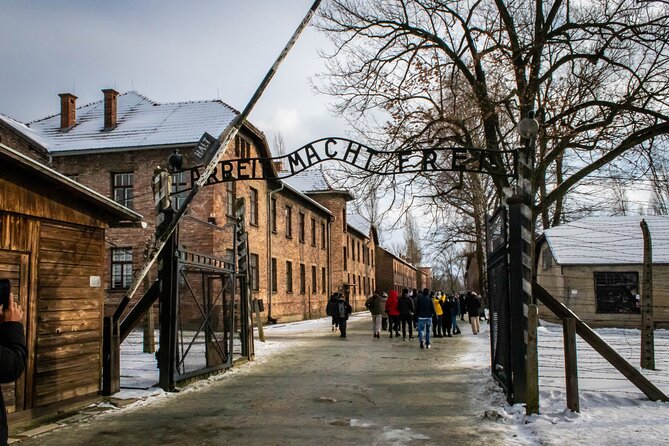
What I like most is the combo of admission included and an in-person guide inside the memorial sites. That matters here. You will see the gate with Arbeit macht frei, the barracks, and the extermination camp remains, while your guide keeps the story respectful and clear. The main drawback to think about is time: you are usually looking at about 1.5 hours at Auschwitz I and around 1 hour at Birkenau, so it can feel a bit fast if you want to read every plaque slowly.
Key things that shape your Auschwitz day
- Door to door transfer from Krakow, with a driver waiting at the end of the visit
- English-speaking guide at the sites, using headsets so you can hear while walking
- Auschwitz I plus Birkenau in one day, including gas chambers and crematorium areas
- Tight pacing between Auschwitz I and Auschwitz II, with limited time in each section
- Walking on uneven ground and lots of stairs, especially at Birkenau (Brzezinka)
Krakow to Oświęcim: the value of private transfer
This tour is built around one big practical idea: get you out of Krakow with less hassle, and get you back without guesswork. A driver meets you at your hotel around your chosen start time, then takes you straight to the visitor area near Oświęcim. The drive is about 1.5 hours each way.
That might not sound glamorous. But on days like this, small stress add up. With private transport, you do not have to coordinate with other groups, hunt for parking, or worry about missing a departing bus. Several people loved how easy it felt to stay in the same car the whole way, including having someone contactable if you needed help finding the right starting point.
One detail to plan for: if your hotel is in a restricted-access zone, you might need to walk a short distance to a nearby pickup point. Also, you will confirm the exact start time the day before, so build in a quick message or call check.
More Auschwitz-Birkenau memorial visits from Krakow:
- From Krakow: Auschwitz-Birkenau Guided Tour & Hotel Pickup
★ 4.5 · 33,358 reviews - From Krakow: Auschwitz-Birkenau Guided Tour & Hotel Pickup
★ 4.5 · 29,340 reviews - Krakow: Auschwitz Guided Tour with Optional Hotel Pickup
★ 4.5 · 15,280 reviews
Arriving at Auschwitz: what the first minutes are really for
When you reach the visitor center, your guide meets you and you enter the memorial complex together. The first impression is not just visual. It is emotional. The gate with Arbeit macht frei is one of those moments that hits hard because it is so deliberate, so staged.
From there, you move through Auschwitz I, the original camp area. This is where you get the historical foundation. You learn how the Nazis set it up first for Polish political prisoners, then expanded it so the neighboring site, Birkenau, could operate at scale. The tour also frames the numbers in plain terms, including the estimate of about 1.1 million people murdered, mostly European Jews.
The guide is also responsible for pace and tone. On this kind of visit, the difference between a good guide and a bad one is whether you feel respected and oriented. The stories are heavy, and your guide should handle them carefully rather than treating them like a script.
Auschwitz I: barracks, exhibits, and the things you can still walk past
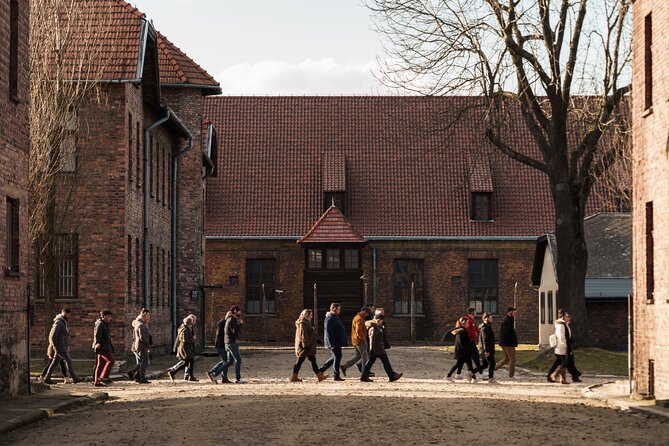
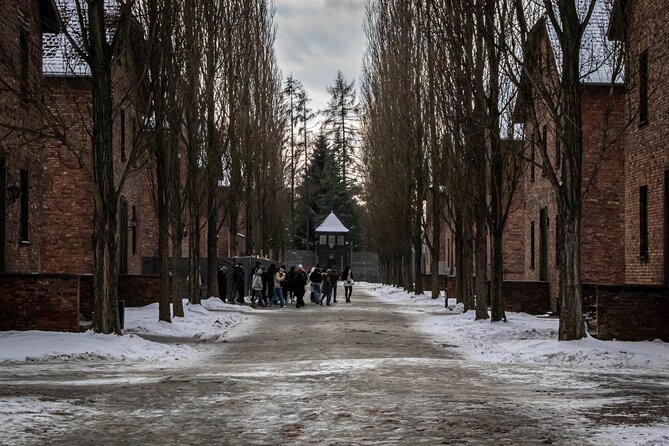
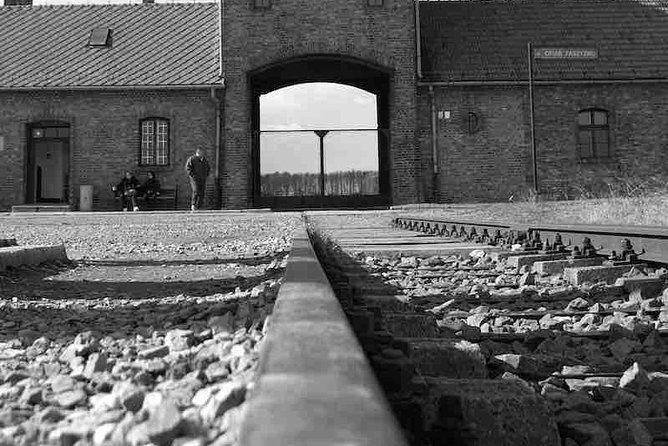
Auschwitz I is the camp area where the surviving structures and exhibits explain how the system worked. Expect to walk through key points like preserved buildings, paths, fences, and watchtowers. You also see reminders of how prisoners were processed and controlled, including elements like the railway approach areas and the death wall.
Inside the Auschwitz I camp, the barracks house exhibitions and documents, plus items taken from prisoners after arrival. This part matters because it connects history to physical space. The rooms are not just “sets,” they are evidence, and the exhibits do the job of explaining what you are looking at.
Time here can be the make-or-break point. Many departures are structured around roughly 1.5 hours at Auschwitz I. That is enough for the key elements, but not enough for slow, sentence-by-sentence reading. If you like to absorb at a quiet pace, you may find yourself moving faster than you want through some corridors and exhibit areas.
Also, Auschwitz I can get crowded. A headset system is typically used, and it helps, but tight pathways and groups moving in multiple directions can still make it harder to hear perfectly.
Birkenau (Brzezinka): where the scale shows up in your body
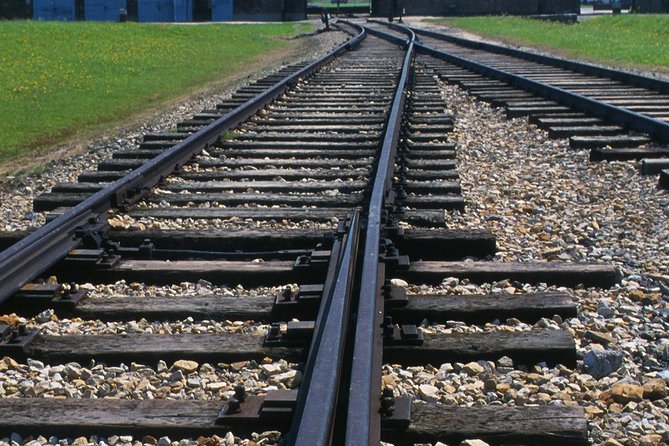
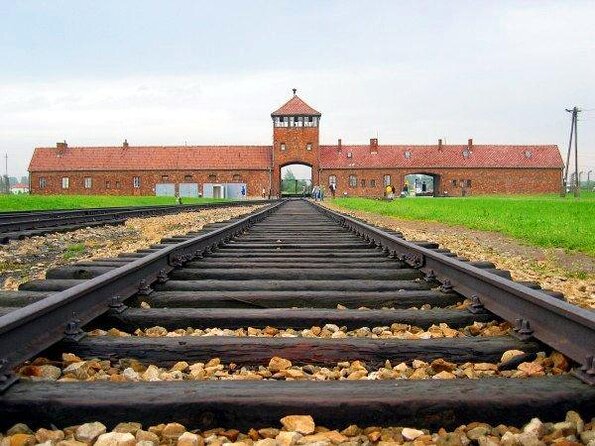
Birkenau is Auschwitz II, built about 3 kilometers from Auschwitz I. This is the camp where scale becomes unavoidable. It was designed to hold around 125,000 prisoners, and it was ultimately used as the central extermination site for Jews. Construction began in October 1941, using forced labor, and the camp was set up near the displaced village of Brzezinka.
Here is what makes Birkenau different from Auschwitz I: you will feel the layout. You walk preserved barracks and see the open spaces where people were trapped in horrific conditions. You also see the rail ramp and the selection process linked to arrivals. One detail that often stays with people is how close the rail arrival area is to the gas chambers, sometimes described around 200 meters.
The tour also addresses the human reality behind the system, including selection and how people were split instantly between what the Nazis intended as life or death. It is hard to describe this without oversimplifying, so your guide will likely keep it sensitive and factual, while still telling you what happened.
The practical side: Birkenau is where walking and stairs become real. Uneven ground, long stretches, and preserved structures mean you should wear solid shoes. If you are sensitive to heavy crowds or if you struggle with mobility, this is the section where you will notice it most.
Time at Birkenau is often around 1 hour, plus a short break between camps for toilets. That schedule is common, but it can still feel like you arrive before you are ready, and you leave before you want to. If your goal is maximum understanding and not just key highlights, you may want to complement this with extra self-guided time later.
A few more Krakow tours worth comparing
- Krakow to Auschwitz Birkenau Guided Tour with Transfer and Ticket
★ 5.0 · 8,197 reviews - Krakow: Wieliczka Salt Mine Fast-Track Ticket & Guided Tour
★ 4.5 · 5,872 reviews - Auschwitz Birkenau Guided Tour with Ticket Hotel Pickup Small Van
★ 5.0 · 4,769 reviews - From Krakow: Wieliczka Salt Mine Tour & Skip the Line Ticket
★ 4.4 · 3,925 reviews
The memorial moment: why the quiet part matters
After the main walk through the camp areas, you will have a chance to visit the memorial area and pause quietly to remember the victims. This is not a “free photo stop.” It is built into the experience because the whole point is remembrance and respect.
Even people who like history tours can find themselves needing a minute here. It is the part that stops you from treating the day like a checklist. If you feel overwhelmed, this is where the tour gives you permission to slow down.
Then your driver returns to pick you up for the trip back to Krakow, typically with a total day around 7 to 8 hours.
Timing and pacing: why it can feel a bit rushed
This tour offers a lot in one day: Auschwitz I, then Birkenau, then return. The tradeoff is that the visit is usually structured around fixed blocks of time.
A common pattern you should expect:
- about 1.5 hours at Auschwitz I
- a short toilet and transition break between sites (often around 10 to 20 minutes)
- about 1 hour at Birkenau
- then the ride back
In plain terms, you might get the essentials, not the slow, read-everything version. One of the most consistent critiques is that group movement and headset audio can make it hard to fully hear your guide in some corridors, and you may only see portions of Auschwitz I and Auschwitz II in detail.
So my advice is simple. Go in expecting highlights, not mastery. If you care about reading every exhibit label and archival detail, plan either extra time in the sites another day or use museum audio tools for the sections you want to revisit.
Driver and guide quality: the comfort factor is real, but it varies
The transfer part is where you have the most direct control over comfort. A good driver can make the day easier: safe driving, on-time pickup, and clear communication about where to meet.
A lot of people loved drivers like Michael, Conrad, Pieter, Dominic, and Thomas for being pleasant and helpful, sometimes even playing documentary material during the ride to set the tone. That is not guaranteed in every car, but it shows what good looks like for this specific kind of trip.
The bigger point: you should assume your guide at the memorial is the star of the day, not the driver. Even though the tour is listed as English-language with an English-speaking professional driver, real-life experiences can vary. If you are relying on the driver for explanation, choose this tour for the on-site guide and headset audio, where the guide work happens.
What to do about food, water, and break time
Schedule matters here because the day is tight. There are places to buy food and drinks at Auschwitz I and at Birkenau, so you are not stuck with nothing to eat.
Still, do not assume you will have much time for queues between the two sites. If a long line forms, you might lose more of your short break. I like having a light plan, like carrying a small snack before the day gets busy, so you are not hunting when time is tight. And yes, wear comfortable layers, because you will be outside in parts of Birkenau.
Practical prep that will help you have a better visit
This tour is physically and emotionally demanding. A few practical things can make it easier.
- Backpack limit: you can bring items, but bags and backpacks must not exceed 30x20x10 cm.
- Shoes matter: Birkenau involves uneven terrain and lots of steps.
- Be ready for a somber day: plan little the rest of the evening. This experience can stay with you.
One more note on communication. Pickup is arranged from your hotel area, and you confirm the exact start time the day before. If you want everything to go smoothly, keep your phone available and respond to the provider message quickly.
Who this Auschwitz-Birkenau trip is best for
This is a strong pick if you want:
- Stress-free Krakow transport with door to door pickup
- An English guide inside the memorial sites
- The Auschwitz I and Birkenau highlights in one full day
- A structured plan that keeps you moving safely through the complex
It is also ideal if you are traveling with someone who does not want to figure out buses and timing on their own. Private transfer removes a lot of uncertainty.
This might be less ideal if you:
- want to spend a long time reading every label and exhibit in Auschwitz I
- feel you need extra quiet time in each building
- get frustrated by crowds and groups moving at a set pace
- need very long breaks, since the day is scheduled tightly between locations
If any of those are you, consider adding audio guides for a slower follow-up experience, so you can return mentally to the sections you felt you skimmed.
Should you book the private transfer plus ticket from Krakow?
I would book it if your priority is a well-organized day with private hotel pickup, admission included, and guided storytelling at the sites. The value is not just the ticket. It is the smooth logistics that let you focus on what you came for.
I would also book it if you know you want the essentials, not an all-day independent marathon. Auschwitz-Birkenau is already overwhelming. Planning an easier transportation day is a kindness to yourself.
But I would hesitate if your dream is slow reading and maximum time inside every block. In that case, you may feel the schedule is too tight, and you might want a format that gives more time on-site.
If you decide to go, go prepared. Solid shoes. A quiet mindset. And the understanding that this is history that does not let you stay on autopilot.
Recently reviewed around Krakow
- Wawel Castle and Cathedral Guided Tour★ 4.6 · 44 reviews
- Walking Tour: Kazimierz, Jewish Quarter – 2-Hours of Magic!★ 4.7 · 35 reviews
- Wawel Castle and Cathedral Guided Tour★ 5.0 · 8 reviews
- Kraków Holocaust Tour★ 4.9 · 5 reviews
- Wadowice and Kalwaria: John Paul II Route★ 4.8 · 5 reviews
- VIP Club Entry and Booth Booking★ 5.0 · 4 reviews
- Walking Tour of Krakow: Old town – 2-Hours of Magic★ 4.7 · 5 reviews
- Krakow: Zakopane, Thermal Baths and Gorce Park Treetop Walk★ 5.0 · 3 reviews