
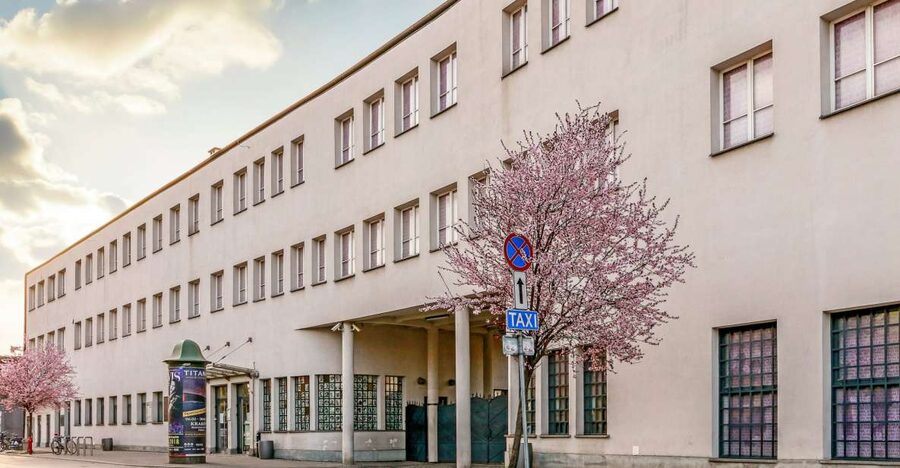
Reviewed · SCHINDLER'S FACTORY TOURS
Krakow: Schindler’s Factory Guided Tour
What makes this experience so compelling is that you’re not just looking at documents. You’re touring Schindler’s Enamel Factory itself, an old industrial building where the war crushed ordinary lives and one man tried to protect over a thousand people. The stories you hear focus on Krakow under Nazi occupation, told in a way that connects politics to daily fear, hope, and survival.
I particularly like two things. First, the tour includes skip-the-line entrance, so you spend more time inside and less time waiting. Second, the guide brings the past to life with personal accounts, including what happened in the lives of Krakow’s residents during nearly six years of occupation, and you’ll also learn about Schindler in his office with the symbolic Survivor’s Ark.
One possible drawback: the pace can feel dense, and group size can be fairly large. Also, if you’re expecting to see something like a functioning factory floor or lots of machinery, you should know this is primarily a museum/story experience in historic rooms.
Key points before you go
- Original enamel factory building: you tour a site dating back to 1937, tied directly to Oskar Schindler.
- Personal Nazi occupation stories: history is framed through Krakow residents and the lived reality under control.
- Survivor’s Ark stop: you’ll learn about Schindler’s role through a key symbolic display and context.
- Expert guide in your language: live guided tour offered in English or Spanish.
- Skip-the-line entry included: faster entry into the museum helps the 90 to 120 minute flow.
- Group logistics matter: one review notes the group can be large, so plan to listen closely and stay patient.
Entering Oskar Schindler’s Enamel Factory in a building from 1937
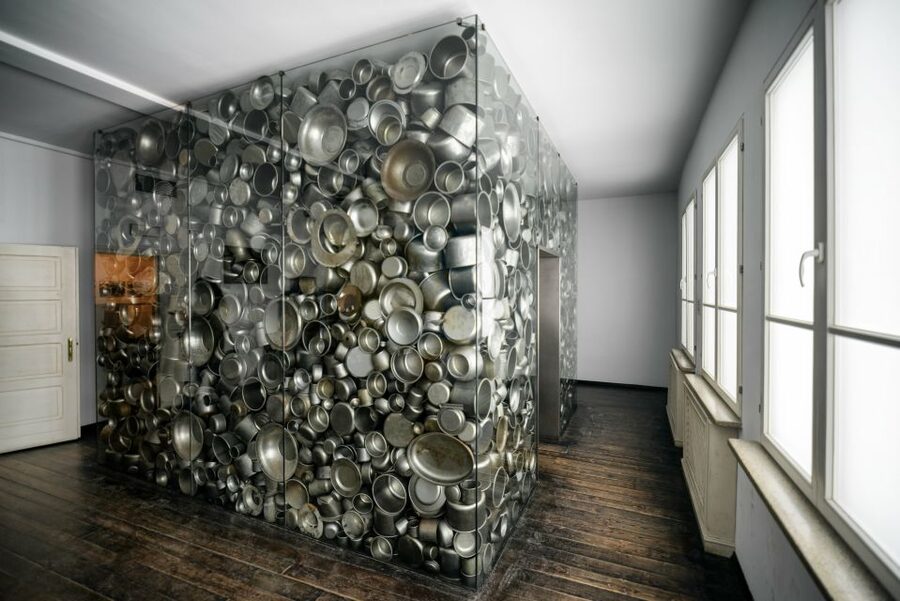
This tour centers on the Oskar Schindler’s Enamel Factory museum, also known as Oskar Schindler’s Deutsche Emailwarenfabrik. The building matters. It dates back to 1937, which means you’re stepping into the same kind of industrial space where war-era decisions played out, long before most visitors even think about survival statistics.
When Nazi Germany invaded Poland on September 1, 1939, Oskar Schindler, a Sudeten German, is believed to have arrived in Krakow on September 6, when German troops entered the city. That timeline is the backbone for how the museum frames what you’re seeing. It’s not abstract. The tour helps you connect the moment the city changes to the way people experience that change, day after day.
You’ll move through the museum in a guided group, with the guide explaining how World War II intersected with everyday life in Krakow. In a visit like this, context is everything. Without it, the exhibits can feel like facts stacked side by side. With it, the building becomes a scene, and the timeline becomes personal.
More Schindler's Factory tours to compare:
- Krakow: Oskar Schindler’s Factory Entry Ticket & Guided Tour
★ 4.2 · 3,793 reviews - Krakow: Schindler’s Factory Tour with Entrance Ticket
★ 4.5 · 3,182 reviews - Krakow: Schindler’s Factory Skip-the-Line Ticket
★ 4.4 · 3,105 reviews
Meeting your guide at the museum entrance and getting inside fast
Your meeting point is simple: go to the entrance of the Oskar Schindler’s Enamel Factory museum. You’ll spot a greeter holding a banner with a GetYourGuide logo.
From there, the tour is run as a group guided visit. The big practical win here is the skip-the-line entrance ticket. Schindler’s Factory is popular, so that one detail can noticeably change your experience. It means you can focus on the story instead of spending your limited time in Krakow waiting at the door.
The tour is designed to be straightforward: meet the guide, enter, then follow the route at a museum pace. Live guidance keeps the experience clear, especially since this subject is heavy and the museum has a lot to process.
If you’re traveling with tight time windows, arriving a few minutes early helps. You’ll get your bearings fast, check that you have the right ID, and settle your thoughts before the tour begins.
The Survivor’s Ark moment and how the tour explains Schindler’s role
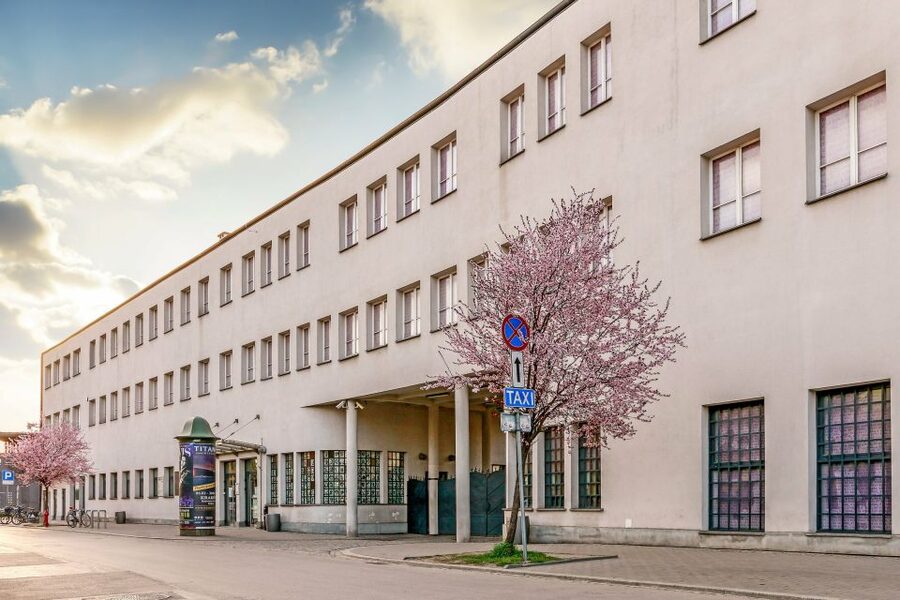
One of the tour’s key promises is learning about the man who saved over 1000 lives, and the museum provides that through the symbolic Survivor’s Ark. Your guide will explain Schindler’s place in the system of occupation and how his choices intersected with the brutal machinery of the Nazi regime.
You’ll likely notice the museum doesn’t treat Schindler as a generic historical figure. Instead, the guide pulls the story toward the human scale: decisions, risk, and consequences. That’s what makes the experience more than a timeline. You’re not only learning what happened. You’re learning why it was possible at all, and what it cost.
In the office area, the tour emphasizes Schindler’s context and what the “Ark” represents. Think of it as a visual and emotional anchor, a way to keep the story from becoming purely informational.
If you want one practical approach for this part, it’s this: slow down when you reach the office and symbolic display area. Even if you think you’ve understood the story already, this is where the tour ties pieces together in a way that can land harder than you expect.
How World War II becomes personal in Krakow, not just a big timeline
The heart of this tour is the way it connects the Nazi occupation to daily life in Krakow. The guide tells personal stories of Krakow’s inhabitants, covering how people lived under Nazi Germany for nearly six years.
This is where the visit can feel both emotionally intense and surprisingly clear. Rather than dumping you in the deep end with dates and policies, the tour keeps returning to people: how survival worked, how fear shaped routines, and how public life was controlled.
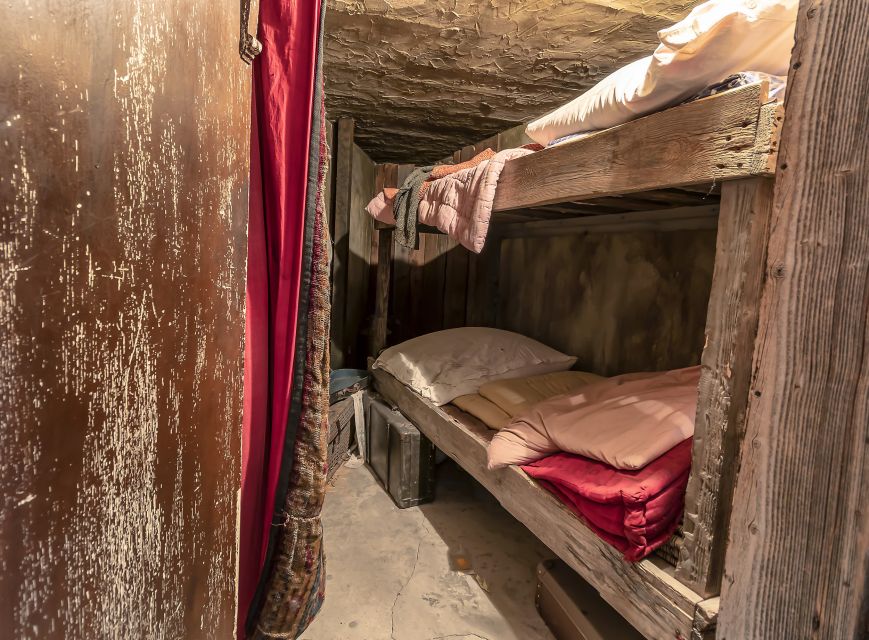
One review highlights how the guide uses reconstructions of historical locations to make the visit feel real. I like that technique in museum tours because it helps you picture a scene. It turns a room into a moment, and it makes the guide’s story easier to follow, especially when the topic is complex.
Another review points out that the tour can feel more like a maze of informational spaces than a factory where you watch old production methods. That’s actually good to know. Schindler’s Factory is not a workshop demo. It’s a museum built to explain occupation and persecution through the setting and the stories.
So if you’re the kind of traveler who wants context, this tour is a strong match. If you mainly want physical industrial history like how enamel products were made, you’ll need to adjust your expectations before you arrive.
A few more Schindler's Factory tours worth comparing
- Schindler’s Factory in Krakow: Guided Tour & Skip the Line Ticket
★ 4.5 · 1,714 reviews - Krakow: Schindler’s Factory & Ghetto Guided Tour
★ 4.7 · 1,694 reviews - Krakow: Schindler’s Factory Ticket with Guided Tour Option
★ 4.3 · 1,485 reviews - Krakow Schindler’s Factory Guided Tour with Admission Ticket
★ 4.0 · 1,156 reviews
What the 90 minutes to 2 hours feels like, and how to pace yourself
Plan for 90 minutes to 2 hours. The exact length depends on the start time and group flow, but the overall structure is consistent: meet, enter as a group, follow the guide through key exhibits, and finish after you’ve seen the museum’s central themes.
Because the content is intense, pacing matters. I suggest you treat this like a listening tour, not a museum sprint. Let your guide’s structure do the work. If you try to read everything on your own while the guide is talking, you can end up overwhelmed and miss the connections the guide is making.
Also, because at least one review notes the group can be quite large, you should expect a bit of crowding at popular spots. That doesn’t ruin the tour, but it means you’ll want to stay attentive and be patient when you move between rooms.
If you care about comfort, bring a light layer. Museums inside historic buildings can swing in temperature, and you may stand for short stretches while the guide explains.
Price and value: is $46 per person worth it?

At about $46 per person, this isn’t the cheapest Krakow activity. But it does have real value, and it comes down to three practical points.
First, you’re paying for a live expert guide who connects the building, the timeline, and the personal stories into one coherent experience. For this kind of topic, that human guidance often makes the difference between reading alone and actually understanding.
Second, the skip-the-line entrance reduces friction. You avoid one of the biggest time sinks at major museums, and you get to protect your schedule in a city where there are plenty of other things competing for your attention.
Third, this is a focused visit. You’re not booking a half-day bus tour with broad stops. You’re buying a concentrated 90 minutes to 2 hours of guided learning at a site that’s emotionally heavy and historically specific.
So yes, I think this can be good value. But I’ll say it plainly: it’s worth it if you want guidance and personal stories more than hands-on industrial history.
Practical tips that make the museum smoother (ID, photos, bags)
Before you go, read the rules. They’re part of how your visit will feel.
You must bring a passport or ID card with photo for every participant. Without it, you won’t be able to enter. If you’re traveling with friends, double-check they have their physical IDs too, not just photos saved on phones.
Inside the museum, the following are not allowed:
- Flash photography
- Video recording
- Luggage or large bags
- Smoking
- Pets
There’s also a note that smoking and open fires in the museum are strictly prohibited.
My advice is simple: travel light. If you’re carrying a larger bag or backpack, plan for the museum restrictions before you arrive. Also, since videos are not allowed, consider using only note-taking and your memory. It sounds old-fashioned, but it helps you process the story as you go.
And one more small mindset tip: when photography is restricted, you stop doing the “capture everything” routine. Instead, you focus on listening, which is exactly what this tour asks of you.
Who should book this Krakow Schindler’s Factory tour
This is best for adults and teens who want a structured World War II in Krakow guided experience with personal stories tied to the actual site.
It is not suitable for children under 14. That’s important for your planning, both for child comfort and because the subject matter is serious.
You should especially consider booking if:
- You want an English or Spanish live guide rather than self-guided reading.
- You like museum tours that explain how big historical events affect ordinary people.
- You’re curious about Schindler’s story and the symbolic Survivor’s Ark theme.
You might think twice if:
- You came hoping for a hands-on look at how the factory used to produce enamel items.
- You dislike dense, emotionally heavy subject matter, even with a guide to help you process it.
If group size bothers you, treat the tour like a “go with the flow” experience. One review specifically notes the group can be fairly large, so pick a calm mindset and be ready to wait a few seconds at key stops.
Should you book Schindler’s Factory Guided Tour in Krakow?
I’d recommend this tour if you want a guided, coherent way to understand Krakow under Nazi occupation inside the real factory setting. The big reasons are straightforward: skip-the-line access, live guidance in English or Spanish, and stories that connect the war to daily life.
Don’t overpromise yourself on what you’ll see. This is not a factory where you watch production. It’s a museum experience with reconstructions and thematic rooms, designed to teach through place and personal narrative. If you’re okay with that, you’ll likely leave with a clearer picture and a deeper emotional understanding than you would from reading alone.
If you’re on the fence, use this decision rule: if you want to learn with a guide and you can handle heavy history, book it. If you’re looking for lighter entertainment or industrial sightseeing only, you may be better off choosing a different Krakow activity.
FAQ
Where is the meeting point for the Schindler’s Factory tour?
You meet outside the entrance of the Oskar Schindler’s Enamel Factory museum. There will be a greeter with a GetYourGuide logo on the banner.
What is the duration of the tour?
The tour lasts about 90 minutes to 2 hours.
How much does the Krakow Schindler’s Factory guided tour cost?
The price is listed as $46 per person.
Is skip-the-line entry included?
Yes. The tour includes a skip-the-line entrance ticket.
What languages are offered for the live guided tour?
Live guides are available in English and Spanish.
What ID do I need to bring?
Bring a passport or an ID card with a photo for every participant.
Can I take photos or record video inside the museum?
Flash photography is not permitted, and video recording is also not allowed inside the museum.
Are large bags or luggage allowed?
No. Luggage or large bags are not allowed inside the museum.
Is the tour suitable for children?
It is not suitable for children under 14.
Is the activity refundable if I need to cancel?
This activity is non-refundable.
Recently reviewed around Schindler's Factory
- Guided tour to Salt Mine & Schindler Factory with Pick-Up Options★ 4.0 · 58 reviews
- Jewish Quarter Kazimierz and Schindler’s Factory Guided Tour★ 4.5 · 78 reviews
- Schindler’s Factory Private Guided Tour in English★ 4.0 · 31 reviews
- Auschwitz-Birkenau: private or group & Schindler’s Factory option★ 4.5 · 36 reviews
- Kazimierz Jewish Quarter of Krakow with Schindler’s Movie Spots★ 5.0 · 11 reviews
- Schindler’s Factory Ticket with Skip the Line★ 4.0 · 84 reviews
- Schindler’s Factory and Jewish Ghetto Walking Tour in Kraków★ 4.5 · 24 reviews
- Schindler’s List excursion incl. Płaszów with Dutch guide★ 5.0 · 3 reviews