
Reviewed · SCHINDLER'S FACTORY TOURS
Schindler’s Factory & Kazimierz Jewish Quarter Tour
This tour is interesting because it connects two sides of Krakow in a single flow: the everyday streets of Kazimierz and the hard wartime reality shown at Schindler’s Factory. If you want a trip that moves beyond one famous name and helps you understand what ordinary people faced, this is a smart pairing.
I love the way Kazimierz comes alive as a real neighborhood, not a postcard. Two stops in particular hit hard, the Old Synagogue museum and the Remuh area, which helps you grasp how faith and community were practiced day to day. One thing to consider: it is a historical, emotionally serious tour, and the museum portion is designed with narrow paths and a staged layout, so it is not the kind of sightseeing where you can easily wander off and take your own pace.
Key things to know before you go
- Starts right at the Old Synagogue, so you get context from minute one.
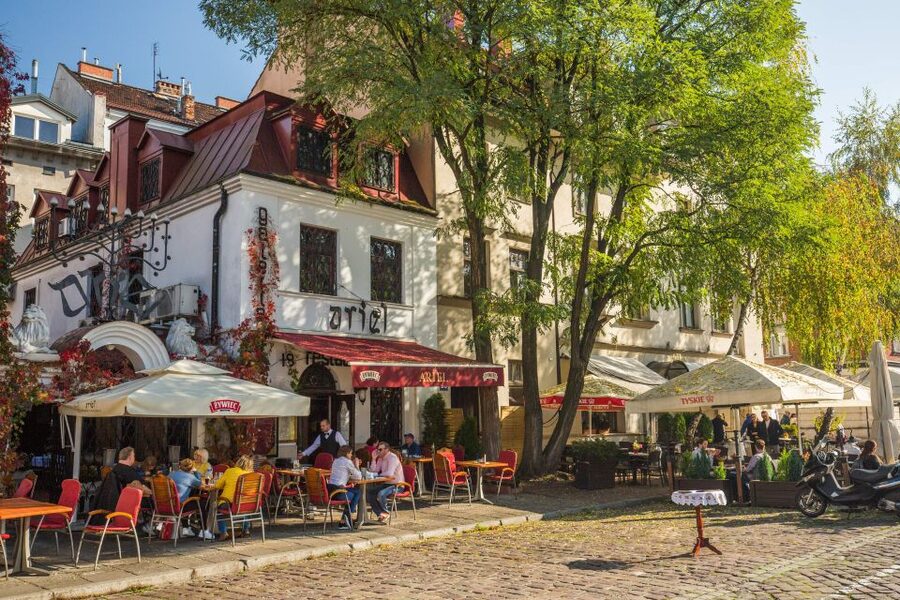
- Kazimierz is walked in full, along Szeroka Street through synagogues, townhouses, and Plac Nowy.
- Schindler’s Factory gets you fast-track entry, which saves real time.
- The museum focuses on Krakow under Nazi occupation, using Schindler’s network to explain survival and deportation.
- Group size is limited to 25, which keeps it manageable.
- Your guide matters, and Helen is one guide who has impressed people with clear, easy-to-follow explanations.
Kazimierz and Schindler’s Factory in one 3.5 hour story
If you only do one thing in Krakow that explains both culture and catastrophe, I’d pick this kind of combo. You’re not just ticking off sites. You’re walking through a place where Jewish and non-Jewish life evolved side by side, then stepping into a museum that shows how the Nazi occupation rewrote that life, day after day.
The pacing is built for a reason. Kazimierz gives you the human scale, streets, buildings, and religious landmarks. Then Schindler’s Factory adds the wartime context, with an exhibition that uses personal testimony and artifacts to make the timeline feel real, not abstract.
And yes, this is a guided experience for a reason. A licensed guide helps you connect the dots between what you see outside, the places you pass, and what you learn inside the museum.
More Schindler's Factory tours to compare:
- Krakow: Oskar Schindler’s Factory Entry Ticket & Guided Tour
★ 4.2 · 3,793 reviews - Krakow: Schindler’s Factory Tour with Entrance Ticket
★ 4.5 · 3,182 reviews - Krakow: Schindler’s Factory Skip-the-Line Ticket
★ 4.4 · 3,105 reviews
Meeting at the Old Synagogue and getting set for the day
You’ll meet your guide on the steps of the Old Synagogue, with a sign for the Kazimierz Guided Tour. Arrive at least 10 minutes early. After the group enters, late arrivals can’t be accommodated and tickets are non-refundable.
This matters more than it sounds. Kazimierz tours start in a tight, structured way, and the museum portion depends on timing. If you show up late, you don’t just miss a few minutes. You risk missing the entry flow that keeps things on schedule.
Also plan for comfort. The exhibition area has narrow passageways and is set up to reflect the atmosphere of wartime Krakow, so wear shoes you can stand in for a while.
Walking Szeroka Street: Kazimierz as lived-in history
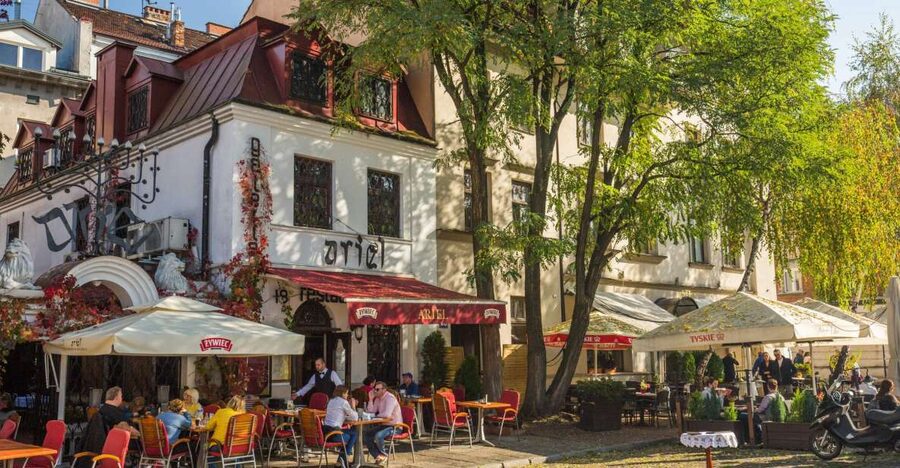
The walk begins on Szeroka Street, the historic center of Kazimierz. This is the part of town where you can feel the layering. You’ll pass townhouses that date from the 16th to the 18th century, and the street pattern and landmark buildings help explain why Kazimierz was such a strong center for Jewish life.
What I like about this segment is how it stays grounded. You’re not just looking at buildings. You’re learning what each site meant to the community and how daily routines revolved around prayer, study, and neighborly support.
If you’re the type who likes history with names and context, this first stretch gives you a foundation for everything you’ll see later at Schindler’s Factory. It also helps you understand why Schindler’s story can feel both extraordinary and painfully connected to the reality around it.
Old Synagogue: where the museum anchors the neighborhood
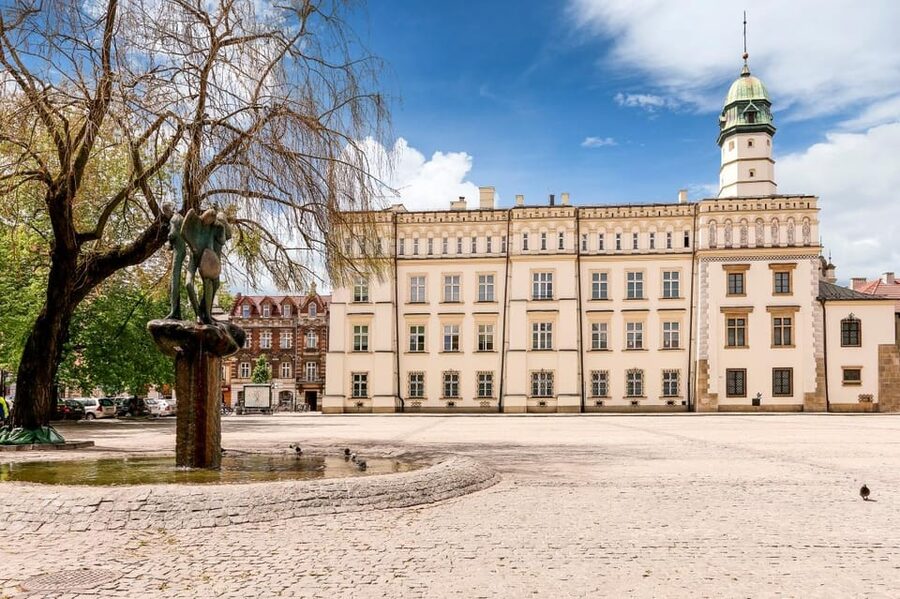
One of the most important early stops is the Old Synagogue, described as the oldest preserved synagogue in Poland and now a museum dedicated to Jewish history.
Even if you’ve visited other Jewish museums in Europe, this one works because it’s not isolated from the neighborhood. You’re learning while you’re still standing inside the district that shaped these traditions. The guide’s job here is key, because you’ll get historical context and explanations that turn the space into something you can understand, not just something you can photograph.
Take your time looking at the details your guide points out. This stop sets the tone for the whole tour, and it makes the wartime material that comes later feel less like a separate story.
More Jewish quarter and heritage tours to compare:
- Krakow: Schindler’s Factory & Ghetto Guided Tour
★ 4.7 · 1,694 reviews - Krakow: Jewish Quarter and Former Ghetto Tour
★ 4.9 · 1,441 reviews - Krakow: Bike Tour of Old Town, Jewish Quarter and the Ghetto
★ 4.9 · 1,155 reviews - Krakow: Kazimierz Jewish Quarter Walking Tour
★ 4.8 · 571 reviews
Remuh Synagogue and cemetery: faith, memory, and place
Next up is the Remuh Synagogue and Cemetery, one of the most important Jewish religious sites in the country.
This stop is often where the tour shifts from learning to absorbing. A cemetery and a synagogue aren’t just heritage objects. They are places of memory and continuity. You’ll get a clearer sense of how the community preserved identity through religious practice and how physical sites held onto meaning through generations.
If you tend to skim when things get quiet, slow down here. This is one of the places where the guide’s explanation helps you notice what you might otherwise miss, the way location and ritual connect.
Kupa Synagogue: history through community inequality
You’ll also pass the Kupa Synagogue, once serving the poorest members of the community.
I like this stop because it adds an uncomfortable but necessary angle. It’s easy to remember Jewish life in Krakow as one unified story. Kupa reminds you that community life had differences in wealth and access, and those differences shaped where people gathered and how they lived.
This is where a good guide earns their pay. When the explanation is clear, you understand that synagogues weren’t only about worship. They were part of the social fabric.
Tempel Synagogue as a modern cultural venue
Another key site along the route is the Tempel Synagogue, which today functions as a cultural venue.
This is a helpful contrast point. You see the continuity of identity, but through change in use. Instead of treating history as something locked in time, the tour shows that the buildings and traditions still have a role now.
If you’re thinking about Krakow as a place to visit after the facts, this stop is a good moment to recalibrate. You get to see how the district exists in the present, not only the past.
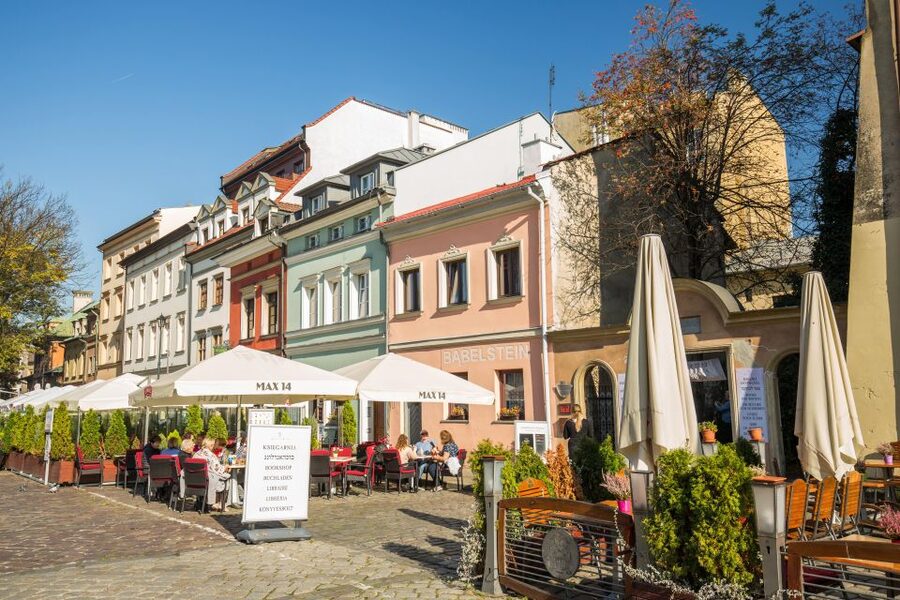
Ending at Plac Nowy: where the neighborhood breathes
The Kazimierz walking portion finishes at Plac Nowy, a lively square with cafés, markets, and local art.
You won’t be there to linger for long, because you still have Schindler’s Factory ahead. But it’s a useful landing spot. If you want to do your own thing after the tour ends, you’ll have a solid reference point for direction and local options for later.
And because food and drinks are not included, this is where you can quickly pivot to grabbing something after the tour.
Schindler’s Enamel Factory: what the museum shows (and what it doesn’t)
After Kazimierz, you’ll head to Schindler’s Enamel Factory, one of Krakow’s most visited museums.
Fast-track admission is included, which is a real value. Museum lines in popular cities can eat up your day. Here, skip-the-line helps you protect time for the exhibition, which is the heart of this second half.
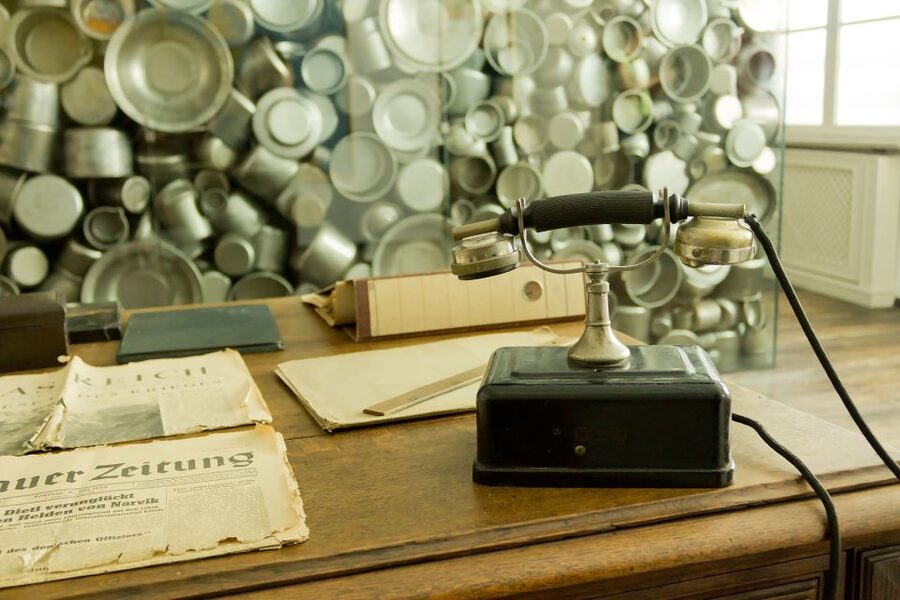
One practical note that keeps expectations sane: the museum does not contain original production equipment. The factory building now operates as a museum, so you’re seeing the story through exhibition design and materials, not factory machinery.
If you were hoping to tour the full original manufacturing floor like a functioning industrial site, you might feel disappointed. The tour is built around the exhibition, and it does that well.
The exhibition: Kraków under Nazi occupation, 1939 to 1945
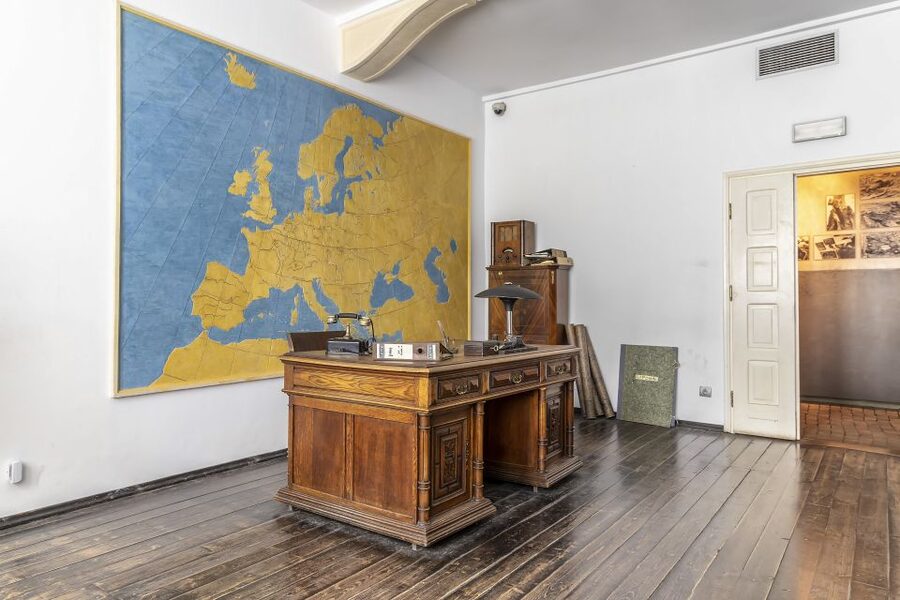
Inside, you’ll explore the permanent exhibition titled Kraków under Nazi Occupation 1939 to 1945. It’s presented through the story of Oskar Schindler and the people he employed.
This is where the tour earns its emotional weight. Your guide explains that Schindler used position, influence, and resources to help save Jewish workers from deportation. The exhibition highlights that more than a thousand men and women survived because of his actions, commonly referred to as the Schindlerjuden.
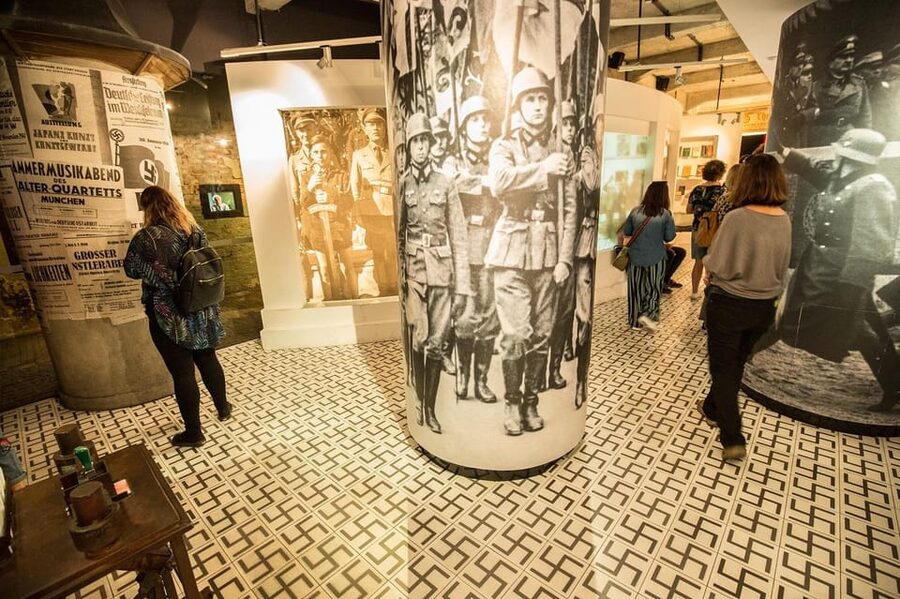
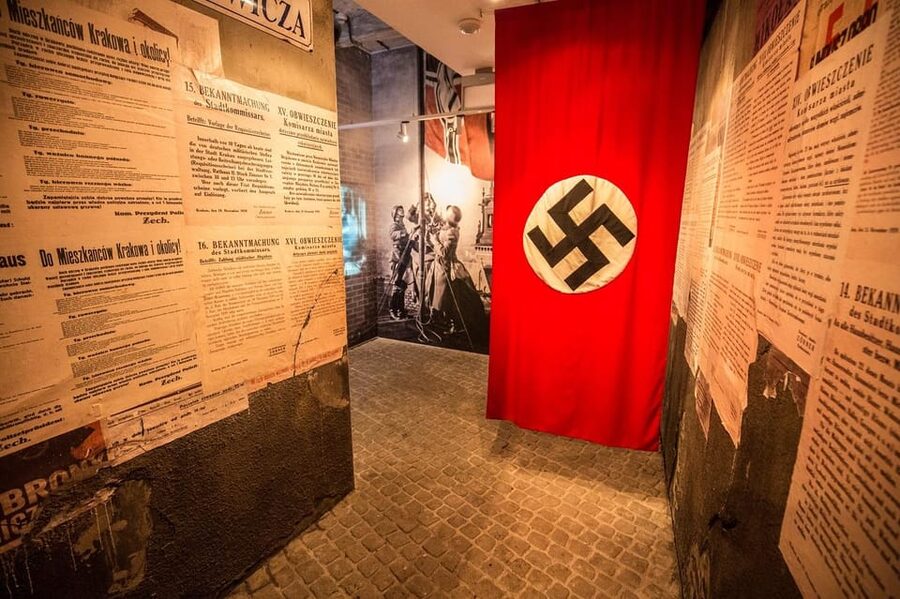
What makes the presentation effective is how it connects the big historical events to personal lives. Historic photographs, personal belongings, and reconstructed streetscapes give you a sense of fear, uncertainty, and hardship during the occupation.
And because the museum is set up with narrow passageways and a layout designed to reflect wartime atmosphere, you move at a slower, more focused pace. It’s not a casual browse. You’re meant to take it in.
How daily life under occupation fits next to Schindler’s story
One of the best parts of this tour is the balance it tries to strike. Schindler’s story is central, but the Kazimierz walking segment makes sure you understand what was at stake in the first place.
When you learn about the way Krakow’s Jewish and non-Jewish residents endured the war, it stops being a single-person narrative. You see it as a system of pressures that shaped neighborhoods, choices, and survival.
A strong guide helps you notice something important: courage doesn’t erase cruelty. Schindler’s actions were extraordinary, yet they existed inside a brutal reality that ordinary people lived through every day.
Timing, group size, and why the pace can feel a bit long
The total duration is 210 minutes. That’s about 3.5 hours, and it’s a walking plus museum schedule.
Group size is limited to 25 participants. In practice, that’s large enough to feel like a group day, but small enough that your guide can keep momentum and answer basic questions.
One caution from past tour experiences is that the timing can run a bit over. If you have a tight second appointment right after this, give yourself buffer time. This is especially true around museum entry and movement through narrow spaces.
Guide quality: the difference between facts and meaning
This tour is only as good as the guide in two places: explaining Kazimierz and guiding your attention in the exhibition.
From feedback I’ve seen, Helen has been especially praised for being easy to listen to and very informative. That kind of guiding matters because it turns a list of sites into a coherent story you can carry around in your head later.
Even if you already know the broad outline of Schindler’s story, a strong guide adds clarity on daily life in Nazi-occupied Krakow and how the district’s residents endured the war.
Price and value: what you’re paying for
At $69 per person, you’re paying for two things that are hard to replicate on your own in the same way.
First, you’re paying for a guided walking experience through multiple meaningful landmarks in Kazimierz, including the historic synagogues and the route through Szeroka Street and Plac Nowy.
Second, you’re paying for fast-track museum entry to Schindler’s Factory. Skip-the-line has a direct value in time and stress.
You’ll need to plan your own food and drinks. The tour doesn’t include them, so budget for that. If you’re traveling with a group and want to keep costs predictable, this price structure is straightforward.
Bottom line: it’s good value if you want context and if you like history explained in a way that makes the places feel connected.
Who should book this tour?
I’d book this if you want:
- A guided way to understand Kazimierz, not just a self-guided stroll
- A museum visit focused on Nazi occupation in Krakow, using personal stories
- A single morning or afternoon plan that covers both neighborhood life and wartime history
You might think twice if:
- You expect to see original factory production equipment. The museum is an exhibition now.
- You dislike tours that are guided start-to-finish, with less roaming time.
- You have very tight timing for later plans, since schedules can run slightly over.
FAQ
FAQ
Where do we meet for the tour?
Meet your guide on the steps of the Old Synagogue. The guide will hold a Kazimierz Guided Tour sign.
What is the duration of the experience?
The tour lasts about 210 minutes, with approximate times that may adjust due to museum or site scheduling.
What languages are available?
The live tour guide is available in German, French, Italian, English, and Spanish.
What is included in the price?
You get a walking tour through Kraków’s historic Kazimierz Jewish Quarter, a professional licensed guide, and fast-track admission to Schindler’s Factory.
Is food or drinks included?
No. Food and drinks are not included.
Do I need to arrive early?
Yes. Plan to arrive at least 10 minutes before the start time. Once the group has entered, late arrivals can’t be accommodated and tickets are non-refundable.
Does the museum have an original factory setup?
No. The building is now a museum and does not contain original production equipment.
How big is the group?
Group size is limited to 25 participants.
What should I know about tickets and names?
Because the museum issues personalized tickets, you must provide the full names of all participants at the time of booking.
Can I cancel for a refund?
Yes, you can cancel up to 24 hours in advance for a full refund.
Should you book Schindler’s Factory and Kazimierz?
If you want more than a highlight reel, yes, book it. This tour pairs a neighborhood walk that explains community life with a museum visit that explains the occupation in a human way, and it does it with professional guiding and fast-track entry.
My best advice is simple: come with comfortable shoes, give yourself time for the emotional weight of the museum, and plan flexibility in your schedule right after. If you do that, you’ll leave Krakow with a much clearer sense of what Kazimierz was, what it endured, and why those stories still matter.
Recently reviewed around Krakow
- Wawel Castle and Cathedral Guided Tour★ 4.6 · 44 reviews
- Walking Tour: Kazimierz, Jewish Quarter – 2-Hours of Magic!★ 4.7 · 35 reviews
- Wawel Castle and Cathedral Guided Tour★ 5.0 · 8 reviews
- Kraków Holocaust Tour★ 4.9 · 5 reviews
- Wadowice and Kalwaria: John Paul II Route★ 4.8 · 5 reviews
- VIP Club Entry and Booth Booking★ 5.0 · 4 reviews
- Walking Tour of Krakow: Old town – 2-Hours of Magic★ 4.7 · 5 reviews
- Krakow: Zakopane, Thermal Baths and Gorce Park Treetop Walk★ 5.0 · 3 reviews